Best Restaurants in Düsseldorf by Neighborhood
Düsseldorf’s best restaurants depend heavily on the neighborhood. Altstadt is the easiest place for traditional brewery dining, Little Tokyo is the clear choice for Japanese food, and areas like Flingern, Unterbilk, and Oberkassel are better for slower, more local meals.
This guide is organized by neighborhood so travelers can choose where to eat based on location, atmosphere, budget, and food style. Most first-time visitors should start with Altstadt and Little Tokyo, then add Flingern, Unterbilk, MedienHafen, or Oberkassel depending on how much time they have.
Quick Overview of Düsseldorf’s Best Restaurant Neighborhoods
| Neighborhood | Best For | Good Choices | Main Drawback |
|---|---|---|---|
| Altstadt | Altbier, Rhineland food, brewery dining | Uerige, Füchschen, Schumacher, Zum Schlüssel | Crowded and tourist-heavy at night |
| Little Tokyo | Ramen, sushi, Japanese bakeries | Takumi, Naniwa, Yabase, Nagaya, Bakery My Heart | Queues at peak times |
| Flingern | Cafés, brunch, casual local dining | Hüftgold, Nooij Dutch Deli, small neighborhood restaurants | Less useful for quick sightseeing days |
| Unterbilk | Wine bars, relaxed evenings, local restaurants | Rocaille, Zicke, Zwanzig23 nearby in Bilk | More spread out than Altstadt |
| MedienHafen | Upscale dining, cocktails, business dinners | DOX, Lido Hafen, Rocca 800°C, Meerbar | Higher prices and less local feel |
| Oberkassel | Quieter meals, brunch, residential dining | Brauhaus Alter Bahnhof, Brasserie Hülsmann, Saittavini, Muggel | Across the Rhine from main sights |
Altstadt: Best Traditional Restaurants in Düsseldorf
Altstadt is the most obvious place to start eating in Düsseldorf because it concentrates the city’s historic brewery culture into a compact area. This is where visitors come for Altbier, pork-heavy Rhineland dishes, loud beer halls, and the kind of fast-moving service that can feel abrupt if you are not expecting it.
The area has a clear tradeoff. Altstadt is convenient and full of character, but it can feel crowded, loud, and tourist-heavy at night. It is excellent for a first Düsseldorf meal, less ideal for a quiet dinner.
Uerige
Uerige is one of Düsseldorf’s defining brewery restaurants. The experience is less about a slow restaurant meal and more about being inside the city’s Altbier culture.
Expect small glasses of Altbier, quick refills, communal tables, and a room that can get loud fast. The food leans traditional, with dishes such as sauerbraten, schnitzel, blood sausage, pork dishes, and hearty sides.
Uerige works best for travelers who want the classic Düsseldorf brewery experience. It is not the best choice for a calm dinner or anyone who dislikes crowded beer halls.
Füchschen
Füchschen offers a similar brewery experience but often feels a little easier to manage than Uerige. The rooms are larger, the food is reliable, and the atmosphere still feels strongly tied to Düsseldorf’s traditional beer culture.
The kitchen is especially useful for schnitzel, roast pork, sausage plates, and seasonal German dishes. For many visitors, Füchschen is the better middle ground: traditional enough to feel distinctive, but usually more comfortable for a full meal.
Brauerei Schumacher
Schumacher is another important Altbier name, although its main location sits just outside the core Altstadt near Oststraße. It is still worth mentioning because it is one of Düsseldorf’s historic house breweries and can work well for travelers staying near the city center or Hauptbahnhof.
The atmosphere feels traditional without being quite as packed into the Altstadt nightlife zone. It is a good option for visitors who want Altbier and brewery food but do not necessarily want the busiest old-town setting.
Brauerei zum Schlüssel
Zum Schlüssel sits directly in Altstadt and is another strong choice for traditional brewery dining. It is particularly useful when Uerige or Füchschen feel too crowded.
The food is straightforward Rhineland brewery cooking, and the location makes it easy to combine with a walk through the old town or along the Rhine promenade.
Zum Schiffchen
Zum Schiffchen is one of Düsseldorf’s oldest restaurants and leans more toward historic dining than brewery culture. It is more restaurant-like than beer-hall-like, which makes it a better fit for older travelers, small groups, or anyone who wants traditional atmosphere without quite as much noise.
Reservations are useful on weekends.
Where Altstadt Works Best
Altstadt works best for:
- first-time visitors
- short stays
- traditional Rhineland food
- Altbier and brewery culture
- groups that want a lively atmosphere
It works less well for modern dining, quiet meals, or travelers who want to avoid crowds.
Little Tokyo: Düsseldorf’s Best Japanese Restaurants
Little Tokyo, centered around Immermannstraße, is Düsseldorf’s most distinctive food neighborhood. The city has one of Europe’s largest Japanese communities, and the concentration of Japanese restaurants, bakeries, supermarkets, and bars gives this area a food identity that few German cities can match.
This is not a gimmick district. The best restaurants here are genuinely strong, and the queues at popular ramen shops are part of the reality.
Takumi
Takumi remains the best-known ramen restaurant in Düsseldorf. It is popular for a reason: the broths are consistent, portions are satisfying, and the menu works well for first-time ramen visitors.
Expect close seating, quick turnover, and queues during lunch and dinner. The spicy ramen and black garlic ramen are safe choices for a first visit.
Takumi is best for travelers who care more about the bowl of ramen than comfort or atmosphere. It is not ideal for large groups or anyone who wants to linger.
Naniwa Noodles & Soups
Naniwa is another essential ramen stop in Little Tokyo and often feels just as central to Düsseldorf’s Japanese food scene as Takumi. It is a practical alternative when Takumi’s line is too long, though Naniwa can also get crowded.
The restaurant is useful for travelers who want a classic, busy noodle-shop experience without turning dinner into a formal event.
Tokyo Ramen Takeichi
Tokyo Ramen Takeichi specializes in chicken-based ramen, which makes it a good option for travelers who want something lighter than a rich pork broth.
The atmosphere is usually more controlled than the busiest Takumi periods, though peak-time waits still happen. It works well for lunch, solo travelers, and visitors who do not want the heaviest ramen option.
Yabase
Yabase is one of Düsseldorf’s more traditional Japanese restaurants and feels noticeably less trend-driven than the ramen shops nearby. It is a strong choice for sushi, sashimi, bento-style meals, and quieter Japanese dining.
Lunch is especially useful here because set meals can offer better value than dinner.
Yabase works best for travelers who want Japanese food beyond ramen.
Nagaya and Yoshi by Nagaya
Nagaya and Yoshi by Nagaya sit at the higher end of Düsseldorf’s Japanese dining scene. Both are better treated as destination meals rather than casual Little Tokyo stops.
These restaurants work best for travelers planning a special dinner, especially those interested in Japanese fine dining. Reservations are essential, and the experience is much more formal than the ramen shops around Immermannstraße.
Where Little Tokyo Works Best
Little Tokyo works best for:
- ramen
- sushi
- Japanese bakeries
- solo travelers
- quick lunches
- food-focused trips
The main drawback is crowding. Popular restaurants regularly have queues outside, so avoid peak lunch and dinner times if you dislike waiting.
Flingern: Düsseldorf’s Best Neighborhood for Cafés and Modern Local Dining
Flingern is where Düsseldorf starts to feel less like a sightseeing city and more like a place where people actually live. The neighborhood has cafés, brunch spots, small restaurants, and a younger local rhythm that contrasts sharply with Altstadt.
This is not the best area for a first meal if you only have one night in town. But for a second or third day, Flingern is one of the better places to eat without feeling like you are following the same tourist path as everyone else.
Hüftgold
Hüftgold is one of the better-known café and brunch names in Flingern. It works well for breakfast, cake, coffee, and a slower late morning.
This is a good choice for travelers who want a neighborhood café rather than a hotel breakfast or quick bakery stop. It is especially useful before exploring Flingern’s shops and side streets.
Nooij Dutch Deli
Nooij Dutch Deli adds something different to the neighborhood with Dutch-influenced breakfast, lunch, and café food. It is a practical option for brunch or a casual daytime meal.
The atmosphere is relaxed and more local than central Düsseldorf dining. It works best for travelers who want something lighter and less formal than a full restaurant meal.
Modern Restaurants and Natural Wine Spots
Flingern’s stronger restaurants often lean toward seasonal menus, smaller dining rooms, natural wine, and casual European cooking. This is the neighborhood where visitors are more likely to find a compact menu, handwritten specials, and a room that feels designed for regulars rather than tourists.
The specific best choice changes more often here than in Altstadt, so it is worth checking current opening hours and reservations before going.
Where Flingern Works Best
Flingern works best for:
- brunch
- coffee shops
- relaxed lunches
- modern casual dining
- repeat visitors
- travelers who want a less touristy neighborhood
It works less well for travelers with limited time who want traditional Düsseldorf food or easy access from the main sights.
Unterbilk and MedienHafen: Best Areas for Evening Dining
Unterbilk and MedienHafen are often grouped together, but they feel different. Unterbilk is more residential and relaxed, while MedienHafen is more polished, architectural, and business-oriented.
Together, they make sense for evening dining, especially for travelers who have already spent time in Altstadt and Little Tokyo.
Rocaille
Rocaille is one of the most useful recommendations in this part of Düsseldorf because it bridges wine-bar atmosphere with proper dinner. It feels more intimate and less corporate than many MedienHafen restaurants.
This is a good choice for couples, smaller groups, and travelers who want wine and food without a loud brewery setting.
Zicke
Zicke is a long-running neighborhood bistro in Unterbilk and works well for a casual meal or drinks in a setting that feels more local than polished. It is not the place for a formal dinner, but it is useful for travelers who want a relaxed evening in a real neighborhood.
Zwanzig23 in Nearby Bilk
Zwanzig23 is technically in Bilk rather than Unterbilk, but it belongs in this conversation because it gives food-focused travelers a serious contemporary option near this part of the city. The restaurant earned attention for modern, sustainability-minded fine dining.
This is not a casual drop-in meal. It works best for travelers planning a special dinner and willing to reserve ahead.
MedienHafen
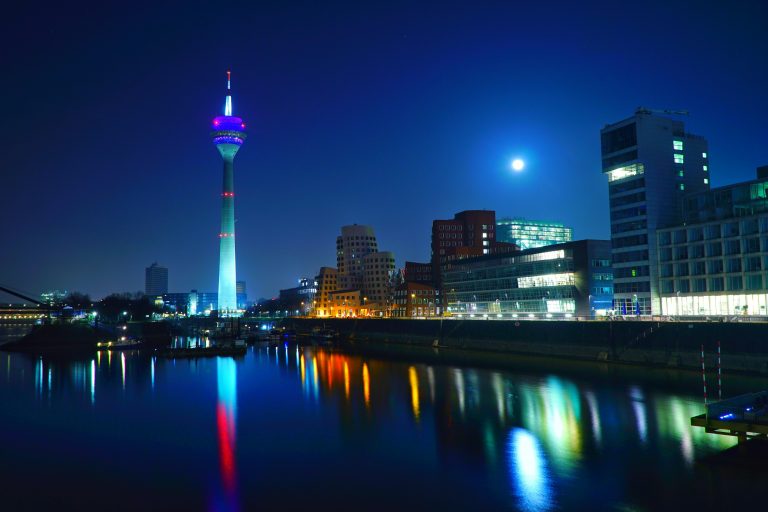
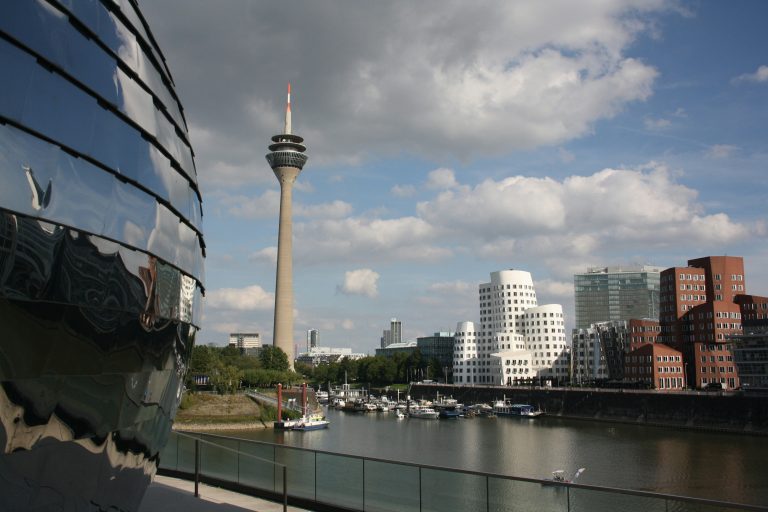
MedienHafen is Düsseldorf’s most visually modern dining district. The architecture, office buildings, and harbor setting make it feel completely different from Altstadt.
It works best for cocktails, business dinners, date nights, and travelers who want a polished setting.
DOX Restaurant
DOX, at the Hyatt Regency, is one of the better-known restaurants in the harbor area. The setting matters here: it works well for travelers who want a more refined dinner near the water.
This is a stronger choice for atmosphere and service than for budget value.
Lido Hafen, Rocca 800°C, and Meerbar
Lido Hafen is useful for modern dining with harbor views. Rocca 800°C is a better fit for steak and a more polished night out. Meerbar remains one of MedienHafen’s recognizable restaurants, especially for drinks and a louder evening atmosphere.
None of these are budget choices. MedienHafen is best approached as a setting-driven dining area rather than the city’s most local food neighborhood.
Where Unterbilk and MedienHafen Work Best
These neighborhoods work best for:
- evening dining
- wine bars
- cocktails
- date nights
- upscale restaurants
- repeat visitors
Travelers focused entirely on traditional German food should prioritize Altstadt instead.
Oberkassel: Quieter Restaurants Across the Rhine
Oberkassel sits across the Rhine from central Düsseldorf and feels more residential, affluent, and calmer than the neighborhoods near Altstadt. It is not the most efficient area for sightseeing, but it is one of the better choices for quieter meals.
The neighborhood centers around Luegallee, Belsenplatz, and surrounding residential streets. Outdoor seating becomes especially appealing in spring and summer.
Brauhaus Alter Bahnhof
Brauhaus Alter Bahnhof is the most useful traditional recommendation in Oberkassel. It gives visitors a brewery-style meal without needing to return to the louder Altstadt beer halls.
It works well for travelers staying on the left bank of the Rhine or anyone who wants Altbier and hearty food in a more neighborhood-oriented setting.
Brasserie Hülsmann
Brasserie Hülsmann is a strong fit for travelers who want a more polished Oberkassel meal. The style leans toward French and European bistro dining rather than traditional German brewery food.
This is a better choice for couples, slower dinners, or travelers who want a quieter evening across the Rhine.
Saittavini
Saittavini is a well-known Italian restaurant in Oberkassel and works best for travelers who want a more refined Italian meal rather than a casual pizzeria.
It is especially useful for visitors staying in Oberkassel or nearby Niederkassel who do not want to cross back into the city center for dinner.
Muggel
Muggel is more casual and useful for brunch, breakfast, coffee, or a relaxed daytime meal. It fits the neighborhood well: local, practical, and more about everyday dining than destination food.
Where Oberkassel Works Best
Oberkassel works best for:
- quieter dinners
- brunch
- couples
- residential atmosphere
- travelers staying west of the Rhine
- slower travel days
It works less well for travelers relying entirely on walking from Altstadt or trying to maximize sightseeing time.
Practical Tips for Eating Out in Düsseldorf
Several restaurant logistics catch visitors off guard in Düsseldorf.
Reservations matter more than many travelers expect, especially for:
- Japanese restaurants
- weekend dinners
- upscale restaurants
- brunch spots
- MedienHafen restaurants with river or harbor views
Other practical details worth knowing:
- Card payments are common, but carrying some cash is still useful in breweries and smaller cafés.
- Dinner service usually starts around 6 PM.
- Sunday dining options are more limited outside central neighborhoods.
- Tipping around 5 to 10 percent is standard.
- Public transportation between neighborhoods is efficient and easy to use.
- Ramen shops in Little Tokyo often move quickly, but lines can still be long.
- Altstadt breweries may keep serving Altbier unless you place a coaster over your glass.
Travelers planning multiple restaurant visits should avoid staying only around the main train station area. The better dining neighborhoods are spread across the city.
Choosing the Right Restaurant Neighborhood in Düsseldorf
The best restaurant area in Düsseldorf depends mostly on the type of trip.
A quick decision guide:
- Traditional German food and Altbier: Altstadt
- Japanese restaurants and ramen: Little Tokyo
- Brunch and cafés: Flingern or Oberkassel
- Wine bars and relaxed evening dining: Unterbilk
- Upscale restaurants and cocktails: MedienHafen
- Quieter residential dining: Oberkassel
Most first-time visitors should start with Altstadt and Little Tokyo. Travelers staying longer usually get more out of neighborhoods like Flingern, Unterbilk, and Oberkassel, where Düsseldorf feels less tourist-focused and more local.