Best Restaurants in Hamburg by Neighborhood
Hamburg restaurants are best chosen by neighborhood, not from one citywide “best of” list. The right place to eat depends heavily on where you are spending the day, whether that is the waterfront around St. Pauli, the café-heavy streets of Schanzenviertel, or the quieter local feel of Altona and Ottensen.
This guide covers six distinct areas of Hamburg and focuses on practical traveler decisions rather than hype. The goal is to help visitors choose restaurants that fit their location, schedule, and type of meal, from Fischbrötchen and seafood to casual international food and calmer sit-down dinners.
The recommendations here are designed for travelers, not residents. The priority is reliability, ease, and a better chance of eating well without wasting time.
Quick Reference: Hamburg Restaurants by Neighborhood
| Neighborhood | Best For | Price Range | Atmosphere |
|---|---|---|---|
| St. Pauli | Seafood, late-night eating | € to €€ | Loud, casual, nightlife-adjacent |
| Schanzenviertel | Brunch, international food | € to €€ | Independent, relaxed, walkable |
| HafenCity | Waterfront dining, convenience | €€ to €€€ | Modern, tourist-heavy |
| Altona / Ottensen | Local dining, variety | € to €€ | Neighborhood, low-key |
| Eppendorf | Relaxed dinner, café culture | €€ to €€€ | Quiet, residential, upscale |
| Altstadt / Innenstadt | Central convenience | €€ | Mixed, tourist-dense in parts |
Altona and Schanzenviertel are the most walkable from mid-range hotel zones in western Hamburg. HafenCity is accessible on foot from the city center and close to the cruise terminals. If there is no fixed plan, Schanzenviertel and Altona/Ottensen are the safest overall choices for Hamburg restaurants. St. Pauli is best for seafood and late-night eating, HafenCity works mainly for convenience near the waterfront, and Eppendorf is the best fit for a quieter dinner.
St. Pauli: Late Nights, Seafood Markets, and No-Nonsense Eating
St. Pauli is Hamburg’s best-known neighborhood for nightlife, but it is also one of the most useful areas for seafood, late-night meals, and casual waterfront eating. For travelers, the food story starts earlier in the day at the Fischmarkt and along the river rather than on the Reeperbahn itself.
The Fischmarkt is the clearest reason to be in St. Pauli on a Sunday morning. It opens from around 5am to 9:30am, and vendors sell fish rolls, smoked eel, and loose produce from market stalls in a setting that is equal parts working port and organized chaos. This is not a tourist recreation of a market. It is a functioning one, and the eating is the point.
For sit-down meals, St. Pauli’s restaurant scene skews international and casual. The neighborhood handles late-night dining better than most parts of Hamburg, which matters for travelers arriving by ferry or with evening plans anchored to the Reeperbahn.
Recommended restaurants in St. Pauli:
- Fischerhaus: A long-running Hamburg fish restaurant with direct Elbe views and a menu built around traditional northern German seafood. Reliable for first-time visitors who want a classic meal without much guesswork.
- Zum Schellfischposten: A no-frills local institution near the Fischmarkt. Strong reputation for fried fish and simple, filling plates. Better suited to travelers who want something grounded and unfussy over anything polished.
- Oma’s Apotheke: A casual neighborhood bar-restaurant in the quieter residential edge of St. Pauli. Works well as a pre- or post-Reeperbahn option without the full tourist-facing feel of the waterfront strip.
Restaurants in St. Pauli tend to stay open later than those in Eppendorf or Altona. For travelers with flexible evening schedules, this is one of the more forgiving neighborhoods for spontaneous dining.
Travelers spending more time in the city should also see the broader guide to things to do in Hamburg.
Schanzenviertel: Hamburg’s Most Diverse Neighborhood for Food
Schanzenviertel is the strongest all-around neighborhood for food in Hamburg. It has the highest concentration of independent restaurants, brunch cafés, Middle Eastern spots, and quality coffee within a compact, walkable area.
This neighborhood appeals most to travelers who prefer informal settings. White-tablecloth dining is not what Schanzenviertel does. The draw is variety, accessibility, and a food culture shaped by independent operators rather than chains.
Schulterblatt street is the main food corridor. Travelers who walk its length can assess options in real time, which makes it well-suited to spontaneous dining decisions rather than advance planning.
Recommended restaurants in Schanzenviertel:
- MAMMA MIA: While its name sounds generic, this is a Schanzenviertel institution for weekend brunch and lively evening atmosphere. It captures the independent, slightly chaotic spirit of the neighborhood better than almost any other spot on Schulterblatt. It’s perfect for those who want a front-row seat to the district’s street life while enjoying hearty, well-portioned Mediterranean-inspired plates.
- Memán: A small, highly-rated spot that perfectly represents the neighborhood’s independent food culture. It offers modern Afghan cuisine in an unpretentious setting that feels much more local than the larger, tourist-facing joints nearby. It’s a great example of the “Schanze” vibe—straightforward, quality-focused, and tucked away in a bustling stretch.
- Nil: A long-running Hamburg restaurant with a seasonal menu and a relaxed atmosphere. Sits slightly above casual without tipping into formal territory. Worth a reservation on weekends.
Schanzenviertel bleeds into Karolinenviertel and Eimsbüttel, which expands the walkable options considerably. Travelers staying anywhere in this zone have more within easy reach than almost anywhere else in the city.
The main drawback for visitors is weekend congestion. Popular brunch spots fill up early, and the streets around Schulterblatt can feel crowded on Saturday afternoons.
HafenCity: Modern Architecture, Tourist Crowds, and Workable Options for Dining
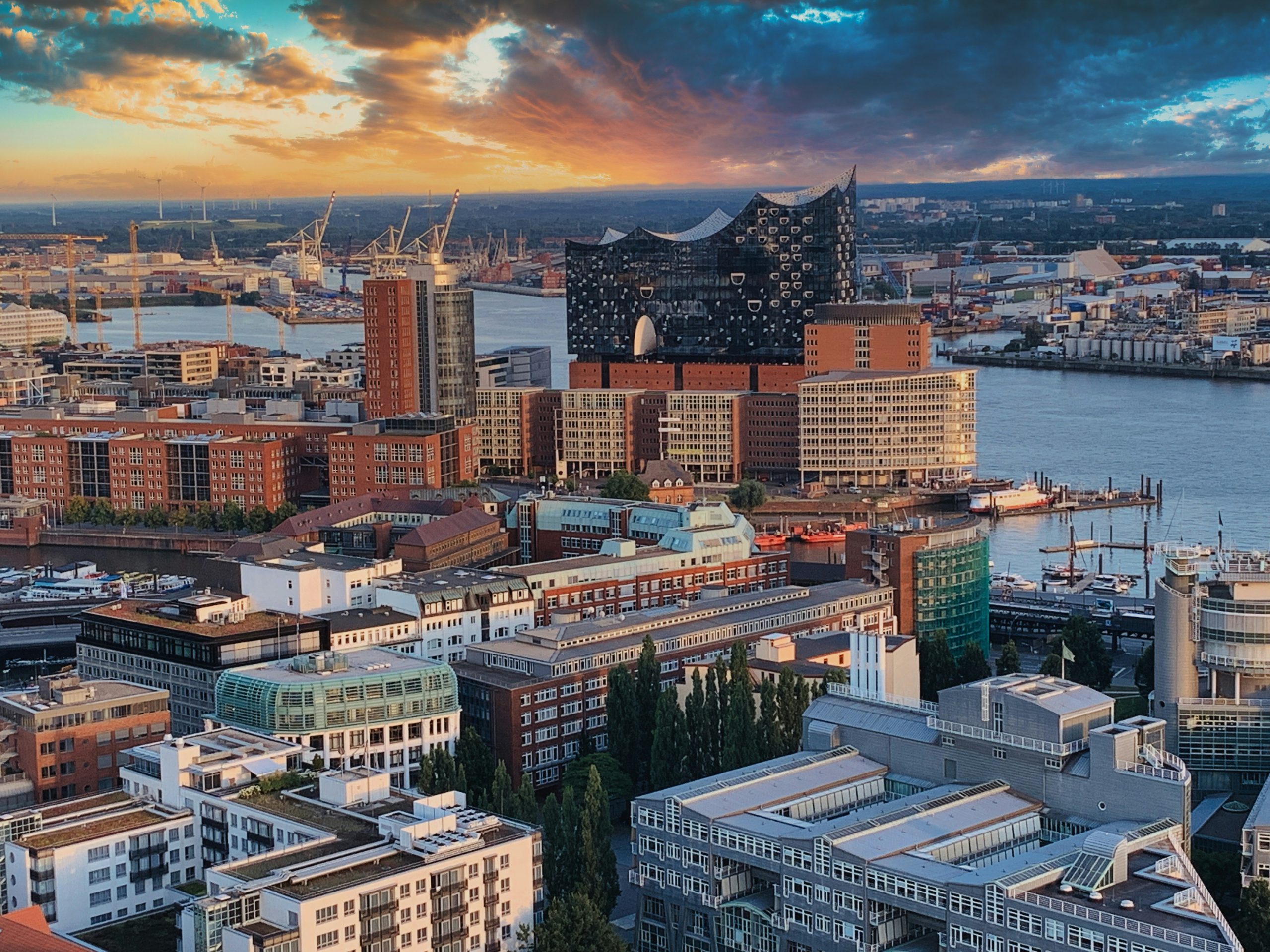
HafenCity is useful for waterfront dining and convenience, but it is not one of Hamburg’s strongest food neighborhoods. Most travelers come here for the Elbphilharmonie and the architecture, not because it is the best place to eat in the city.
That said, HafenCity works well for specific types of travelers. Those visiting the Elbphilharmonie, staying in one of the district’s hotels, or simply wanting waterfront dining with minimal transit effort will find reasonable options.
Recommended restaurants in HafenCity:
- Fischrestaurant Brücke 10: One of the better-known spots for Fischbrötchen on the waterfront. Casual, outdoor-friendly, and reliable for a fish roll with harbor views. More of a standing lunch option than a full meal.
- WASSERSCHLOSS Speicherstadt: A sit-down restaurant inside one of the historic warehouse buildings at Sandtorkai. Focuses on northern German ingredients with a more considered approach than most of the surrounding options. Better suited to travelers who want a proper dinner rather than a tourist meal.
- Oberhafen-Kantine: A small, older building that survived the HafenCity development and now operates as a restaurant. The setting is distinctive and the menu is grounded in Hamburg tradition. Worth noting for the contrast it provides to the surrounding architecture.
Evenings in HafenCity can feel quiet for solo travelers once the Elbphilharmonie crowd disperses. The Magellan-Terrassen waterfront area is the most active stretch for dinner. Travelers who want a livelier evening are better served moving toward St. Pauli or Schanzenviertel.
This area is best suited to travelers already spending time around the Elbphilharmonie, not as a standalone food destination.
Altona and Ottensen: Where Hamburg Locals Eat
Altona and Ottensen offer the most consistently local dining experience in Hamburg. Tourist density is lower than in HafenCity or the city center, the quality-to-price ratio is generally better, and the neighborhood restaurant culture feels more stable and less visitor-dependent.
This area suits travelers who want to eat well without navigating tourist infrastructure. It is not a destination neighborhood in the sightseeing sense, but the combination of Altona train station access and proximity to the Elbstrand (Elbe beach) makes it a practical base for anyone exploring western Hamburg.
Recommended restaurants in Altona and Ottensen:
- Fischereihafen Restaurant: One of Hamburg’s most respected fish restaurants, overlooking the Elbe. The menu focuses on traditional northern German seafood with careful preparation. Reservations are strongly advised. Best for a longer, more deliberate meal rather than a quick dinner.
- Restaurant Henssler: A Hamburg institution on the Elbe waterfront known for Japanese-influenced cooking. Consistently high reviews. Suits travelers who want something outside the German seafood category without leaving the Altona waterfront.
- Ottensener Markt: The weekly market at Ottenser Marktplatz is worth knowing about for casual lunch options, street food, and local produce. Better for daytime visits than evening meals.
The Altona Fischauktionshalle (fish auction hall) is worth flagging separately. It operates as a Sunday brunch venue, and it is better known among Hamburg residents than tourists. The setting is a converted industrial hall near the Elbe, and the format is open and communal. Travelers who are already planning a Sunday morning at the Fischmarkt can consider this as an alternative or follow-on stop.
Eppendorf: Upscale, Quiet, and Best for a Relaxed Dinner
Eppendorf is the best neighborhood in this guide for a slower, quieter dinner. The restaurant scene leans toward polished bistros, wine bars, and café culture rather than anything loud or nightlife-adjacent.
This neighborhood suits couples, travelers staying in northern Hamburg, and anyone who wants a quieter evening away from the energy of St. Pauli or Schanzenviertel. It is not a neighborhood travelers typically visit for sightseeing. The food is the reason to come here, and Eppendorfer Baum is the street where most of the useful options are concentrated.
Recommended in Eppendorf:
- Paledo: A highly-regarded neighborhood favorite that has stepped in as the go-to spot for a local crowd. The menu focuses on fresh, seasonal bowls, artisanal breakfasts, and excellent coffee. It works perfectly for a morning visit or a lighter midday meal before exploring the nearby Haynspark. While it’s an ideal stop for lunch, note that it closes in the early evening, so it isn’t suited for those looking for a full dinner.
- Klinker: A sophisticated yet relaxed dinner option that has become a neighborhood favorite. It suits travelers who want a sit-down evening meal with a creative, seasonal European menu without the noise levels of the Sternschanze. The atmosphere is quieter and more refined, making it worth booking in advance for a Friday or Saturday night.
Eppendorf is not walk-in friendly for dinner at popular spots. Reservations are expected at most of the better restaurants here, which is worth planning around.
Altstadt and Innenstadt: Convenient, Central, and Worth Knowing Your Options
Altstadt and Innenstadt are useful for convenience but not the strongest food areas in Hamburg. Travelers staying centrally will likely eat here at some point, but the best move is usually to know which streets and detours are worth it rather than defaulting to the obvious options around the main shopping zones.
The density of predictable international chains on the main pedestrian streets is high. Travelers who step off the main shopping corridors, particularly toward the canal streets and the Kontorhausviertel district, will find better choices.
Recommended restaurants in Altstadt / Innenstadt:
- Buddels Gasthaus und Weinbar: Housed in one of the beautifully restored historic merchant buildings on Deichstraße, this is one of the most atmospheric dining spots in the Altstadt. It focuses on modern North German cooking and an excellent wine list, providing the perfect historical context for a meal in Hamburg’s oldest surviving street. It is a reliable, high-quality choice for first-time visitors.
- Alte Liebe: Located in the historic Kaispeicher B (the same building as the International Maritime Museum), this spot is a fantastic alternative for that warehouse feel. It’s particularly famous for its Sunday Fleet-Brunch, where you can eat directly overlooking the water. It’s a bit more hidden than the main tourist strips, making it a perfect midday break for travelers exploring the museum district.
- Altes Mädchen: Technically just outside the Innenstadt, but walkable and consistently well-reviewed for its northern German food and Hamburg-brewed beer. A practical option for travelers who want something more considered than the city center alternatives without going far.
Deichstraße is the most useful street to know in this area. Several restaurants here operate in restored 17th and 18th century warehouse buildings with canal views. The setting is genuinely distinctive by Hamburg standards, and the dining quality is more consistent than on the surrounding tourist-facing streets.
What Hamburg Does Better Than Most German Cities
Hamburg’s food strengths are specific and worth knowing before arriving.
Fischbrötchen (fish rolls) are the clearest example. Available from market stalls, street vendors, and dedicated fish roll stands across the city, these are the most Hamburg-specific food experience available. Options typically include Bismarck herring, smoked eel, shrimp, and matjes. The Fischmarkt and the Landungsbrücken waterfront are the most reliable places to find them.
Hamburg’s port history shaped its international food culture. The city has had working relationships with West Africa, Southeast Asia, and South America for over a century, and that contact shows in its restaurant mix. The Vietnamese and Turkish food scenes in Schanzenviertel and Altona are particularly strong by German city standards, which is worth knowing for travelers on a budget.
The café culture in Hamburg is well-developed, more maritime in character and less scene-driven than Berlin. Northern German bakeries, particularly in Eppendorf and Ottensen, maintain a high standard that is easy to underestimate.
Hamburg also has a strong Delikatessen tradition. Quality deli shops that double as lunch counters are common in Eppendorf and Ottensen. These are not well-advertised to tourists but offer some of the best value in the city for a midday meal.
Planning Your Hamburg Restaurant Strategy
Hamburg’s neighborhoods are spread out, and eating across the city in a single day requires transit planning. The most practical approach is to anchor restaurant choices to the day’s sightseeing itinerary rather than making separate Hamburg’s neighborhoods are spread out enough that eating well usually depends on matching food plans to where the day is already taking place. The easiest mistake is treating the city center as the default dining zone and then wondering why the meals feel average.
A better approach is simple: eat in St. Pauli if the day is built around the waterfront or late-night plans, in Schanzenviertel for brunch and informal variety, in Altona or Ottensen for the most locally grounded meals, and in Eppendorf for a quieter dinner. That single adjustment improves the average meal in Hamburg more than any individual restaurant recommendation.