Rügen Island Itinerary for a Relaxed Coastal Trip
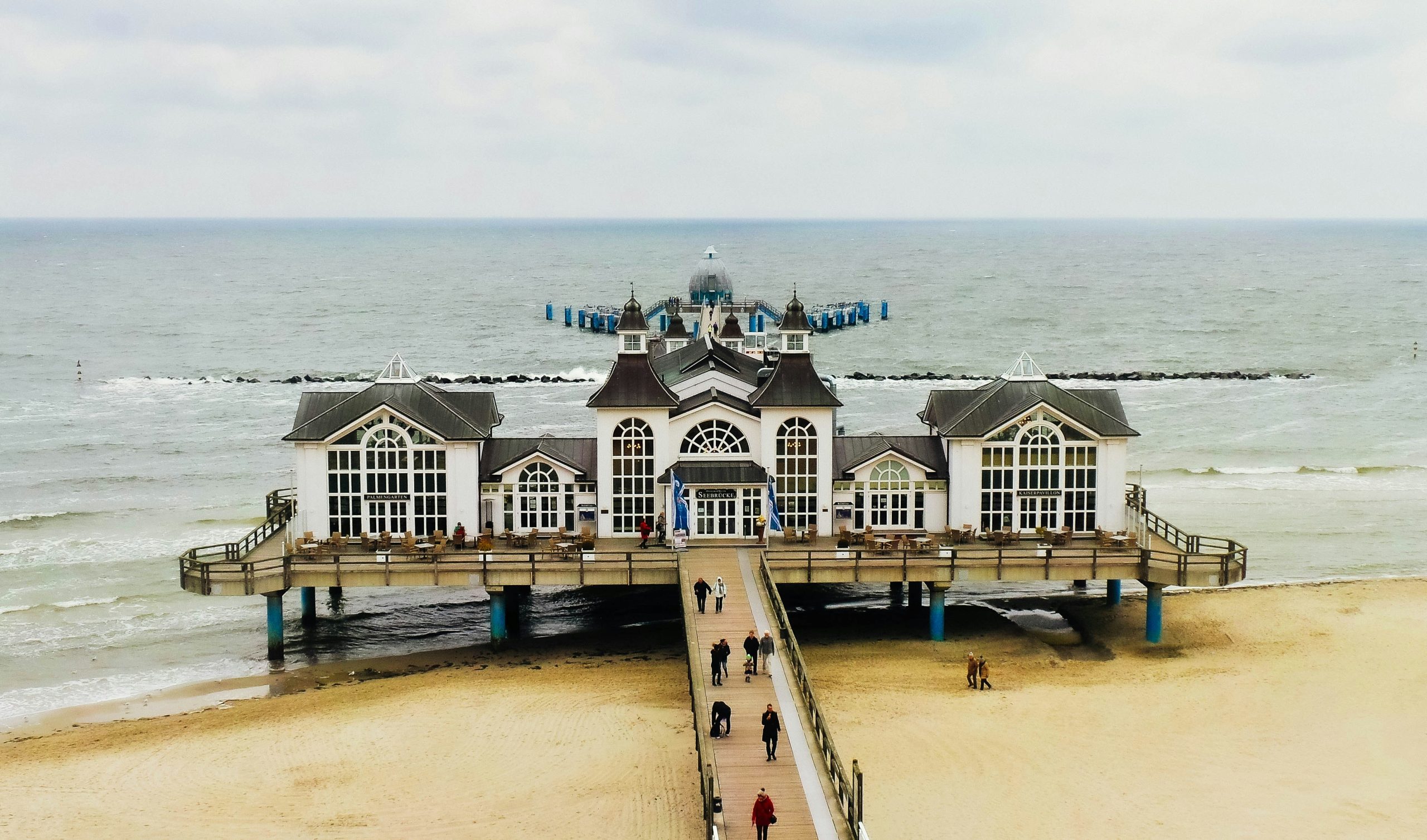
Rügen works very well as a 2–3 day coastal itinerary built around beaches, chalk cliffs, seaside resort towns, and slower Baltic pacing. Germany’s largest island suits travelers who want scenic variety and outdoor time without trying to turn the trip into a packed checklist.
Rügen sits in the Baltic Sea off the coast of Mecklenburg-Vorpommern and connects to the mainland via the Rügendamm bridge near Stralsund. Road and rail access are both straightforward, which makes it one of the more practical German islands to visit.
| Trip Length | Recommended Base | Best For | Avoid If |
|---|---|---|---|
| 2 nights | Binz | First-time visitors, beach + cliffs | You want nightlife or luxury |
| 3 nights | Binz or Sellin | Full island coverage | You dislike resort-town crowds |
| 3+ nights | Sassnitz | Jasmund-focused or hiking trips | You need wide dining options |
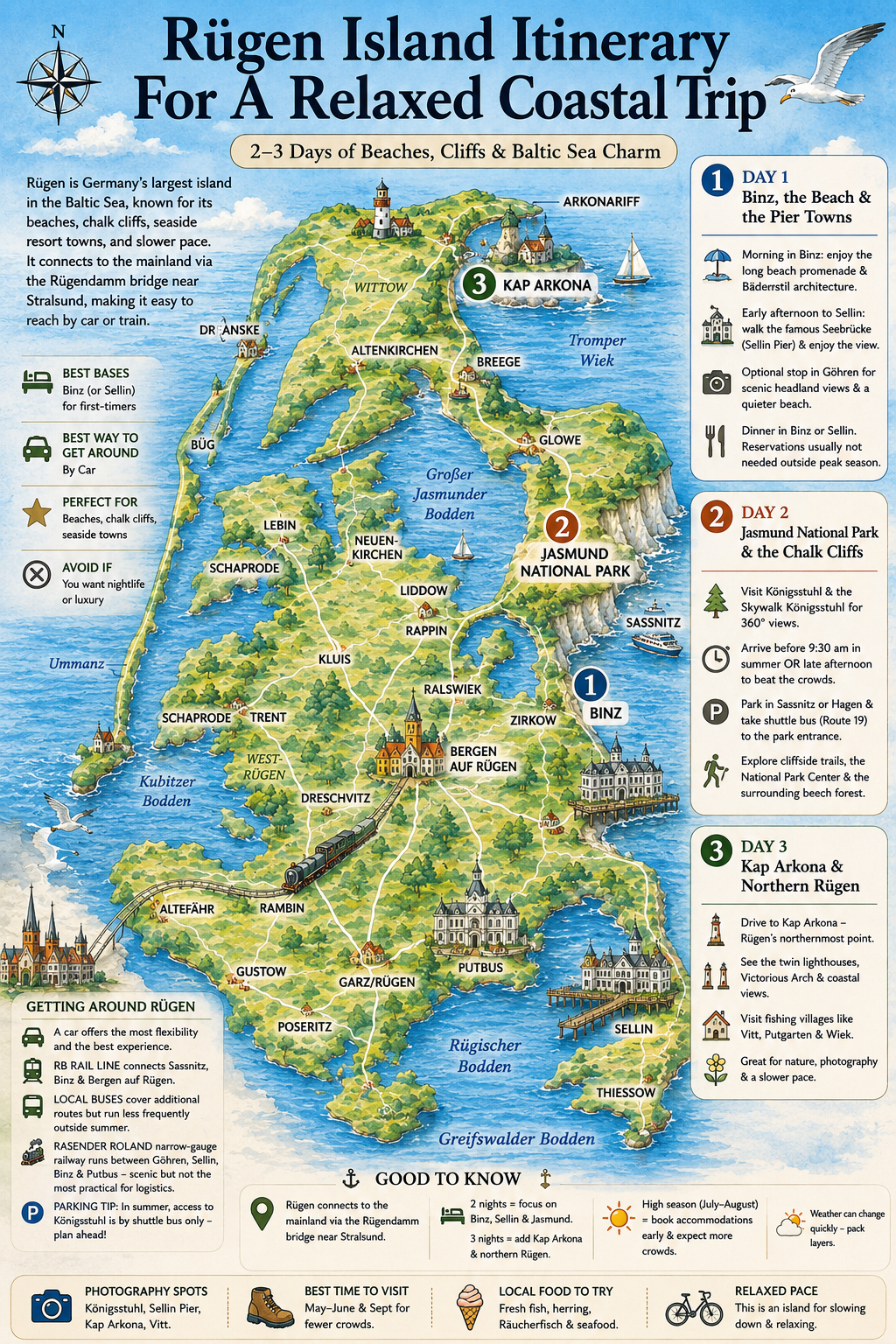
This guide lays out a relaxed 2–3 day route that keeps driving manageable and focuses on the parts of Rügen that are actually worth prioritizing.
If you only have two nights on Rügen, base yourself in Binz and focus on two things: the eastern resort towns and Jasmund National Park. A third day is best used for Kap Arkona and the northern peninsula. That is enough to experience the island’s main character without trying to cover too much ground.
For two nights, compare stays in Binz near the promenade or rail station if Day 1 starts without a car. Sellin stays suit travelers who would rather end that day near the pier and accept a less direct start for Jasmund. Check the exact address against the station or parking plan; a town name alone does not guarantee a convenient base.
Getting Around Rügen: Car, Train, or Bus?
A car is the best way to do this itinerary and makes a noticeable difference to how relaxed the trip feels. Public transport on Rügen is workable for a smaller island stay centered on Binz, Sassnitz, and Sellin, but it becomes limiting once you add Jasmund logistics, quieter beaches, or Kap Arkona.
Without a car, the options are workable but limited. The RB rail line connects Sassnitz, Binz, and Bergen auf Rügen. Local buses cover additional routes but run with reduced frequency outside the summer months.
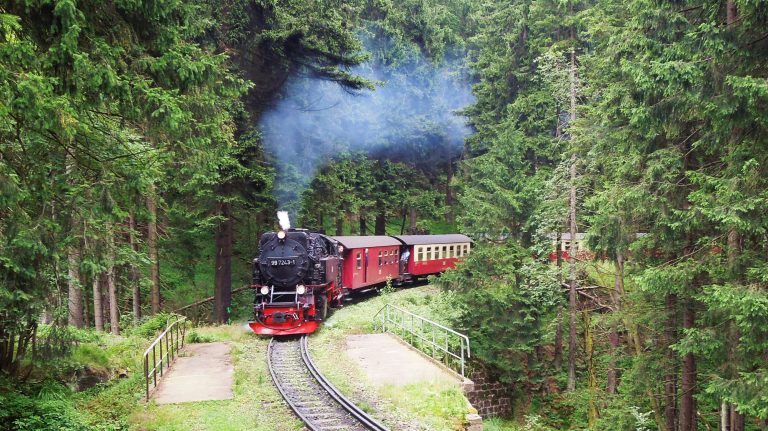
The Rasender Roland narrow-gauge railway is worth knowing about. It runs between Göhren, Sellin, Binz, and Putbus and offers a scenic ride through the southern part of Rügen. It is not a practical logistics solution for covering the island efficiently, but it appeals to travelers with extra time.
Parking requires planning in high season. Königsstuhl in Jasmund National Park is the most affected spot. Visitors driving in summer are required to use the shuttle bus from Sassnitz or Hagen rather than driving directly to the park entrance. Factor this into the Day 2 schedule.
Where to Base Yourself on Rügen
This is a practical decision, not a hotel recommendation. The right base depends on how much of Rügen a traveler plans to cover.
- Binz is the largest resort town on the island. Rügen’s eastern coast is most central here, transport links are reliable, and accommodation options are the widest available. For first-time visitors, Binz is the default choice.
- Sellin or Göhren offer a quieter alternative. Both sit on the Mönchgut peninsula south of Binz and suit travelers who prefer a lower-key atmosphere without sacrificing coastal access.
- Sassnitz is functional rather than charming. It is the closest base to Jasmund National Park, which makes it a sensible choice for anyone prioritizing the chalk cliffs and wanting to minimize driving time each morning.
Bergen auf Rügen is useful as a transport node but usually not the right base for a coastal trip. For most travelers, it adds road time without improving access to the parts of the island they actually came to see.
For a car-free two-night stay, Binz hotels and apartments on Booking.com are worth comparing by walking route, not beach distance alone. Check the arrival station, the bus stop for Day 2, and evening food options against the exact address. Binz suits travelers keeping one base; a distant beachfront address is less useful if each excursion begins with another transfer.
Day 1 on Rügen: Binz, the Beach, and the Pier Towns
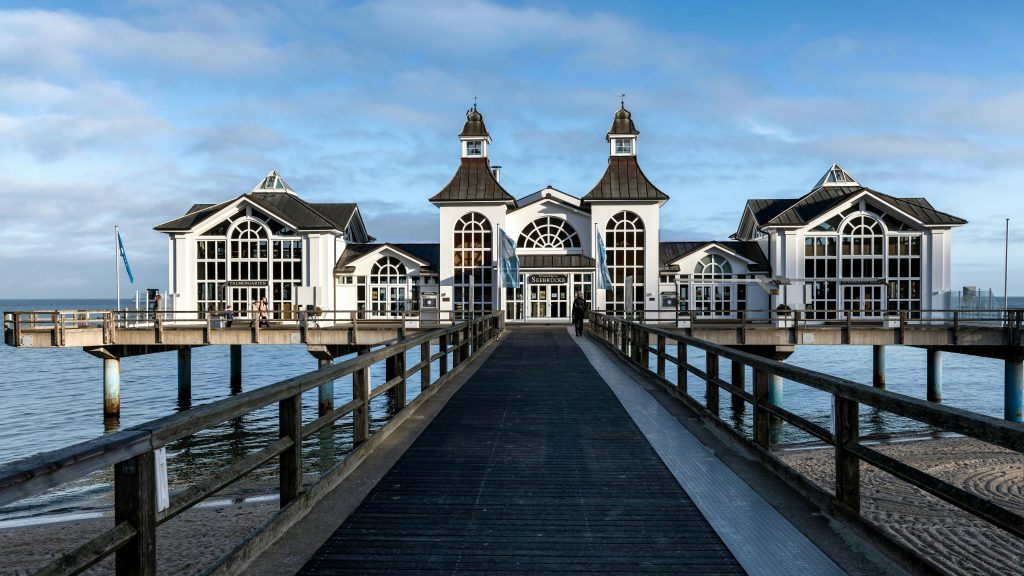
The first day works best as an orientation to Rügen’s eastern coast rather than an attempt to cover ground quickly.
Binz is the natural starting point. The beach promenade is long and easy to walk, and the Bäderstil architecture along the seafront sets the visual tone of the island: white resort villas with decorative verandas, built in the late 19th and early 20th centuries. This is not an itinerary that rewards rushing.
Morning in Binz leaves time for the beach and the promenade before the early-afternoon drive or train south to Sellin. The Sellin pier (Seebrücke) is one of the most photographed structures on Rügen. Arriving before the midday crowds makes a noticeable difference. The pier has a restaurant at its end, which is convenient but not essential. The walk out over the water and back is the point.
From Sellin, continuing south to Göhren is worth considering if time allows. The eastern headland at Göhren gives an open view back along the coastline, and the beach there is noticeably less crowded than Binz. If time is limited, Sellin is the better second stop than Göhren. Add Göhren only if you want more beach time and do not mind a longer, lighter-value extension.
Both Binz and Sellin have solid dinner options. Outside of peak July and August weekends, reservations are generally not necessary.
This day works well for travelers who want to settle into the island’s rhythm before the more demanding Day 2 excursion to Jasmund.
For a longer beach-led stay, Göhren accommodation on Booking.com offers another southern base. The Rasender Roland route ends near the promenade, but check the walk from the station to the specific accommodation and beach. This fits travelers leaving afternoons open for the coast; it adds backtracking if Jasmund and Kap Arkona are the main priorities.
Day 2 on Rügen: Jasmund National Park and the Chalk Cliffs
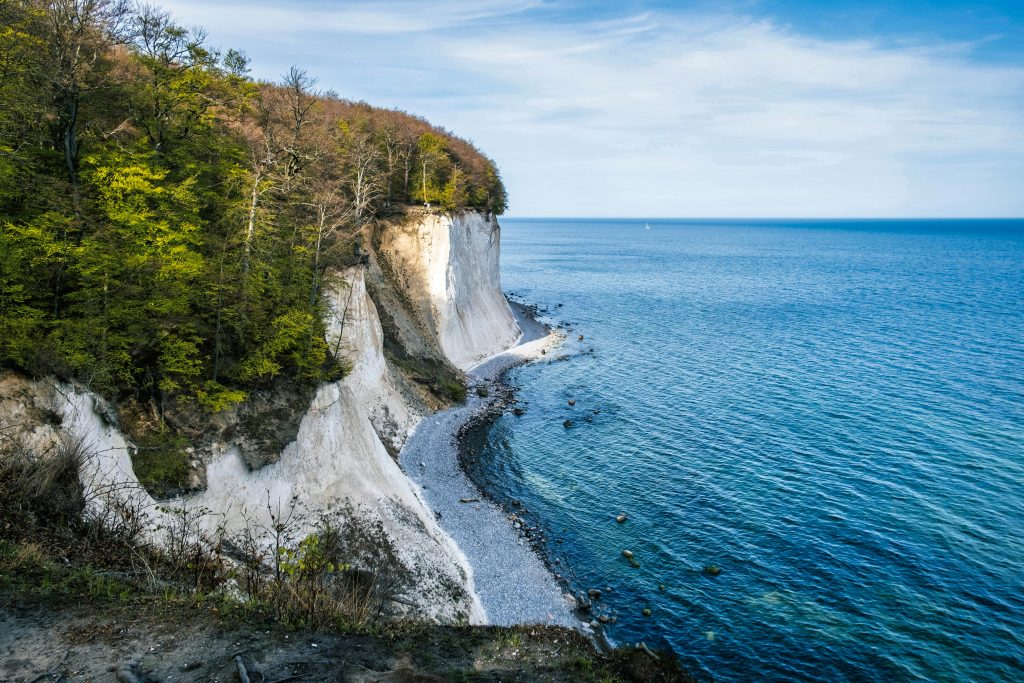
Jasmund National Park is the natural centerpiece of any Rügen itinerary. The Königsstuhl chalk cliffs are genuinely impressive, but the way you experience them has changed with the opening of the Skywalk Königsstuhl—a massive, elliptical floating walkway that offers a 360-degree view of the coast and the Baltic Sea.
Arriving before 9:30 am in summer is strongly advised to beat the crowds, or alternatively, arriving in the late afternoon as visitor numbers drop. The entrance fee (€12 for adults) covers access to the Skywalk, the National Park Center, and the surrounding cliffside forest paths. To get here, park at the large Hagen parking lot and take the shuttle bus (Route 19), as direct car access to the cliffs is prohibited.
The Hochuferweg trail is the more rewarding option for many visitors. It runs along the cliff edge through beech forest above the Baltic Sea and provides views that the crowds gathered at the main Königsstuhl platform often miss entirely. The trail does not require exceptional fitness, but appropriate footwear matters on uneven forest paths.
Victoria-Sicht is a lesser-known overlook along the Hochuferweg that offers a cleaner angle on the white chalk cliffs without the queue. Travelers who only do the main viewpoint and leave often miss this.
The drive from Binz to Jasmund takes roughly 30–40 minutes. In high season, factor in the mandatory shuttle from Hagen or Sassnitz, which adds time to the journey but avoids the traffic bottlenecks that build up by mid-morning.
For the afternoon, the area around Stubbenkammer and the forest roads returning toward Sassnitz has a different quality from the resort beach towns. Driving slowly through the wooded interior of Jasmund adds context to the coastal landscape visible from the cliffs.
This day is the most activity-heavy of the three and suits travelers with an interest in walking and natural scenery. Those who prefer beach time over hiking can keep Jasmund to two or three hours and return to Binz for the afternoon.
Travelers giving Jasmund most of Day 2 can compare stays in Sassnitz and check the route to Hagen or the bus stop before booking. Sassnitz saves a return across the island after the cliff walk, but it is a weaker base for repeated evenings in Binz or Sellin. A single base is usually simpler for a two-night trip.
When comparing Sassnitz hotels and apartments on Booking.com, separate a town stay from an address near the ferry port. Check the actual walk to the departure stop: Königsstuhl’s current guidance lists bus 23 from Sassnitz and bus 19 from Hagen. Sassnitz suits a hiking-focused stay; it is less suitable for travelers expecting a sandy resort beach outside the door.
Day 3 on Rügen: The West Coast and Cape Arkona
Kap Arkona sits at the northern tip of the Wittow peninsula and serves as the natural endpoint of a Rügen itinerary. The cape has two historic lighthouses, the ruins of a Slavic fortification (Jaromarsburg), and an open headland with unobstructed views toward Denmark on clear days.
The cape itself is a short walk or tourist train ride from the parking area at Putgarten. Cars are not driven to the very tip. The walk takes around 15–20 minutes each way on a flat path, making it accessible for most visitors.
Combining the cape with a stop at Vitt is worth the short detour. Vitt is a small fishing village just below Kap Arkona with thatched-roof cottages and a small chapel. It is one of the most photographed villages in Mecklenburg-Vorpommern and is genuine rather than staged.
The west coast of Rügen between Wiek and Schaprode is quieter and far less visited than the eastern resort towns. Travelers who want an afternoon away from Bäderstil architecture and beach chairs will find the western coast a practical contrast.
This day works best as a standalone when staying a third night. For travelers departing on Day 3, keeping the itinerary to Kap Arkona and Vitt before heading back toward the Rügendamm bridge is the more realistic plan.
For a third night focused on Wittow, compare stays in Glowe against the drive to Putgarten and the next day’s departure route. Glowe suits beach time on the northern side; it is less convenient for a short stay built around the southern pier towns. Moving hotels for one night only helps if that northern stop is a priority.
What to Skip If Time Is Short
If you only have two full days on Rügen, skip Kap Arkona first. It is worth seeing, but it is the easiest part of the itinerary to remove without weakening the core trip.
The essential structure is still intact without it: one day for Binz, Sellin, and the eastern resort coast, and one day for Jasmund National Park and the chalk cliffs. That already covers the island’s two strongest identities.
Rügen’s Best Beaches: What to Expect and Where to Go
Rügen has some of the best beaches in Germany, but they differ more than first-time visitors often expect. Some are classic Baltic resort beaches with promenades and Strandkörbe, while others are quieter and feel much less developed. Choosing the right one matters more than trying to see all of them.
- Binz beach is long, lifeguarded, and lined with Strandkörbe (the hooded wicker beach chairs common across the Baltic coast). It is busy in summer and offers the full Baltic resort beach experience. This is the right choice for travelers who want facilities, people-watching, and the classic Rügen atmosphere.
- Prora beach sits just north of Binz and offers the same quality of sand with noticeably fewer people. Behind the beach stands the vast unfinished structure built during the Nazi era as a mass holiday complex. It adds an unusual and genuinely disquieting historical backdrop to what is otherwise a pleasant stretch of coast. Most of this “Colossus of Rügen” has been renovated into sleek, white luxury apartments and hotels. For the historical context, head directly to the Prora Documentation Center in Block 3. It provides the best overview of the site’s transition from a Nazi “Strength through Joy” project to a GDR military base.
- Dranske or Glowe, on the Wittow peninsula, see far fewer visitors. The water is shallower here, making these beaches more suitable for families or anyone who wants open sand without the resort infrastructure.
Baltic Sea water temperatures peak in late July and August, reaching roughly 18–21°C. Earlier or later in the season, the beaches remain visually appealing but swimming is cold. Rügen’s beaches in May, June, or September are quieter and still very usable for walking and time outdoors.
Rügen vs. Sylt: Which German Island Should You Visit?
This is one of the most common planning questions for travelers considering a German coastal trip. The short answer is that Rügen and Sylt offer meaningfully different experiences.
- Landscape: Rügen is more varied. Chalk cliffs, beech forest, long sandy beaches, and historic pier towns sit within a compact area. Sylt is flatter, more exposed, and defined primarily by its wide North Sea beaches and dune landscape.
- Atmosphere: Sylt carries a more exclusive and fashion-forward reputation. It has a strong association with wealthy German holidaymakers and higher price points across accommodation and dining. Rügen is more accessible in both cost and atmosphere.
- Logistics: Rügen is easier to reach. Travelers can drive or take a direct train from Hamburg or Berlin. Getting to Sylt requires crossing the Hindenburgdamm by rail shuttle (cars are loaded onto trains) or flying, and accommodation costs more on average.
Rügen is the better choice for travelers who want variety, easier logistics, and a more manageable budget. Sylt makes more sense for travelers specifically looking for North Sea atmosphere and a more polished, higher-end coastal scene.
For a broader overview beyond the island itself, see the guide to the best beaches in Germany. Travelers considering the North Sea instead should also see the full Sylt travel guide for families.
Seasonal Considerations and Crowd Realities on Rügen
Rügen is a year-round destination, but the experience changes substantially across seasons.
- July–August brings peak crowds, full accommodation, and the busiest conditions at Jasmund and Binz. It is worth visiting for swimming and the full beach atmosphere, but booking months ahead is not an exaggeration.
- May–June and September are the most practical months for most visitors. Weather is generally good, crowds are manageable, parking is less stressful, and prices drop noticeably compared to peak season.
- October–April offers a dramatically different experience. The chalk cliffs under low winter light are considered by many to be more visually striking than in summer. Almost no tourists are present, but many smaller cafes, beach facilities, and seasonal attractions run reduced hours or close entirely.
The Baltic coast is generally milder and less wind-exposed than the North Sea, which is a meaningful practical difference from Sylt. That said, rain and grey skies are possible in any month on Rügen, and the island’s appeal does not depend entirely on sunshine. For a broader planning view, this also fits naturally into a wider summer in Germany trip or a shoulder-season coastal route in late spring or early fall.
Planning Rügen Without Overcomplicating It
Rügen rewards a selective approach. Travelers who try to cover the whole island in two days usually spend too much time driving and not enough time actually experiencing the coast.
A realistic two-night itinerary focuses on two things: the resort-town side of the island around Binz and Sellin, and the natural side around Jasmund National Park. That already gives a complete and satisfying sense of what makes Rügen worth visiting.
A third day for Kap Arkona is the natural extension if time allows. It is worth adding, but it is not necessary for the trip to feel complete.
Rügen can seem larger and more fragmented than it really is. With a clear plan and the right base, it is one of the more manageable coastal trips in Germany.
Before reserving, compare stays across Rügen by location on the actual two- or three-day route, then check parking or station distance and the booking terms for the dates selected. A cheaper inland address can add travel time on both sightseeing days. Travelers keeping only two nights can usually save effort by staying in one eastern-coast base.
For a beach-focused extension, compare Glowe stays on Booking.com with Rügen accommodation by location and room type. Glowe favors northern-coast time; an eastern base fits repeated Binz and Sellin visits better. Compare identical dates, party size, sleeping arrangements, and total cost, including any listed parking or cleaning charges. An apartment may suit families wanting separate sleeping space, while a short stay may favor simpler meal arrangements. Check the selected rate’s cancellation deadline rather than assuming every room has the same terms.