Hohenzollern Castle: The Hilltop Castle in Southern Germany
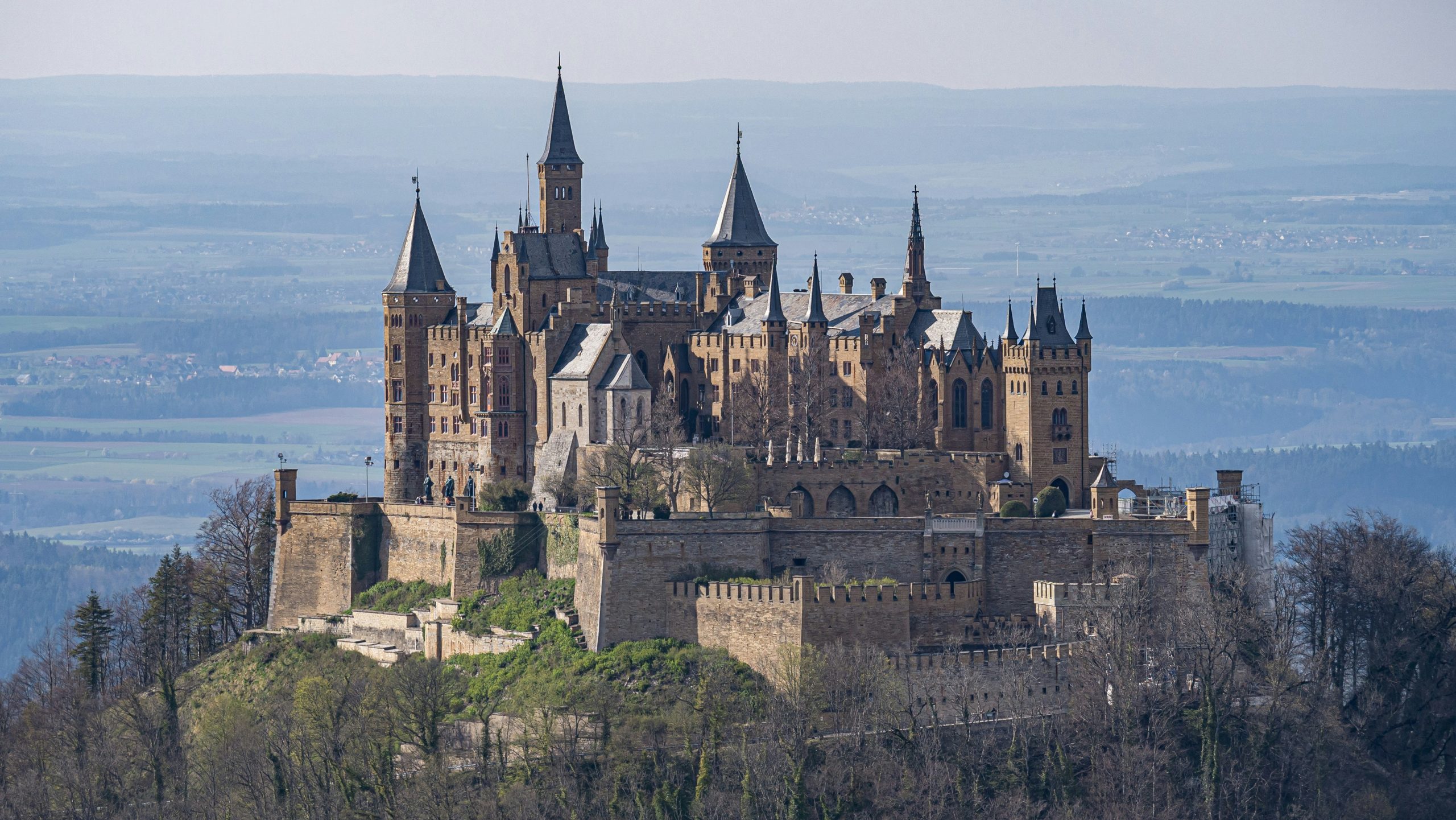
Hohenzollern Castle is one of the most dramatic hilltop castles in southern Germany, and for most travelers in southwest Germany it is worth visiting if the weather cooperates. Known in German as Burg Hohenzollern, it sits at 855 metres on an isolated spur in the Swabian Alps, roughly 50 kilometres south of Stuttgart, and was rebuilt in the 19th century as the ancestral seat of the House of Hohenzollern, the dynasty that produced the Prussian kings and German emperors.
This guide focuses on the practical decisions that matter before arriving: how to get there, what the tickets actually include, which parts of the interior are worth prioritising, and how Hohenzollern Castle compares to other major castles in Germany.
The exterior setting and hilltop silhouette are the headline attraction. The interior is worthwhile, but secondary.
Hohenzollern Castle at a Glance
| Detail | Information |
|---|---|
| Location | Hechingen, Baden-Württemberg (approx. 4 km from town center) |
| Elevation | 855 metres above sea level |
| Opening Hours | Seasonal; generally 10:00–17:30 (winter) and 09:00–18:00 (summer) |
| Adult Ticket (Grounds) | Approx. €12 |
| Adult Ticket (With Interior Tour) | Approx. €22–24 |
| Guided Tour Language | German; English audio guides available |
| Average Visit Duration | 2–3 hours |
| Nearest Town | Hechingen |
| Parking | Parkplatz Burg Hohenzollern at base of hill (paid) |
| Best Season | May, June, September |
| Ownership | Privately owned by the House of Hohenzollern |
Hours and prices change seasonally. Travelers should verify current details on the official Hohenzollern Castle website before visiting.
If you are deciding whether Hohenzollern Castle is worth the detour, the answer is yes for travelers already in southwest Germany who value dramatic settings, panoramic views, and Prussian history. The strongest reasons to visit are the approach, the exterior terraces, and the hilltop position itself. The interior is good enough to justify the higher ticket tier if you are interested in dynastic history, but it is not the main draw.
How to Get to Hohenzollern Castle
Hohenzollern Castle is not a casual stop. It requires a deliberate detour and works best as a half-day destination rather than a quick add-on. For most travelers, driving is the simplest option.
By car is the most straightforward option. The closest town is Hechingen, approximately 4 kilometres from the base of the hill. The Parkplatz Burg Hohenzollern sits at the bottom of the approach road and is the standard starting point for the visit. The car park fills quickly on weekends and during July and August. Arriving before 9:30am or after 3:00pm significantly reduces the chance of queuing for a space.
By shuttle from the car park, a paid bus runs to a drop-off point below the castle entrance. The shuttle does not reach the courtyard gate, so some uphill walking remains. Visitors should expect a short but moderately steep final stretch on foot regardless of whether they take the shuttle.
On foot from Hechingen, a marked hiking path climbs to the castle in roughly 45 to 60 minutes one way. The gradient is manageable for reasonably fit travelers and the path is well-maintained. It connects to longer trails in the Swabian Alps for those building a walking day around the visit.
By public transport, the castle is reachable from Stuttgart or Tübingen via regional train to Hechingen, followed by a local bus or taxi to the car park. Public transport connections to the castle base are limited and infrequent. Travelers relying on buses should check schedules carefully in advance, as connections can involve significant waiting time.
The Approach: What to Expect Before Reaching the Gate
The experience of approaching Hohenzollern Castle begins well before the entrance.
The castle’s layered silhouette is visible from the B27 road as travelers drive through the surrounding landscape. This view, with the towers rising above the forested hillside, is one of the most photographed angles and is worth slowing down to take in. Some visitors stop at roadside pullouts on the approach specifically for exterior photography.
The best exterior photographs usually come either from the road approach before arrival or from the southwest terraces once inside the grounds. Travelers who wait until they are fully inside the courtyard often miss the strongest silhouette angles.
The final approach on foot, whether from the shuttle drop-off or the hiking path, passes through wooded switchbacks. It does not feel immediately dramatic. The path opens suddenly at the gatehouse, which creates a more striking transition than a gradual reveal.
Unlike Neuschwanstein, there are no souvenir shops, visitor facilities, or tour buses crowding the base of the hill. The forested slopes around Hohenzollern Castle give the setting an isolated character that most visitors find preferable.
Tickets, Tours, and What Access Actually Gets You
Hohenzollern Castle operates a two-tier access system that travelers should understand before arriving.
A basic ticket covers the castle grounds and courtyard, including the exterior terraces, the courtyard café and restaurant, and the views from the outer ramparts. This is sufficient for travelers who are primarily visiting for the exterior setting and landscape views.
Access to the interior, including the royal apartments, the Hohenzollern treasury, and the chapel, requires a guided tour or a higher-tier ticket.
Guided tours are conducted in German. English audio guides and printed translations are available for non-German speakers. The audio guide covers the main interior spaces and is adequate for following the tour without German language knowledge, though the experience is naturally more fluid for German speakers.
Tour slots fill quickly in summer. Pre-booking online is strongly recommended for any weekend visit between May and October. Walk-in availability exists on weekdays outside peak season but cannot be relied upon during busy periods.
The grounds-only ticket is a reasonable choice for travelers with limited time, limited budget, or a primary interest in photography and views. For everyone else, the interior upgrade usually makes sense, mainly because the chapel and treasury add enough historical substance to justify the higher ticket price.
Key Highlights Inside Hohenzollern Castle
The interior is a 19th-century reconstruction, not a preserved medieval space. Travelers expecting the atmosphere of an ancient castle will need to recalibrate expectations. What the interior offers instead is a well-maintained dynastic showpiece with genuine historical artifacts.
The Chapel
The chapel is the strongest interior space for most visitors. It is neo-Gothic in style and contains original medieval stained glass that was relocated here during the castle’s 19th-century rebuild. The quality of the glass and the overall composition of the space make it the single most rewarding room on the guided tour. Visitors with limited time should prioritise this above other interior stops.
The Hohenzollern Treasury
The treasury holds items tied directly to Prussian royal history: military decorations, personal effects of the Hohenzollern family, and royal regalia including the crown of Wilhelm II. The collection is relevant and well-presented for anyone with prior interest in German imperial history. For general visitors without that context, parts of the treasury may feel overly specific.
The Royal Apartments
The apartments are restored to a 19th-century aesthetic. This is a deliberate presentation of dynastic identity rather than a window into medieval daily life. Visitors who understand this framing will find the rooms coherent. Those expecting rough stone interiors and period furniture from the Middle Ages will be disappointed.
What to Skip If Time Is Short
If time is limited, focus on the approach, the courtyard, the southwest terrace, the chapel, and the treasury. Secondary rooms centered on genealogy and family portraiture add less value unless you already have a strong interest in the Hohenzollern dynasty.
Travelers visiting mainly for the hilltop setting and photographs can skip the interior entirely and still have a worthwhile experience.
Views from Hohenzollern Castle and When They Deliver
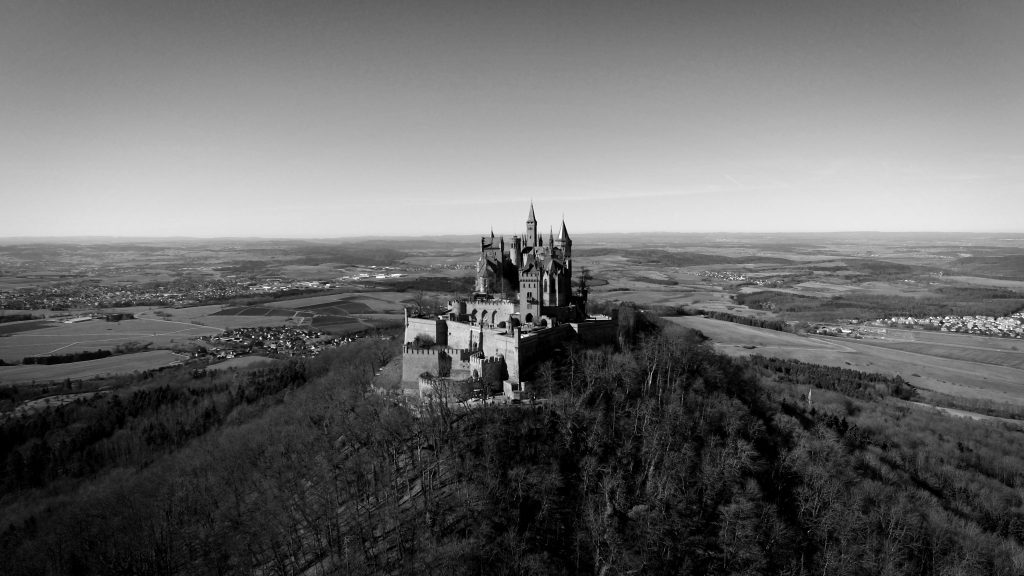
The views are one of the main reasons to visit Hohenzollern Castle. On a clear day, the Swabian Alps spread to the south and the surrounding highlands open out in every direction. The castle’s isolated hilltop position is what gives it its dramatic appeal, and that appeal depends heavily on visibility.
The main drawback is visibility. The castle sits in a region prone to low cloud and morning mist, particularly in autumn and winter. This can work in the visit’s favor aesthetically, but it can also eliminate the view entirely. Travelers visiting specifically for the landscape should check forecasts carefully.
Best conditions for views: late spring and early autumn on clear mornings before midday cloud build-up. Summer weekdays before 11:00am also tend to offer clear conditions before afternoon haze develops.
The southwest terrace is the most rewarding viewpoint on the castle grounds. The northern side is partially obstructed by tree cover and offers a less complete panorama.
Evening visits are not a standard option. The castle is not floodlit for public viewing, and the site closes in the late afternoon or early evening depending on season.
Hohenzollern vs. Other German Castles: How to Prioritize
This comparison is aimed at travelers choosing between castle visits on a limited itinerary.
Hohenzollern Castle vs. Neuschwanstein
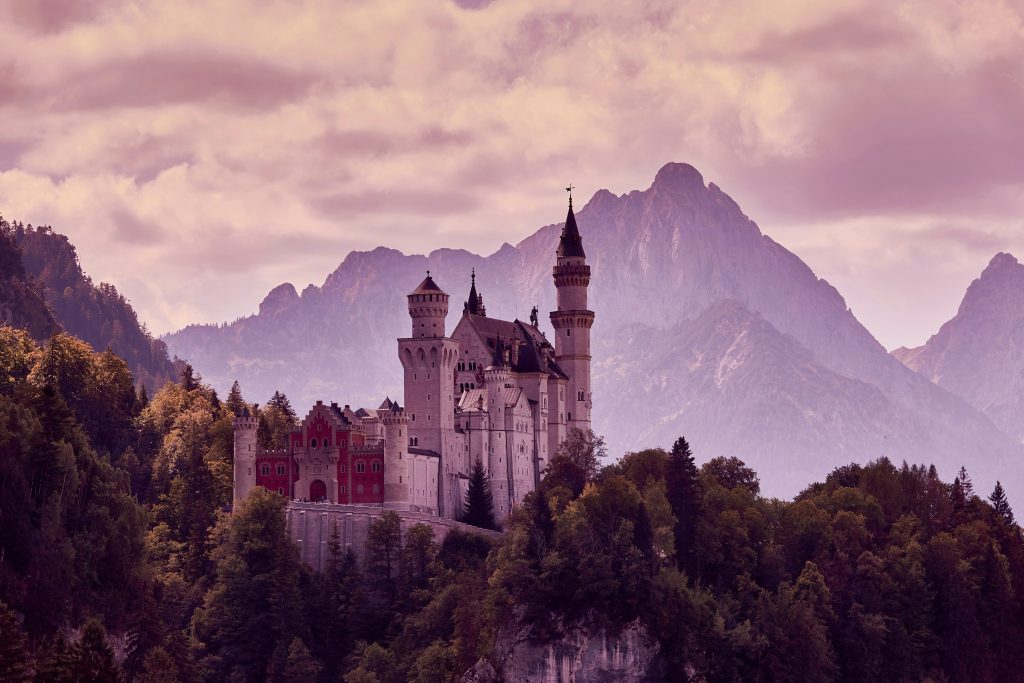
Neuschwanstein is more famous and its interior is more theatrically elaborate, with rooms designed by a stage designer on the instruction of Ludwig II. However, visitor numbers at Neuschwanstein are significantly higher, logistics are more complex, and the surrounding area at Schwangau is considerably more commercialized. Hohenzollern Castle offers a comparable hilltop drama with far fewer visitors and a more historically grounded presentation. It is a better choice for travelers focused on dynastic history rather than fairy-tale architecture.
Travelers comparing multiple major castle stops should also see the broader guide to castles in Germany.
Hohenzollern Castle vs. Burg Eltz

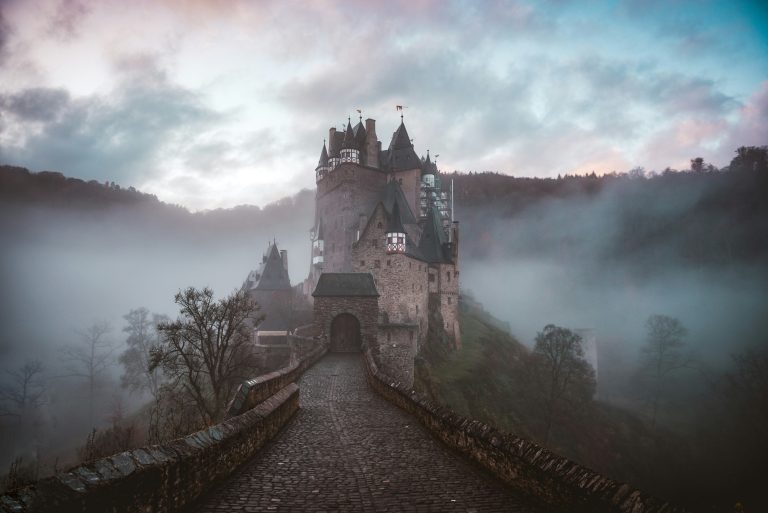
Burg Eltz, in the Moselle region, is arguably the more atmospheric medieval castle in Germany. Its interior is genuinely preserved rather than reconstructed, and the approach through a forested valley is widely considered one of the most striking castle approaches in the country. Travelers prioritising authentic medieval architecture and atmosphere will likely prefer Burg Eltz. The two castles are in different regions and serve different itinerary needs. Visiting both is feasible on a longer Germany trip but not practical as a day combination.
Hohenzollern Castle vs. Heidelberg Castle
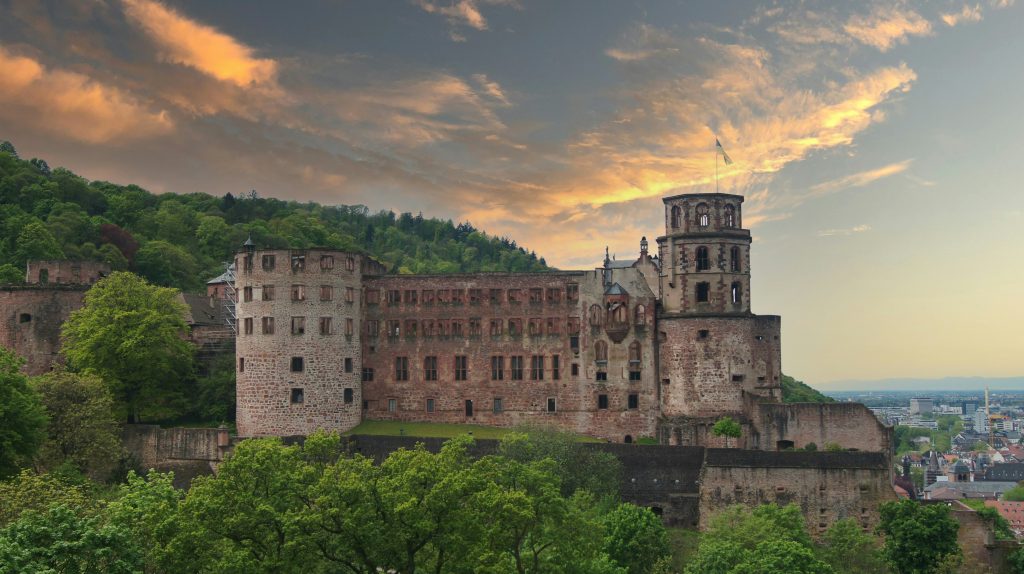
Heidelberg Castle is more accessible, sits directly above a city with substantial independent appeal, and is easily combined with a full Heidelberg day. Hohenzollern requires a dedicated visit and is more remote. The comparison is not direct. Travelers based in Stuttgart or Tübingen will find Hohenzollern more convenient; those passing through Heidelberg have no practical reason to detour south for it.
Bottom line: Hohenzollern Castle is best for travelers in southwest Germany who care about setting, views, and Prussian dynastic history. It is not the single essential castle visit in Germany, but it earns its place on a longer itinerary and usually performs best when travelers arrive knowing that the exterior setting matters more than the interior.
Planning Your Visit: Timing, Crowds, and Practical Logistics
Best months to visit are May, June, and September. These months offer reliable weather, manageable visitor numbers, and good visibility for the surrounding landscape. July and August bring peak congestion at the car park and on guided tours.
Weekday visits are significantly quieter than weekends throughout the year.
- Recommended minimum time on site: 2 hours for the grounds and one guided interior tour. Allow 3 hours if including the full interior visit, a stop at the café or terrace, and time to walk the exterior ramparts properly.
- The castle café and restaurant are inside the courtyard and are popular at peak times. Queues can develop during midday on busy weekends. This is not a reason to avoid them, but visitors should factor timing into their plan.
- Accessibility: the shuttle from the car park reduces the walking distance considerably but does not eliminate uphill sections entirely. The interior has narrow stairs and uneven stone surfaces throughout. It is not well-suited to visitors with significant mobility limitations.
- Photography: tripods are not permitted inside the castle. Exterior photography is unrestricted, and the grounds offer multiple viewpoints worth using. Interior handheld photography is generally permitted but visitors should confirm current rules at the ticket desk, as policies on privately owned castles can change.
Making the Most of a Half-Day at Hohenzollern Castle
A well-planned visit to Hohenzollern Castle fits comfortably into half a day and still leaves room for a second stop in the region.
The most effective structure is simple: arrive before 10:00am, secure parking before the main rush, take in the exterior approach and southwest viewpoint first, then join a pre-booked interior tour in the late morning. After that, use the courtyard and café as a natural pause before heading back down.
The castle’s strongest assets are its setting, its silhouette, and the coherence of its Prussian historical presentation. Visitors who arrive expecting a medieval fortress will find a 19th-century dynastic reconstruction. Visitors who arrive expecting one of the most visually arresting hilltop positions in southern Germany will not be disappointed.
For a full day in the region, Hohenzollern pairs well with Hechingen town (30 minutes on foot from the castle car park area, with the nearby Roman villa Borg as an additional stop) or Tübingen, approximately 45 minutes by car, which offers a well-preserved medieval old town and a worthwhile afternoon.
Travelers planning a weekend visit between May and October should book interior tour tickets online before the trip. Walk-in tour availability on busy days is not guaranteed.
For travelers extending the trip beyond a single castle stop, Hohenzollern also fits naturally into a broader Black Forest itinerary or a southern Germany road trip.