Visiting Wartburg Castle in Eisenach, Germany
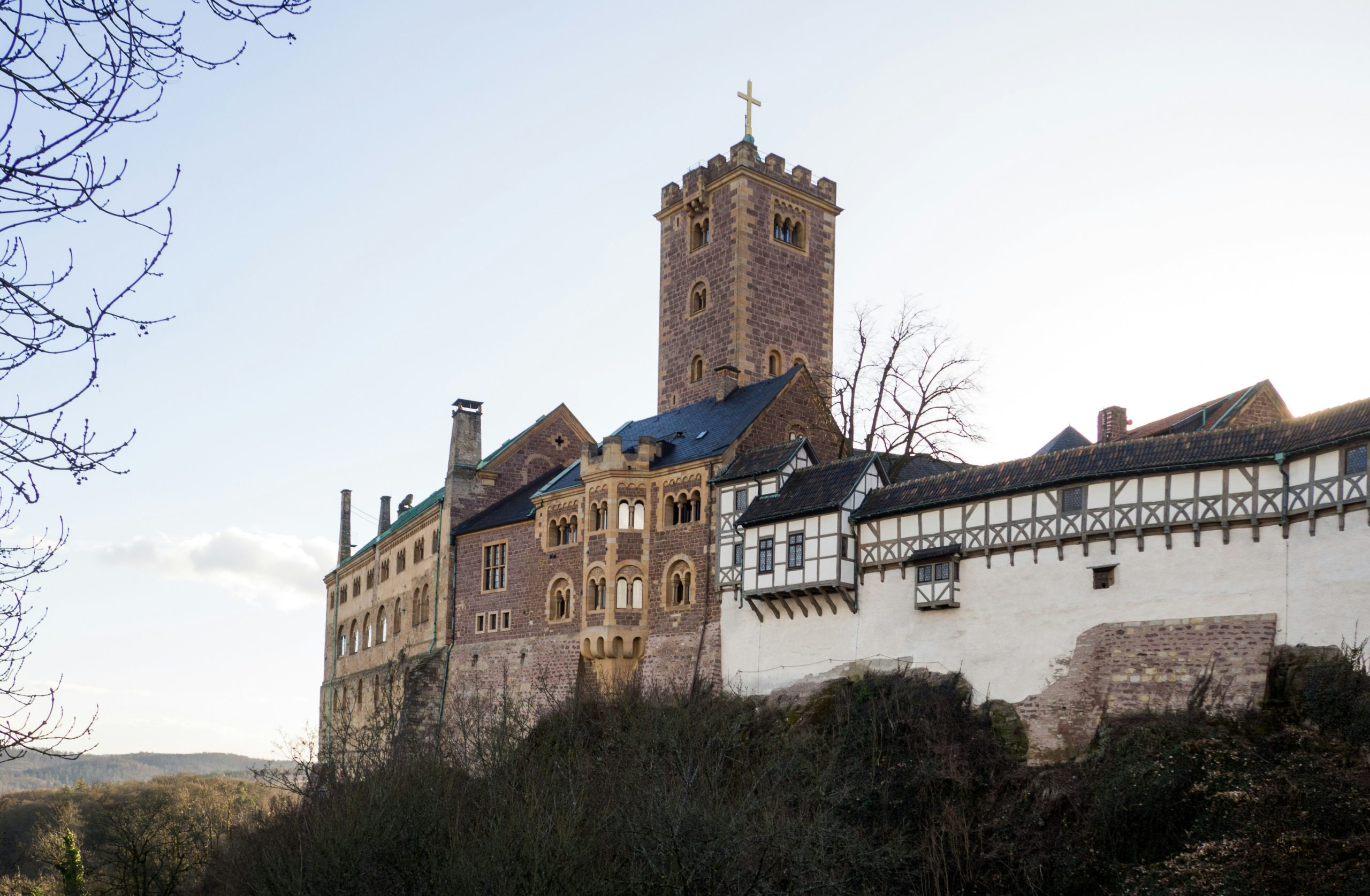
Wartburg Castle is one of the most historically important castles in Germany, and it is worth visiting for travelers interested in Reformation history, medieval architecture, or German cultural heritage.
Located above Eisenach in Thuringia, Wartburg Castle is a UNESCO World Heritage Site with authentic medieval fabric, strong ties to Martin Luther, and one of the clearest links between a German castle and broader European history.
This guide covers what to expect, how to get there, what the visit involves, and who will get the most out of it.
Quick Reference: Key Facts at a Glance
| Detail | Information |
|---|---|
| Location | Wartburg Castle, Eisenach, Thuringia, Germany |
| UNESCO Status | Inscribed 1999 |
| Opening Hours | Approx. 8:30am–5pm (winter); 8:30am–8pm (summer); confirm before visiting |
| Ticket Price | Adults approx. €12–14; concessions and children lower; check official site |
| Guided Tours | Required for interior; German and English options available |
| Time Needed | 2.5–3 hours minimum |
| Getting There | 30–40 min walk from Eisenach town center; shuttle available seasonally |
| Best For | History travelers, Reformation-trail visitors, architecture enthusiasts |
Prices and hours are approximate and subject to change. Always confirm current details at wartburg.de before your visit.
Wartburg Castle is best for travelers who care about history more than spectacle. The castle is most famous as the place where Martin Luther translated the New Testament into German, but it also has major medieval, religious, and national-cultural significance. Plan at least 2.5 to 3 hours for the visit, and expect a guided interior tour rather than a free-roaming castle experience.
Why Wartburg Castle Matters Historically
Wartburg Castle was founded in 1067 by Ludwig the Springer, a Thuringian nobleman. It served for centuries as the seat of the Ludowingian landgraves, making it a genuine center of medieval political and cultural life.
This is not a reconstructed tourist castle. Much of what visitors see today reflects the actual built fabric of the medieval site, which is central to understanding why it carries the weight it does.
The castle is associated with three distinct and significant periods in German history.
St. Elisabeth of Hungary lived at Wartburg Castle in the early 13th century. She was later canonized, and the castle remains a site of quiet religious significance alongside its secular history. Visitors encounter her story throughout the guided tour, particularly in the Elisabeth Gallery.
Martin Luther is the figure most closely associated with Wartburg Castle today. Following his excommunication and condemnation at the Diet of Worms in 1521, Luther was given refuge here under the alias Junker Jörg by Frederick the Wise, Elector of Saxony. During roughly ten months in hiding, he translated the New Testament into German. That translation shaped the development of the modern German language and remains one of the most consequential acts of the Reformation.
The castle also played a role in 19th-century German nationalism. The 1817 Wartburg Festival, attended by student associations from across the German states, used the castle as a symbolic backdrop for calls for political unity and reform. Its influence on Romantic-era thinking extended further still, directly inspiring the design of Neuschwanstein and other later castle projects.
UNESCO World Heritage Status
Wartburg Castle received UNESCO World Heritage designation in 1999. The inscription recognized the castle’s authenticity, its historical integrity across multiple centuries, and its outstanding cultural significance in European history.
What makes this designation meaningful in practical terms is that Wartburg Castle retains substantial original medieval construction. Unlike many German castles that were heavily rebuilt or romantically reimagined in the 19th century, the core structure here reflects genuine continuity from the medieval period.
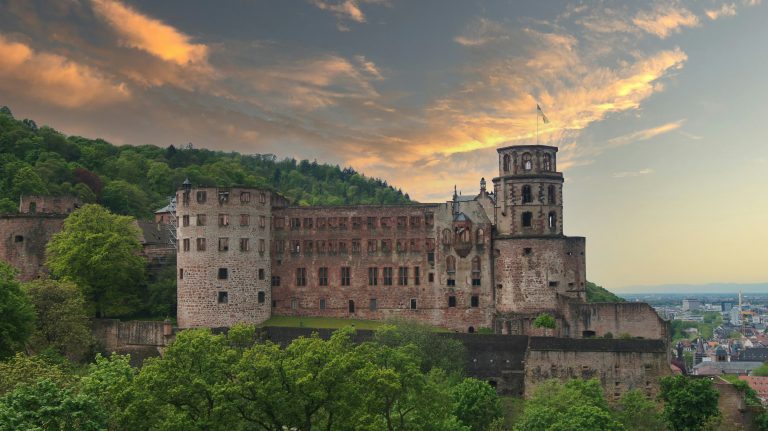
For comparison: Neuschwanstein, one of Germany’s most visited castles, was constructed entirely in the 1880s as a royal fantasy project. Heidelberg Castle, though partially ruined, involved significant later construction phases. Wartburg Castle’s relationship with its own history is more direct and less mediated.
UNESCO status also signals why visitor access is managed carefully. The castle prioritizes preservation alongside access, which means tour group sizes, interior conditions, and access to certain areas can vary seasonally.
Getting to Wartburg Castle from Eisenach
Wartburg Castle sits on a forested hill above Eisenach. Visitors cannot drive directly to the castle gate. This is a logistics point that catches some travelers off guard.
There are three practical access options:
- On foot: The walk from Eisenach town center takes approximately 30–40 minutes. The path is well-marked and passes through forest, but involves a sustained uphill section. Suitable for most reasonably fit visitors.
- Shuttle bus: A seasonal shuttle runs from a lower parking area or the town center. Schedules vary by season and year. Check the official Wartburg website for current timetable information before arriving.
- By car: Drivers can reach a parking area below the castle. From there, it is either a short uphill walk or a shuttle ride to the main gate. Driving to the castle entrance itself is not permitted.
Eisenach is straightforward to reach by train. From Erfurt, the journey takes approximately 30 minutes. From Frankfurt, the trip is under two hours. Both make Eisenach workable as a day trip, though an overnight stay allows more time for the town itself.
Travelers combining Wartburg Castle with the Bach House (Johann Sebastian Bach was born in Eisenach) or the old town should plan for a full day. The castle alone warrants at least half a day.
Tickets, Tours, and Opening Hours
Ticket prices for adults run approximately €12–14 at the time of writing. Concession and child rates are lower. Prices are subject to change and should be confirmed at wartburg.de before visiting.
Interior access requires a guided tour. This is not optional. The standard ticket includes the tour, which covers the main historic rooms of the Palas and the Luther sections. Self-guided exploration is limited to the outer courtyard, the approach path, and the castle exterior.
English-language tours run at set times, typically with fewer daily slots than German tours. International visitors should check the schedule in advance and arrive early during summer weekends. Missing the English tour can mean waiting several hours for the next one.
Opening hours follow a seasonal pattern. The castle is generally open year-round, with shorter hours in winter (roughly 8:30am–5pm) and extended hours in summer (roughly 8:30am–8pm). The grounds typically open before tour times begin, which allows time for exterior photography and courtyard exploration on arrival.
Crowd levels are highest on summer weekends and public holidays. Midweek morning visits are noticeably quieter and make for a more comfortable experience overall.
What to See Inside Wartburg Castle
The guided tour covers the castle’s primary interior spaces. Visitors should come prepared for a structured walk through historic rooms rather than a free-form exploration.
The Palas (Great Hall)
The Palas is the main residential palace building, dating to the 12th century. It contains some of the most intact Romanesque architecture remaining anywhere in Germany. The Knights’ Hall and the Landgrave’s Hall are the standout spaces: high-ceilinged, stone-vaulted rooms that convey the scale of the medieval court. For visitors interested in architecture, this is the section that most rewards close attention.
Luther’s Room (Lutherstube)
The Lutherstube is small and deliberately plain. Visitors see the desk at which Luther worked during his months in hiding, along with the famous inkstain on the wall, widely thought to be apocryphal but retained as part of the site’s history. The room tends to be the emotional and historical center of the tour for most visitors. It is modest in scale but significant in context, and guides typically spend more time here than anywhere else.
The Elisabeth Gallery
The Elisabeth Gallery features 19th-century mosaics depicting scenes from St. Elisabeth’s life. The mosaics are a Victorian-era addition rather than medieval originals, which is worth knowing in advance. They serve as useful context for understanding the castle’s layered significance across different centuries and traditions.
The Museum Collection
Wartburg Castle holds a collection of medieval art, armor, religious objects, and Reformation-era materials that many visitors underestimate. The quality and depth of the collection often comes as a surprise to those who arrive focused primarily on the architecture. Travelers with an interest in medieval material culture should allow extra time here.
Accessibility note: Several sections of the interior tour involve stairs and uneven stone surfaces. The castle is not fully accessible for visitors with significant mobility limitations. The outer courtyard and grounds are more manageable.
The Grounds, Views, and What to Do Outside the Tour
The outer courtyard is accessible before and after the guided tour. Visitors can walk the approach path, examine the gatehouse, look at the medieval well at the center of the courtyard, and move along the outer walls at their own pace.
The viewpoints from the castle terrace and walls are worth prioritizing. On clear days, views extend across the Thuringian Forest and toward the Hörselberge hills to the west. The outlook is broad rather than dramatic, but it gives useful geographic context for the castle’s strategic position.
For visitors who arrive before tour times, short walking trails in the surrounding forested hillside offer alternative viewpoints and a quieter experience than the main courtyard. The forest approach itself gives a reasonable sense of how the castle would have appeared to anyone approaching it historically.
There is an on-site café and a souvenir shop. Both are serviceable. Neither is a reason to extend the visit.
How Much Time to Plan and Who It’s Best Suited For
A comfortable visit to Wartburg Castle takes 2.5 to 3 hours, covering the guided tour, the museum collection, the grounds, and the views. Visitors combining the castle with Eisenach’s town center or the Bach House should plan for a full day.
This visit works best for:
- Travelers with an interest in the Protestant Reformation and Martin Luther’s life
- Anyone following the Luther Trail (Lutherweg), the marked long-distance route connecting Reformation sites across central Germany
- Visitors focused on medieval architecture and authentic historic fabric
- History travelers looking for substance over spectacle
This visit is less well-suited for:
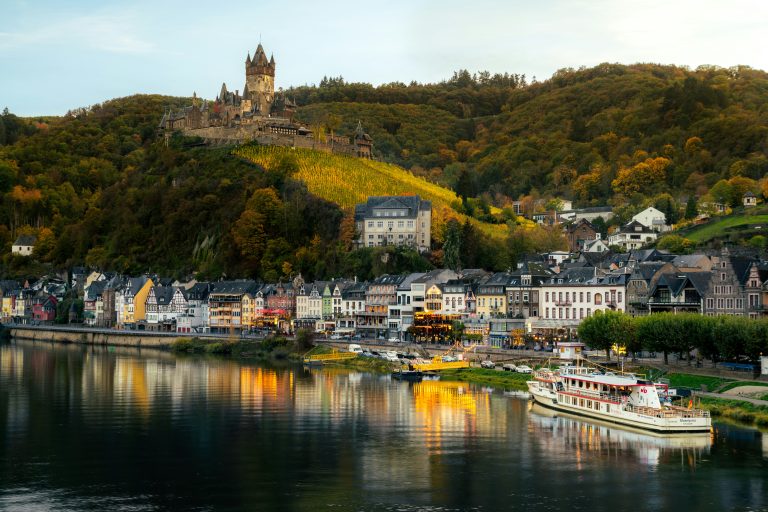
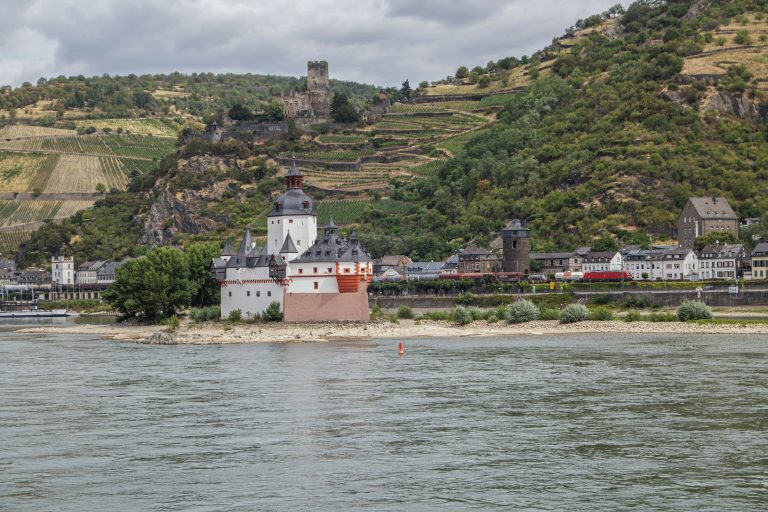
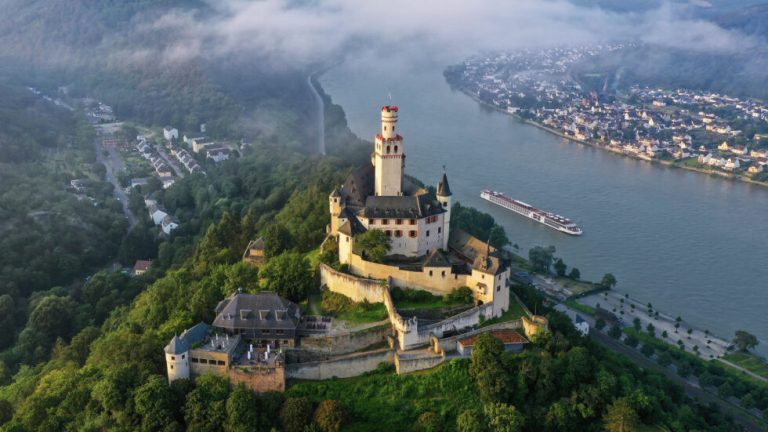
- Travelers primarily seeking dramatic castle exteriors or Rhine Valley-style hilltop aesthetics; other sites, such as Rheinfels, Marksburg, or Burg Eltz, offer more in that regard
- Very young children, given the guided format, extended standing, and staircase-heavy interior
- Visitors with significant mobility limitations, particularly for the interior tour
Wartburg Castle fits naturally into a broader Thuringia itinerary. Erfurt, with its intact medieval old town, is 30 minutes by train. Weimar, known for its Goethe and Schiller connections and its own UNESCO status, is accessible within the hour. The Thuringian Forest begins immediately south of Eisenach for those adding hiking days.
Travelers comparing major historic castles should also see the broader guide to castles in Germany.
Putting Wartburg Castle on Your Germany Itinerary
Wartburg Castle works best as the anchor of a Thuringia-focused stop rather than as a random castle detour. Erfurt, Weimar, Eisenach, and the Thuringian Forest all combine well with the visit and give the region more context.
For travelers following the Luther Trail, Wartburg Castle is one of the most important stops. For travelers focused on castles more broadly, it offers something different from the Rhine or Bavaria: less spectacle, more historical substance.
That is the reason to visit. Wartburg Castle earns its place not because it is the most dramatic castle in Germany, but because few castle sites connect architecture, religion, language, and national history so clearly.