Hidden Gems in Hamburg for Food, Culture, and Local Life
Hamburg hidden gems are less about secret landmarks and more about knowing which neighborhoods, markets, waterways, and cultural spaces are actually worth your time beyond the standard visitor circuit. This guide focuses on the parts of Hamburg that feel more local, less staged, and easier to appreciate once you step away from the Reeperbahn, HafenCity, and the main sightseeing loop.
Finding the less-visited side of Hamburg does not require much effort. It requires knowing which streets, districts, and smaller detours to prioritize before arriving.
This guide is organized by theme — neighborhoods, food, culture, waterways, shopping, and unusual activities — so readers can navigate based on what they actually care about.
| Theme | What to Expect |
|---|---|
| Quieter neighborhoods | Ottensen, Eppendorf, Karolinenviertel |
| Hidden food spots | Isemarkt, canal-adjacent cafés, lunch-focused kitchens |
| Unusual cultural attractions | Museum der Arbeit, Oberhafenquartier, independent galleries |
| Canalside walks | Eilbekkanal, Winterhude, Uhlenhorst waterways |
| Independent shops and markets | Flohschanze, Grindel district, Karolinenviertel retail |
| Unusual activities | Laeiszhalle, Altonaer Balkon, Hamburg Planetarium |
If you only have half a day, start with Ottensen or Karolinenviertel, add the Isemarkt if your timing lines up, and then choose either the Oberhafenquartier or a quieter canalside walk in Winterhude or Uhlenhorst. That gives a much more local version of Hamburg than the standard city-center circuit.
Hamburg’s Quieter Neighborhoods: Where to Walk Before You Eat or Drink
Ottensen is the easiest place to start for first-time visitors who want local character without much planning. It still feels lived-in rather than overly polished, with a mix of residential streets, independent businesses, and smaller food spots that do not depend on tourism.
Sternschanze is still worth walking, but it is less of a true hidden gem than it once was. Weekend afternoons can feel crowded enough that some of the local atmosphere gets diluted. Karolinenviertel is the quieter and often better choice for travelers who want a similar independent feel without as much foot traffic.
Sternschanze sits nearby and has become slightly more touristed over time. It remains worth walking for its independent shops and the open square at Schanzenviertel. The main drawback is that weekend afternoons can feel noticeably crowded. Karolinenviertel, just south of Sternschanze, runs quieter and is the better choice for travelers who want a similar character without the foot traffic.
Eppendorf suits a different kind of visitor. The neighborhood offers traditional Hamburg bourgeois character — leafy residential streets, independent bakeries, and the Eppendorfer Markt. Visitors who find Sternschanze too urban in feel tend to respond better to Eppendorf.
These three areas do not connect cleanly on foot. Ottensen to Eppendorf is manageable by walking but takes roughly 40 minutes. The U-Bahn is the smarter option for linking multiple neighborhoods in a single day.
This section suits slower-paced travelers with a half or full day to wander. It is not well-suited to visitors on a short city stopover with a packed itinerary.
Hidden Food Spots: Neighborhood Cafés, Market Stalls, and Under-the-Radar Kitchens
The most useful approach to finding local food in Hamburg is to look for types of places rather than specific names. Small neighborhood bakeries attached to residential streets in Ottensen, breakfast cafés in Eimsbüttel, and Vietnamese lunch spots in Sternschanze represent the general category of what is there.
Hamburg’s hidden food scene works best at lunch or late morning. Many of the smaller, locally oriented spots do not carry through to dinner service. Travelers expecting the same flexibility they would find in a larger city’s food scene may find the hours restrictive.
The Isemarkt
The Isemarkt is one of the better local markets in northern Germany and operates almost entirely off the tourist radar. It runs twice weekly — Tuesdays and Fridays — under the U-Bahn viaduct between Eppendorf and Harvestehude.
The market carries produce, cheese, bread, fish, and prepared food. It draws an almost exclusively local crowd. Visitors who plan around it tend to rate it as one of the stronger experiences available in Hamburg.
Beyond the Alster lakefront (which most visitors already know), there is a quieter café culture along the narrower Fleete that cut through residential areas in the northern districts. These canal-adjacent spots are lower-key and less visible than anything near the waterfront but function as a more representative version of daily Hamburg life.
For a broader view of where to eat across the city, see the guide to the best restaurants in Hamburg by neighborhood.
Unusual Cultural Attractions: Secret Spots in Hamburg Most Visitors Miss
The Museum der Arbeit in Barmbek is one of the strongest hidden cultural picks in Hamburg. It gives a clearer sense of the city’s working-class and industrial identity than most of the central museum circuit, and it remains almost entirely absent from typical visitor itineraries.
The Speicherstadt warehouse district is well-known, but most visitors follow the same photography loop through the northern half. The southern end carries a different character. A handful of independent cultural spaces operate in former storage buildings in this area, and they are significantly less crowded than the main canal sections.
The Oberhafenquartier
The Oberhafenquartier is the cluster of creative studios and exhibition spaces occupying repurposed rail buildings near the Deichtorhallen. It is worth finding for visitors with an interest in contemporary art and urban reuse.
It is consistently missed because it sits slightly outside the main Speicherstadt pedestrian loop. Reaching it requires a deliberate five-minute detour from the main path. That detour is why it remains a genuine local spot in Hamburg rather than a standard stop.
The Galerie der Gegenwart at the Kunsthalle is worth knowing about, but the smaller independent gallery spaces in Karolinenviertel show emerging local and international work with no entry cost. For visitors who find the main museum trail too conventional, these spaces are the more useful option.
Hamburg’s cultural calendar is inconsistent for travelers. Several of these spaces have limited hours or close on Mondays. Checking ahead is non-negotiable for this category of visit.
Canalside Walks and Quieter Waterfront Areas
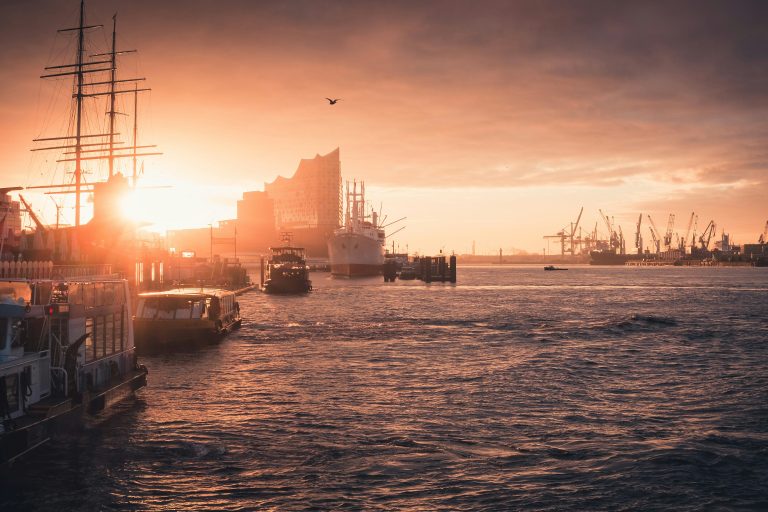
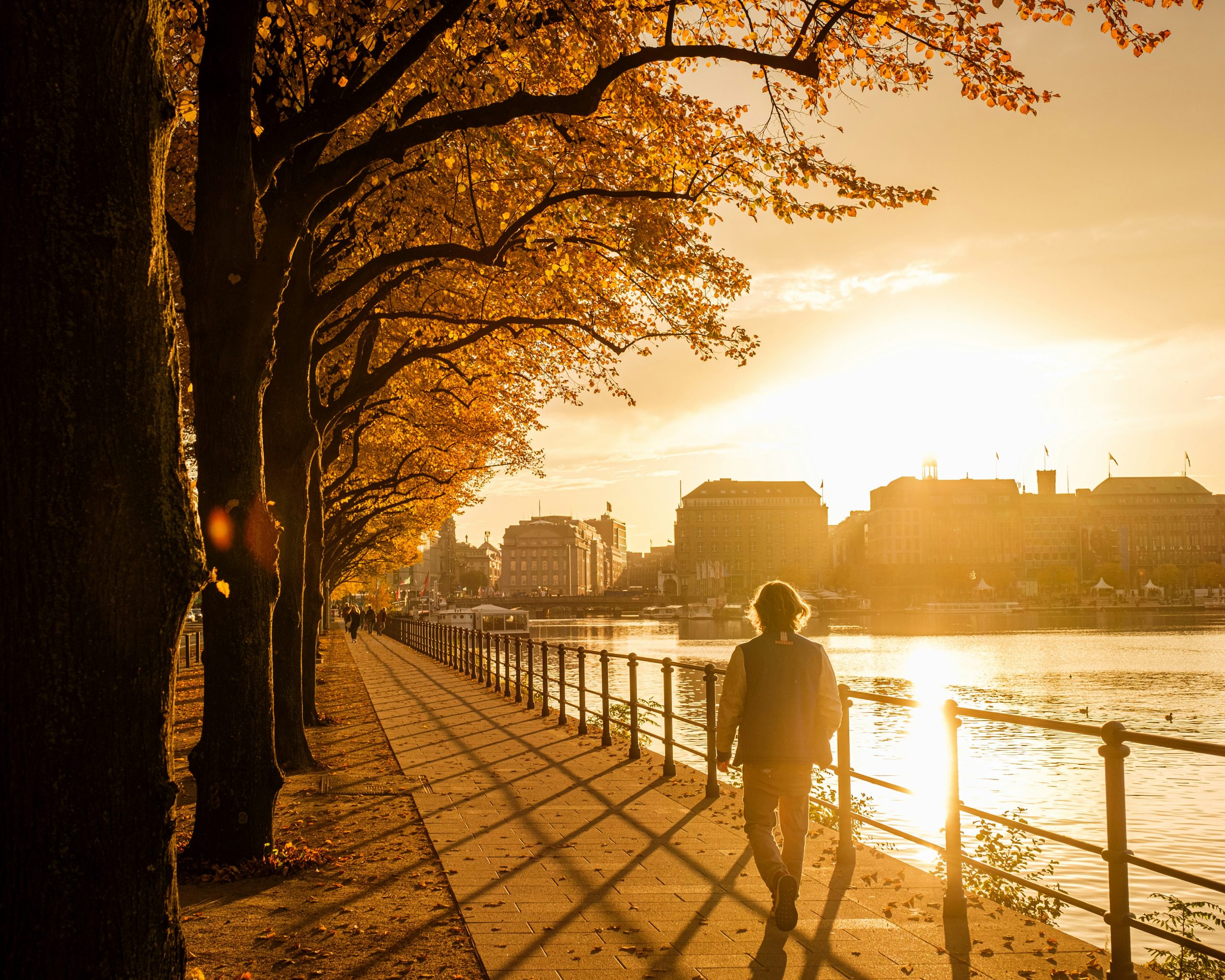
Hamburg’s water identity extends far beyond the Alster and the main harbor. Some of the most rewarding quiet walks are along the smaller canals and waterways in residential districts such as Winterhude, Uhlenhorst, and the Eilbekkanal corridor.
The Mundsburg canal area and the walking path along the Eilbekkanal are genuinely quiet alternatives to the Binnenalster promenade. These routes run through residential neighborhoods and carry almost no tourist foot traffic.
These walks work best from late spring through early autumn. Winter light is limited and some paths become less accessible depending on conditions.
For a lower-key alternative to the organized Alster boat tours, smaller operators near Winterhude rent kayaks and paddleboats. The experience is more independent and significantly less structured.
Independent Shops and Local Markets Worth Finding
Ottensen and Karolinenviertel carry the strongest concentration of independent retail in Hamburg. The character of what is available runs toward vintage homeware, small-press bookshops, locally made clothing, and art print shops. The value here comes less from individual shop names and more from knowing which streets and districts are worth wandering slowly.
The Flohschanze vs. the Fischmarkt
The Flohschanze flea market, held on weekends at Schanzenviertel, is significantly better for actual secondhand finds than the famous Fischmarkt. The Fischmarkt has shifted toward tourist-oriented goods over time and no longer reflects the same local character it once had.
The streets around Lippmannstraße and the side streets feeding into the Grindel district are worth including in any half-day in this part of the city. The area also carries a strong café culture connected to the nearby university.
There is a practical constraint worth flagging: most of Hamburg’s independent shops are closed on Sundays. Saturday morning is the optimal window for combining market visits and shop browsing in the same neighborhood.
Sternschanze on a sunny Saturday afternoon gets crowded enough that it loses some of its local character. Earlier in the day, or a weekday visit, changes the experience substantially. This is the main tradeoff for this area.
Lesser-Known Corners of St. Pauli and Speicherstadt
Most day visitors to St. Pauli see the Reeperbahn and not much else. The streets south toward the Elbe, particularly around Antonistraße and the area flanking Wohlwillstraße, hold a quieter, more residential version of the neighborhood.
This is the part of St. Pauli that functions as a place to live rather than a place to visit.
The Lehmweg corridor and the northern edges of St. Pauli blend into Eimsbüttel and carry a mix of independent food spots, small music venues, and neighborhood bars. These feel genuinely local in a way that the main entertainment streets do not.
In Speicherstadt, the blocks adjacent to the Deichtorhallen and the Oberhafenquartier reward visitors who are willing to walk a short distance beyond the standard loop. The creative studios and exhibition spaces in the repurposed rail buildings there operate without much promotion.
The Oberhafenquartier is worth the five-minute detour from the main Speicherstadt path. Most visitors miss it not because it is difficult to reach but because it is not signposted.
For orientation across Hamburg’s districts before visiting, see the broader Hamburg travel guide for logistics, transport, and neighborhood breakdowns.
Unusual Things to Do in Hamburg That Don’t Appear on Most Lists
Several of the local spots in Hamburg that reward advance planning fall into a category that standard city guides rarely cover.
The Hamburg Planetarium in Stadtpark is one of the oldest functioning planetariums in the world. It is housed in a former water tower inside a large park that functions as a significant local gathering space on weekends. It is almost entirely unknown to visitors and requires a short U-Bahn ride from the center.
The Altonaer Balkon is a small elevated park in Altona with a direct view over the Elbe. It is used by locals as a picnic spot and almost never appears in tourist itineraries. No entry cost, no crowds on weekday afternoons.
The Laeiszhalle is Hamburg’s historic concert hall. It receives substantially less attention than the Elbphilharmonie but offers a more intimate version of the same classical music experience at lower ticket prices. For visitors who could not secure Elbphilharmonie tickets, it is a practical and worthwhile alternative.
An HSV match at the Volksparkstadion is worth considering for sports travelers. The HSV supporter culture is specific and intense. Tickets for non-premium fixtures remain reasonably priced compared to equivalent fixtures in other German cities.
This section works best for travelers who are planning ahead rather than improvising on arrival. The payoff is that these are some of the least tourist-shaped experiences in the city.
Timing Your Visit and How to Move Between These Places
Most of these spots work best across two or three focused half-days, organized by neighborhood cluster. Attempting to cover this material in a single long day of movement across the city tends to produce a rushed experience.
The U3 line connects Sternschanze, Altona, and the direction of Barmbek with minimal transfers. It is the most useful single line for reaching Hamburg hidden gems spread across the city.
The Isemarkt (Tuesdays and Fridays) and the Flohschanze (weekends) operate on specific schedules. If either is a priority, it should anchor the itinerary rather than fit around it.
One practical note: Hamburg is a large city, but many of these areas feel farther apart on a map than they are on foot. Walking between Ottensen, Karolinenviertel, and Sternschanze is realistic for most visitors.
What to Bring Back from Hamburg’s Local Side
The hidden gems in this guide are less about checking off attractions and more about changing the texture of a city visit. A quieter canal path, a market visited at the right hour, or a neighborhood that does not perform for visitors often leaves a stronger impression than another major landmark.
Some of these places will change over time. That is part of what makes them worth seeking out now.
This guide works best as a starting point, not a checklist.