Rügen or Usedom Which German Baltic Island Is Better
Rügen is usually the better choice for travelers who want varied landscapes, national park walks, and several distinct sightseeing days. Usedom is usually better for a beach-centered vacation with connected resort towns, easier car-free movement, and a simpler daily rhythm.
That is the practical answer to Rügen vs Usedom, but neither island wins every category. The right choice depends on whether the trip should feel like an active island tour or a relaxed Baltic resort stay.
Rügen suits a three-to-five-day trip built around beaches, chalk cliffs, forest, resort towns, and a few carefully selected excursions. Usedom works particularly well for travelers who want to settle into one base, walk or cycle between seaside towns, and leave room for slow beach days.
Rügen vs Usedom Quick Comparison
| Decision | Rügen | Usedom |
|---|---|---|
| Best overall use | Active island trip with varied sightseeing | Relaxed beach vacation with easy resort access |
| Strongest landscape | Chalk coast, beech forest, peninsulas, and Baltic beaches | Long beach corridor, coastal forest, and the quieter Achterland |
| Beach experience | More variety, but the best areas are spread out | More continuous and easier to use from the main resorts |
| Easiest without a car | Manageable with a carefully chosen base | Better for linking the main seaside towns by rail |
| Easiest cycling | More route variety and more uneven terrain | Better for casual resort-to-resort rides |
| Family fit | Best for families wanting different activities each day | Best for families wanting a simple beach routine |
| Best short stay | Two or three nights with one regional focus | Two or three nights in the Kaiserbäder |
| Best longer stay | Three to five nights for beaches and sightseeing | Five to seven nights for a slower coastal vacation |
| Rainy-day depth | More varied, but many headline sights still depend on suitable outdoor conditions | Adequate for one poor-weather day, weaker for a long wet spell |
| Crowd pattern | Pressure concentrates in major resorts, Jasmund, and access routes | Pressure is more continuous along the Kaiserbäder beach corridor |
| Relative cost | No consistent islandwide advantage | No consistent islandwide advantage |
| Main drawback | Longer transfers between major sights | Less variety if beach weather is poor |
Choose Rügen if chalk cliffs, forests, distinct towns, and a more active itinerary matter most. Binz, Sellin, Sassnitz, Jasmund National Park, and Mönchgut give the island several different travel experiences.
Choose Usedom if the priority is a comfortable beach base with walks, cycling, resort architecture, and easier movement between Bansin, Heringsdorf, Ahlbeck, and Świnoujście.
The difference is not absolute. Binz or Sellin can support an easy Rügen beach vacation, while Usedom can become more active through cycling, the Achterland, Peenemünde, and a Polish day trip.
Travelers who already know which island they prefer can move from comparison to planning with the Rügen island itinerary or the Usedom itinerary. The guide to Germany’s best Baltic Coast towns and beaches is more useful when the real decision is between an island and a mainland resort.
Which Island Has the Better Beaches
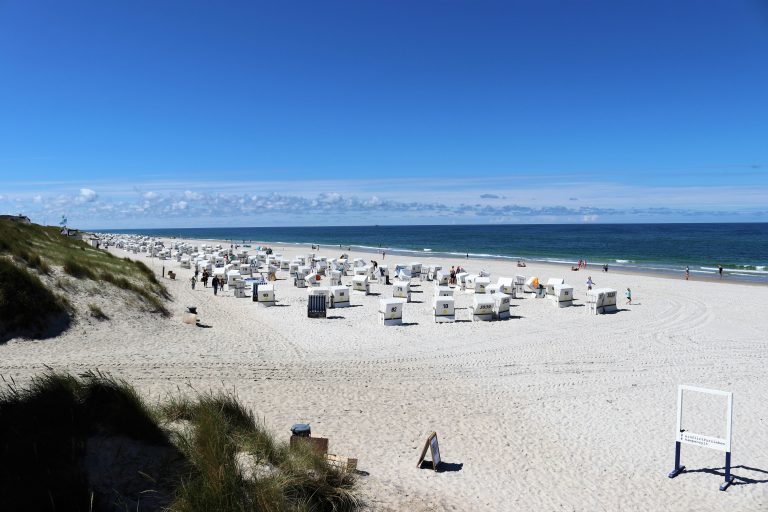
Usedom has the practical edge for a conventional beach vacation. Rügen offers more variety, but choosing the right beach and base takes more planning.
Usedom’s official tourism organization describes a 42-kilometer sandy coast. The main advantage is not the number itself. It is the way the resort towns sit along the coast.
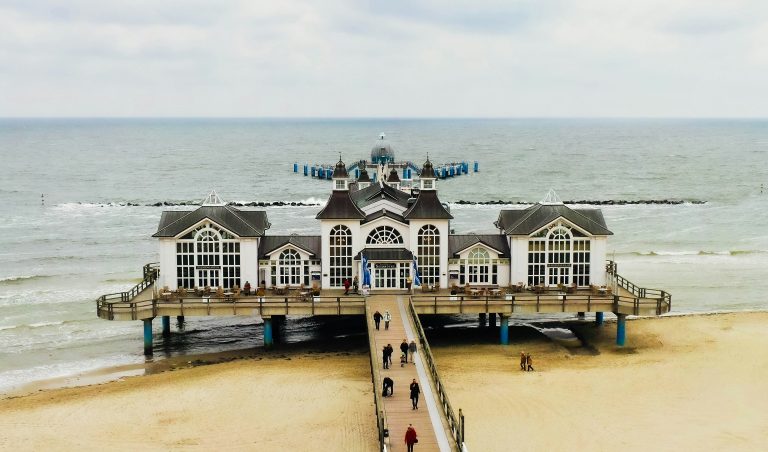
Bansin, Heringsdorf, and Ahlbeck form the Kaiserbäder corridor. Travelers can combine beach time with promenades, piers, restaurants, and resort architecture without treating every outing as a separate excursion. The Usedom resort railway also makes it easier to return to the accommodation when children need food, a bathroom, or a break.
Karlshagen and Trassenheide are worth considering for families who prefer a smaller northern-island base. Official Usedom guidance specifically points to these towns for broad beaches, nearby play options, and family-oriented infrastructure. Current lifeguard coverage and individual beach facilities still need to be checked for the travel dates.
Rügen’s beaches feel less like one connected coastal strip. Binz provides the broadest combination of beach, promenade, dining, and transportation. Sellin adds its pier and gives easier access to southeastern Rügen. Baabe and Göhren make sense for travelers focusing on Mönchgut and the Rasender Roland railway.
The Schaabe, between Glowe and Juliusruh, offers a longer, less urban beach setting. It works best with a car or a northern Rügen base. It is a poor choice for a rushed day of beach hopping from Binz if the group needs frequent facilities.
The useful distinction is simple:
- Choose Usedom for easy resort-to-resort beach days.
- Choose Rügen for beach variety and a trip that also includes major nature sights.
- Choose Binz, Sellin, or Baabe if Rügen appeals but remote beach logistics do not.
Beach rules vary by municipality and section. Visitor taxes, supervised swimming areas, dog beaches, naturist sections, accessible entrances, and beach-chair services should be checked with the local resort before arrival.
Landscapes, Sightseeing and Outdoor Activities
Rügen is the stronger island for travelers who want sightseeing variety. Usedom is better when outdoor time should revolve around beaches, promenades, and cycling.
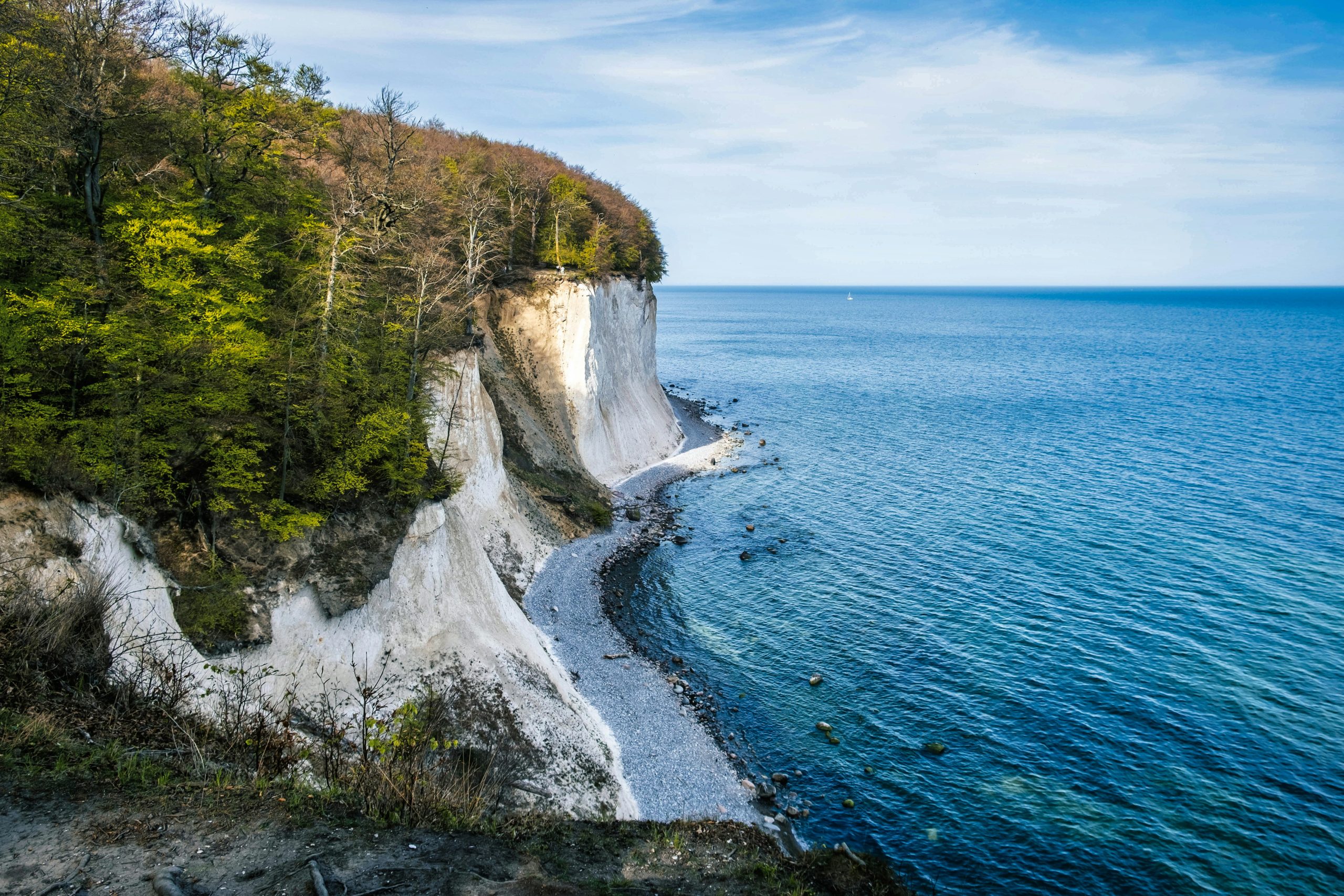
Jasmund National Park is Rügen’s defining nature experience. Its beech forest and chalk coast create a day that feels different from a normal Baltic resort visit. The official Rügen tourism site describes the clifftop route from Sassnitz to the Nationalpark-Zentrum Königsstuhl as roughly 10 kilometers and about three hours.
That full walk is not the right default for every traveler. Families with younger children, travelers with limited mobility, and anyone facing poor weather can use a shorter marked route or reach the visitor center by bus. Cars cannot drive directly to Königsstuhl, and the current arrival system uses buses from locations including Hagen and Sassnitz.
The cliff environment also requires restraint. Official guidance warns visitors to stay on marked paths and avoid walking below the chalk cliffs because slides and collapses can occur.
Beyond Jasmund, Rügen works best when the itinerary selects one additional area instead of chasing the entire island. Mönchgut combines smaller seaside towns, coastal walks, and access to the Rasender Roland. Northern Rügen brings the Schaabe and Kap Arkona area, but it adds a substantial cross-island transfer from the southeastern resorts.
Usedom’s attractions sit more naturally around a resort vacation. The Kaiserbäder provide a connected promenade, piers, beaches, and resort-era architecture. Cycling opens the quieter Achterland, where the experience shifts toward inland water, villages, and a slower rural landscape.
Peenemünde adds museums and historical context in the north. It should not be included automatically. It is a worthwhile excursion for travelers interested in twentieth-century history or needing an indoor-focused day, but it is a long detour from the Kaiserbäder for someone who primarily wants the beach.
Świnoujście creates Usedom’s clearest cross-border option. The resort railway reaches Świnoujście Centrum, and official Usedom tourism also presents the Polish city as an excursion from the German resorts. Travelers should still carry valid identification and check current rail service before departure.
What many comparisons miss is geography. Rügen has more distinct headline experiences, but they consume more travel time. Usedom has fewer dramatic changes of setting, but its main resort corridor is easier to use.
Where to Stay and How Many Days to Plan
The best base matters more on Rügen because the island’s main sights are spread across different areas.
Where to Stay on Rügen
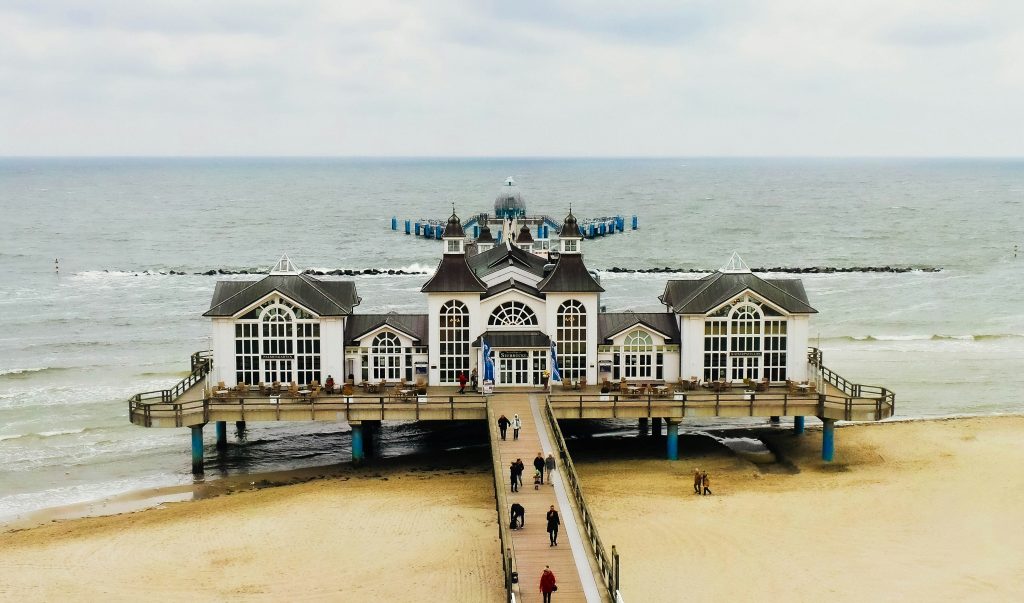
Binz is the safest first-time base. It combines beach access, restaurants, rail connections, and a useful position for day trips. The drawback is that it can feel busy and highly developed during the summer season.
Sellin or Baabe work better for travelers who prefer a smaller resort and want to concentrate on southeastern Rügen. They also fit naturally with a Rasender Roland ride and time around Mönchgut.
Sassnitz is the practical choice for a Jasmund-focused trip. It reduces the friction around the national park and works for travelers who care more about hiking and harbor access than a full resort-beach atmosphere.
Bergen auf Rügen is useful as a transportation node. It is rarely the best choice for a beach-first vacation because staying inland adds another step to most coastal days.
Where to Stay on Usedom
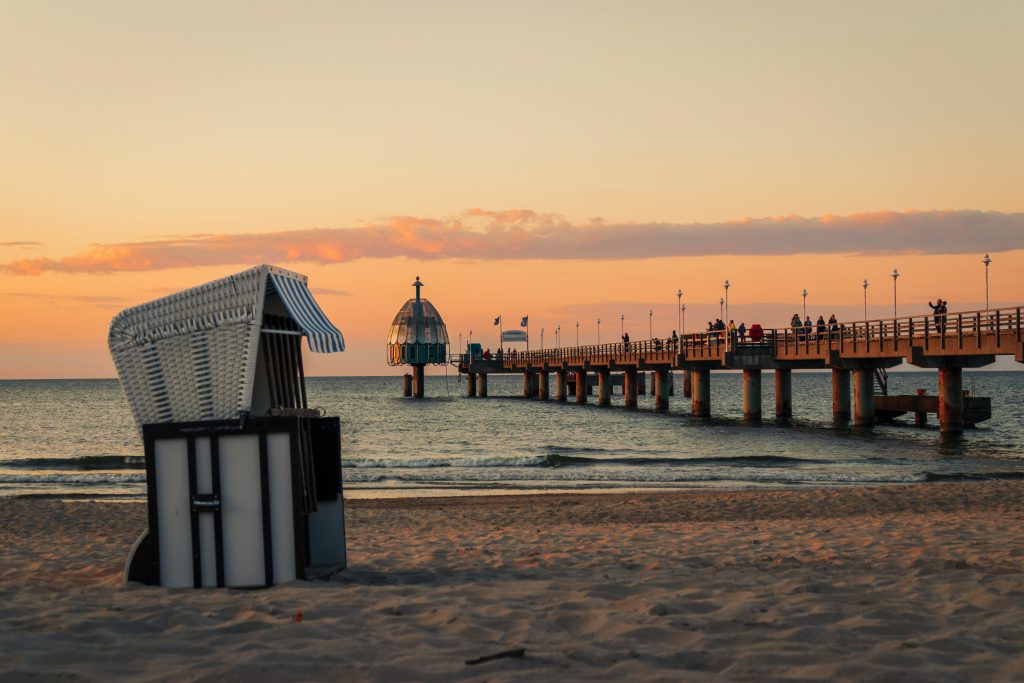
Heringsdorf or Ahlbeck provide the widest range of resort infrastructure and the easiest connection toward Świnoujście. They suit first-time visitors who want a straightforward base without a car.
Bansin keeps travelers within the Kaiserbäder corridor while placing them at its western end. It works well for beach time, walks, and rail-based outings.
Zinnowitz is a practical northern-island alternative. It makes more sense for travelers who plan to include Peenemünde or the northern beaches than for those focused on the Polish border.
Karlshagen or Trassenheide suit families prioritizing beach access and child-oriented activities. Travelers should check which activities operate during their dates rather than assuming the summer offer continues year-round.
Two nights are enough only with a narrow plan. On Rügen, that means choosing either Jasmund and Binz or southeastern Rügen, not both plus Kap Arkona. On Usedom, two nights work best in the Kaiserbäder.
Three to five nights allow Rügen’s variety to justify the longer internal transfers. Five to seven nights fit Usedom’s slower beach rhythm, although active travelers can cover the main resort corridor in less time.
Most travelers should use one base. Changing hotels saves some driving on Rügen, but packing and check-in time usually cost more than they return on a short trip.
Getting to Rügen and Usedom and Traveling Without a Car
Usedom is easier without a car when the trip centers on its seaside resorts. Rügen is still workable by public transportation, but the itinerary needs tighter geographic limits.
Rügen connects to mainland Germany through Stralsund. The island’s official travel service notes that road and rail use the bridge and causeway connections, with no car toll. This makes Stralsund the most logical mainland stop to pair with Rügen.
Usedom and Rügen both require a substantial northeast Germany transfer for many international itineraries. Instead of choosing from a national rail map, compare the complete journey to the intended base on the actual travel date. A connection that reaches Stralsund or Züssow quickly can still become inconvenient after the final island transfer.
Current bridge operations, rail construction, and long-distance services should be checked before travel.
Once on Rügen, regional trains and VVR buses serve the main towns and attractions. The Rasender Roland links Putbus with Binz, Sellin, Baabe, and Göhren, with seasonal service patterns that change during the year.
That network works well for a southeastern Rügen trip. It becomes less efficient when the same itinerary also tries to include Königsstuhl, Kap Arkona, and remote beaches.
Usedom rail trips typically connect through Züssow and continue across the Wolgast side of the island. The resort railway serves the coastal towns and extends to Świnoujście Centrum, while a branch from Zinnowitz serves Peenemünde.
This gives Usedom a real advantage for a car-free beach vacation. Accommodation near a station in Bansin, Heringsdorf, Ahlbeck, or Zinnowitz reduces the need to plan every outing around parking.
A car still helps on both islands:
- On Rügen, it makes dispersed sights and quieter beaches easier to combine.
- On Usedom, it improves access to the Achterland and places away from the rail corridor.
- On both islands, it adds luggage and grocery flexibility for apartment stays.
The drawback is summer traffic and parking. Bridge approaches, resort centers, and major attractions can absorb the time a car was supposed to save.
Driving distances are also misleading on both islands. A route that looks short can include slow resort roads, bridge traffic, parking searches, or a shuttle transfer. Compare door-to-door travel to the chosen sight, not just the map distance, and avoid placing major attractions from opposite ends of an island on the same day.
Königsstuhl is a clear example. Driving to Rügen does not mean driving to the visitor-center entrance. Visitors use designated parking and bus connections, or arrive by public transportation from another base.
Visitor cards can include local transportation benefits, but the rules differ by municipality and year. Usedom’s 2026 information, for example, shows different rail, bus, bike, and boat benefits depending on the issuing town. These should be treated as a possible savings opportunity, not a sitewide promise.
Skip a rental car on Usedom if the entire trip centers on the Kaiserbäder and rail-connected outings. On Rügen, skip the car only after confirming that the chosen base and two or three priorities sit on workable public-transport routes.
Which Island Works Better for Families, Cycling and Rainy Days
Usedom is usually easier for families seeking a predictable beach routine. Rügen is stronger for families who want each day to feel different.
With younger children, logistics often matter more than the number of attractions. A useful base has a beach, simple meals, toilets, and a low-effort backup within easy reach. The Kaiserbäder and family-oriented northern Usedom resorts make that rhythm relatively easy to maintain.
Rügen asks families to make more choices. A day at Jasmund, a resort day, and a Rasender Roland outing can create a well-balanced trip, but combining them into one overfilled schedule defeats the point.
One major commitment per day is the safer approach:
- On Rügen, pair Jasmund with Sassnitz rather than adding Kap Arkona.
- On Usedom, pair a resort walk with the beach rather than crossing the whole island for another attraction.
- Keep one flexible afternoon for weather, rest, or an uncomplicated meal.
For cycling, Usedom has the edge for casual riders. Official tourism information emphasizes the island’s connected cycling network, gentle gradients, rentals, and the ability to combine some rides with rail.
Rügen offers a larger range of cycling landscapes, from coastal resorts to forest and peninsula routes. It also has more variable terrain and more fragmented connections. A route that looks manageable by distance can still be a poor family choice if it involves hills, road exposure, or uncertain return transport.
Bike carriage rules and seasonal capacity should always be checked. A train shown on the map is not a guaranteed rescue plan for several bicycles on a busy summer afternoon.
Rainy weather weakens both islands, but in different ways. Usedom’s appeal depends more heavily on the beach and promenade. Indoor attractions around the resort towns and Peenemünde can fill a day, but repeated poor-weather days reduce the case for a long beach stay.
Rügen has more sightseeing variety, yet its key outdoor experiences are also weather-sensitive. A wet or windy day is not the time to force a long Jasmund hike. A short town visit, museum, railway outing, or visitor-center experience is the better alternative.
Costs, Crowds and the Best Time to Visit
Neither island is consistently cheaper. The final cost depends more on the chosen resort, accommodation type, season, parking needs, and paid activities than on the island name.
Dining follows the same pattern. Binz and the Kaiserbäder give travelers the broadest choice close to the main resort areas, while smaller bases trade variety for a quieter setting. An apartment with a nearby grocery store can reduce both cost and meal-planning friction, especially for families. Grocery and restaurant opening hours should be checked for the exact dates, particularly outside the main summer season.
Compare these categories before booking:
- Accommodation in the exact base
- Visitor tax charged by the municipality
- Parking at the accommodation and attractions
- Local rail and bus tickets
- Bike rental
- Beach-chair rental
- Paid museums, visitor centers, and boat trips
- Cancellation terms for weather-dependent activities
July and August bring the strongest beach conditions and the highest pressure on popular resorts. Accommodation books earlier, central beaches become busier, and parking requires more patience.
Late spring and early autumn can work better for walking and cycling. The tradeoff is less dependable swimming weather and a greater need to verify seasonal restaurants, boats, attractions, and transportation.
Weather is part of the buying decision. Usedom is a weaker choice if the trip would feel unsuccessful without several warm beach days. Rügen offers more non-beach objectives, but its cliffs, forests, boat trips, and viewpoints still depend on suitable conditions.
Travelers who value space more than swimming should consider the shoulder season. Travelers who dislike resort crowds and cannot reserve early should avoid the busiest summer weeks rather than assuming a remote beach will solve every logistical problem.
Final Verdict by Traveler Type
| Traveler | Better fit | Reason |
|---|---|---|
| First-time visitor | Rügen | More landscape and sightseeing variety |
| Beach-first traveler | Usedom | Easier resort-based coastal routine |
| Outdoor explorer | Rügen | Jasmund, forest, peninsulas, and varied day trips |
| Family with younger children | Usedom | Shorter daily movements when based in the right resort |
| Family with older children | Rügen | More variety across nature, towns, rail, and beaches |
| Casual cyclist | Usedom | Easier resort-to-resort riding |
| Car-free traveler | Usedom | Strong rail coverage along the main resort corridor |
| Two-night stay | Either | Rügen for one focused area, Usedom for the Kaiserbäder |
| Weeklong vacation | Usedom | A slower beach rhythm is easier to sustain |
Rügen wins for travelers who want a more active island trip with meaningful changes of landscape. Usedom wins for travelers who want a connected Baltic resort vacation that is easier to manage without a car.
Neither choice has to follow the stereotype. Binz, Sellin, or Baabe can turn Rügen into an easy resort stay. Cycling, the Achterland, Peenemünde, and Świnoujście can give Usedom more depth.
Travelers seeking reliably warm water, substantial nightlife, or a quick side trip from southern Germany should reconsider both. These islands deserve enough time to justify the journey to Germany’s northeast.
Frequently Asked Questions (FAQs)
Sources
- Rügen Travel Service
- KÖNIGSSTUHL Getting Here
- Rügen Beaches
- Rügen Cycling Information
- Jasmund National Park
- Nationalpark-Zentrum Königsstuhl Arrival Information
- VVR Rügen Bus and Königsstuhl Information
- Rasender Roland Current Timetables
- Usedom Mobility Information
- Usedom Resort Railway Information
- Usedom Cycling Information
- Usedom Family Travel Information
- Świnoujście From Usedom
- UsedomCard and Visitor-Tax Information