Germany’s Best Forest Parks for Climbing, Playing and Exploring
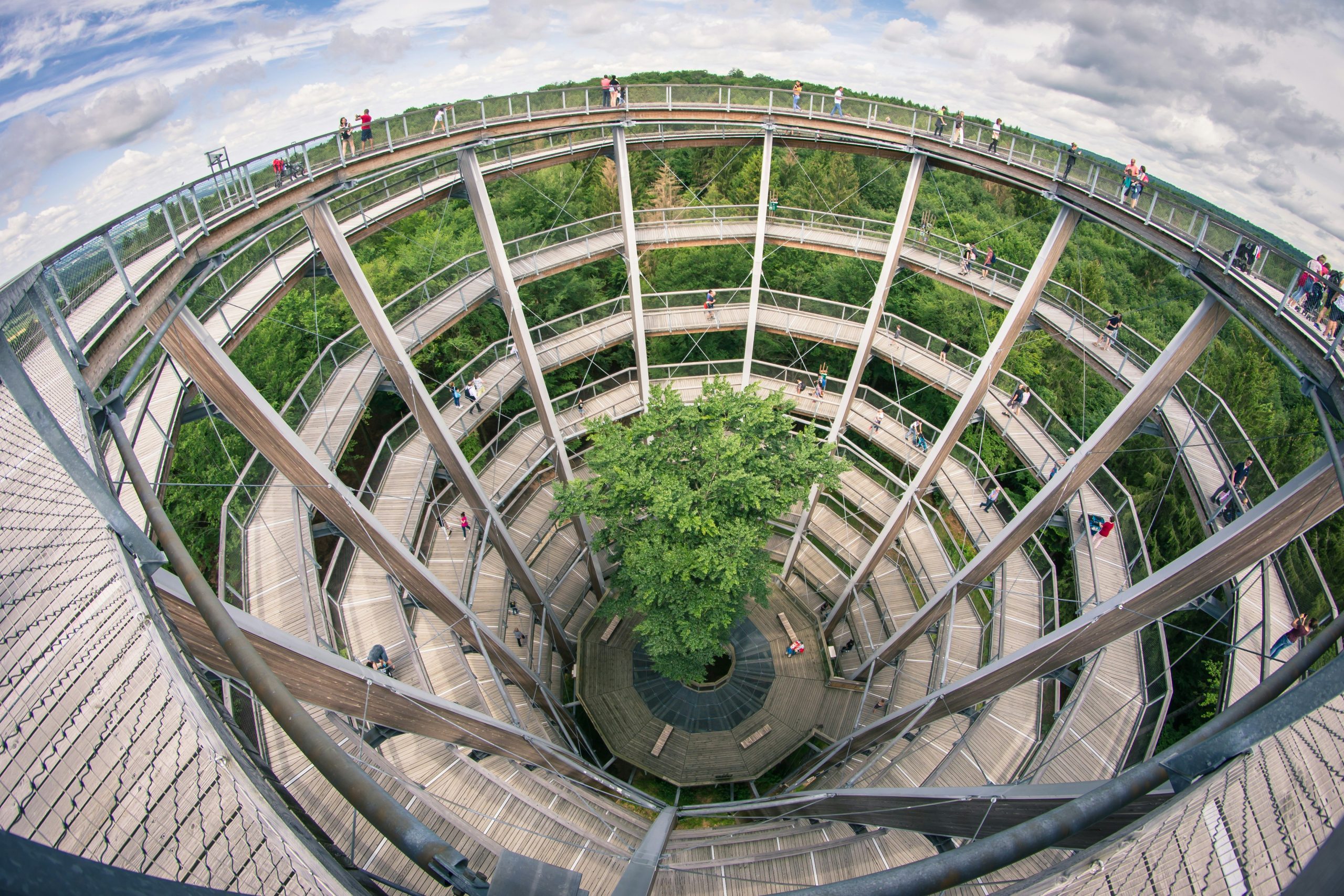
Germany’s best forest parks serve three different needs: aerial climbing for active families, treetop and play complexes for mixed confidence levels, and ground-level exploration for visitors who want to avoid harnesses or heights. The right choice depends more on ages, mobility, weather, and route fit than on which park has the longest list of attractions.
This guide compares eight forest adventure parks in Germany by experience type, useful travel base, time commitment, transport, family fit, and main limitation. Kletterwälder are managed rope-course attractions. They should not be confused with natural Klettersteige, which require alpine planning and personal protective equipment.
Quick Comparison of Forest Adventure Parks in Germany
| Park | Region and base | Core experience | Time to allow | Best for | Access | Nonclimbers and mobility | Check before travel |
|---|---|---|---|---|---|---|---|
| Kletterwald Neroberg | Hesse; Wiesbaden | Large aerial climbing park with a separate children’s area | About 3 hours | Broad challenge range near a city | Bus to Nerotal, then walk or use the Nerobergbahn | Ground waiting areas and other Neroberg activities | Course eligibility, weather, booking and Nerobergbahn operation |
| KletterWald Hamburg | Hamburg; Volksdorf | Eight height-based courses with zip lines | About 2.5 hours | An active half day during a Hamburg stay | U1 or bus 24 to the Meiendorfer Weg area | Free ground-level spectators on marked paths | Start time, height rules, weather and equipment availability |
| Münchner Wald | Bavaria; Munich or Vaterstetten | Low children’s courses plus higher aerial courses | About 3.5 hours, including early check-in | Preschoolers and older siblings at one venue | S-Bahn to Vaterstetten, followed by a bus or longer walk | Free spectators, playground and restaurant area | Age rules, supervision ratio, parking and booking |
| Waldseilgarten Höllschlucht | Allgäu; Pfronten | Aerial courses and Flying Fox zip lines by a stream | Up to 3 hours | Older children who want climbing to anchor the day | Car, bicycle or bus to Pfronten-Kappel, followed by a short walk | Cafeteria terrace and separate activities | Course ages, operating date, storm policy and payment method |
| Bad Wildbad Sommerberg | Black Forest; Bad Wildbad | Treetop walk, optional tower slide and forest play | 1 hour for the path; half a day with play | Mixed confidence levels and shared family time | Rail to town, then the Sommerbergbahn or road access | Main path is barrier-free; approaches vary | Funicular timetable, slide, playground, parking and separate tickets |
| Baumwipfelpfad Saarschleife | Saarland; Mettlach or Orscholz | Step-free treetop path and lookout tower | 1–2 hours | Strollers, wheelchairs and mixed mobility | Car or limited bus service from Merzig | Low-gradient route, rest areas and accessible facilities | Bus timetable, opening hours, equipment rentals and weather |
| Luisenburg-Felsenlabyrinth | Fichtelgebirge; Wunsiedel | Marked route through granite blocks and narrow passages | About 2 hours | Sure-footed school-age children and adults | Car is simplest; regional transport requires planning | Not suitable for strollers | Weather closures, season, footwear and current access |
| Barfußpark Beelitz-Heilstätten | Brandenburg; Berlin, Potsdam or Beelitz | Barefoot sensory routes, playground and cafés | 2–4 hours | Ground-level play and families avoiding heights | RE7 to Beelitz-Heilstätten, followed by a 1.2-kilometer walk | Stations can be bypassed, but natural paths limit mobility | Season, route status, weather and foot-washing facilities |
These parks work best as additions to an existing regional trip. Crossing Germany for a standard rope course rarely makes sense when a comparable option is closer to the planned route.
Regional map key
- North: KletterWald Hamburg
- East: Barfußpark Beelitz-Heilstätten
- West: Kletterwald Neroberg and Baumwipfelpfad Saarschleife
- Southwest: Bad Wildbad Sommerberg
- Southeast: Münchner Wald, Waldseilgarten Höllschlucht, and Luisenburg-Felsenlabyrinth
These parks work best as additions to an existing regional trip. Crossing Germany for a standard rope course rarely makes sense when a comparable option sits closer to the planned route.
Best Aerial Climbing Parks for Different Ages and Confidence Levels
Aerial parks make the most sense when climbing is the main purpose of the outing. Eligibility rules matter more than a park’s marketing language, especially when siblings fall into different age or height groups.
Kletterwald Neroberg in Wiesbaden: Best for a Broad Range of Challenge Levels
Kletterwald Neroberg is the strongest western option for families who want a wide choice of aerial courses without leaving a city base. The operator lists 19 courses, more than 200 climbing elements, a zip-line course, and a separate Räuberlager area for children from age four.
The standard visit allows about three hours, including the safety briefing. Current operator terms allow children from age six onto eligible high courses. Six and seven-year-olds need an adult climbing with them, while supervision rules change for older children. The same terms list a maximum participant weight, so families should check every climber against the current rules before paying.
Neroberg also gives nonclimbers more to do than a remote rope course. The hill has walking areas, viewpoints, and seasonal access by the Nerobergbahn. Wiesbaden states that bus line 1 runs from the main station to Nerotal, where visitors can continue uphill on foot or use the funicular when it is operating.
- Best for: Families staying in Wiesbaden or the Rhine-Main area who want different challenge levels in one place.
- Main tradeoff: Young children in the low course and older children in high courses can split adult attention. A family with one supervising adult should confirm whether its preferred courses can be managed together.
- Skip it when: The whole group wants to stay together, anyone dislikes harnesses, or the funicular and final uphill access add more friction than the activity is worth.
Reserve a start time, then recheck course eligibility, weather, and Nerobergbahn operation on the day of travel.
KletterWald Hamburg in Volksdorf: Best for a City-Based Active Half Day
KletterWald Hamburg fits a Hamburg itinerary better than it fits a Germany-wide bucket list. It has eight courses between 2 and 10 meters high. Seven finish with a Flying Fox zip line.
Course access depends on body height. The first two courses start at 110 centimeters, while later courses require 130, 140, or 160 centimeters. The operator says children can start at age five if they also meet the minimum height. Children under ten need an adult companion, and written consent is required for minors arriving without a parent.
A booking covers 2.5 hours from the start of the briefing, with about two hours of climbing in normal use. Closed shoes and gloves are required. The operator supplies the harness and helmet.
This is one of the easier climbing parks to combine with a city break. The operator directs visitors to the U1 stop at Meiendorfer Weg or bus line 24. Drivers are asked to use the parking garage by the U-Bahn rather than search for forest-edge parking.
Nonclimbing adults can enter without paying and watch from marked paths. The compromise is basic on-site sanitation: the operator states that the forest has portable toilets rather than a permanent washroom building.
- Best for: Families already spending several days in Hamburg who want a physical break from urban sightseeing.
- Main tradeoff: The park is convenient, but it is still a weather-exposed two-hour climbing session. It should not displace a major Hamburg sight on a short first visit.
- Alternative: Use a regular park or an indoor attraction when rain, cold, or a child’s height makes the rope courses a poor fit.
Münchner Wald in Vaterstetten: Best for Preschoolers and Older Siblings in One Venue
Münchner Wald is the clearest choice near Munich for a family with preschoolers and older children who all want to climb. Four low children’s courses start at age three. Higher courses open from age six with an adult, and the operator releases additional courses as children get older.
The useful detail is not simply the age range. Children on the low courses can climb while an adult supervises from the ground. On eligible high courses, one adult may supervise no more than three children in the six-year-old age band. Families should map children to courses before arrival rather than assume everyone can begin together.
The ticket provides three hours in the climbing area. Visitors should arrive 30 minutes before the booked start for forms, equipment, and check-in. The operator uses a continuous-belay system and supplies the required climbing equipment. It also lists closed shoes, written consent for minors, and a current maximum weight.
Vaterstetten is reachable by S-Bahn, but this is not a step-off-the-train attraction. The operator’s school travel guidance describes either a roughly 30-minute walk from the station or a bus connection followed by a shorter walk. Drivers have on-site parking, subject to the current parking arrangement.
A restaurant area and toilets sit by the park, and spectators do not pay admission. That gives a nonclimbing adult a practical base, though supervising children can still require movement between course areas.
- Best for: Families using the Munich travel guide to plan a longer city stay and traveling with a wide age spread and enough adults to divide supervision.
- Main tradeoff: Separate children’s and high-course zones solve eligibility differences but may prevent a shared experience.
- Alternative: Families that want to move through one attraction together should choose Bad Wildbad or the Saarschleife treetop walk.
Waldseilgarten Höllschlucht in Pfronten: Best for Older Children and a Full Allgäu Activity Day
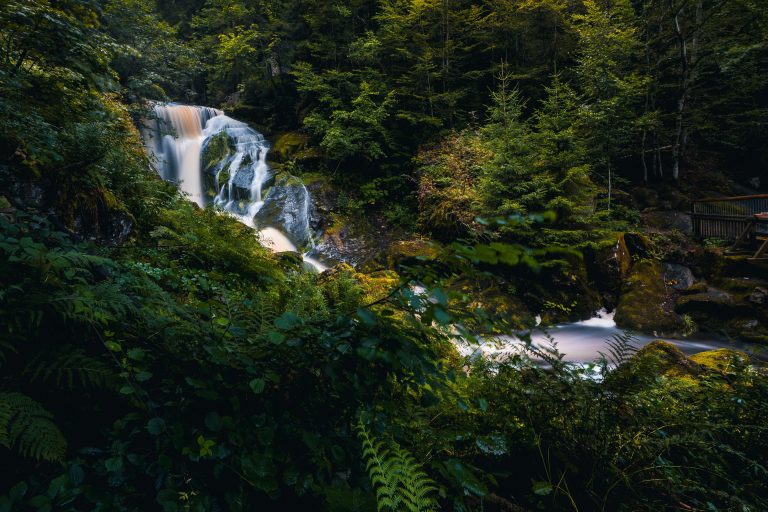
Waldseilgarten Höllschlucht works best when climbing is a central Allgäu activity, not an extra stop between destinations. The operator describes 12 courses and Flying Fox zip lines crossing a stream. The setting and harder courses give older children more progression than a low-key family park.
The park starts at age six. Children through age nine need an adult climbing companion, and the most difficult courses have higher age thresholds. The operator allows a maximum of three hours on the courses. Its rules also permit staff to stop activity for storms or thunderstorms.
Pfronten-Kappel is rural but not car-only. The operator directs drivers to signed parking at the northern edge of the village, then across a covered bridge for the short walk to the park. There is no public parking directly at the attraction. Bus travelers can use the Pfronten-Kappel Gasthof Engel stop and walk uphill.
A cafeteria terrace gives nonclimbers a place to wait. The site also offers a separate 3D archery course, but it should be treated as another full activity rather than an automatic add-on. Stacking both can produce a long, tiring day.
- Best for: Sure-footed older children, teens, and adults staying in Pfronten or the eastern Allgäu.
- Main tradeoff: The park rewards confident climbers, but it is a weak choice for a hesitant child or a transfer day with a fixed departure.
- Skip it when: A family wants a brief walk-in activity, needs step-free participation, or cannot adapt if weather stops operations.
Check the exact operating calendar, course eligibility, payment method, and weather notice before leaving the accommodation.
Best Treetop Walks and Forest Play Parks for Mixed Confidence Levels
Treetop paths keep the group together. They offer height and forest views without placing every visitor in a harness or sorting family members into course levels.
Bad Wildbad Sommerberg: Best All-Around Forest Activity Complex
Bad Wildbad Sommerberg is the strongest all-around choice in this guide. Families can use the treetop path as the main activity, add the optional tunnel slide, and continue to the adjacent Abenteuerwald when children still have energy.
The main path runs for about 1.2 kilometers and rises gradually to a lookout tower. Bad Wildbad describes it as barrier-free. The tower has a 55-meter tunnel slide from a separate platform, so visitors who dislike slides can walk back down instead.
The treetop path alone takes about an hour. Combining it with the forest playground turns the outing into a practical half day. Adding more Sommerberg attractions may sound efficient, but separate admissions, lines, meals, and tired legs can erase the benefit.
Rail travelers can reach Bad Wildbad, then use the Sommerbergbahn when it is operating. The funicular reduces the climb from town, but the complete route is not uniformly barrier-free. The tourism office notes that some approaches from disabled parking use forest paths. Drivers should expect limited parking on the hill and compare it with parking in town plus the funicular.
- Best for: Mixed-confidence families, grandparents, stroller users, and groups where only some people want a slide or high-energy play.
- Main tradeoff: It is easy to overspend and overpack the day by treating every adjacent attraction as mandatory.
- What to skip: Skip the slide when height sensitivity or current restrictions make it uncomfortable. Skip extra attractions when the path and playground already provide enough activity.
Verify the funicular timetable, parking, slide operation, playground hours, accessibility route, and separate ticket rules before travel.
Baumwipfelpfad Saarschleife: Best for Strollers, Wheelchairs, and a Shared Canopy Experience
Baumwipfelpfad Saarschleife is the clearest option for a group that needs a low-barrier route. The operator states that the 1,250-meter path and tower have no steps and a maximum gradient of 6 percent. Flat rest areas are built into the route.
The operator recommends 1 to 2 hours for the path. Wheelchairs and walkers can be borrowed with advance phone notice, subject to availability. Accessible toilets are in the Cloef-Atrium near the entrance, and disabled parking is available in the visitor lots.
Public transport needs more planning than the path itself. The operator lists bus line 250 from Merzig to Cloef, Orscholz Mettlach, with more limited service on weekends. It tells visitors to verify the timetable with the local transport provider before setting out.
The nearby Abenteuerwald adds several hours of active play, food, and breaks. It is a separate attraction, so families should choose it deliberately rather than assume the treetop ticket includes it.
- Best for: Strollers, wheelchair users, grandparents, and families that want everyone to share the same route.
- Main tradeoff: The path is inclusive but not a substitute for a rope course when older children want a demanding physical activity.
- Accessibility limit: A step-free attraction does not guarantee a friction-free trip. Confirm parking, bus service, rental equipment, toilets, and the route between each arrival point and the entrance.
Best Ground-Level Forest Adventures Without Harnesses
Ground-level parks suit families that want movement and problem-solving without an aerial safety system. “Ground-level” does not always mean easy or accessible.
Luisenburg-Felsenlabyrinth near Wunsiedel: Best for Natural Rock Exploration
Luisenburg-Felsenlabyrinth is a marked route through granite blocks, narrow passages, steps, roots, and forest floor. It is not a Kletterwald and not a Klettersteig.
The City of Wunsiedel recommends about two hours for the complete route. Visitors follow blue markings uphill and red markings downhill. A crossing point allows a shorter return, which matters when a child’s energy or the weather changes.
Expect about 100 meters of elevation change, metal stairs, grates, steep sections, and tight passages. The city recommends sturdy footwear and states that the route is unsuitable for strollers. Strong wind, rain, or snow can close the labyrinth for safety.
This is the better choice for school-age children who enjoy scrambling through natural terrain but do not want a harness. Adults should still treat it as a hike with obstacles, not as a playground where children can run independently.
Wunsiedel or Marktredwitz makes the most useful base. A car simplifies the outing. Public transport should be checked for the exact date because the final connection to Luisenburg can be the weak point.
- Best for: Sure-footed school-age children and adults exploring the Fichtelgebirge.
- Main tradeoff: The route offers natural variety at a relatively modest time commitment, but it excludes strollers and can be uncomfortable when rock and steps are wet.
- Skip it when: Anyone has limited balance, cannot manage stairs, or needs a predictable all-weather plan.
Barfußpark Beelitz-Heilstätten: Best Sensory Option Near Berlin and Potsdam
Barfußpark Beelitz-Heilstätten is the lower-height option for families that want active forest play without ropes. Its routes use changing natural surfaces and sensory stations. Shoes can go back on whenever walking barefoot becomes uncomfortable.
The park provides lockers and a foot-washing area. Visitors should bring a small towel, weather-appropriate clothing, and spare socks or clothes for children. Picnics are allowed, and cafés and a playground make it easier to build in a real break.
The park is seasonal, and its operating calendar can change. Check the official opening information and any current route notice before travel rather than relying on a generic seasonal window.
Train access is practical but not immediate. The operator directs visitors to the RE7 station at Beelitz-Heilstätten, followed by a signed walk of about 1.2 kilometers. Drivers use the A9 exit and the signed P1 parking area.
The accessibility wording needs care. An accessible toilet is available, some stations have handrails, and obstacles can be bypassed. The operator also warns that bark and forest-floor paths may be difficult or completely impractical for mobility aids.
- Best for: Younger children, mixed-confidence groups, and families near Berlin or Potsdam that prefer sensory play to heights.
- Main tradeoff: Barefoot walking is optional, but uneven natural surfaces remain part of the experience.
- Alternative: Use the neighboring treetop attraction only if its current access and ticket setup better match the group. Do not combine both automatically. A slower family may get better value from one activity plus a meal break.
Practical Planning for Rules, Weather, Cost, and Family Logistics
Kletterwald, Hochseilgarten, Baumwipfelpfad, and Klettersteig Are Not Interchangeable
A Kletterwald or Hochseilgarten is a managed aerial course. The operator controls admission, supplies the main climbing equipment, gives a briefing, and sets course-specific eligibility.
A Baumwipfelpfad is a walkable elevated path. It normally does not require a harness, but it can still involve long approaches, exposure to sun or wind, and separate accessibility issues between parking and the entrance.
A Klettersteig is an outdoor fixed-rope route on natural rock. The German Alpine Club advises users to assess difficulty, length, approaches, weather, and current conditions. It lists a climbing harness, via ferrata set, and helmet as standard equipment.
That is why this guide does not add a Klettersteig for variety. A natural route requires a different level of preparation and cannot be judged by a family park’s age label.
What to Verify Before Booking
Check these points on the operator’s current page:
- Operating date and same-day weather notice
- Reserved start time and required arrival buffer
- Age, height, reach, and weight limits for each desired course
- Adult-to-child supervision ratio
- Written consent or waiver for minors
- Closed shoes, gloves, clothing, and loose-item rules
- Whether equipment is included
- Session length, last entry, and cancellation policy
- Toilets after check-in
- Food, water, and picnic rules
- Lockers and storage
- Admission and waiting areas for nonparticipants
- Stroller, wheelchair, and assistance-dog rules
- What happens if a child stops early
Ticket price alone does not show the full cost. Parking, local transport, gloves, lockers, slides, playgrounds, adjacent attractions, and food may be separate.
A family should make the eligibility check before the price comparison. The cheapest park is poor value if one child cannot use the intended course.
Weather, Pacing, and Safety Expectations
One main forest activity per half day is a sensible family pace. It leaves time for arrival, forms, a safety briefing, a food break, and the child who repeats an easy course or stops early.
Light rain does not close every attraction. KletterWald Hamburg and Münchner Wald both state that ordinary rain can be manageable, while severe weather can stop operations. Luisenburg uses a stricter site-specific rule and may close during strong wind, rain, or snow.
No universal closure threshold applies. Check the operator on the morning of travel, then check again before starting a long drive.
For storms, choose an indoor regional attraction rather than trying to salvage a prepaid outdoor day. For height avoidance, choose Beelitz or Luisenburg. For mixed mobility, Saarschleife is the better starting point, subject to the full arrival route.
How to Choose the Right Park for the Family and Route
Filter in this order:
- Eligibility and mobility: Remove any park where age, height, weight, supervision, stairs, or natural surfaces exclude someone from the intended experience.
- Geography: Choose a park that fits an existing city or regional base.
- Intensity: Decide between aerial climbing, a shared treetop walk, rock exploration, or sensory play.
- Weather and availability: Check the live operating notice and book the required start time.
- Total cost: Add transport, parking, equipment extras, food, and adjacent attractions.
The practical verdict is straightforward:
- Choose Kletterwald Neroberg for broad aerial challenge near Wiesbaden.
- Choose KletterWald Hamburg for a climbing half day during a longer city stay.
- Choose Münchner Wald for preschoolers and older siblings, especially with two supervising adults.
- Choose Höllschlucht when older children want climbing to be a primary Allgäu activity.
- Choose Bad Wildbad for the best mix of shared canopy access, optional slide, and forest play.
- Choose Saarschleife for strollers, wheelchairs, and a group that wants one shared route.
- Choose Luisenburg for natural rock exploration with sure-footed school-age children.
- Choose Beelitz for ground-level sensory play near Berlin and Potsdam.
Most of these attractions are regional add-ons, not reasons to cross Germany. Bad Wildbad can fill a larger part of a day, while Pfronten makes sense within a broader Allgäu stay. A standard rope course should not force an otherwise inefficient route.
The most common mistake is booking the headline activity before checking every participant’s eligibility. The second is combining two paid attractions because they share a site. One well-paced activity usually creates a better family day than a checklist of adjacent tickets.
Frequently Asked Questions (FAQs)
Sources
Accessed August 14, 2026. Operating details remain subject to change.
- Kletterwald Neroberg official site
- Kletterwald Neroberg operator terms and supervision rules
- Kletterwald Neroberg safety and rules
- City of Wiesbaden Nerobergbahn information
- KletterWald Hamburg courses and access
- KletterWald Hamburg visitor questions
- Münchner Wald visitor questions
- Münchner Wald arrival guidance
- Waldseilgarten Höllschlucht courses
- Waldseilgarten Höllschlucht visitor rules
- Waldseilgarten Höllschlucht current operating calendar
- Waldseilgarten Höllschlucht access
- Bad Wildbad treetop walk and Sommerberg information
- Saarschleife treetop walk visitor information
- Saarschleife accessibility questions
- City of Wunsiedel Luisenburg visitor information
- Barfußpark Beelitz-Heilstätten visitor information
- German Alpine Club Klettersteig safety recommendations