12 Legendary Ski Routes in the European Alps
On the 80 km Grande Guerra in the Dolomites, the way back can involve a ski bus and a tow from a pair of Noriker horses. Austria’s White Ring comes back to Lech in about half a day on skis and lifts. Choose a route everyone can ski, check what gets the group home, then book near the lift or bus stop that makes the day work. Alta Badia’s Grande Guerra guide, Ski Arlberg’s White Ring guide
These twelve lift-served ski routes in the Alps span Austria, Italy, Switzerland and France. They suit different groups, from families comfortable on linked blues and reds to experts looking for a long descent. Start with the White Ring if everyone can handle Madloch and the group wants an afternoon free. Give the Sellaronda a full day. Save the trips that cross a border or end in another village for the day the return works.
The best ski routes in the Alps by time, terrain, and return
Ski Arlberg measures the White Ring to the meter, adding up the lifts and the runs. Saalbach’s Challenge counts 65 km of pistes and logs 32 lifts separately. Both figures tell you something about the day. Neither tells you how long a lift queue will be or how far you’ll have to travel if you miss the way home. White Ring course breakdown, The Challenge route figures
Start with the hardest compulsory segment and the time you have. Operator estimates apply to the route as described. Other time allowances are for planning, including the approach and the way back. Add time for queues, a hut stop or a group that skis at different speeds.
| Route and starting base | Published distance | Time to reserve | Terrain and return |
|---|---|---|---|
| White Ring · Lech, Austria | About 22 km including lifts | Half-day | Easy to intermediate overall. Madloch #170 is a marked ski route. |
| Sellaronda · Corvara, Italy | 44 km total, including 23 km of skiing | Full day, about 6 hours per operator | Intermediate with stamina. Last pass depends on direction. |
| Run of Fame · St. Anton, Austria | 85 km total route | Full day for fast advanced skiers, or two or more days | Advanced. Flexenbahn and Auenfeldjet govern the return. |
| The Challenge · Saalbach, Austria | About 65 km of pistes | Full day, 6 to 7 hours for athletic skiers per operator | Blues, reds and some blacks. Check the lifts between sectors. |
| Courchevel 1850 to Val Thorens · France | Operator lists 11 runs. Full distance unpublished. | Full day per operator | Mainly blues on the published itinerary. Check both valleys’ return links. |
| Grande Guerra · Arabba, Italy | 80 km circuit with transfers | 6 to 8 hours per operator. Two days also possible. | Confident intermediate or stronger. Bus and tow logistics depend on direction. |
| Giro delle Cime · Versciaco or Sesto, Italy | 35 km of pistes | Most of a day including shuttle legs | Published route includes a black run and a T-bar. SALTO shuttle required. |
| Piste des Cascades · Flaine or Samoëns, France | 14 km descent | Half-day or longer with the return | Plan for red-run ability. Shuttle from Sixt to rejoin the lift network. |
| Smuggler’s Circuit Bronze · Ischgl or Samnaun, Austria/Switzerland | 40.2 km route | About 4 hours per operator, plus stops | Blue-oriented with a long cross-border return. |
| Matterhorn Ski Safari · Zermatt, Switzerland/Italy | 73 km route | Full day, about 5 hours 5 minutes per operator | Confident reds. High, wind-exposed return from Italy. |
| Parsenn to Küblis · Davos Dorf, Switzerland | About 12 km historical descent | Half-day including the rail return | Medium overall on the tourism board’s route. Check the upper pitch, valley opening and train. |
| Aiguille Rouge · Arc 2000, France | 7 km descent | Half-day including the lift approach and return | Expert black summit piste. Check the village gondola and onward lifts. |
White Ring or Sellaronda for a first big circuit
At Lech’s Schlegelkopfbahn, a board lists winners of the White Ring race. Its team trophy is named for Sepp Bildstein, whom Ski Arlberg credits with starting the circuit. For a holiday skier, the half-day loop leaves time for lunch at Kriegeralpe, where friends can meet the group on the marked winter walking route from Oberlech. White Ring race and circuit history, Oberlech winter walking route
White Ring, Lech to Zürs to Zug
Start at the Rüfikopfbahn in Lech with a Ski Arlberg pass. Follow the marked circuit through Zürs, over Madloch and down to Zug, then take the Zugerbergbahn to return via Oberlech. Zürs and Zug also have marked starts. Lech is the straightforward choice if the group wants to finish where it can also spend an afternoon off skis. White Ring route map, Ski Arlberg passes
Ski Arlberg rates the loop easy to intermediate overall. The local report lists Madloch #170 as a marked ski route. Check its preparation with patrol and verify the Zugerbergbahn is running before committing. Stay around Oberlech if anyone needs gentle groomers throughout. For groups doing the loop, Kriegeralpe can wait until after the climb out of Zug. Lech Zürs lift and ski-route report, Live piste map, Kriegeralpe hut
Sellaronda from Corvara or the other three valleys
Book Corvara for a first circuit. The clockwise orange route heads toward Campolongo from the Boè side. The green route runs counterclockwise and heads toward Gardena via Colfosco. From Corvara, Gardena is the final pass going clockwise and Campolongo is the final one going counterclockwise. That makes the direction a return decision as much as a terrain choice. Selva, Arabba and the Canazei area also work if that’s where the group is staying. Carry the Dolomiti Superski pass and save both direction maps. Sellaronda maps and route status, Alta Badia route guide
Twenty-one of the operator’s 44 km are covered on lifts, and that’s a large part of the appeal. The valleys change in the course of one day. The route still asks a lot from a skier who finds successive intermediate runs tiring. Dolomiti Superski suggests starting before 10 a.m. and reaching the last pass by 3:30 p.m. at the latest. Work back from the final lift that day and allow for a queue on the approach. Save Rifugio Col Alt for a Corvara day if the extra lift would cost the margin. If outbound queues eat into the margin, spend the afternoon in Alta Badia. Operator timing and distance, Rifugio Col Alt
Long days across the Arlberg, Skicircus, and Les 3 Vallées
On these three routes, time goes in different places. The Run of Fame spans three Alpine passes. Saalbach’s Challenge marks its circuit with 32 lifts. Courchevel to Val Thorens uses mostly blue terrain on the published itinerary, yet the group still has to cross back through Méribel.
Run of Fame, St. Anton to Warth and back
The route leaves St. Anton’s Rendl sector, passes through Stuben, Zürs, Lech and Schröcken and reaches Warth. The Hall of Fame in Zürs is an official checkpoint. It also makes a good point to reconsider the day’s pace before carrying on. Ski Arlberg says sporty skiers can finish the 85 km route in one day and suggests two or more days for a less hurried trip. Plan a return to the home sector on each day of a split. Run of Fame route maps and checkpoints
St. Anton is the rail-oriented start. The operator lists a Rifflbahn I entry as the easier alternative to the unprepared marked ski route #16 from Rifflbahn II. Even with the easier entry, this is an advanced day. From the northern end, use the Dorfbahn in Warth and the southbound route map. Either start uses a Ski Arlberg pass. St. Anton rail and bus information, Ski Arlberg passes
Write down the Flexenbahn and Auenfeldjet return times. If either required link is closed, ski the home sector. On a split day, stop for lunch around Zürs on a segment with a confirmed return. If a lift shuts after the group has crossed, ask staff where to exit and check an actual road route to the hotel. Arlberg lift hours and live status, Lech Zürs huts
The Challenge, Saalbach to Leogang and Fieberbrunn
The Challenge makes a full pass through the Skicircus, including Leogang and Fieberbrunn. Start at Schattberg X-press from Saalbach, or use the map to start at a listed lift nearer a Leogang or Hinterglemm hotel. Much of the circuit is blue or red, with some black terrain. The operator’s six-to-seven-hour estimate is for athletic skiers skiing without substantial breaks. A long lunch and a last-minute run back through Fieberbrunn make a poor pairing. The Challenge’s lift list and terrain breakdown
Use a Ski ALPIN CARD day ticket covering the Skicircus and select The Challenge on the official map. Check TirolS and the Leogang links before setting out. If a link is closed or the group wants a long lunch, pick the shorter Saalbach circuit. On a local Kohlmais day, try the Maisalm. Skicircus interactive piste map, shorter Skicircus circuits
Courchevel 1850 to Val Thorens via Méribel
The official day itinerary uses 11 runs to cross from Courchevel 1850 over Saulire, through Méribel Mottaret and up Côte Brune toward Val Thorens. It returns via Col de la Chambre, Plan des Mains and Pas du Lac. Côte Brune is now a gondola. Use the current map for lift names and return times. The operator gives no full-route distance. Les 3 Vallées itinerary, Côte Brune lift change, current piste map
This is a full day for strong blue skiers who are comfortable with long runs and high links. Buy the full Les 3 Vallées pass for the crossing. Skip the optional Péclet detour when the return is looking tight, and save a longer lunch for Méribel Mottaret once back across from Val Thorens. On a low-visibility day, stay on suitable local pistes. Méribel makes a useful base if the party wants the option to try one side at a time. Full-area day passes, live inter-valley links, choosing Courchevel or Méribel
Ski days that depend on a bus or a tow
At Lagazuoi, the open-air museum documents tunnels and ledges dug into the mountain during the First World War. Below the mountain, the modern ski circuit has a different kind of infrastructure. In the direction that descends from Lagazuoi to Armentarola, horses tow skiers across a flat stretch. A lift pass gets you onto the mountain. Getting through the valley takes a little more planning. Lagazuoi open-air museum, Alta Badia’s account of the horse tow
Grande Guerra around Col di Lana, from Arabba
Base in Arabba when the circuit is the point of the trip. San Cassiano or Armentarola makes more sense if the group mainly wants to ski Lagazuoi. Dolomiti Superski puts the full route at 80 km and advises allowing six to eight hours. Counterclockwise from Arabba, ski to Malga Ciapela, ride the bus to Alleghe and ski through Civetta to Pescul. The next bus crosses to Fedare. From there, the mapped lifts and pistes take you to Falzarego and Lagazuoi before the descent toward Armentarola. Download the map for the direction you intend to ski. The clockwise itinerary runs the bus legs in the other direction. Grande Guerra route and timing, both direction maps and ski bus information
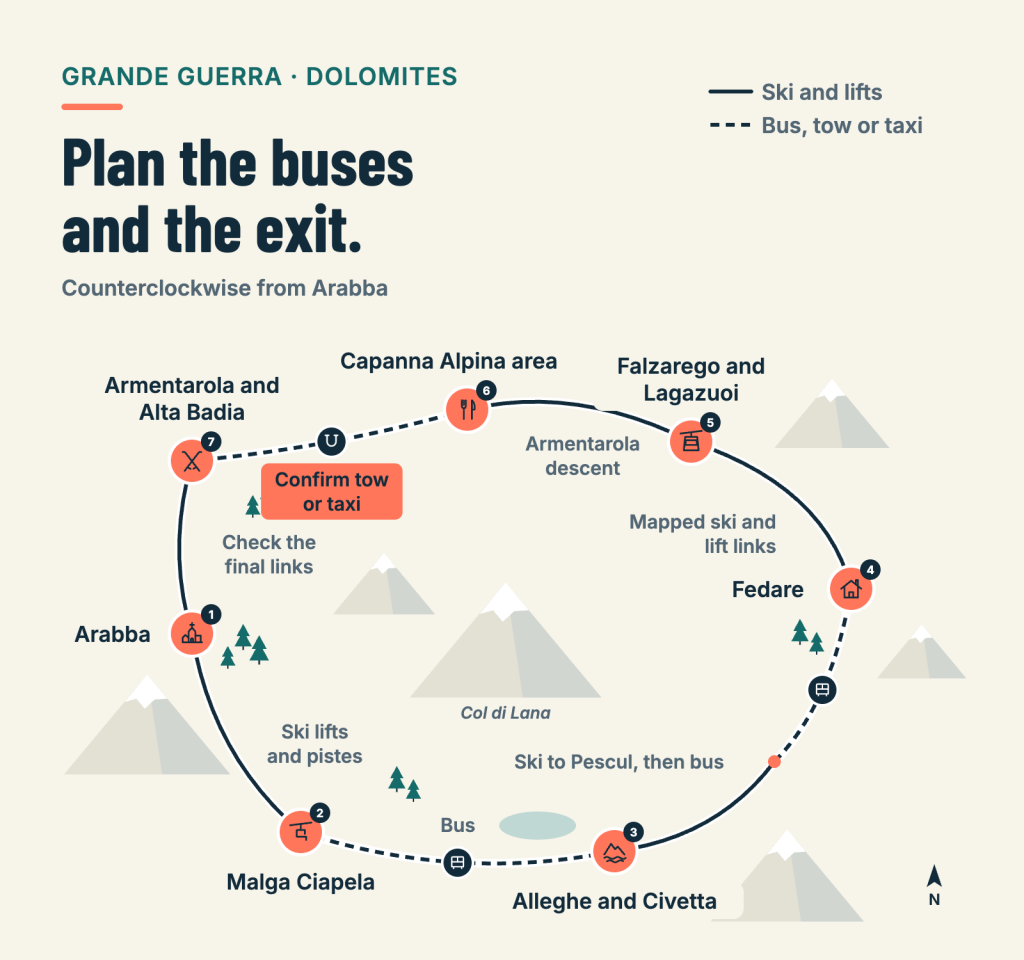
Grande Guerra route sketch from Arabba. The two bus legs and the Armentarola exit can dictate the day. Use the operator’s maps for exact connections.
Use the Dolomiti Superski pass for the lifts and pay separately for the bus and tow or taxi. Dolomiti Superski still links the 2025/26 timetables for the S42 Malga Ciapela to Alleghe and S41 Pescul to Fedare buses. The 2026/27 times are unconfirmed. Verify both for the trip date and direction before committing. The Lagazuoi operator lists different taxi destinations from Capanna Alpina, including Hotel Armentarola and Falzarego. Confirm the one you need and check the tow’s snow and weather status before leaving Arabba. For a long lunch at Rifugio Scotoni or time for the history, plan a split with a verified overnight stop or road transfer. Lagazuoi to Armentarola can also be a day of its own if the approach taxi and exit are confirmed independently. If the transfer chain is uncertain, ski Arabba locally. Lagazuoi descent and huts, Lagazuoi taxis and tow status
Giro delle Cime, from Versciaco or Sesto
Among the 35 km of runs and 11 lifts on the Giro delle Cime, the course’s most distinctive waypoint might be the snowman family at Croda Rossa. Next come Passo Monte Croce, a T-bar and a pickup at Bagni di Valgrande for Val Comelico. Take the SALTO shuttle back toward Signaue. For lunch, the hut at Col d’la Tenda works when the dated return departure gives you time to sit down. 3 Zinnen route map, seven stages and SALTO information
Start at Monte Elmo from Versciaco for the rail-and-lift option, or at Helmjet Sexten if staying in Sesto. Allow most of the day for the full circuit. Confirm that the 3 Zinnen or Dolomiti Superski product you’re buying covers Val Comelico, and check the shuttle fare or Guest Pass terms and both ride times. The route page still links an earlier winter’s timetable. The 2026/27 shuttle schedule is unconfirmed. Check both rides for your ski date on the operator’s route page. 3 Zinnen winter passes, operator’s shuttle update link
3 Zinnen’s mapped circuit includes a black descent to Helmjet and warns that some segments are awkward on a snowboard. If a member of the party is uncomfortable on the black, or if the shuttle remains unconfirmed, keep the ski day around Monte Elmo and Stiergarten on terrain that suits the group. Check the marked return to the original start.
Piste des Cascades, Grandes Platières to Sixt-Fer-à-Cheval
The Cascades descends 14 km from Grandes Platières through the Sixt-Passy nature reserve. Haut-Giffre Tourism points out frozen waterfalls along the way. Once the group reaches Sixt-Fer-à-Cheval, the next connection is by road. Start in Flaine for direct access to the summit lift. Samoëns makes sense if you’d rather finish closer to your hotel once the bus brings you back from Sixt. Grand Massif route, Haut-Giffre route description
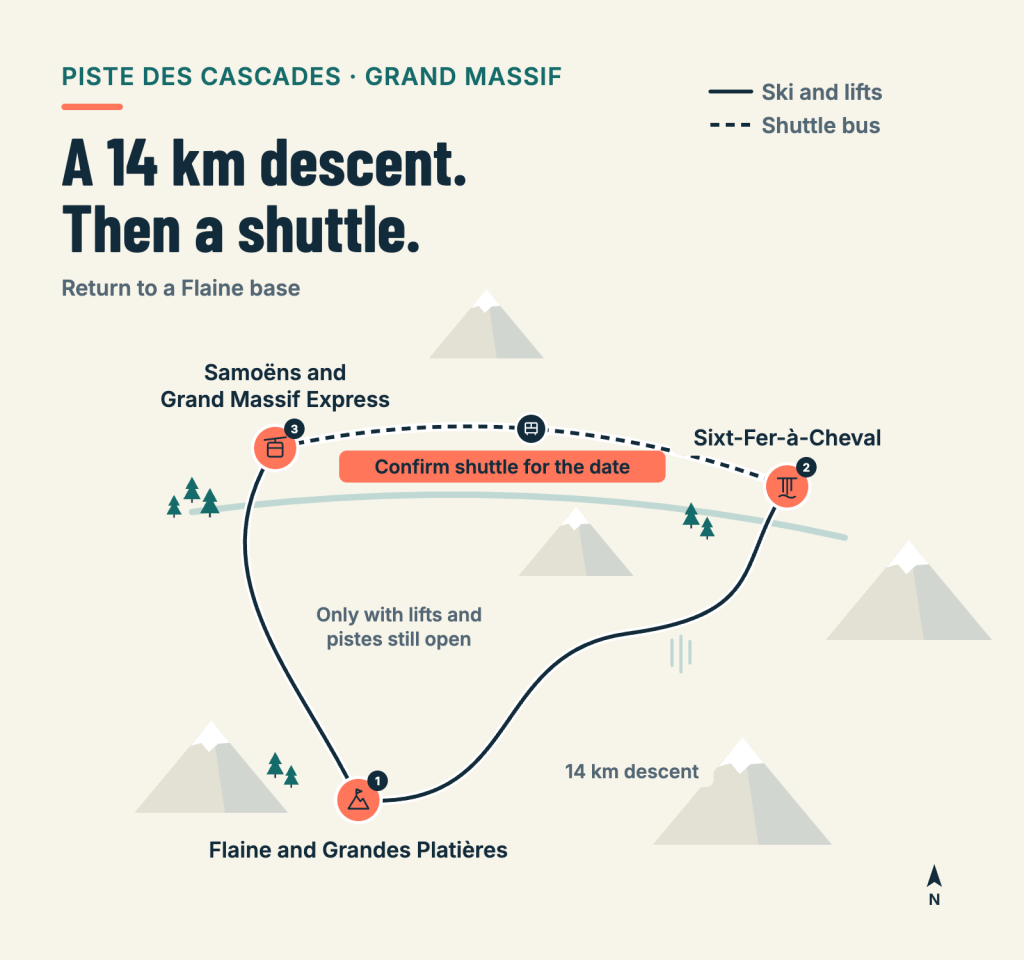
Cascades return sketch. If based in Flaine, leave time for the bus to Samoëns and the onward ski links.
Use Grand Massif’s red rating for planning. The local tourism listing still calls Cascades blue. Ask patrol about the day’s conditions and the full descent, then use a pass covering Grand Massif. The 2025/26 shuttle map showed a green line from the Piste des Cascades stop to Grand Massif Express. Service for 2026/27 is unconfirmed. For a Flaine base, allow at least half a day and check that your bus reaches Samoëns while there’s still time to ski back to Flaine. If the transfer or the full descent is unconfirmed, ski within the sector where you’re staying. Grand Massif map, daily opening status, Giffre winter shuttles
Skiing across a border at Samnaun and the Matterhorn
Between Ischgl and Samnaun, postwar smugglers carried coffee and nylon stockings across the mountains, according to Ischgl’s tourism office. Skiers can now cross on an itinerary built around blue pistes. At the Matterhorn, the route into Italy runs higher and calls for confidence on reds. Both days are worth considering if the group would be happy skiing just its home side when the links are closed. Ischgl’s Smuggler’s Trail history and routes, Zermatt Bergbahnen’s cross-border route
Smuggler’s Circuit Bronze, Ischgl to Samnaun
Start at Fimbabahn A3 in Ischgl, or use the Twinliner L1 in Samnaun to start and finish on the Swiss side. Follow the Bronze checkpoints in order. Ischgl gives this version as 40.2 km and about four hours. It’s a good option for skiers who favor blues and have the stamina for a long morning and an afternoon return. Buy a pass covering both sides of the Silvretta Arena. Bronze checkpoint route, Silvretta tickets and operating hours
Check the piste down to Samnaun and the Twinliner and Viderjoch links before leaving the side where you’re staying. An Alp Trida lunch fits if there’s enough time left after clearing the valley leg. If the return is in doubt, spend the day in your home sector. Choose Samnaun as a base if Twinliner is your planned start and the date’s arrival transport works for the group. Samnaun mountain restaurants, Ischgl regional transport
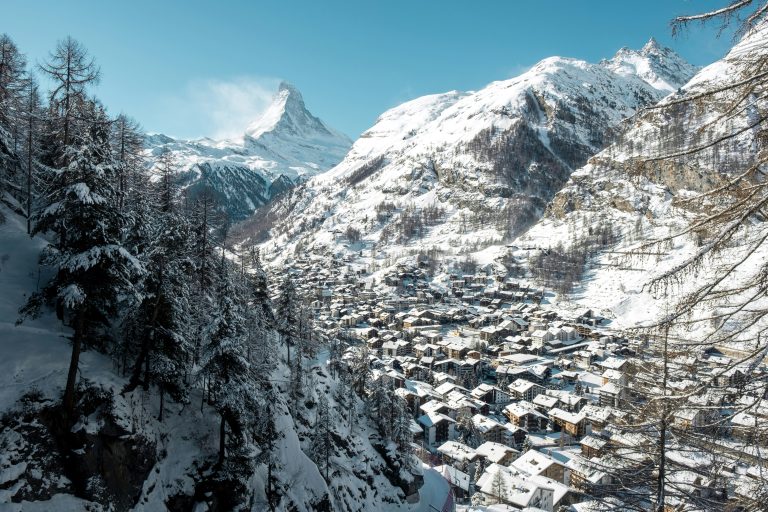
Matterhorn Ski Safari from Zermatt to the Cervinia side
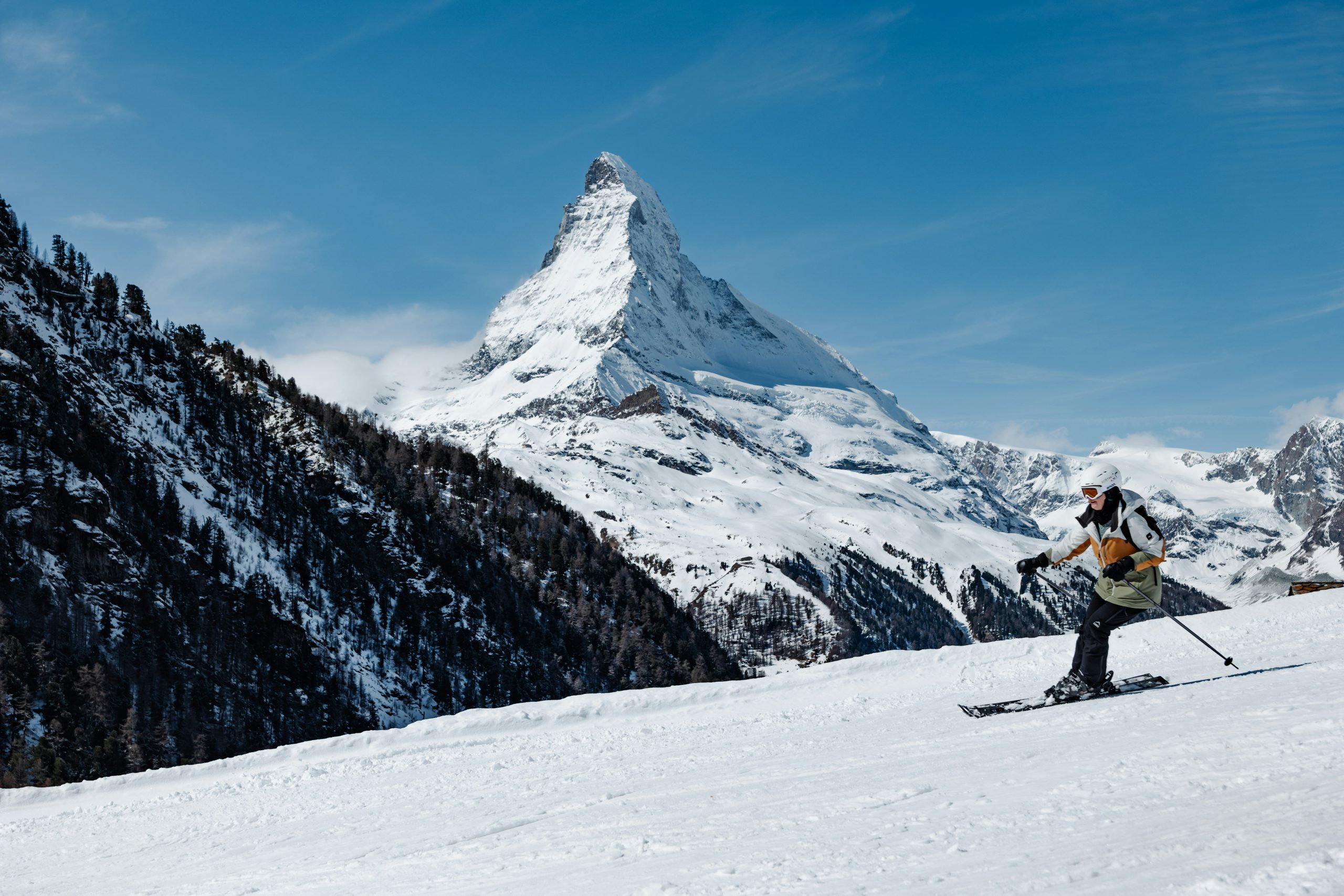
Start at the Matterhorn Express in Zermatt with the International ski pass. Zermatt Bergbahnen’s Swiss-Italian Flirt route measures 73 km and takes about five hours and five minutes on its estimate. It runs via Trockener Steg, Matterhorn Glacier Paradise and Theodulpass to Plan Maison on the Cervinia side. The six-stage route turns back above Cervinia village. Add the descent into town only if you’ve confirmed how it fits the way back. Six-stage Matterhorn route and live status, International ski pass
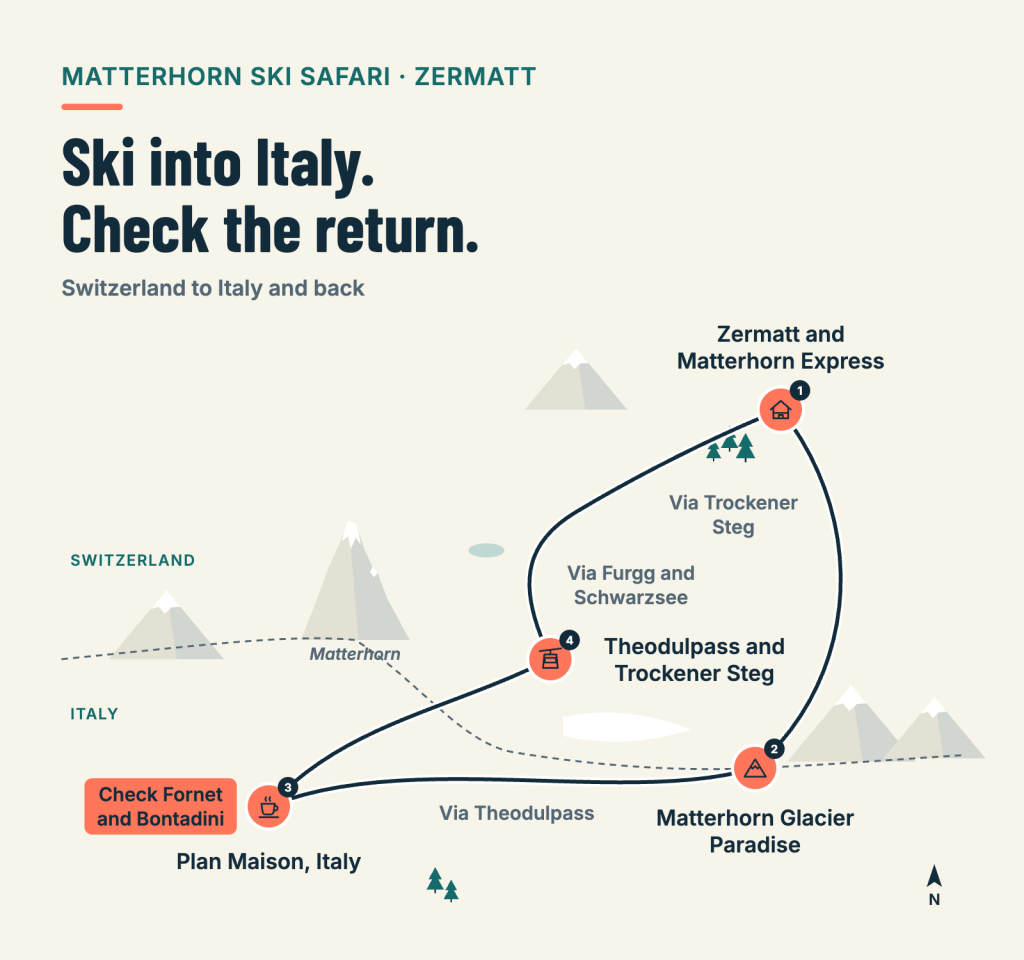
Matterhorn border route sketch. Confirm the Italy-to-Switzerland lift sequence before crossing. Follow the operator’s stage map for exact pistes.
Before leaving Zermatt, check the wind, live reports on both sides and the last usable lift sequence back from Plan Maison via Fornet and Bontadini. That decides how much time you have at Chalet Etoile. If the border links are doubtful or someone struggles on reds, pick suitable Swiss pistes. The Gornergrat itinerary is a shorter option for a group comfortable on its terrain. Live lifts and pistes, Chalet Etoile, Swiss-side Ski Safari options
For the Italian portion and the Dolomites routes, bring a certified ski helmet for adults and children. Italy also requires third-party liability insurance for alpine skiers. Verify that your policy covers skiing in Italy before you cross. Cervino Ski Paradise’s helmet rules, Italian slope liability insurance guidance
Long descents to Küblis and Villaroger
In 1895, four English visitors lost their way above Davos and ended up in Küblis, according to Davos Tourism. The route later became a Parsenn classic. The funicular opened in 1931, and modern skiers can plan a return by rail from the village. In France, a gondola does the first part of the return from Villaroger. Both descents can fit into half a day with the right connections. Davos Tourism’s Parsenn history, Villaroger gondola changes
Parsenn from Weissfluhjoch to Küblis
Take the Parsennbahn from Davos Dorf and follow the mapped line via Parsennfurgga and Schifer toward Küblis. The operator puts the historic Weissfluhjoch descent at roughly 12 km. Switzerland Tourism describes a version that starts higher on Weissfluh. It rates the whole descent medium and flags high mountain terrain at the top. Choose the approach that fits the least experienced skier and check the steepest segment on the current map. Parsenn operator route and history, Swiss Tourism’s summit variant, Parsenn piste map
Give the outing a half-day including the train. Use Küblis to Davos Dorf in the RhB planner and check whether the trip is direct or changes at Klosters Platz. Leave room to walk from the runout to Küblis station in ski boots. Buy a ticket covering Parsenn and check the rail fare separately. Berghaus Schifer is a good pause when the lower run is open and the train plan leaves time. When valley snow is thin or the train plan fails, ski the upper sector and confirm a lift down to Davos Dorf. Parsenn live status, ski tickets, RhB departures, Berghaus Schifer
Aiguille Rouge from Arc 2000 to Villaroger
The full descent drops about 2,000 vertical meters over 7 km. Start from Arc 2000 with a ticket covering Les Arcs and Peisey-Vallandry, and check the Varet approach and summit cable car. Les Arcs now classifies the summit piste as expert black. The operator attributes the steeper, more exposed pitch to changes in the Varet glacier. A party with intermediate skiers can visit the summit by lift and download when the cable car is operating. Les Arcs descent and passes, expert-only summit classification
Block out half a day for the approach, descent and return. Villaroger’s ten-seat gondola replaced the old village lift arrangement and carries skiers to the base of Droset. Check both lifts and the rest of the return to Arc 2000. Have lunch back at the base once the group has cleared those links. If the summit is on wind hold or the valley run is closed, keep the day on open Arc 2000 pistes. Villaroger gondola, Les Arcs live map and lift hours
Where to stay and how to check the last lift
Book near the first useful lift, with something else worth doing if the circuit is closed. Lech suits the White Ring, and St. Anton has the rail option for the Run of Fame. In the Dolomites, Corvara makes the Sellaronda easy to start, while Arabba puts the group on the Grande Guerra. Pick one of those clusters for a short trip and leave a weather day if there’s a route everyone especially wants to ski. Choosing St. Anton or Lech, four bases for skiing the Sellaronda, choosing a month for skiing in the Alps
These hotels are starting points for the accommodation search.
- Lech and Corvara. Compare Hotel Sandhof for central Lech and Hotel Col Alto for a Corvara village stay. Check the exact walk in boots to Rüfikopf for the White Ring, or to the lift you want for the orange or green Sellaronda direction.
- Versciaco and Davos Dorf. Check Helmhotel if using the Monte Elmo start and Hotel Parsenn for the Parsennbahn. Confirm the route from the rail stop with luggage and the hotel’s gear storage before committing.
- France. La Loze puts the Courchevel departure in reach, RockyPop Flaine suits a Flaine-based Cascades plan, and Hôtel Taj-I Mah is an Arc 2000 option. Ask about the practical ski or shuttle return, room layout and cancellation terms.
Before booking, check that the lifts and transfers cover your travel dates. Revisit the timetable in the arrival week. On the morning of the ski day, work backward from each required lift or transfer and leave time for the slowest skier, queues and breaks. Set the turnaround by whichever connection gives everyone the least time.
On the Run of Fame from St. Anton, use Zürs as the point to decide whether to continue north. Work back from both the Flexenbahn and Auenfeldjet return times, because missing either can end the ski return. If the group reaches Zürs behind plan, turn back there while the Flexenbahn is still running. Ski Arlberg’s return warning, live lift hours
With kids or a mixed group, try a local half-day or lesson before committing to a full circuit. Pick up rentals early if the shop allows it, check helmet and clothing needs, and save the maps offline. Leave room for lunch and bathroom stops. Stick to open pistes and operator-marked routes that fit the group. A marked route can be ungroomed, so ask patrol about its preparation, respect closures and stay out of uncontrolled terrain. If wind or flat light makes an exposed link a poor bet, stay in the home sector or take the day off. For a day off skis, check the opening hours of the Matterhorn Museum in Zermatt, or look at the maintained winter paths in Lech if conditions allow. Météo-France mountain forecasts and avalanche bulletins, Swiss SLF avalanche bulletin, Matterhorn Museum, Lech Zürs winter walks
Pick the ski day that gets everyone home
If everyone can ski Madloch in the day’s conditions, start with the White Ring and have lunch after the lift out of Zug. For a group that wants to spend the whole day on the move, start the Sellaronda from Corvara and leave the next morning free for a few local runs.
Book close to the first lift and choose a village where the group would still enjoy a day on its own side of the mountain. Keep the Grande Guerra penciled in until the buses and Armentarola exit line up. Then you can go for what makes that circuit worth a day of its own, right down to the horse tow. White Ring course, Grande Guerra timing and route
Frequently Asked Questions (FAQs)
Sources
Dolomites routes and transport
- Alta Badia’s Grande Guerra guide
- Sellaronda maps and route status
- Alta Badia route guide
- Operator timing and distance
- Lagazuoi open-air museum
- Grande Guerra route and timing
- Lagazuoi descent and huts
- Lagazuoi taxis and tow status
- 3 Zinnen route map, seven stages and SALTO information
- 3 Zinnen winter passes
Arlberg, Skicircus and Silvretta
- Lech Zürs lift and ski-route report
- Maisalm at Saalbach
- Ski Arlberg’s White Ring guide
- The Challenge route figures
- Oberlech winter walking route
- Ski Arlberg passes
- Live piste map
- Kriegeralpe hut
- Run of Fame route maps and checkpoints
- St. Anton rail and bus information
- Arlberg lift hours and live status
- Lech Zürs huts
- Ski ALPIN CARD day ticket
- Skicircus interactive piste map
- shorter Skicircus circuits
- Ischgl’s Smuggler’s Trail history and routes
- Silvretta tickets and operating hours
- Samnaun mountain restaurants
- Ischgl regional transport
- Lech Zürs winter walks
French Alps routes, lifts and shuttles
- Rifugio Col Alt
- Les 3 Vallées itinerary
- Côte Brune lift change
- current piste map
- Full-area day passes
- live inter-valley links
- Grand Massif route
- Haut-Giffre route description
- Grand Massif map
- daily opening status
- Giffre winter shuttles
- Villaroger gondola changes
- Les Arcs descent and passes
- expert-only summit classification
- Les Arcs live map and lift hours
- Météo-France mountain forecasts and avalanche bulletins
Berge und Bier trip-planning guides
- choosing Courchevel or Méribel
- Choosing St. Anton or Lech
- four bases for skiing the Sellaronda
- choosing a month for skiing in the Alps
Matterhorn and Parsenn
- Cervino Ski Paradise’s helmet rules
- Italian slope liability insurance guidance
- Swiss SLF avalanche bulletin
- Zermatt Bergbahnen’s cross-border route
- International ski pass
- Live lifts and pistes
- Chalet Etoile
- Swiss-side Ski Safari options
- Davos Tourism’s Parsenn history
- Parsenn operator route and history
- Swiss Tourism’s summit variant
- Parsenn piste map
- Parsenn live status
- ski tickets
- RhB departures
- Berghaus Schifer
- Matterhorn Museum