Almabtrieb in Bavaria When the Cattle Set the Schedule
Almabtrieb is the autumn return of livestock from Alpine pastures; in Bavaria, travelers should distinguish advertised village celebrations from working descents whose timing remains with the farmers. For a date-dependent trip, choose a published event in Oberstdorf or Krün; visit Königssee only if the lake and surrounding region would justify the stay without a cattle sighting.
| Bavarian option | What is published | Planning implication |
|---|---|---|
| Oberstdorf Viehscheid | September 13, 2027 | A listed Allgäu event; dated transport details still need checking. |
| Krün cattle return and farmers’ market | September 18, 2027; event start 11 a.m. | A village celebration to plan around, without a guaranteed cattle-passage time. |
| Königssee cattle transfer | Dates deliberately unpublished | An incidental possibility during an independent autumn visit. |
The attraction extends beyond the decorated animals. Herd sorting, handmade head ornaments and a village market reveal different sides of the end of the mountain grazing season. Choosing the right kind of day matters more than finding the longest list of events.
What an Almabtrieb means beyond the flowers
Almabtrieb belongs to a wider Alpine pastoral cycle. Discover Germany’s account explains the regional names, including Viehscheid in the Allgäu and Alpabzug in Switzerland; Bavaria offers several expressions of the custom rather than a single standardized festival.
Viehscheid makes the practical purpose particularly clear. Oberstdorf’s tourism page describes cattle returning to the gathering place, where the herds are separated and the animals go back to their owners. The gathering is connected to farm work even when visitors attend.
That changes how the day deserves to be watched. A pause or an altered movement belongs to the handling of livestock; it is not a gap in a performance that needs filling.
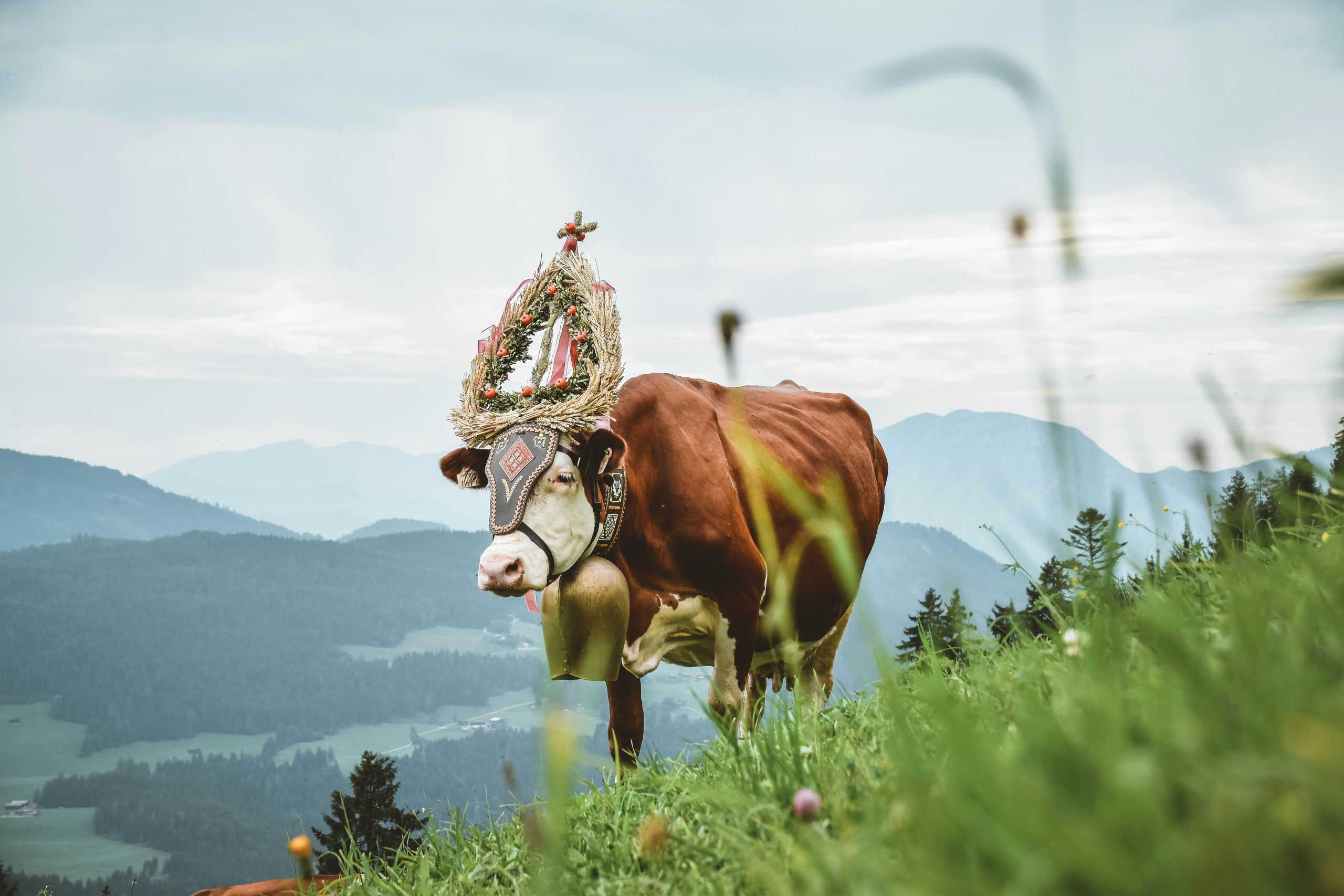
The head ornaments reward a closer look when that can be done from a permitted position. Berchtesgaden tourism describes Fuikln made from shaped fir or spruce branches, decorated with rosettes and stars of dyed wood shavings.
The same official account describes Latsch’n-Boschn, smaller arrangements using mountain pine, generally associated with younger or smaller cattle. These local names say more about the craft than a generic description of flower-covered cows.
Festive decoration is conditional on an uneventful summer. Brauchtum München’s overview also connects the adornment to the season’s safe return, so visitors should not expect every animal or every descent to look like a promotional photograph.
The useful cultural question is how a particular community marks the return. It leaves room to appreciate both the elaborate ornament and the unadorned working herd, without treating either as a spectacle owed to visitors.
Oberstdorf for an Allgäu Viehscheid
Oberstdorf is the option to investigate for an Allgäu stay centered on the herd gathering and separation. Its official listing places the 2027 event at Nordic Zentrum im Ried, rather than presenting it as a procession through any convenient town-center street.
Location matters when choosing accommodation. Staying close to restaurants or the station does not automatically mean staying beside the cattle gathering.
The tourism page estimates about 45 minutes on foot from the bus station. That is a useful indication of the approach, not a promise about an individual’s pace, terrain suitability or access needs.
For a group comfortable with a substantial walk, the approach can be part of the day. For someone who needs a short, step-free transfer, the decision should wait for confirmed arrangements rather than rest on a map’s apparent proximity.
There is a year mismatch worth catching before money is committed. The official page announces 2027 dates but still carries a road notice explicitly dated 2026.
Its older traffic information should not become a presumed 2027 closure or shuttle timetable. Check the same event page and ask Oberstdorf tourist information for the dated travel plan before booking nonrefundable transport, then check again in the week of arrival.
This is also a reason to arrive in the region before the event day if the wider trip allows it. A late arrival followed by an uncertain transfer leaves little flexibility for finding the permitted viewing area.
Oberstdorf works particularly well as a choice when the stay already includes the Allgäu. The Oberstdorf to Kleinwalsertal itinerary offers a broader regional framework without making the Viehscheid carry the entire holiday.
The independent cultural alternative is the Heimatmuseum, discussed below. If its seasonal closure overlaps the visit, a village walk and a meal can still make a modest rest day.
That fallback is deliberately smaller than a replacement mountain excursion. Experienced Alpine travelers do not need to turn every change of plan into another long hike.
Krün for a village festival with a published date
Krün offers a different emphasis: an advertised cattle return combined with a farmers’ market and village celebration. The exact Alpenwelt Karwendel event record places it in the village center on Karwendelstraße.
Its published program includes food, beer, coffee and cake, and music. That gives a visitor reasons to remain in the village even if the herd does not pass at a hoped-for moment.
For travelers already spending time around Krün or Mittenwald, this is a coherent cultural day. The choice is less persuasive if it requires reshaping an otherwise unrelated Bavarian itinerary simply to pursue a cattle photograph.
The listed 11 a.m. start belongs to the event. It should not be used to calculate the minute when animals will pass a particular corner, nor to justify a close onward train connection.
A market and a working livestock movement can share a day without sharing the visitor’s timetable. Leaving the afternoon open is a more useful planning choice than allocating a precise viewing slot.
The official record also links to a program or map dated 2026. That document can explain the previous event, but it does not settle the 2027 viewing layout, parking arrangements or toilet locations.
Before booking, look for a dated update on the event record. In the arrival week, confirm any vehicle restrictions and the approach from the actual accommodation or transit stop.
Anyone with mobility needs should ask about the viewing surface, distance and a suitable place to remain outside the route. “Village center” alone does not establish accessible viewing.
The nearby cultural alternative is Mittenwald’s Geigenbaumuseum. It makes more sense as a replacement day or another part of the stay than as a compulsory stop squeezed around the cattle return.
Krün’s appeal is the combination of a farming custom and an advertised village gathering. Travelers seeking a quiet encounter with animals away from an audience should choose another activity rather than expect that setting from a published festival.
Königssee when the return stays unscheduled
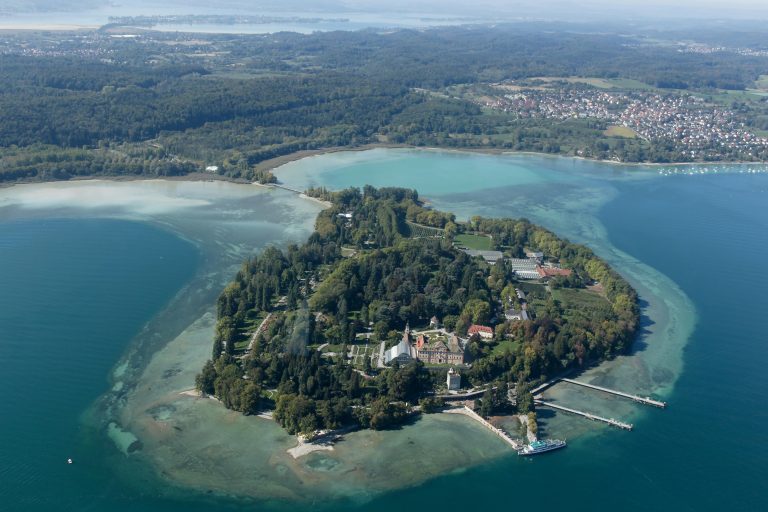
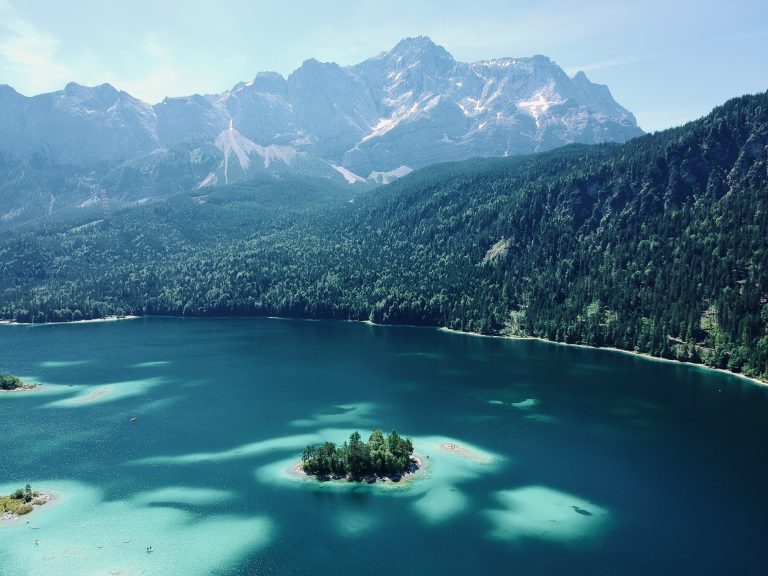
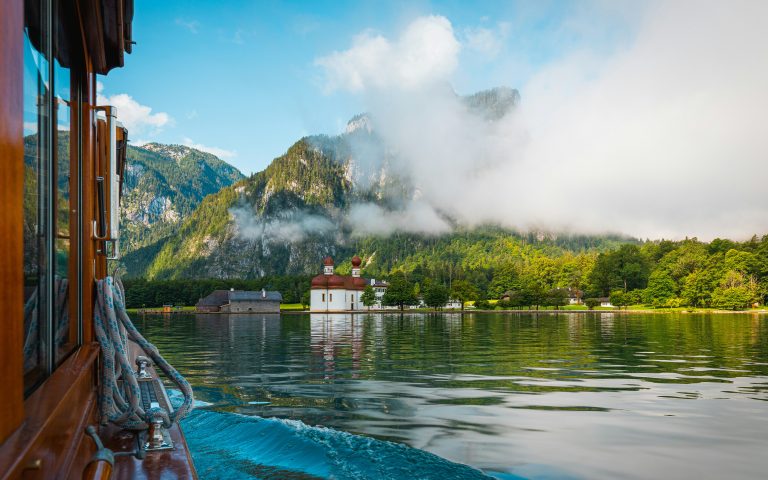
At Königssee, the geography explains the boats. Berchtesgaden tourism describes the difficult land access to Saletalm and Fischunkelalm, which makes transporting cattle across the lake the practical route back toward the northern Seelände.
The working boats are flat-bottomed wooden Landauer. Berchtesgaden tourism says the cattle receive their festive decorations after the crossing, once back on firm ground, and only after an uneventful summer.
A photograph of decorated cattle ashore should therefore not create an expectation of the same arrangement aboard a boat.
The tourism authority explicitly says the transfer dates are deliberately not published. Weather and pasture conditions determine the return; this is not a public event waiting for its final timetable.
That distinction should survive the booking process. A general reference to autumn, a photograph from an earlier year or a longer stay cannot establish a reliable day to see the crossing.
There is little value in asking a hotel to build an itinerary around a guessed transfer date. The better question is whether Königssee and Berchtesgaden would be worth the stay if no cattle appeared at all.
If the transfer happens during an ordinary visit, watching from permitted public space may be possible. Farmers and staff need room to handle the animals; following instructions takes precedence over a preferred photograph.
A normal passenger excursion is a separate decision. Do not assume that buying a ticket provides a place on a cattle boat, access to unloading or a promised view of the crossing.
For an independent lake day, use the Königssee boat operator’s current information to check an ordinary visit to St. Bartholomä. Check the actual day’s service and last return, rather than treating the cattle’s movements as part of the passenger timetable.
Salet service is seasonal. An old summer PDF does not confirm an autumn 2027 landing or departure, and weather can interrupt boat operations.
A canceled sailing also does not create a substitute walk along the whole lake. The operator’s arrival guidance says there is no lakeshore path between St. Bartholomä and Salet; an improvised shoreline route is not the fallback.
An indoor visit in Berchtesgaden can take the lake day’s place, subject to its own opening and admission checks. Skip Königssee as an event-only detour if seeing cattle is essential.
Build an autumn stay that works without cattle
For this kind of trip, two or three nights in one region is a useful planning model. It gives an arrival day, a cultural or event day, and some room for weather or a slower departure.
That is an editorial suggestion, not a requirement or an assurance that extra nights produce a cattle sighting. At Königssee especially, flexibility makes the wider holiday easier; it does not turn an unpublished descent into a bookable event.
Choose the base from the rest of the trip. Oberstdorf serves the Allgäu version of this plan, Krün or Mittenwald serves the Karwendel village celebration, and Berchtesgaden serves an independent Königssee visit.
The three options are alternatives, not stops in a compact cattle-return circuit. There is no need to add another regional transfer merely because two events happen to have published dates.
A fallback earns its place when it has a purpose of its own:
| Region | Independent day or visit | Check before relying on it |
|---|---|---|
| Oberstdorf | Heimatmuseum and time in the village | Dated opening information; the museum has seasonal closures. |
| Krün and Mittenwald | Geigenbaumuseum in Mittenwald | Opening day, access needs and transport between the actual base and museum. |
| Berchtesgaden and Königssee | Ordinary lake excursion, or a salt-mine visit if the boat day falls through | Boat operation and last return; a suitable salt-mine tour slot and visitor requirements. |
Oberstdorf’s Heimatmuseum occupies a historic Allgäu farmhouse and covers village and farming life. It continues the cultural thread of the cattle return without requiring another event to take place.
Its own website warns of spring and autumn closures and very limited accessibility in the historic building. Confirm the visit date and any access needs before choosing it as the day’s anchor.
If it is closed or unsuitable for the group, a shorter village outing and a meal require less rearrangement than another attraction.
In Mittenwald, the Geigenbaumuseum connects violin making with the town’s history. Instruments, materials and the craft offer another way into regional life after a day focused on farming.
Check its opening information and travel options before assigning it to a particular day. A museum that is open later in the stay may work better then than as an immediate escape from the event.
Berchtesgaden’s salt mine visitor-planning page recommends advance booking. The operator describes a roughly one-hour guided tour and advises allowing about one and a half to two hours for the visit overall.
A reserved tour can be a useful indoor anchor, but it is not an automatic walk-in replacement when a sailing is canceled. The operator says the mine is not barrier-free and prohibits strollers and child back carriers underground.
Families with those needs should resolve them before reserving. Check the tour’s current visitor requirements and available slots first.
Before committing money, confirm the correct event year, the dated access plan, and the accommodation’s actual cancellation terms. In the arrival week, check for changes, the fallback’s opening day and the return journey.
The Fall in Germany guide places this mountain-culture stop within a broader autumn trip. Keep high-level hiking optional: a changed event or boat day does not require a weather-exposed mountain substitute.
Watch without getting in the herd’s way
Oberstdorf’s official visitor guidance calls for distance from the animals, staying behind barriers and not touching the cattle. Treat the route as a working space throughout the movement.
As practical viewing advice, avoid feeding animals or stepping into their path for a photograph. A clear view is never a reason to narrow the space available to handlers.
For families, a position with room to step back is more useful than the closest possible position. Hold young children’s hands near the route, and choose a shorter visit if bells, standing or crowds make it uncomfortable.
That is a planning judgment, not a guarantee that any particular viewing area is suitable. Ask the organizer about the actual setup and follow instructions on the day.
The same approach applies to mobility and dog questions. Confirm permitted access, viewing surfaces and dog rules directly; do not infer them from photographs or a general destination description.
It is reasonable to leave before every herd has arrived. A meal break or a quieter part of the village can belong to the day without becoming evidence that the event was missed.
For Königssee, sort out ordinary visitor needs before boarding. The boat operator lists toilets at the waiting hall, including an accessible toilet, but none aboard the boats.
Check the return sailing before settling into a stop. An interesting development on the water is not a reason to miss the last planned way back.
Layers for waiting outdoors and shoes suited to the approach are useful even on a day without a hike. Pack for the actual access route rather than the most appealing event photograph.
A group that can comfortably watch for a while, step back when asked and leave when ready has a workable plan. Waiting all day for a particular photograph is unnecessary.
Frequently Asked Questions (FAQs)
Sources
Official listings and operating information checked November 9, 2026. Event dates above refer to 2027; older access documents are not treated as confirmed 2027 arrangements.
- Oberstdorf tourism: Viehscheid dates, location, approach and viewing guidance
- Alpenwelt Karwendel: Krün cattle return and farmers’ market event record
- Berchtesgaden tourism: Königssee cattle transfer and deliberately unpublished dates
- Berchtesgaden tourism: Fuikln and Latsch’n-Boschn
- Bayerische Seenschifffahrt: Königssee passenger services and operating updates
- Bayerische Seenschifffahrt: arrival, shore-path limitations and facilities
- Heimatmuseum Oberstdorf: collections, building and seasonal openings
- Alpenwelt Karwendel: Geigenbaumuseum Mittenwald
- Salzbergwerk Berchtesgaden: planning a visit
- Discover Germany: When the Cows Come Home, regional terminology
- Brauchtum München: Almabtrieb, cultural context