January, February or March: When Is the Best Time to Ski in the Alps?
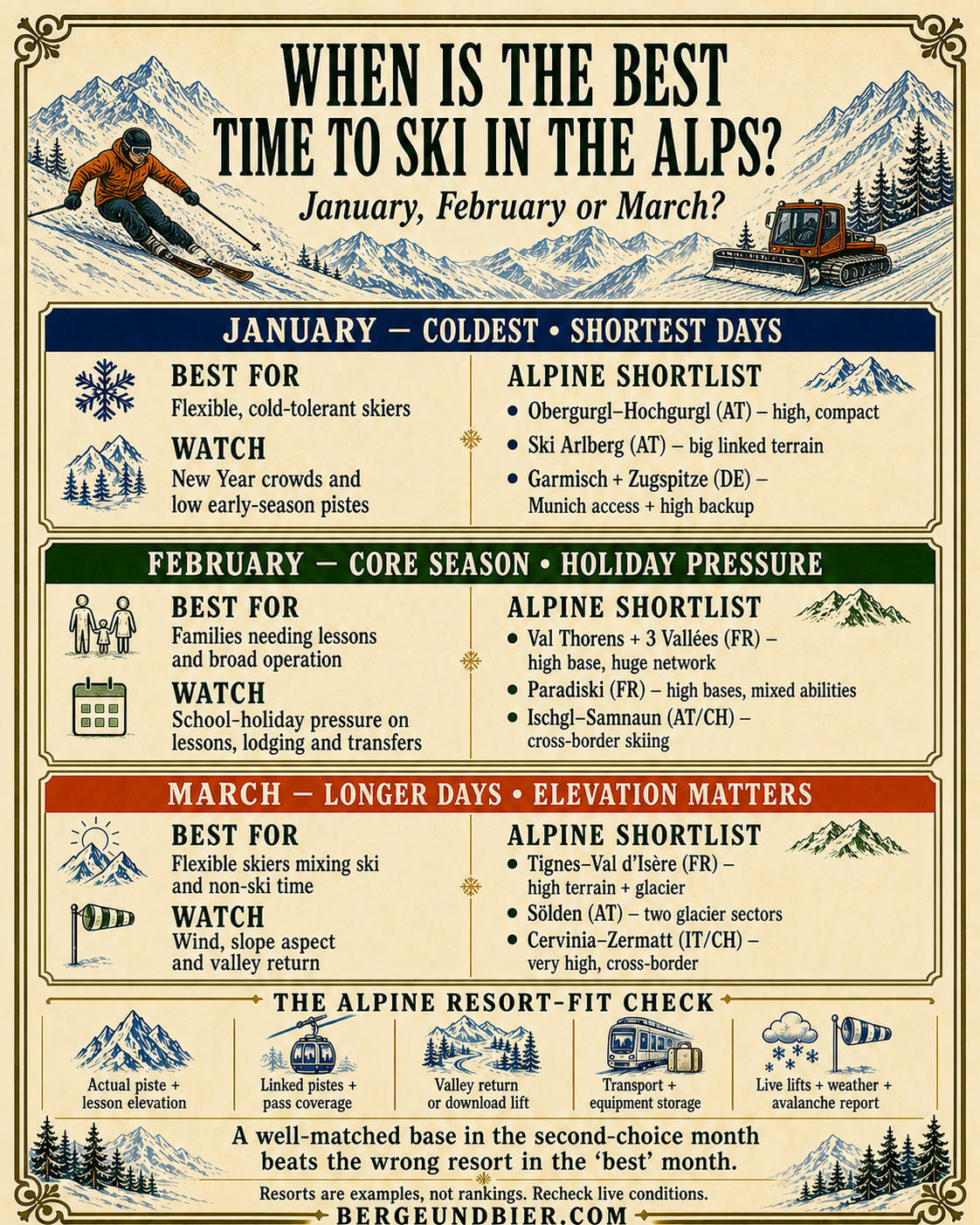
There is no single best time to ski in the Alps. January is the strongest starting point for colder midwinter trips, February offers the broadest core-season schedule but the most holiday pressure, and March gives travelers longer days while making elevation, slope aspect, and overnight temperatures more important.
This guide is for travelers who already understand the rhythm of a mountain vacation. The useful decision is not whether skiing is appealing. It is whether a January, February, or March trip best fits the group’s terrain preferences, ability mix, lesson needs, transport plan, budget, and tolerance for changing conditions.
A month is only a first filter. The final choice should still be made at the level of region, valley, resort network, and overnight base.
Best Time to Ski in the Alps: January, February and March at a Glance
| Month | Typical strength | Main tradeoff | Crowd pattern | Daylight and temperature | Elevation sensitivity | Best fit | Who should avoid it |
|---|---|---|---|---|---|---|---|
| January | Colder midwinter pattern and better chances of quieter non-holiday weeks | Early-season coverage risk after a dry December | New Year is busy; later January can be calmer, but weekends and events still matter | Shortest days of the three months, with colder starts and greater wind-chill exposure | High elevation helps, but lower pistes can remain limited after a weak start | Flexible adults, confident skiers, and groups that value colder conditions | Groups that need long lunches, mild starts, or every valley return open |
| February | Core-season schedules, established grooming routines, and broad resort services | Staggered school breaks can tighten lodging, lessons, transfers, and restaurants | Pressure shifts as French zones, Austrian states, German states, and other markets overlap | More daylight than January, but cold, storms, poor visibility, and wind remain possible | A high summit does not solve a low beginner area or valley-return problem | School-break families and groups that need the broadest planned operation | Flexible travelers prioritizing quieter pistes or lower total cost |
| March | Longer days, easier outdoor breaks, and a better fit for ski plus non-ski time | Surface quality can change quickly with aspect, cloud cover, and daytime warming | Often easier outside holiday weeks, but Easter and late winter breaks can reverse that | Longest days of the three months, with a stronger freeze-thaw and sun-timing effect | Critical: useful terrain height, aspect, base elevation, and download options matter more | Travelers who can select higher terrain and adjust the ski day to conditions | Groups tied to low, sunny learning terrain or an essential valley return |
Snow reliability is not a month printed on a calendar. It is the interaction of altitude, exposure, storm track, snow-making, grooming, wind, and the resort’s operating decisions.
The European Environment Agency notes that snow-season definitions and local thresholds vary, while elevation and local climate matter. MeteoSwiss also emphasizes that heavy snowfall can still occur while warming has a stronger effect on snow at lower elevations.
The practical rule is simple: choose the month, then test the actual resort layout against the group’s needs.
January: Colder, Shorter Days and Better Odds of Quiet Non-Holiday Weeks
January works best for travelers who value a midwinter pattern and can travel after the New Year rush. It is not automatically the best powder month, and it is not uniformly quiet.
Colder weather can help resorts preserve existing snow and operate snow-making when conditions allow. It can also make exposed lifts, lesson meeting points, and long transfers across a lift network less appealing.
Shorter daylight changes the daily plan. A group that needs a slow breakfast, rental pickup, and lesson drop-off can lose a meaningful portion of the lift day before reaching useful terrain.
This is where base selection matters more than a broad resort ranking. A practical January base has:
- A short walk or dependable ski-bus ride to the main access lift
- Indoor equipment storage near the lift or accommodation
- Groceries and simple meal options that do not require another drive
- A lesson meeting point that does not force the whole group onto the same morning schedule
- A realistic indoor, village, or lower-effort option for a cold or windy day
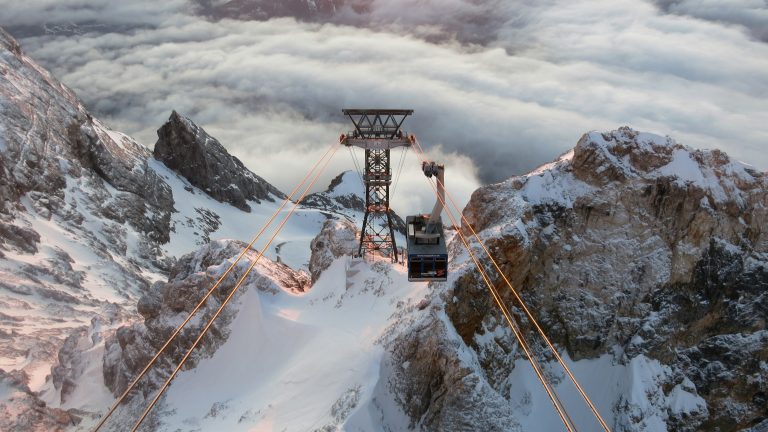
Two January bases solve different problems. Compare Garmisch-Partenkirchen stays for a short Germany-based trip that may alternate Garmisch-Classic and Zugspitze; those ski areas are separate, so check the morning transfer. Compare Lech am Arlberg stays for a Ski Arlberg week centered on a village base; it is a poor budget fallback during New Year demand. For either choice, map the exact lodging address to the useful lift, rental shop, and lesson meeting point before comparing room totals.
January is strongest for flexible couples, adult groups, and families traveling outside major holiday periods. It also suits confident skiers who prefer to start early and keep lunch short.
It is a poor fit for travelers who dislike cold lift rides, want long outdoor lunches, or need every low valley return to be open. A dry early winter can leave a high resort operating while the lower runs that make a specific base convenient remain limited.
Do not assume that late January is empty. Weekends, races, local holidays, and nearby source markets can still create pressure. Check the resort’s event calendar and the school calendars relevant to the destination.
Specific Resort Examples for January
The first week of January is still part of the Christmas and New Year peak. None of these resorts should be treated as quiet then. Travelers whose dates are flexible should compare weeks after the relevant New Year school holidays end.
| Resort or area | Why it can fit January | Best for | Main watch-out |
|---|---|---|---|
| Obergurgl-Hochgurgl, Austria | The ski area runs from 1,800 to 3,030 meters, which gives an early-January trip a useful elevation hedge after a dry December. | Travelers prioritizing groomed high-altitude terrain and a compact resort setup | Premium lodging and exposed high-alpine terrain; poor visibility can reduce the value of the altitude advantage |
| Garmisch-Classic and Zugspitze, Germany | One base can support a conventional valley-area ski day plus a much higher Zugspitze option if lower coverage is limited. | Shorter trips, mixed ski and non-ski plans, and travelers reaching the Alps through Munich | They are separate ski areas rather than one continuous network, and New Year or weekend day traffic can strain parking, trains, and access lifts |
| Ski Arlberg, Austria | The 300-kilometer network gives experienced groups enough terrain variety for a core-winter week. | Confident intermediates and advanced skiers who value a large linked area | St. Anton, Lech, Zürs, and the best-known ski circuits remain high-demand choices around New Year; lodging and lessons can be expensive or constrained |
| Les Arcs and Paradiski, France | High village options and a 425-kilometer linked network give groups several terrain and base choices once the New Year peak passes. | Mixed-ability groups that want a large area and a practical high-altitude base | The Vanoise Express is a key connection, and the full network can be unnecessary if the group will mostly use one local sector |
Choose January when colder conditions and flexible dates matter more than daylight. Skip it when the group’s comfort limits would turn a theoretical snow advantage into shorter ski days.
February: Core Winter Coverage With the Highest Holiday Pressure
February is the default core-winter choice for many Alpine trips. At the representative resorts whose published schedules were checked for this article, February sits inside the advertised main winter season. Ski schools, rentals, restaurants, and local transport also plan around high demand. That supports a planning assumption about scheduled operation, not a guarantee of snow depth or complete daily access.
That does not make February the month with guaranteed snow. Wind can close high lifts. Warm spells can affect low pistes. Heavy snowfall can reduce visibility and disrupt transfers. An open resort can still have important sectors or connections closed.
The main February planning problem is capacity, not a single crowd date.
For the 2026 to 2027 season, official calendars show how the demand wave moves:
- Austria’s education ministry staggers February semester breaks across three groups of states from February 1 through February 20, 2027.
- France’s education ministry lists winter breaks by zone from February 6 through March 8, 2027.
- Germany’s KMK calendar shows different winter or spring breaks by state, including some February periods and others in March.
- The UK government directs families to local councils because term and half-term dates vary.
- The Dutch government publishes dates across north, central, and south school-holiday regions.
- Belgium’s federal information service explains the country’s three language communities; its education pages direct families to separate community calendars.
These dates will change each year. Their planning value is the pattern: one country’s quiet week can overlap with another market’s holiday.
February Resort Examples and Crowd Pressure
There is no official Europe-wide ranking of the most crowded ski resorts. The examples below are a planning-risk assessment: large international destinations and famous linked networks are more exposed when several school-holiday markets overlap. A large resort may absorb skiers well on the mountain while lodging, lessons, transfer roads, restaurants, and a few key lifts still feel full.
| Resort or area | Why it can fit February | Where pressure is most likely | Who should reconsider |
|---|---|---|---|
| Val Thorens and Les 3 Vallées, France | A high resort base and a very large network suit groups that want broad core-season operation. | Accommodation, lessons, Saturday transfers, and popular inter-valley links during French and international holiday overlap | Travelers who will not use the network enough to justify peak-period cost and complexity |
| Les Arcs, La Plagne, and Paradiski, France | Multiple high bases and 425 kilometers of linked pistes provide options for mixed abilities. | Arrival routes through the Tarentaise, ski-school meeting points, and the Vanoise Express corridor on the busiest weeks | Groups expecting a large map to eliminate queues or simplify lesson logistics |
| St. Anton, Lech, Zürs, and Ski Arlberg, Austria | The network is a strong fit for experienced skiers who want varied terrain and can move between sectors. | Premium lodging villages, lessons, famous ski circuits, and transfer days when Austrian, German, Dutch, or UK breaks overlap | Budget-focused groups or families that need one simple lesson and pickup hub |
| Sölden and Ischgl-Samnaun, Austria | High terrain and extensive scheduled winter operation make both logical February candidates. | Main village access, rental and lesson inventory, nightlife-oriented accommodation, and key lifts during central European breaks | Travelers choosing February mainly to find quiet pistes |
| Garmisch-Classic and Zugspitze, Germany | They work well for shorter trips and groups combining skiing with a Germany itinerary. | Weekend and holiday day traffic from the Munich region, parking, cogwheel-train capacity, and first access lifts | Week-long skiers who need a single broad, continuously linked network |
The practical response is not automatically to avoid these resorts. Book the exact lesson, lodging, and transfer setup early, choose a base that removes daily transport friction, and avoid Saturday arrival or departure when the route offers a realistic alternative.
A different village within Les 3 Vallées may solve a February lodging constraint. Compare Les Menuires stays if the group expects to ski the linked network but does not need to sleep in Val Thorens. This is a poor fit when a required lesson or daily plan starts in Val Thorens and the route between villages adds avoidable morning pressure. Check the actual lift route, meeting point, and return plan before treating a room rate as a saving.
Check more than lodging prices. The most trip-disrupting constraints can be lesson inventory, childcare, Saturday transfer traffic, rental queues, restaurant bookings, and a crowded village bus at lesson start and closing time.
Families should book the hard constraint first. If children need a specific lesson level or language, secure that product before committing to nonrefundable lodging. Then map the rental shop, storage, meeting point, nearest useful lift, and pickup plan.
Mixed-ability groups should also resist overpacking the week. One main mountain commitment per day is usually enough. A rest day or non-ski day protects the trip from fatigue, poor visibility, or a storm without forcing the group to recover on the busiest transfer day.
February suits school-break families and groups that want the broadest scheduled operation. It is less attractive for flexible travelers whose main priorities are lower prices and quieter pistes.
Choose February for operational breadth. Avoid a specific February week when the required lesson, transfer, or lodging setup no longer works.
March: Longer Days, Spring Snow and a Bigger Elevation Tradeoff
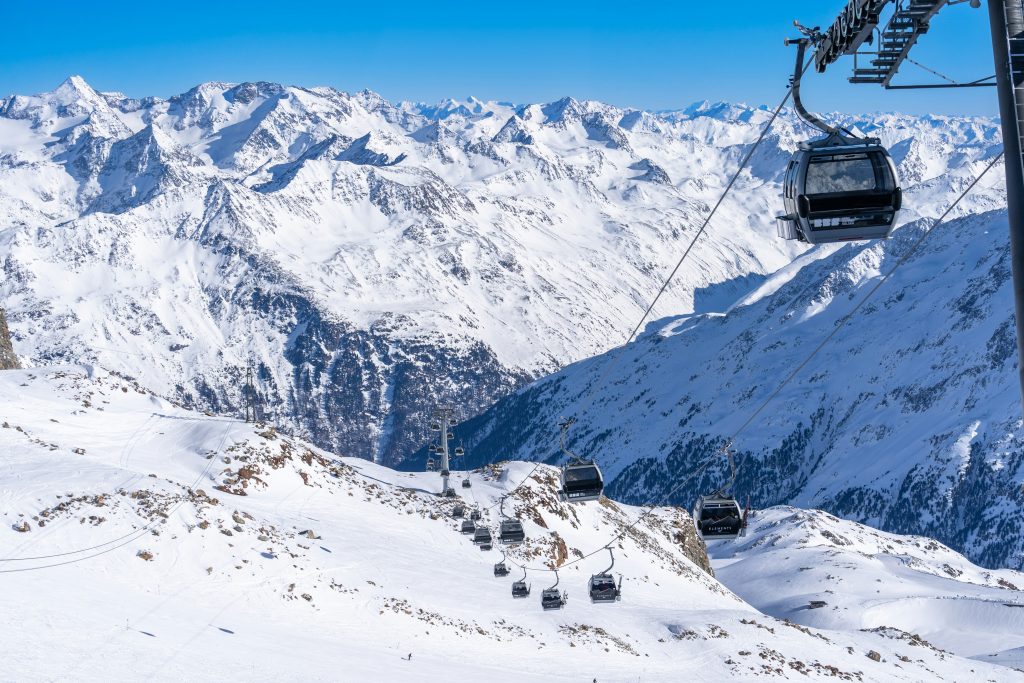
March offers the best time balance for many experienced Alpine travelers. Days are longer, lift rides are often more comfortable, and a ski day can include an outdoor lunch without using most of the available daylight.
The tradeoff is a more active surface cycle.
After a clear, cold night, a supporting crust can create favorable morning conditions. Sun and warming may soften exposed pistes as the day progresses. East-facing slopes can change before west-facing slopes, and a cloudy or warm night can remove the expected morning reset.
The Swiss Institute for Snow and Avalanche Research explains that wet-snow problems depend on liquid water, elevation, and slope aspect. It also notes that good timing matters and that a warm, cloudy night can leave a wet-snow problem in place early.
This does not mean March is only for spring snow. MeteoSwiss documents that substantial fresh snow can still fall in March. A storm can bring winter surfaces, poor visibility, wind holds, and a very different day from the sunny spring pattern.
On managed pistes, use the resort’s grooming and lift reports to plan sectors. If the group enters uncontrolled terrain, the decision standard changes. Read the local avalanche bulletin, carry the appropriate equipment, and use qualified local guidance. The European Avalanche Warning Services states that a regional bulletin supports decision-making but does not replace an assessment of the specific location.
A good March ski day often looks like this:
- Check the overnight temperature, cloud cover, wind, new snow, lift report, and local avalanche bulletin.
- Start with the terrain that fits the morning surface and the group’s ability.
- Reassess aspect and elevation before lunch.
- Move higher, change aspect, or finish earlier if lower pistes deteriorate.
- Confirm the final valley return or download lift before committing to the last sector.
March also exposes weaknesses in resort design. A high summit is not enough if most beginner terrain sits low and sunny. A glacier link is less useful if wind interrupts the connection. A low village can still work if fast lifts reach useful terrain and downloading is normal.
Official 2026 to 2027 schedules show why the resort must be checked, not just the destination name. Zugspitze lists an expected season through May 2, 2027, while nearby Garmisch-Classic lists an expected closing date of March 29. Val Thorens and Orelle list November 21, 2026 through May 2, 2027. Sölden separates its full winter area from a later glacier-only period. Cervino Ski Paradise lists different operating windows for Breuil-Cervinia, Valtournenche, Torgnon, and Chamois.
Those are planned dates, not promises of complete operation. Weather, snow, wind, maintenance, and operator decisions still control the day.
High-Altitude Resort Examples for March
Higher elevation improves the odds of useful late-season coverage, but it does not guarantee powder, open connections, good visibility, or a skiable valley return. These examples are strongest when the group chooses the right base and terrain within the resort.
| Resort or area | Why it is a stronger March candidate | Best fit | Main watch-out |
|---|---|---|---|
| Val Thorens-Orelle, France | The operator states that 99 percent of the local area is above 2,000 meters and lists the 2026 to 2027 season through May 2. | Travelers who want a high, ski-focused base with broad intermediate terrain | Open high-alpine terrain can be exposed to wind and poor visibility; the wider Les 3 Vallées schedule can differ from the local area |
| Tignes-Val d’Isère, France | High terrain and glacier access make it a logical late-March shortlist choice; Tignes states that high-altitude skiing continues into April and May. | Mixed groups that want a large network and several high-base options | Wind, whiteout, and inter-resort link closures can reduce the usable map; verify which sectors and village returns matter to the group |
| Sölden, Austria | Two glacier sectors and high lift-served terrain support late-season planning. The operator lists full winter-area operation through April 18, 2027, followed by glacier-only operation through May 2. | Experienced groups that want groomed skiing, high terrain, and a lively resort base | Glacier access and upper lifts remain weather-dependent; a long vertical range does not mean every valley piste will ski equally well |
| Breuil-Cervinia and Zermatt, Italy and Switzerland | Breuil-Cervinia’s operator lists a 2026 to 2027 winter season through May 2, and the cross-border area reaches very high terrain. | Travelers prioritizing altitude, long groomed runs, and a cross-border ski day | Wind can close the international connection, subareas can follow different schedules, and the return route must be checked before crossing |
| Obergurgl-Hochgurgl, Austria | The ski area spans 1,800 to 3,030 meters without depending on a low valley base, making it a strong non-glacier March option. | Groups that value a compact high-altitude resort and straightforward piste skiing | Less tree cover for poor-visibility days and a higher lodging-cost floor than many lower valley bases |
| Zugspitze, Germany | The expected 2026 to 2027 season runs through May 2, much later than nearby Garmisch-Classic’s expected March 29 close. | Germany-based trips, short high-altitude ski breaks, and a weather-dependent backup to lower Bavarian areas | The ski area is smaller than the major French, Austrian, Swiss, or Italian networks and is not a substitute for a full linked-resort week |
For a March booking, compare the elevation of the terrain the group will actually ski, not just the highest lift. A high summit is weak insurance when beginner lessons, essential links, or the final return piste sit much lower.
Compare Tignes stays with the exact ski-day route in mind. Le Lac and Val Claret can produce different walks, lesson drop-offs, and first-lift choices even within one resort. Tignes suits groups willing to change sectors when weather or visibility shifts; it is less suitable for beginners who need a simple morning unless the chosen address and lesson location make that routine practical. Confirm the required piste and lift connections from the operator before relying on the full linked map.
Choose March when longer days and flexible terrain selection improve the trip. Skip a low or sun-exposed base when the group depends on lower beginner pistes or an open valley return.
Which Month Fits Your Ski Group?
The strongest month changes when the least flexible need changes.
Colder midwinter seekers
Start with January, especially outside New Year and local holiday periods. The backup is February if the group values broader scheduled operation more than quieter dates.
January is not the right choice if cold-sensitive travelers will delay every start or stop skiing early.
Families using ski school
Start with the week the school can actually serve the children’s age, language, and ability level. That may lead to February, but capacity and price pressure will be highest during overlapping breaks.
March can work well when lessons continue on terrain with suitable elevation and aspect. Verify the meeting-point elevation rather than relying on the resort summit.
Advanced skiers seeking varied terrain
Choose the resort network before the month. January may offer a colder pattern, February may support the broadest scheduled links, and March may reward skiers who can follow elevation and aspect.
No month justifies an off-piste assumption. Storm snow can increase hazard while closing the lift or connection needed to reach the intended terrain.
Groomed-run intermediates
February is the safest starting point for schedule breadth. January is a strong alternative for flexible travelers, while March can be excellent for skiers who are comfortable adjusting start time and sector choice.
A large network is not always better. A compact area with reliable internal connections can produce more useful skiing than a vast map with wind-sensitive links.
Mixed skiers and non-skiers
March usually offers the strongest combination of skiing, outdoor lunches, village time, and non-ski activity. January can work if the base has useful indoor options and short transfers.
The non-skier’s day should not depend on driving the ski group to several lifts. A walkable village, rail access, or dependable bus network is more valuable than one extra high sector.
Value-focused travelers
Compare live checkout totals rather than assuming a month is cheap. Match occupancy, cancellation terms, meal plan, lesson products, rentals, transfers, and pass duration.
January after New Year and March outside holiday periods are often the first windows to test. The answer can reverse at a specific high-altitude resort, event week, or flight market.
Quick month-selection checklist
Before choosing a month, answer these questions:
- Are dates fixed by school or work?
- Which lesson, childcare, or guiding product is nonnegotiable?
- Where is the terrain used by the least experienced skier?
- Is downloading acceptable if a valley run closes?
- Does the pass cover every sector the group expects to use?
- Can equipment stay near the access lift?
- Is the base practical without daily driving?
- Would a rest day improve the week?
- Does the budget tolerate a peak holiday period?
- Does the group prefer colder starts or longer daylight?
Choose around the least flexible traveler. A well-matched base in the second-choice month usually beats a poorly matched resort in the supposedly best month.
How Elevation, Geography and Resort Design Change the Answer
Country comparisons are too broad for this decision. The useful hierarchy is country, region, valley, resort network, village, and accommodation base.
Elevation must also be read as a distribution, not a headline number.
Check:
- Base elevation
- Highest lift-served point
- Elevation of beginner and intermediate terrain
- Elevation of key connecting pistes
- Slope aspect and tree cover
- Snowmaking coverage
- Whether the valley return is optional
- Whether a download lift is practical at closing time
A high purpose-built base can reduce the dependence on a low valley return, but it may offer less for non-skiers. A valley network can provide useful village services and buses while requiring more morning movement. A high-mountain rail and lift system can connect several sectors, but weather may interrupt the planned link. Sunny terrain can reward careful timing while softening earlier on exposed slopes.
These are resort-design patterns, not country rankings.
Resort design affects ability fit as much as snow does. A family may book for the high point, then discover that the children’s lesson area is low, sunny, and separate from the adult group’s preferred lifts. Another group may choose a linked map without noticing that the connection requires a difficult return piste or a final lift with an early closing time.
Bad-weather usability matters too. Tree-lined terrain can help with visual definition, while high open slopes may become difficult in cloud or wind. The correct fallback could be a lower sector, a smaller neighboring area, a village day, or a planned rest day.
For concrete comparisons, the existing Austria versus Switzerland ski guide addresses country-level cost and resort tradeoffs. The Garmisch-Partenkirchen versus Ehrwald guide shows why choosing the overnight side of one mountain changes access. The Oberstdorf to Kleinwalsertal itinerary explains how a cross-border valley trip works in practice.
Do not select a March resort from its summit elevation alone. Select the terrain, connections, and base the group will actually use.
Booking, Transport and Daily Logistics by Month
Book in the order of constraint:
- Choose the week and Alpine region.
- Select the resort network and base that fit the group.
- Secure essential lessons, childcare, or guiding.
- Confirm rental location and storage.
- Compare lodging with equivalent cancellation terms.
- Check passes, transfers, rail, parking, and local buses.
- Add restaurants only where reservations are genuinely useful.
- Keep one realistic non-ski or rest-day option.
This order prevents an attractive lodging rate from locking the group into the wrong side of a valley.
Verify the Trip at Three Different Times
| When | What to verify | Decision it protects |
|---|---|---|
| Before booking | Planned season window, lesson inventory, pass coverage, rental and storage setup, lodging cancellation terms, and transport options | Whether the resort and base can serve the group at all |
| About 48 hours before travel | Weather, rail or road disruption, transfer timing, chain or winter-equipment rules, and the operator’s opening forecast | Whether the arrival and first ski day still work |
| Each ski morning | Live lift and piste status, wind, mountain weather, last-download times, and the local avalanche bulletin when leaving controlled terrain | Which sector, start time, and fallback plan fit that day |
This sequence separates bookable infrastructure from forecasts and live operating decisions. It also prevents a planned closing date from being mistaken for a promise about the terrain available on a specific day.
Equipment movement deserves more attention than it usually gets. Carrying skis through a village twice a day can outweigh a small lodging saving. Storage by the lift, a rental shop near lessons, or a dependable ski bus can improve every morning.
Lesson drop-off should be mapped before booking. Confirm the exact meeting point, level, start time, pickup procedure, and lift access. If adults plan to ski another sector, calculate whether the return is realistic without relying on one wind-sensitive connection.
Transport claims also need a dated check. Winter tire and chain rules differ by country and can change. Rail works, road closures, parking systems, and bus timetables are local. Use government, rail, road, and resort sources for the actual travel dates.
A car adds flexibility only when it solves a real problem. In a walkable base with a reliable bus, it can add parking pressure, road risk, and an extra task at both ends of the ski day.
A family or mixed group should plan one main mountain commitment per day. Leave space for fatigue, changing conditions, a slow lunch, or a child moving lesson levels. A scheduled rest day is not wasted vacation time if it preserves the rest of the week.
Travelers comparing total cost should use the Alps versus US ski-cost guide for a full-trip framework. Travelers staying in Germany can use the Germany ski resorts by month guide to narrow local options.
The cheapest month is not the one with the lowest room rate. It is the one that delivers the trip without expensive fixes, wasted transfers, or unusable lesson plans.
Final Verdict: Choose the Trip Pattern Before the Month
January is the strongest starting point for flexible travelers who want a colder midwinter trip and accept shorter days. February is the default for groups that prioritize broad scheduled operation and can manage holiday pressure. March is the best starting point for longer days, ski plus non-ski time, and travelers comfortable selecting terrain by elevation and aspect.
Then test the month against the actual base.
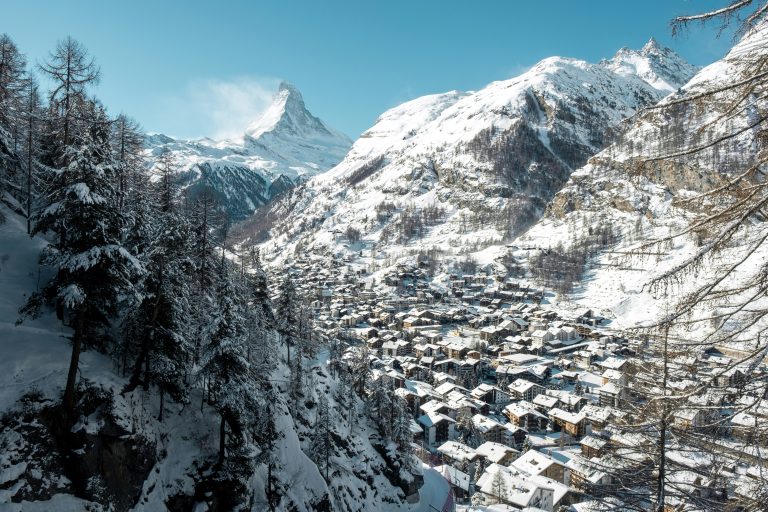
A cross-border March trip makes the overnight side especially important. Compare Zermatt stays when the group wants to start from the Swiss side and have a usable village day if the upper lifts close. It is a poor fit for a plan that depends on reaching Breuil-Cervinia every day: the international connection can be wind-sensitive. Check the route and return options for the exact travel dates, and compare equivalent lodging terms before assuming two bases serve the same trip.
Verify lesson inventory, equipment movement, terrain by ability, pass coverage, planned operating dates, transport, and the current lift report. Check mountain weather and the local avalanche bulletin near travel.
If the group cannot agree, prioritize the least flexible need. A suitable base in the second-choice month is a better booking than the wrong resort in the month that looks best on paper.
Frequently Asked Questions (FAQs)
Sources
- European Environment Agency: Snow, glaciers and ice sheets
- MeteoSwiss: Snow
- MeteoSwiss: Snowfall in spring
- Swiss Institute for Snow and Avalanche Research: Wet snow
- European Avalanche Warning Services: Information pyramid
- Austrian education ministry: School holidays 2026 to 2027
- French education ministry: School calendar 2026 to 2027
- German KMK: School holiday calendar 2026 to 2027
- UK government: School term and holiday dates
- Dutch government: School holiday dates by academic year and region
- Belgium federal information service: The three language communities
- Bayerische Zugspitzbahn: Operating times and expected 2026 to 2027 ski seasons
- Val Thorens: Official 2026 to 2027 opening dates
- Sölden: Official 2026 to 2027 season periods
- Cervino Ski Paradise: Official lift, piste, and 2026 to 2027 season information
- Gurgl: Official Obergurgl-Hochgurgl ski-area elevations and operating information
- Les Arcs: Official Paradiski area and 2026 to 2027 opening dates
- Ski Arlberg: Official 2026 to 2027 season dates and ski-area information
- Ischgl: Official 2026 to 2027 operating dates
- Tignes: Official high-altitude ski-area and 2026 to 2027 season information
- Val Thorens lift operator: Official altitude distribution and 2026 to 2027 dates