A Few Days in Dresden and the Heart of Saxony
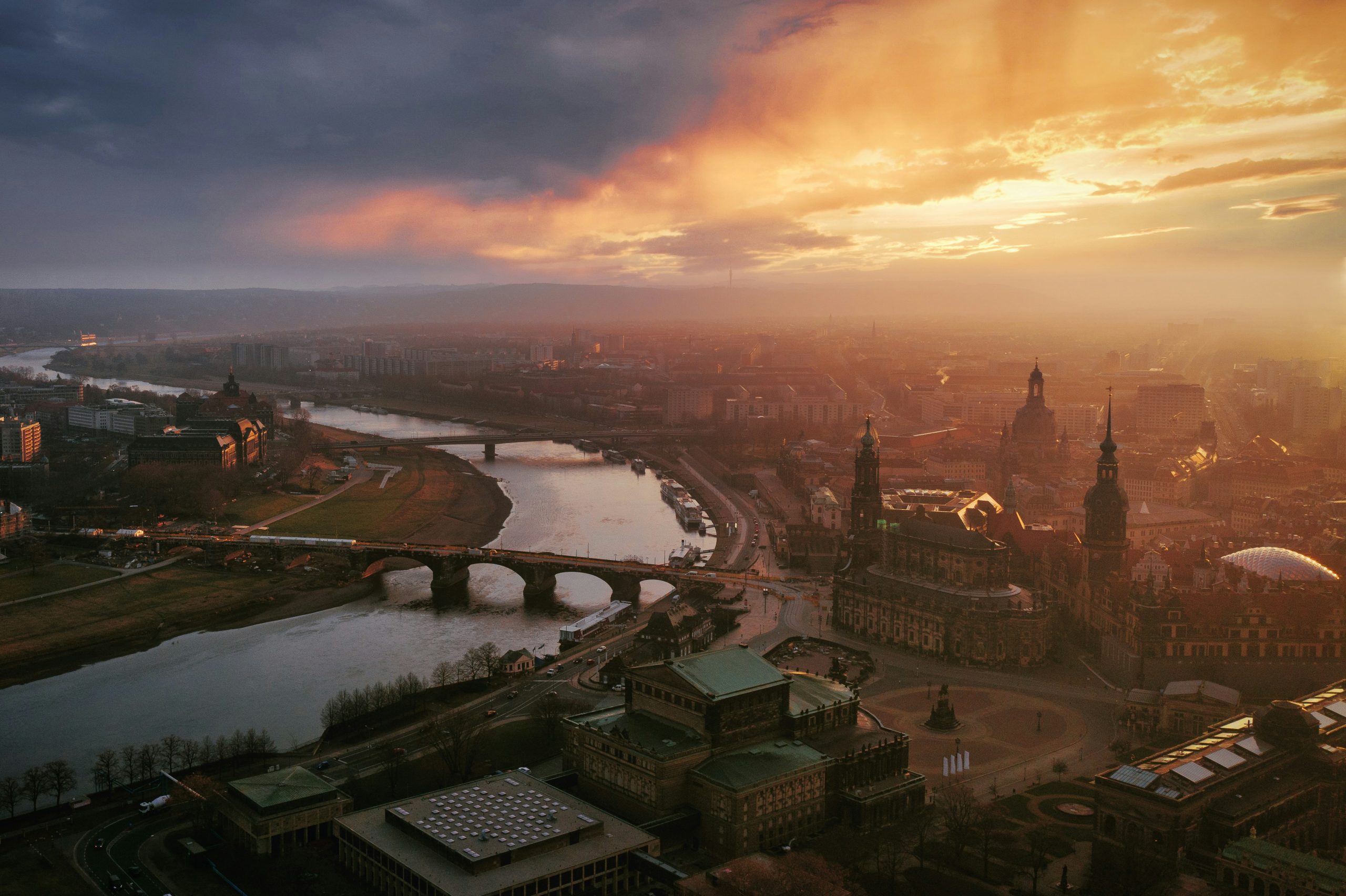
Dresden is worth more than a single night. For travelers planning things to do in Dresden, the city works best when it’s given two to three days rather than treated as a quick stop between Berlin and Prague. The Elbe River runs through the center, and the city spreads across both banks in ways that shape how visitors move through it.
Dresden does not function like Berlin or Munich. Those cities reward fast, goal-oriented visits. Dresden functions differently: its appeal is concentrated but layered, and a visitor who rushes through the main landmarks in a day tends to leave with a superficial impression of a place that has considerably more depth.
The core tension of the city is historical. The baroque architecture that defines the Altstadt was largely rebuilt after the Allied bombing of 1945, and that reconstruction is both the city’s dominant story and its most complex one. Alongside that rebuilt grandeur sits the Neustadt, a grittier, more independent-minded neighborhood on the north bank of the Elbe River that has almost nothing in common with the postcard version of Dresden.
Dresden also functions as a practical base. Saxon Switzerland National Park is under an hour away by train. Meissen is 40 minutes. Leipzig and Görlitz are reachable for longer day trips or short extensions. This makes the city a logical anchor for a wider Saxony itinerary rather than just a standalone destination.
Getting Your Bearings: Altstadt vs. Neustadt
The geographic split is simple. The historic Altstadt sits on the south bank of the Elbe River; the Neustadt is directly across on the north bank. For visitors, understanding this distinction matters because the two areas serve completely different purposes and attract different types of travelers.
The Altstadt is dense with monuments, museums, and significant architecture. Most of Dresden’s major landmarks are within a compact, walkable zone. The Neustadt is neighborhood-scaled: more residential, less formally structured, and oriented around independent bars, cafes, and street-level culture rather than ticketed attractions.
Most first-time visitors spend the majority of their time in the Altstadt, which is the right instinct. Skipping the Neustadt entirely, however, means missing a meaningful layer of the city. It’s a short walk or tram ride across the Augustus Bridge, and a few hours there adds context that the Altstadt can’t provide.
Where visitors stay affects how they move. Those based in the Altstadt find the main museums and landmarks immediately accessible but may need to make a deliberate effort to cross the river. Those staying in the Neustadt tend to drift into the Altstadt for morning sightseeing and return north for evenings.
The Altstadt’s Big Landmarks and How to Approach Them
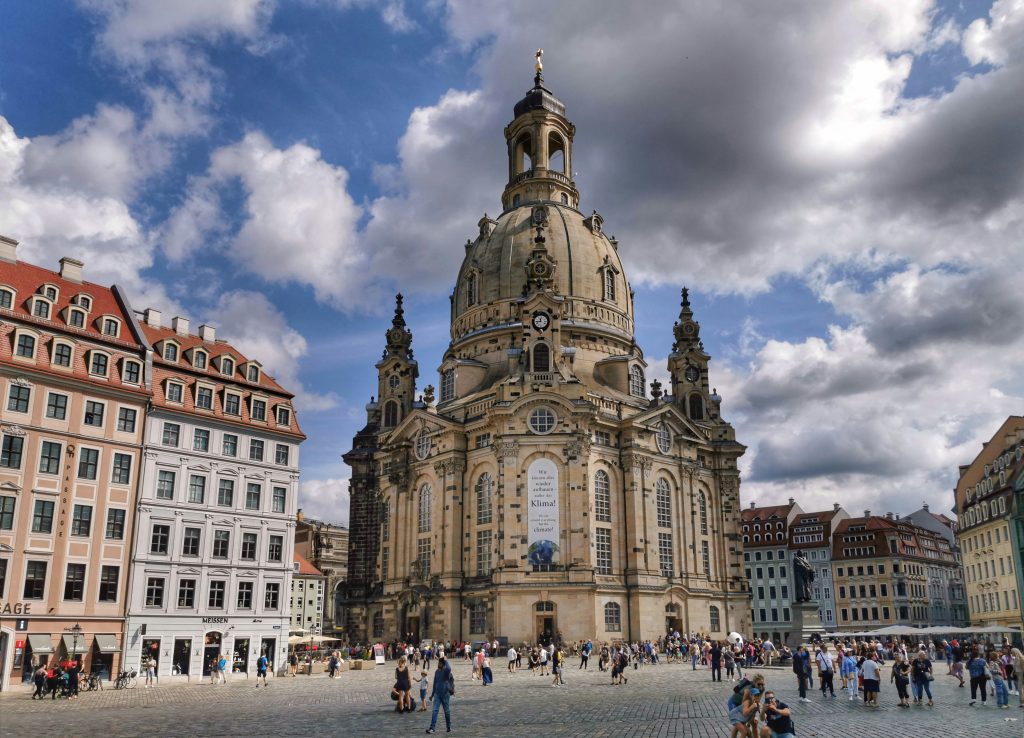
The core cluster of Dresden’s most-visited things to do sits within a compact section of the Altstadt: the Frauenkirche, the Zwinger, the Semperoper, and the Residenzschloss. These four landmarks are close enough to walk between in under 20 minutes, which makes planning straightforward.
Frauenkirche is the rebuilt Protestant church that has become the city’s most recognizable structure. Completed in 2005 after decades of reconstruction, it is not an original 18th-century building. Visitors who understand this appreciate it as a significant feat of restoration; those expecting unaltered historical fabric may feel differently. Entry to the interior is free. The dome platform offers views over the Altstadt and requires a separate ticket.
Zwinger is a baroque palace complex housing several of the Dresden State Art Collections, including the Old Masters Picture Gallery (Gemäldegalerie Alte Meister). It has been restored multiple times since its original construction in the early 18th century. The courtyard is accessible without a ticket; the galleries require admission.
Semperoper is one of the most architecturally significant opera houses in Germany. Guided tours run regularly and require advance booking, particularly in peak season. Attending a performance is the fuller experience but requires planning well ahead.
Residenzschloss houses the Historic Green Vault (Historisches Grünes Gewölbe) among other collections. The Green Vault alone justifies a visit for travelers with any interest in royal decorative arts.
The Altstadt is very walkable within this core zone. In peak summer months, midday crowds around the Frauenkirche and Zwinger can be significant. Early morning visits, starting before 9am, offer a noticeably different experience.
Walking the Elbe and the Brühlsche Terrasse
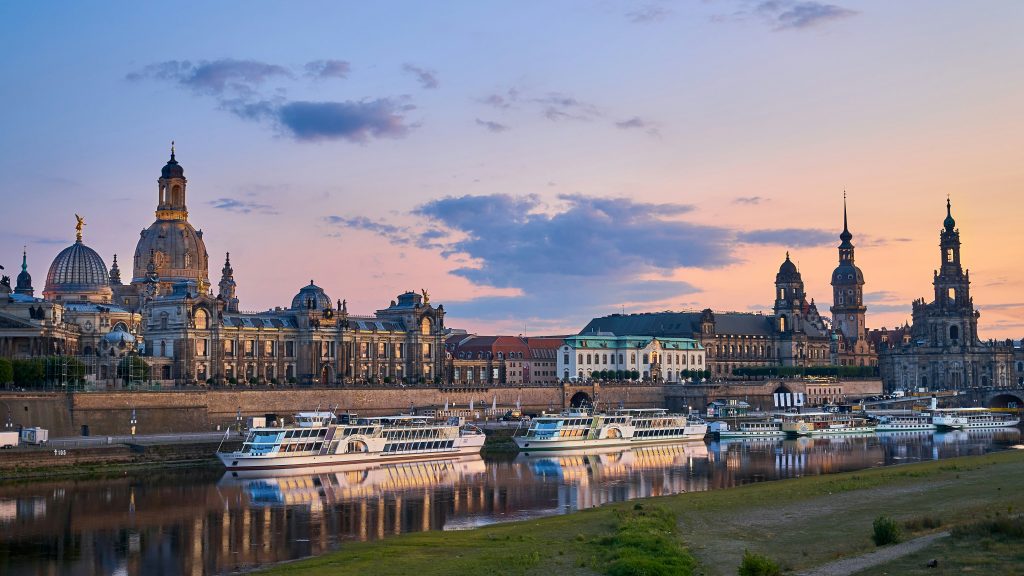
The Brühlsche Terrasse is a raised riverside promenade running along the Elbe River above the Altstadt. Known historically as the “Balcony of Europe,” it requires no ticket and no planning. It is one of the few things to do in Dresden that works for any traveler, regardless of interest or budget.
The views across the river toward the Neustadt are direct and unobstructed. The terrace connects several of the Altstadt’s main landmarks at its western and eastern ends, making it a natural link rather than a detour.
On the north bank, the Elbwiesen (Elbe meadows) offer a more informal alternative. This stretch of open grassland along the river is used heavily by local residents, particularly in summer, and gives visitors a different picture of how the city functions beyond its tourist areas.
Seasonal variation matters here. Both the terrace and the meadows are substantially more lively from May through September. For those visiting outside summer, the riverside is quieter but still worth including.
The Elbe’s flood history is also visible in parts of the infrastructure along the banks, with flood markers and engineering adaptations that reflect the city’s relationship with a river that has caused repeated damage, most recently in 2002.
Museum Strategy: Choosing Depth Over Coverage
Dresden’s museum offer is genuinely extensive. The Dresden State Art Collections alone span twelve museums. Attempting to cover more than two or three in a short visit is counterproductive and typically results in museum fatigue rather than meaningful engagement.
A selection approach based on visitor interest works better than trying to cover everything:
- Art-focused visitors should prioritize the Old Masters Picture Gallery (Gemäldegalerie Alte Meister) in the Zwinger. The collection includes Raphael’s Sistine Madonna and major works from the Dutch and Flemish masters.
- Those drawn to decorative arts and royal collections should visit the Green Vault (Grünes Gewölbe) in the Residenzschloss. This requires advance booking with timed entry. It is not a casual drop-in option.
- Visitors interested in broader German history will find the Military History Museum (Militärhistorisches Museum) more relevant. Housed in a 19th-century arsenal redesigned by Daniel Libeskind, it covers German military history with deliberate critical framing.
If time is limited, the New Green Vault (Neues Grünes Gewölbe) in the Residenzschloss offers the royal treasury collection without timed entry restrictions, making it a more flexible alternative to the Historic Green Vault.
Trying to combine three or more collections in a single day is rarely satisfying. One focused museum visit per day is a more realistic target.
Neustadt: A Different Kind of Dresden
The Äußere Neustadt (Outer Neustadt) is Dresden’s most visually distinct neighborhood, and it functions almost entirely differently from the Altstadt across the river. Street art covers many building facades. Independent bars and secondhand shops line the main streets, particularly around Alaunstrasse and Louisenstrasse. The demographic is younger and more local.
This area works best for travelers who want to spend time in a city rather than just visiting its monuments. It is less suited to visitors on tight schedules who have prioritized the main Altstadt landmarks.
The inner Neustadt, closer to the Elbe River and the Augustus Bridge, has a more refined character: upscale cafes, some mid-range restaurants, and a slower pace than the outer streets.
The Kunsthofpassage is a connected series of courtyard spaces embedded in the residential Neustadt streets, each courtyard with distinctly decorated facades. It is popular but genuinely worth visiting. It avoids the over-commercialized feel that some Dresden landmarks carry, and it takes less than an hour to walk through.
Neustadt works best without a fixed itinerary. A half-day or a free evening after a heavy Altstadt day is enough to get a reasonable sense of the neighborhood.
Cafes, Beer Gardens, and Eating Without a Plan
Dresden has a genuine coffeehouse tradition that predates the current tourist infrastructure. The Altstadt has several historic cafe options worth knowing about in advance rather than stumbling into by accident. Coselpalais, near the Frauenkirche, is one of the more established options for coffee and cake in a historic setting.
Beer gardens along the Elbe River function as unpretentious afternoon stops. These are neighborhood spots rather than destination experiences. Visitors expecting a polished Bavarian-style beer garden setup may need to adjust expectations: they are functional and local in character.
Saxon cuisine has a few specific things worth trying:
- Sauerbraten (slow-cooked marinated meat, the Saxon version often served with red cabbage and potato dumplings)
- Dresdner Eierschecke (a regional cheesecake variant with a distinct layered texture, different from Bavarian or Berlin-style versions)
- Radeberger and Feldschlosschen are the local beer brands most commonly available in bars and restaurants across the city
For visitors eating multiple dinners in Dresden, the Neustadt has the most interesting independent food options. The Altstadt restaurant scene is competent but disproportionately tourist-facing.
Day Trips: Saxon Switzerland and Beyond
Saxon Switzerland National Park is the most compelling day trip from Dresden. The park is defined by sandstone rock formations rising from forested gorges, and the Bastei Bridge viewpoint, perched above the Elbe valley, is among the most recognizable landscapes in eastern Germany.
Hiking trails vary considerably in difficulty. The route from Kurort Rathen to the Bastei is accessible to most visitors and takes around 45 minutes on foot. More demanding routes through the Schrammsteine or Affensteine areas require proper footwear and a half-day commitment.
Getting there is straightforward. The S-Bahn runs from Dresden Hauptbahnhof to Kurort Rathen or Bad Schandau in under an hour. No car is required.
Meissen is a shorter, lower-effort alternative. Reachable in around 40 minutes by regional train, it suits visitors who prefer a historical detour over a physical one. The town is well known for its porcelain production, and the Meissen Porcelain Manufactory (Porzellan-Manufaktur Meissen) offers factory tours and a museum.
One realistic caution: Saxon Switzerland can be very crowded on summer weekends, particularly around the Bastei. Midweek visits or an early start make a meaningful practical difference.
Pacing a Two to Three Day Visit
Three days is enough to cover Dresden without rushing. Two days is workable if museum visits are prioritized in advance, particularly the Green Vault, which requires a booked timed entry.
A loose structure that works for most visitors:
- Day 1: Altstadt landmarks in the morning (Frauenkirche, Zwinger exterior, Brühlsche Terrasse). An afternoon museum visit. Cross to the Neustadt for the evening.
- Day 2: Museum focus (Old Masters Gallery or Green Vault). Riverside walk along the Elbwiesen in the afternoon. Dinner in the Neustadt.
- Day 3: Day trip to Saxon Switzerland, or a slower morning in the Neustadt followed by any Altstadt landmarks not yet covered.
Visitors arriving by train have a slight logistical advantage. Dresden Hauptbahnhof is within walking distance of the Altstadt and has direct S-Bahn connections to Saxon Switzerland, making it easy to combine city time with day trips.
The genuine trade-off of a short visit is time allocation. The museum collections are more substantial than most first-time visitors expect. Committing to one or two in depth usually leaves more satisfaction than skimming four.
Dresden as a Starting Point, Not Just a Destination
Dresden has enough substance to anchor a longer visit to the wider Saxony region. It is not simply a stop between other cities.
For travelers who want to extend beyond Dresden, the options are straightforward. Leipzig is around 70 minutes by train and offers a contrasting city experience, with a stronger contemporary culture scene and its own significant history. Görlitz, on the Polish border, is reachable in just over an hour and is among the best-preserved historic town centers in Germany. The Erzgebirge (Ore Mountains) to the south offer hiking and a distinct regional character that has almost no tourist infrastructure compared to more visited parts of Germany.
Dresden itself does three things particularly well: concentrated historical architecture, accessible nature within easy reach, and a city that moves at a human scale. It is not a city for travelers who want nonstop stimulation. It is well suited to those willing to slow down and let the layers of the place reveal themselves over a few days.