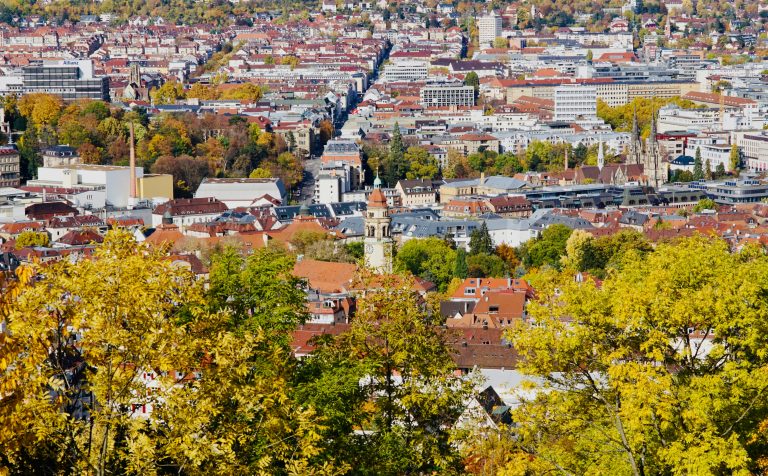
A Guide to Germany’s Best Beer Gardens
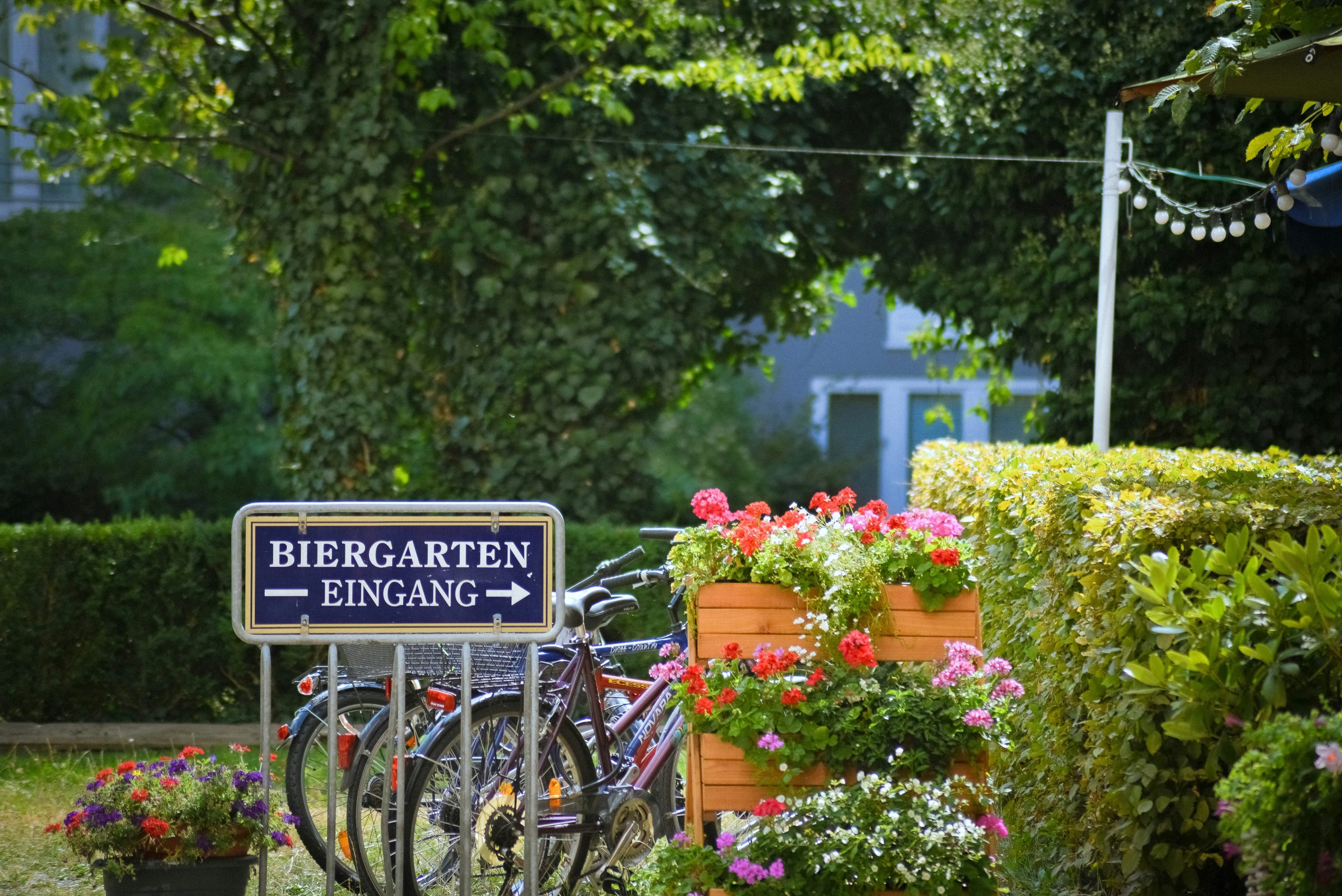
Germany’s best beer gardens are not simply outdoor bars with picnic tables. The traditional Bavarian model combines a garden setting, communal seating, self-service, and the right to eat food brought from home, while well-known venues elsewhere in Germany adapt the idea to their own regional beer culture.
For most travelers, the right choice depends less on a national ranking than on route, weather, crowd tolerance, and whether the stop should anchor an afternoon or fit into a larger city itinerary. This guide explains the customs, tradeoffs, and regional options that matter when planning a visit.
Munich Beer Gardens That Set the Standard
Munich offers enough choice that travelers rarely need to cross the city for a name alone. Pick one venue that fits the day’s route and one neighborhood option if the itinerary has room.
Augustiner-Keller
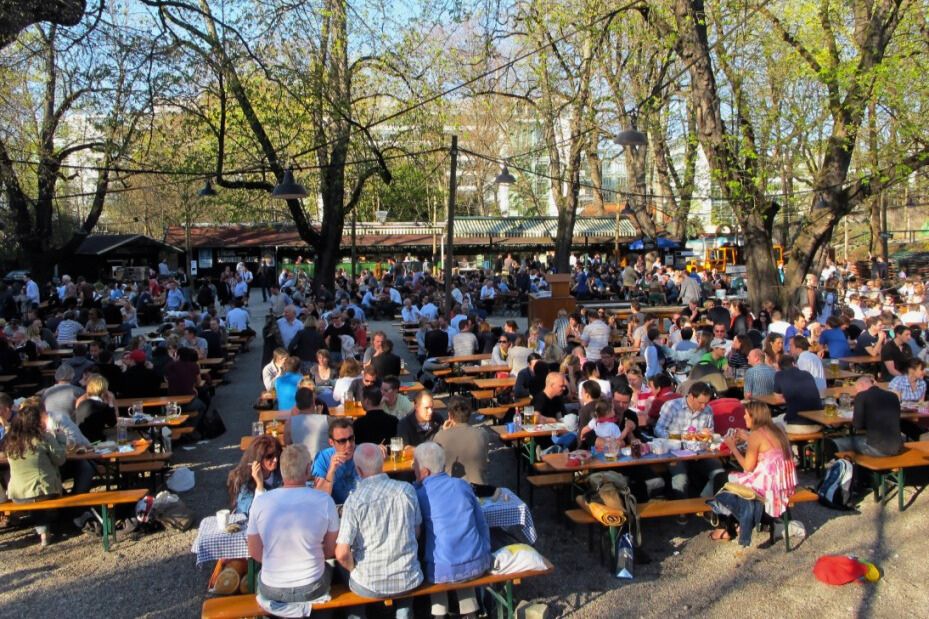
Augustiner-Keller near Munich Hauptbahnhof combines a large self-service garden under mature chestnut trees with served areas and indoor rooms. Augustiner beer drawn from wooden barrels is the main point of distinction.
This is the practical choice for travelers who want a traditional stop without adding a long detour from the center. It is not the best choice for a quiet meal on a warm weekend evening, when its scale and convenient location draw heavy traffic.
Hirschgarten
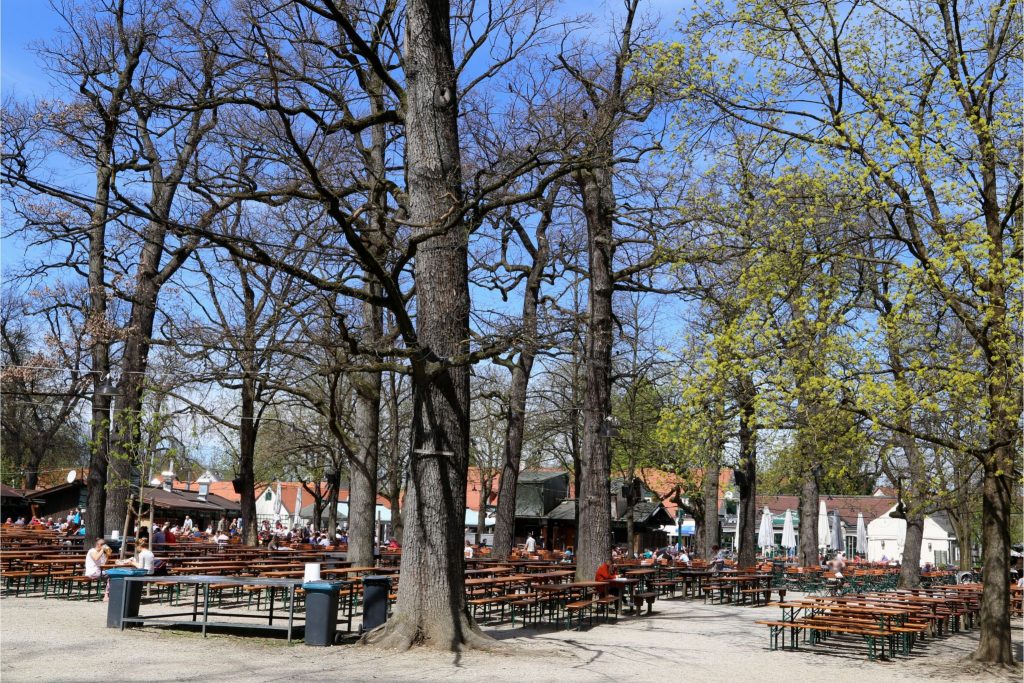
Hirschgarten is Munich’s largest beer garden, with about 8,000 places across its self-service and served outdoor areas. The surrounding park includes playgrounds and a deer enclosure, making the stop easier to combine with unstructured family time.
Choose Hirschgarten for space, groups, and family logistics. Travelers looking for a compact central stop or a more intimate atmosphere will probably prefer Augustiner-Keller or a smaller neighborhood beer garden.
Chinesischer Turm (English Garden)
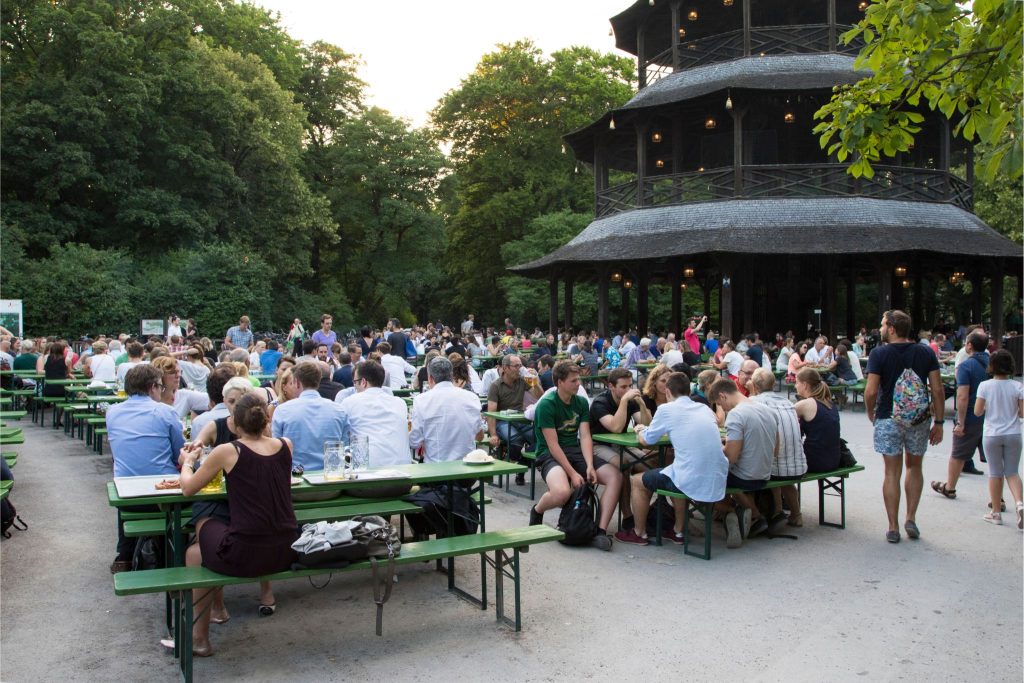
Chinesischer Turm works well as part of a walk through the English Garden. Its central park location and large capacity make it straightforward for first-time visitors, but summer crowds can make the experience feel more like a major city attraction than a neighborhood gathering place.
Choose it when the park is already on the itinerary. Do not cross Munich solely for it if another traditional beer garden is closer and the schedule is tight.
For a beer-garden-focused stay, central Munich is the easiest base for combining Augustiner-Keller and the English Garden with museums and evening meals. Staying near the Hauptbahnhof or along an S-Bahn or U-Bahn line favors visitors without a car; outer neighborhoods can be quieter but add transfers. Travelers using Munich mainly as an arrival point for rural Bavaria may prefer fewer city nights. Compare Munich stays by neighborhood and transit access.
Bavaria Beyond Munich
Outside Munich, the strongest beer-garden stops often work as part of a monastery, river, or old-town day rather than as stand-alone detours.
Klosterschenke Weltenburg near Kelheim
Klosterschenke Weltenburg sits in Weltenburg Abbey at the Danube Gorge. The abbey brewery documents brewing there since 1050 and describes itself as the world’s oldest monastic brewery. Weltenburger Barock Dunkel is the signature order.
The setting is the reason to build this stop into a Danube itinerary, but access requires more planning than a city beer garden. Passenger boats, walking routes, water conditions, and seasonal timetables can affect the plan, so travelers should check the current official transport and venue information before departure. This is best for visitors already spending time around Kelheim or Regensburg, not for a rushed Munich afternoon.
Kloster Andechs
Kloster Andechs combines a pilgrimage site, monastery brewery, self-service Bräustüberl, terraces, and outdoor seating on the Holy Mountain south of Munich. The official site confirms that visitors may bring their own food in the Bräustüberl and on the terraces.
Andechs works for travelers who want the beer stop to share the day with a walk, church visit, or wider excursion around the Ammersee area. It is less convenient for anyone who wants a short city-center visit. Check current opening information and transport before leaving, especially if the plan depends on a bus connection or a specific walking route.
Schlenkerla in Bamberg
Schlenkerla is not a traditional Bavarian beer garden. Its old-town tavern and outdoor seating are included because its smoked Rauchbier gives travelers a clear introduction to Bamberg’s distinct beer culture.
The smoke character can be polarizing, which makes this a better fit for curious beer drinkers than for travelers seeking a familiar pale lager. Bamberg has enough breweries and taverns to justify a broader beer-focused day, so Schlenkerla should be one stop rather than the entire plan.
Bamberg works better than Munich for travelers who want a compact old town and Franconian beer culture to shape most of the day. The station-to-center connection makes a car unnecessary for a short stay, while drivers should weigh parking against the convenience of day trips into Franconia. It is less suitable for visitors prioritizing Munich’s museums or airport access. Check Bamberg accommodation options near the old town or station.
Northern and Western Germany: Different Beer-Garden Traditions
Northern and western cities adapt the outdoor drinking format to local beer, neighborhoods, and waterfronts. These stops are useful regional contrasts, not substitutes for a Bavaria-first beer trip.
Prater Garten in Berlin
Prater Garten dates to 1837 and is identified by Berlin’s official tourism organization as the city’s oldest beer garden. Its shaded courtyard in Prenzlauer Berg keeps the communal, outdoor format while offering a broader Berlin food-and-drink context.
Prater is best for travelers already exploring Prenzlauer Berg or looking for an easy evening stop. Berlin’s distances make it less sensible to treat one beer garden as the anchor for an otherwise unrelated day.
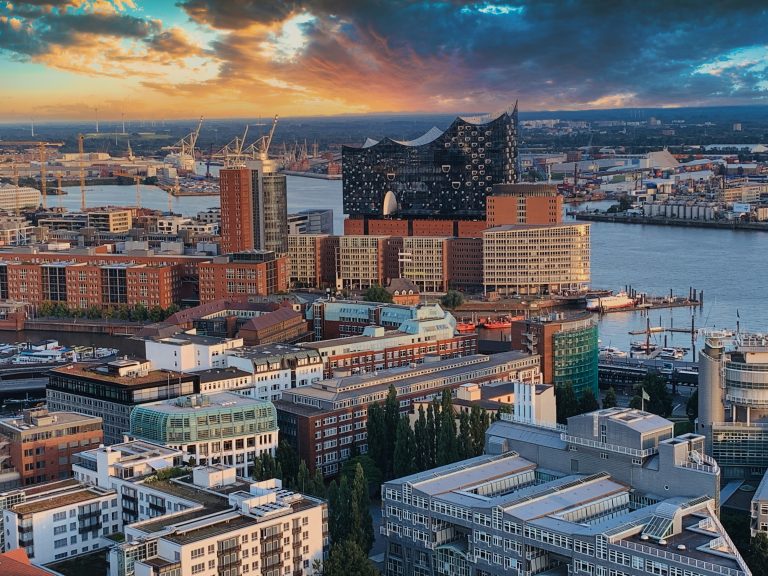
Hamburg’s Waterfront Beer Gardens
Hamburg’s outdoor drinking spaces tend to be waterfront-oriented rather than modeled closely on Bavaria. Places such as StrandPauli near the Elbe trade chestnut trees and Brotzeit customs for harbor views, music, and a bar-led setup.
That difference is the point. Choose Hamburg for an outdoor drink tied to the harbor and neighborhood atmosphere, not for a lesson in Bavarian beer-garden rules.
Choose Berlin as the northern base when variety matters: Prater Garten can sit alongside neighborhoods, museums, and nightlife, but beer-garden time competes with a broad city itinerary. Browse Berlin stays with an U-Bahn or S-Bahn connection. Hamburg suits travelers who want waterfront districts and a shorter beer-garden list; compare Hamburg hotels by proximity to the harbor or an S-Bahn or U-Bahn stop. Neither city is a substitute for a Bavaria-first beer trip.
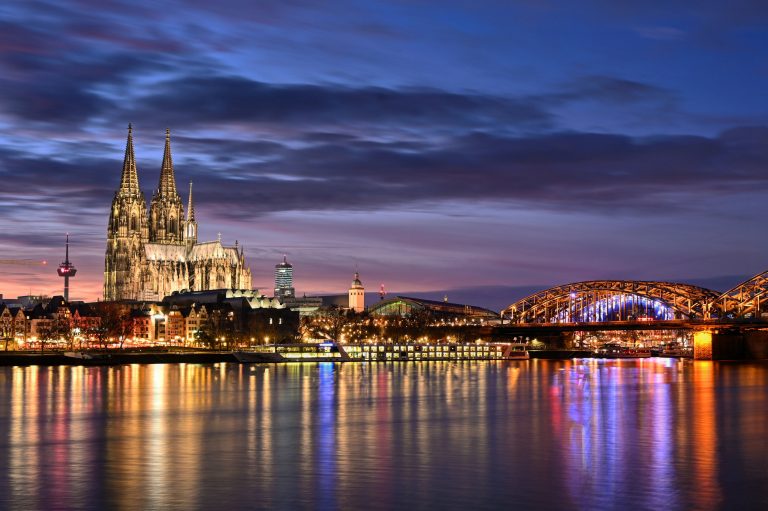
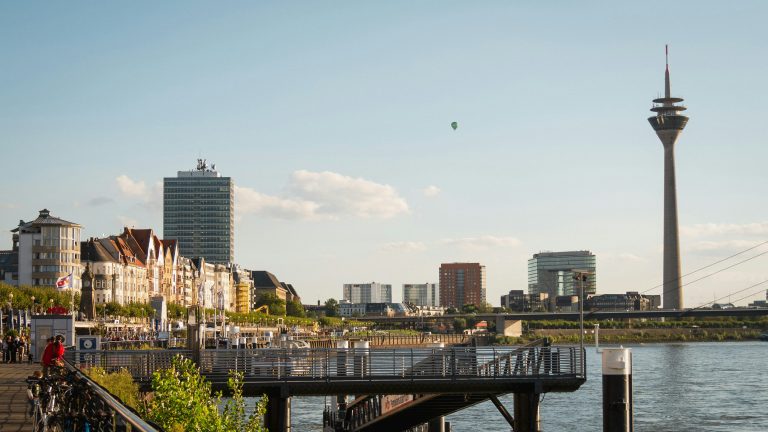
Cologne and Düsseldorf on the Rhine
The Rhineland’s outdoor drinking culture follows its local beer traditions. Cologne centers on Kölsch, commonly served in narrow 0.2-liter glasses, while Düsseldorf is associated with Altbier, often served in similarly small rounds. The pacing differs from a one-liter Munich Maß.
For a Rhine base, Cologne is better for visitors pairing Kölsch houses with the cathedral and a walkable central core; review Cologne hotel options near the Hauptbahnhof or Belgian Quarter. Düsseldorf fits travelers more interested in Altbier and the Old Town, though the nightlife-heavy center may not suit an early, quiet schedule; check Düsseldorf stays by Old Town access and transit. A rental car adds little for the urban core in either city.
How to Choose the Right Beer Garden for Your Trip
Use four criteria: route, service model, group fit, and weather fallback.
- Route: A good beer garden within a short walk or direct transit ride usually beats a famous venue that consumes an extra hour.
- Service model: Choose self-service for the traditional format and the option to bring food where permitted. Choose served seating when table service matters more.
- Group fit: Families may value playgrounds and space. Couples or solo travelers may prefer a smaller neighborhood garden. Large groups need capacity but should not assume reservations are available in self-service areas.
- Weather fallback: Confirm whether the same property has indoor seating and whether it follows different reservation or food rules.
Travelers visiting Munich for fewer than three days should pick one well-known beer garden and one convenient neighborhood option rather than trying to complete a checklist. Outside Munich, Weltenburg and Andechs make more sense when the surrounding excursion already earns its place in the itinerary.
The interactive beer garden map can help identify options near an existing route. Treat it as a planning aid, then confirm current operations on each venue’s official site.
What Makes a Beer Garden a Beer Garden
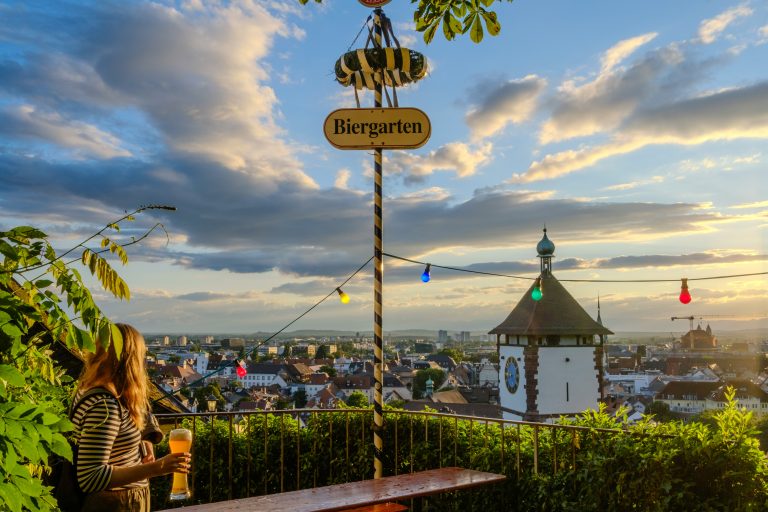
In Bavaria, the term Biergarten has a more specific meaning than ordinary outdoor restaurant seating. The current Bavarian Beer Garden Ordinance and later court interpretation emphasize two central features: a genuine garden character and a traditional operating model that allows guests to eat their own Brotzeit without charge.
That tradition grew from the beer cellars used by Munich breweries in the 19th century. Shade trees helped keep the ground above the cellars cool, and guests brought food while buying beer from the brewer. Chestnut trees, long shared tables, and separate self-service areas remain strong cultural markers, but not every traditional beer garden has exactly the same layout.
Self-service is where the format is easiest to recognize. Guests order at a counter, carry their own food and drink, and often pay a refundable deposit (Pfand) for the mug. Some venues also have a served section that operates more like an outdoor restaurant. The rules on outside food apply to the traditional self-service area, not automatically to every terrace or table on the property.
Many establishments elsewhere in Germany use “beer garden” more broadly. A shaded courtyard in Berlin, a waterfront terrace in Hamburg, and a Rhineland outdoor drinking area can all be worthwhile, but they should not be judged by a Bavarian checklist.
The Unwritten Rules of the Communal Table
Sitting with strangers is normal. Long tables are meant to be shared, so a small group can ask whether open seats are free rather than waiting for a private table. Conversation is optional, but personal space is limited.
In a self-service section, guests collect their own order and return reusable mugs or trays as directed. A Stammtisch sign marks a regulars’ table and should be left for that group. Tablecloths often indicate a served section, but signs and staff instructions are more reliable than appearance alone.
Tipping depends on the service model. There is usually no table-service tip at a self-service counter. In a served section, rounding up or leaving a modest tip is customary. Paying when each order arrives is common, so travelers should keep cash or a payment card accessible and check the venue’s accepted methods before relying on one option.
This format suits families, groups, and solo travelers comfortable with informal shared seating. It is a poor fit for anyone expecting attentive table service, a quiet meal, or guaranteed private space.
When Beer Gardens Work Best and When They Do Not
Beer gardens work best in dry, mild weather. Many outdoor sections operate seasonally or reduce service when conditions are poor, but exact dates and hours vary by venue and can change at short notice. Check the official site on the day of a visit rather than planning around a generic April-to-October season.
Midday and weekday afternoons are usually the easiest times for families and travelers who want less crowd pressure. Warm weekend evenings can mean long counter lines and limited seating. During major local events, including Munich’s Oktoberfest period, well-known venues may feel busier even when they are far from the festival grounds.
Rain does not always cancel the entire stop. Some properties have an adjoining restaurant or beer hall, but that indoor alternative can have different service, reservation, and outside-food rules. Travelers who care about the outdoor experience should keep a flexible backup rather than assume the same visit works in bad weather.
What to Eat and Drink at a German Beer Garden
Common Bavarian choices include Obatzda cheese spread, Radi or sliced radish, Brezn pretzels, roast chicken, roast pork, sausages, and potato salad. Menus differ by venue, and a beer garden with a full kitchen is a different food proposition from a simple self-service counter.
In a traditional self-service area, bringing a personal Brotzeit is part of the format. Outside drinks are not included in that custom. Travelers with dietary restrictions should still review the current menu or bring suitable food only where the venue explicitly permits it.
Beer may be sold in a one-liter Maß or a half-liter glass. A Radler, commonly beer mixed with lemon soda, is a lighter option. The brewery or house brand usually defines the list, so traditional beer gardens are better for experiencing a local serving culture than for comparing many craft styles.
Pacing matters. A liter is a substantial serving, especially on a warm day. Travelers should plan a public-transit or walking return, eat, drink water, and avoid building a driving itinerary around beer-garden stops.
What a Beer Garden Will Not Give You
A traditional beer garden is not fine dining, a craft-beer tasting room, or a quiet reservation-led restaurant. Menus can be repetitive, service is intentionally informal, and warm-weather crowds are part of the experience.
Vegetarian choices such as pretzels, cheese spreads, salads, and radish are common, but vegan and allergy-safe choices vary. Bringing suitable food can help only in a section where outside food is permitted. Travelers with strict dietary needs should verify the current menu and cross-contact information rather than rely on the general tradition.
Beer gardens are also a weak bad-weather plan. An adjacent indoor restaurant may save the meal, but it does not reproduce the communal outdoor experience. Anyone who dislikes shared tables, counter lines, or noisy groups should choose a smaller served terrace instead.
The Long Table and the Short Afternoon
The most useful way to plan a beer garden is as a flexible part of the day, not a venue to collect. Weather, an open seat, and proximity usually matter more than a national ranking.
Munich gives the clearest version of the tradition. Weltenburg and Andechs turn it into an excursion. Bamberg, Berlin, Hamburg, Cologne, and Düsseldorf show how outdoor beer culture changes with local geography and serving customs.
Choose the stop that fits the route, confirm the day’s operating details, and leave enough time to sit rather than rush to the next name on a list.
Frequently Asked Questions (FAQs)
Sources
- Bavarian Beer Garden Ordinance
- Bavarian Administrative Court: characteristics of a traditional beer garden
- Munich Tourism: beer gardens in and around Munich
- Augustiner-Keller
- Königlicher Hirschgarten
- Chinesischer Turm
- Weltenburg Abbey Brewery history
- Klosterschenke Weltenburg
- Kloster Andechs
- Schlenkerla
- visitBerlin: Prater Restaurant and Beer Garden
- StrandPauli
- Cologne Tourism: Cologne brewery culture
- Visit Düsseldorf: Altbier guide