Zermatt vs Verbier — Which Swiss Ski Trip Is Worth the Splurge?
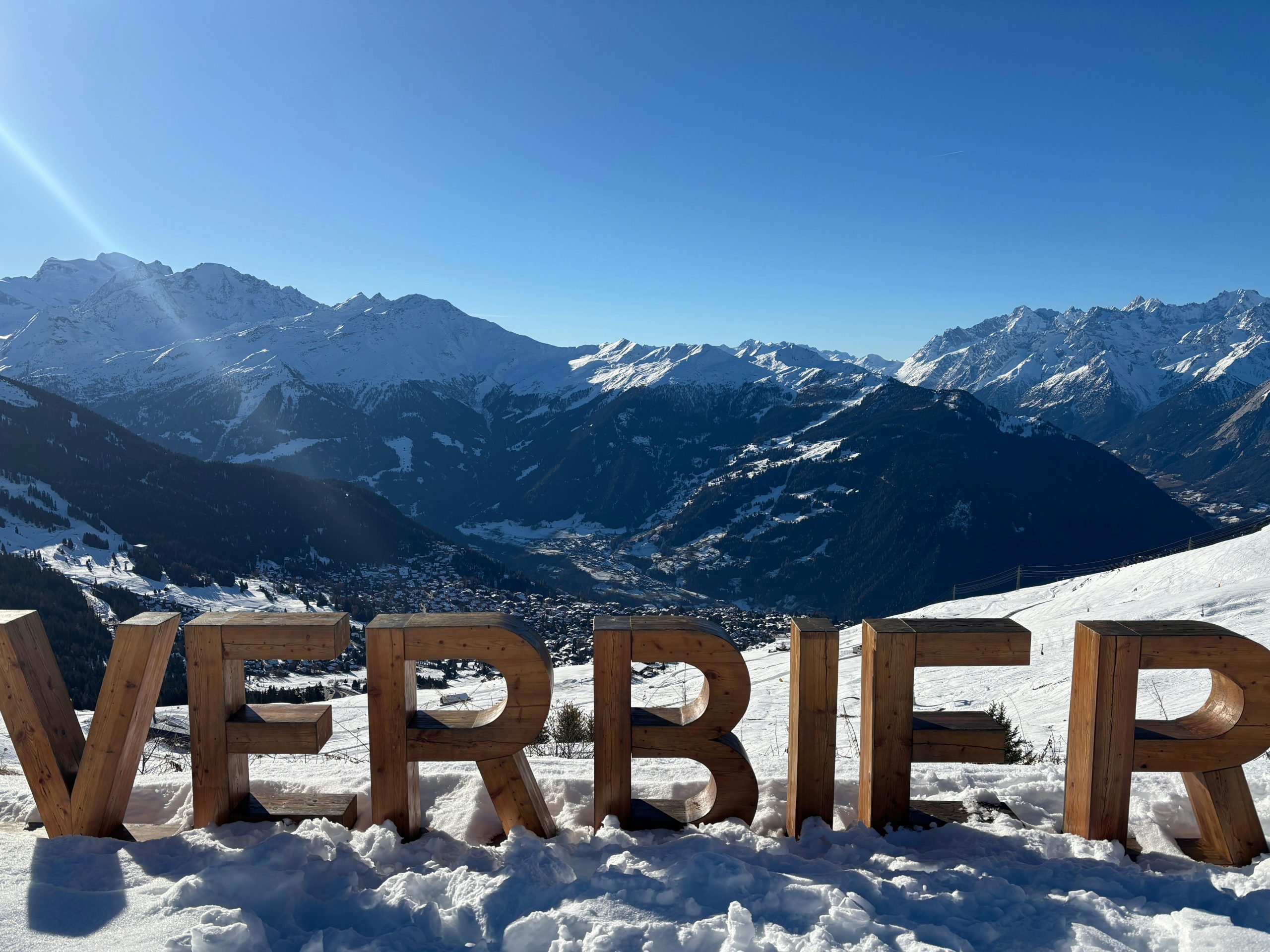
Verbier vs Zermatt comes down to what the group will actually use. Zermatt makes the stronger case for travelers who want the Matterhorn setting, a car-free village and long days of varied groomed skiing with an optional crossing into Italy. Verbier makes the stronger case for confident skiers who want its lift-served steep and off-piste terrain, the wider 4 Vallées network and its busier après-ski reputation.
Treat both verdicts as hypotheses, not rankings. They only hold once they are tested against the group’s ability mix, the terrain that is actually open that week and dated cost quotes for the same dates.
This guide compares the two as complete week-long ski vacations, not as lift tickets. The “splurge” here means the total door-to-door week: lodging, the right pass, rentals, lessons, meals, arrival and daily movement. Neither destination automatically beats a better-matched Swiss or nearby Alpine base, and the last section explains when to choose neither.
| Priority | Likely better fit | Main cost or friction | Verify before booking |
|---|---|---|---|
| Intermediate progression on groomed runs | Zermatt | Sectors are spread out; the first lift may be a walk or e-bus ride away | Which sectors are open and how lodging connects to Sunnegga or the Matterhorn Glacier Paradise lifts |
| Expert or guided off-piste terrain | Verbier | Guide fees; Mont Fort needs the full 4 Vallées pass | Avalanche bulletin, itinerary opening status, guide availability |
| Non-ski or rest day | Zermatt | Headline excursions still depend on lifts, railways and weather | Operating days and prices for the exact week |
| Family ski-school drop-off | Depends on lodging location | Verbier’s children’s meeting point N°17 has no private drop-off; Zermatt meeting points vary by level | The booked school’s meeting point for the child’s level and week |
| Value for the money spent | Verbier on typical January rates, by about $470 for two | The gap is mostly lodging, and cheaper valley bases add daily time and transfers | Same-date, all-in quotes for the exact week |
How Zermatt and Verbier Differ as Ski Vacations
Zermatt and Verbier are separate trips in separate valleys of the Valais, each with its own lift company and pass. They are not two sectors of one shared ski area, so the choice decides the whole week.
Zermatt’s skiing is organized into distinct sectors above one village: Sunnegga-Rothorn, Gornergrat and Matterhorn Glacier Paradise with Schwarzsee. The lift operator describes the Matterhorn Ski Paradise as 360 km of pistes served by 52 lifts across two countries, including Breuil-Cervinia and Valtournenche in Italy.
That headline figure only applies to a traveler holding the International pass and actually crossing the border. A skier on the Zermatt-only pass in a week of wind closures on the glacier will use far less.
Verbier sits at the western end of the 4 Vallées, which also links La Tzoumaz, Nendaz, Veysonnaz and Thyon. Verbier’s lift company sells separate passes for Bruson, the Verbier and La Tzoumaz local area and the full 4 Vallées, and the top station at Mont Fort reaches 3,330 m.
The 4 Vallées total is widely quoted at 410 km of pistes, though an independent measurement cited on Wikipedia put the marked runs closer to 164 km. Independent reviewers estimate the local Verbier pass covers about half of the network; much of the rest lies toward Nendaz, Veysonnaz and Thyon, a long commute on skis. Few mixed-ability groups will ski all of it in a week.
Zermatt: best for travelers who want a car-free village, high-altitude cruising and the option of a day in Italy. Main drawback: the sectors are spread along the valley, so daily movement to the right lift is part of the plan.
Verbier: best for strong skiers who want steep lift-served terrain and guided off-piste near the village. Main drawback:village access varies sharply between Médran, the center, Savoleyres and cheaper Le Châble.
Views and nightlife should only tip the decision when the group will use them. A Matterhorn view does not make a run suitable for a cautious skier, and a famous après-ski bar adds nothing for a family in bed by nine.
Where to Stay: Convenient Village vs Lower-Cost Base
In both destinations the lodging address matters more than the resort name. The right base puts the group close to the first useful lift, the ski-school meeting point, the rental shop and groceries.
Zermatt Village and Täsch
Zermatt is car-free. Private vehicles stop at Täsch, where the Matterhorn Terminal has 2,100 covered parking spaces and shuttle trains run to Zermatt every 20 minutes. The ride takes 12 minutes.
Inside Zermatt, guests move on foot, by electric taxi or on a free e-bus with two routes, a Ski-Bus line and a Winkelmatten line. The practical question is which lift a lodging sits near: the Zermatt-Sunnegga lift for the beginner and family sector, or the lifts toward Schwarzsee, Matterhorn Glacier Paradise and Italy.
Täsch can lower the lodging bill. The catch is that the 12-minute train is only one piece of the morning. Guests still walk or ride from Zermatt station to the lift, carry or store equipment, and repeat the trip after dinner.
Skip Täsch when young children have an early ski-school start, when the group wants late dinners in Zermatt, or when equipment will move daily. A smaller central apartment near the correct lift or meeting point usually costs less in friction.
Verbier Médran, Center, Savoleyres and Le Châble
Verbier’s main lift base is Médran, where the gondola from Le Châble arrives. The tourist office lists walking times from Médran of about 8 minutes to Place Centrale and about 25 minutes to the Savoleyres gondola.
Verbier has free shuttle buses year-round, and it has no car park directly at the ski-lift departures. Lodging above or away from Médran often means a shuttle ride with skis each morning.
Le Châble, in the valley, is connected to Verbier by a gondola that runs from 5:10 a.m. to 11:55 p.m., with a bus as an alternative. Both take about 20 minutes, and the bus is free for same-day ski-pass holders when the gondola is running.
That gondola makes Le Châble a genuinely connected base for adults who ski from Médran. It works poorly for families whose children meet at bus stop N°17 above the village, or for anyone planning evenings in Verbier.
The gondola also has scheduled maintenance windows; the lift company announced a closure with replacement buses on September 30, 2026. Check the operating timetable for the actual travel dates.
Before booking either destination, confirm: the exact address, bookable same-date inventory with mandatory fees in CHF, cancellation terms, minimum stay, ski storage, shuttle dependency and the winter walking route. Do not accept a “ski-in/ski-out” label without checking the route in both directions and whether it depends on snow cover.
Verbier vs Zermatt Costs for a Comparable Seven-Night Trip
The fair comparison uses one fixed scenario: two adults sharing a hotel room for seven nights, Saturday January 16 to Saturday January 23, 2027, with six ski days, one lift pass each and one shared private lesson.
Rentals, meals and transfers are left out. They depend more on the group’s own choices than on the destination, and they would blur the gap between the two villages.
Scenario and Line-Item Table
Lodging is a rough average taken from Expedia on September 28, 2026: the median seven-night total, with taxes and fees, across every hotel listing returned for January 16 to 23, 2027, for two adults in one room. That covered 155 listings in Zermatt and 67 in the Verbier area. Rates move with the travel week and how far ahead the room is booked, so treat these as a snapshot, not a quote.
Pass and lesson prices come from the lift companies’ and instructors’ published 2026-27 price lists in CHF. They are converted to US dollars at that day’s European Central Bank reference rates, which work out to about $1.20 per Swiss franc.
| Line item (2 adults) | Zermatt | Verbier |
|---|---|---|
| Hotel lodging, 7 nights | $2,696 (CHF 2,242), about $385 per night | $2,107 (CHF 1,753), about $301 per night |
| 6-day lift pass for two | $923 (CHF 768): Zermatt pass, from CHF 384 each; covers the Swiss-side sectors | $983 (CHF 818): 4 Vallées pass, CHF 409 each at the cash desk; includes Mont Fort |
| One shared 3-hour private morning lesson | $385 (CHF 320): ZERMATTERS regular-season rate, which covers January 11 to February 5, 2027, for 1 to 3 people | $445 (CHF 370): Roddy Willis, an independent Verbier instructor, mid-season rate for January 4 to 29, 2027 |
| Total for two adults | $4,004 (CHF 3,330) | $3,535 (CHF 2,941) |
On these numbers, Zermatt costs about $470 more for the week, roughly 13% above Verbier.
The gap is all lodging. Zermatt’s hotel line is about $590 higher, while Verbier’s pass and lesson together cost about $120 more.
The Zermatt total is a floor. CHF 384 is the operator’s season-low starting price, which it says applies only from November 1 to 27, 2026 and April 19 to May 2, 2027. A January pass will cost more, so the real gap is likely wider.
The median hides a wide spread. The middle half of Expedia’s listings ran from about $1,890 to $4,610 for the week in Zermatt and from about $1,160 to $4,170 in Verbier. A handful of luxury properties pull the simple average higher, to about $3,800 in Zermatt and $3,170 in Verbier. A well-chosen room in either village can move the total by more than the gap between them.
These are hotel listings; apartments and chalets, which many ski groups book, are not in the sample. Check whether the local visitor tax is included in any quote, and whether pass insurance is worth adding: Verbier sells it at CHF 4 to CHF 6 per day and states that no refund is considered without it.
Family-of-four sensitivity check. This is not comparable to the two-adult total; it only shows how children change the pass line. Zermatt gives free passes to children up to 8.99 years, 50% off for ages 9 to 15.99, and makes the Zermatt pass free for children up to 15.99 on Saturdays. Verbier’s 2026-27 table shows free passes for children born in 2020 or later and a CHF 205 six-day 4 Vallées child price for those born 2012 to 2019.
When the Cheaper Room Costs More in Practice
Lodging makes up roughly 60% to 67% of each total above. That makes the base decision the real cost lever, far more than the pass.
A Täsch or Le Châble room can cut the lodging line, but it adds daily fares, time and equipment handling that these totals do not count. For a family with an early ski-school start, that friction can outweigh the saving.
Pass choices move the total less. Verbier’s local Verbier and La Tzoumaz pass costs CHF 374 per adult but excludes Mont Fort. Zermatt’s International pass adds at least CHF 48 per adult for the Italian side, which only pays off if the group will actually cross the border.
If live quotes for the exact dates narrow the lodging gap, Verbier’s cost advantage largely disappears. In that case, choose the base that fits the group’s daily route rather than the cheaper headline.
Skiing Fit: Groomed Progression, Advanced Days and Route Limits
For most intermediate pairs, Zermatt offers more easy-to-moderate groomed mileage that is simple to string together. Verbier rewards strong skiers more, but its best-known terrain is steep, mogul-heavy or off-piste.
Beginner and Intermediate Progression
Zermatt’s beginner pass covers Zermatt-Sunnegga, Sunnegga-Blauherd, Eisfluh, the Findel chairlift and the Leisee shuttle, which shows where the operator places its gentlest terrain. Adults who want coaching without a private instructor can book ZERMATTERS’ three-day adult group course, listed at CHF 390 in regular season and CHF 450 in high season for 2026-27. A confident intermediate’s first day can stay on the Sunnegga-Rothorn side, with a lunch stop and a clear regroup point before descending.
A second day can move to the Matterhorn Glacier Paradise side for higher, longer runs if wind and visibility allow. Check piste grades and the last lift down on the current map before committing.
In Verbier, early intermediates should use the current piste map to find blue runs reachable from their own base, since the steepest terrain sits higher on Mont Fort and Mont Gelé. The Swiss Ski School’s adult group courses offer a useful signal: Blue League groups start at Les Esserts, while Red and Black League groups start at Les Ruinettes above Médran. The full 4 Vallées pass pays off only if the group will actually make the long transfer toward Nendaz and Thyon and still ski back in time.
Skip the big pass when the group will stay near beginner areas all week. The larger network adds cost without adding usable terrain.
Mountain Lunches and Regroup Points
A booked lunch is the easiest way for a mixed group to split up in the morning and meet again. Pick a restaurant on terrain every member can reach and leave.
In Zermatt, Chez Vrony in Findeln, at 2,100 m in the Sunnegga sector, is one of the best-known lunch stops, and its official listing recommends reservations. Confirm the winter piste or walking route before sending a cautious skier there.
In Verbier, Cabane Mont Fort is a slope-side refuge restaurant at 2,457 m. The tourist office listing checked for this guide showed summer dates only, so confirm the 2026-27 winter opening before building a day around it.
Mountain lunch prices were not verified for this comparison. Budget-minded groups can cut this line with picnic lunches or valley meals, but that often means an extra lift ride or a less flexible regroup plan.
Advanced Skiing and Guided Off-Piste
Verbier’s advanced appeal is well documented. Mont Fort and Tortin are known for steep mogul runs, and Mont Gelé is a lift-served freeride area that is often closed.
Verbier marks freeride itineraries with yellow poles. They can only be used during lift opening hours, and their opening status must be checked on Infosnow.
A marked itinerary is not an ordinary groomed run, and an open lift does not make ungroomed terrain safe. Off-piste skiing and heliskiing, which Verbier permits on Rosablanche and Petit Combin with local operators, require qualified local guiding, avalanche equipment the skier knows how to use, the current Swiss avalanche bulletin and current local instructions.
The SLF publishes the Swiss avalanche bulletin twice daily in winter on its website and in the White Risk app. Zermatt’s lift company also sells guided freeride days; the same rules apply there.
Skip calls: an early intermediate should skip an itinerary-heavy “expert” day in either resort. An expert seeking open terrain should skip a plan, or even the destination, if conditions, guide availability or the group’s ability do not support it. The alternative is suitable marked pistes or one separate guided day for the qualified skiers only.
Lessons, Transfers, Equipment and Daily Movement
Both destinations work without a car, but they reach the skier in different ways. Zermatt is the simpler car-free arrival; Verbier is the simpler drive.
Zermatt Tourism lists about three and a half hours by train from Zurich Airport and about four hours from Geneva or Basel airports, with trains to Zermatt every half hour. Drivers park in Täsch and finish by shuttle train or licensed taxi; driving into Zermatt without authorization brings large fines.
Verbier’s tourist office lists about 2 hours 40 minutes by train from Geneva and about 4 hours 20 minutes from Zurich to Le Châble, then 20 minutes by gondola or bus. The Verbier Express and VosAlpes Express run directly to Le Châble on winter weekends and public holidays, which matters for a Saturday arrival like January 16.
By car, Verbier is reachable year-round. Le Châble’s P4 car park at the foot of the lifts offers free parking for up to 10 days, and snow chains may be required between Le Châble and Verbier in heavy snowfall.
SBB’s luggage services can move bags between stations and airports on both routes. Confirm the service, deadlines and the last connection for the actual dates.
Ski-School Meeting Points
Meeting points should be plotted against lodging before booking.
In Zermatt, the ZERMATTERS children’s group course (ages 6 to 14) starts Mondays at 8:45 a.m. and runs about five hours with lunch and supervision included, from CHF 485 for five days. Blue League children meet at the tourist office by the train station daily; Red and Black League children move to the Sunnegga station from Wednesday.
In Verbier, children’s group lessons use the ski schools’ meeting point at bus stop N°17, which the Swiss Ski School describes as near the top of Les Esserts. No private-vehicle drop-off is allowed there; access is only by shuttle line 1. The school caps groups at 6 to 8 children and publishes its 2026-27 rates in a downloadable price list.
Group lessons are the cheaper route to child progression. Private lessons cost more but let a family ski together between drills. Policies differ by school, age, level and week, so confirm the booked product.
Rentals and Storage
Add rental pickup, boot transport and storage to the daily route. A rental shop near the first lift, with overnight lockers, saves more stress for a family than it does for two adults who can move quickly.
If a transfer or meeting point cannot be confirmed for the actual week, book closer to the required school or lift. Skip a remote base when the morning logistics cannot be made reliable.
Weather, Season and Non-Ski Days
Elevation helps both resorts, but neither can promise snow quality, visibility or full operation. Wind and low cloud close high lifts and cut the links that make each area worth the price.
Zermatt’s 2026-27 winter season is scheduled from November 1, 2026 to May 3, 2027, with Sunnegga-Rothorn and Gornergrat opening November 28 and closing in mid-April. Verbier’s local pass is valid from December 5, 2026 and the 4 Vallées pass from December 12, 2026. Both lift companies decide daily openings on the morning itself, so check the live lift and wind pages before naming a route.
On the Italian side, a new 3S cableway from Breuil-Cervinia to Plateau Rosa is under construction through December 2029. Zermatt’s lift company says no operational restrictions are anticipated, but a cross-border day should still be confirmed on the morning.
Storm or rest day in Zermatt: a walk through the car-free village, winter walking trails and the Gornergrat railway to 3,089 m, which also serves the Gornergrat ski sector from November 28, 2026. The ride still depends on operations and visibility for its value.
Storm or rest day in Verbier: the La Tzoumaz toboggan run, with a 711 m drop, cross-country skiing on a 2.5 km loop at Les Ruinettes, dog sledding, or tandem paragliding from Les Ruinettes in suitable weather. The Mont 4 zip line starts at Mont Fort and needs high lifts running.
A cross-border Zermatt day or a full 4 Vallées tour is a poor anchor for a fixed itinerary. Keep one local-sector ski day and one non-ski day flexible, and skip the long circuit when the live route or the return is in doubt.
Which Splurge Earns Its Price, and When to Choose Neither
The marginal-value test is simple. What experience, convenience or terrain does the group gain for the all-in price difference, about $470 for two on this guide’s January snapshot, once the same dates and room standard are quoted?
| Traveler or priority | Zermatt | Verbier | Lower-cost alternative | Decisive check |
|---|---|---|---|---|
| Intermediate pair | Strong fit | Fits if they stay on groomed sectors | Grindelwald (Grindelwald-Wengen): groomed runs on the Männlichen and Kleine Scheidegg side; hotel median $1,911 for the week | Groomed terrain reachable from the lodging |
| Advanced group wanting guided terrain | Good with a guide | Strong fit | Engelberg-Titlis: named freeride descents such as Laub and Steinberg, with guiding advised; hotel median $1,528 | Avalanche bulletin and guide availability |
| Family with a child in lessons | Strong if lodging is near the meeting point | Workable with shuttle line 1 to N°17 | Adelboden-Lenk: children’s lifts and learning areas across the region; hotel median $2,033 | Meeting point for the child’s level |
| Adults seeking après-ski | Good | Strong fit | No cheaper pick in this sample: St. Anton’s hotel median ran $3,055, above both | Lodging within walking distance of the evening scene |
| Mixed ski and non-ski party | Strong fit | Fair | Grindelwald: the Jungfraujoch runs year-round, about 45 minutes via the Eiger Express and Jungfrau Railway; hotel median $1,911 | Non-ski activities running that week |
The hotel medians in the alternative column come from the same Expedia search as the cost table: hotels only, January 16 to 23, 2027, two adults, checked September 28, 2026. For comparison, Zermatt’s median was $2,696 and Verbier’s was $2,107. Expedia’s search areas can include nearby villages, and six-day pass prices for these alternatives were not yet published for 2026-27, so treat the column as a lodging signal rather than a full trip total.
Several Austrian resorts often suggested as cheaper did not beat Verbier on this measure. Serfaus came in at $2,904, Saalbach-Hinterglemm at $2,859, Schruns in the Montafon at $3,144 and St. Anton at $3,055. Many Austrian hotels include half-board, so compare the meal plan before comparing the price.
A destination wins only when its advantage matches the group’s itinerary and ability. It does not win because one pass or room looks cheaper in isolation.
Choose neither when the budget forces long daily commutes, when the group cannot use the terrain it would pay for, or when closures and limited time would undermine the reason for going. In that case, price the same dates in Engelberg, Grindelwald or Adelboden, which all came in below both villages on hotel cost, before assuming either splurge is necessary. The Austria vs Switzerland skiing comparison and the Alps vs US seven-night cost comparison show how to run that check.
For timing, the best time to ski in the Alps guide covers January versus February and March. Families should also read the kids’ ski school cost comparison, and travelers weighing other big-name bases can compare Courchevel vs Méribel.
Frequently Asked Questions (FAQs)
Sources
Prices and operating details were checked on September 28, 2026.
- Matterhorn Ski Paradise: Ski pass prices, winter 2026-27 and reductions
- Matterhorn Ski Paradise: Skiing in Zermatt and Cervinia (360 km, 52 lifts)
- Matterhorn Ski Paradise: Open lifts and pistes
- Matterhorn Ski Paradise: Weather and wind
- Matterhorn Ski Paradise: Cervino The One, Zermatt and Cervinia connection (Feb. 5, 2026)
- Zermatt Tourism: Travelling to Zermatt
- Zermatt Tourism: Täsch railway station and Matterhorn Terminal
- Zermatt Tourism: ZERMATTERS group lessons for children (6-14 years)
- Gornergrat Bahn
- Verbier 4Vallées: Prices winter 2026-27
- Verbier 4Vallées: FAQs (pass areas, online discount, daily openings, Le Châble gondola notice)
- Verbier 4Vallées: Live information winter
- Verbier 4Vallées: More winter activities
- Verbier Tourism: Getting to Verbier
- Verbier Tourism: Getting around Verbier (shuttles, meeting point N°17)
- Verbier Tourism: Freeride and heliskiing in complete safety
- Verbier.com: Ski passes (local pass excludes Mont Fort)
- Ecole Suisse de Ski Verbier: Group lessons and 2026-27 price list
- WhatSkiResort: Verbier review (local pass coverage)
- Wikipedia: Verbier (4 Vallées piste length measurement, off-piste areas)
- WSL Institute for Snow and Avalanche Research SLF: Avalanche bulletin
- ZERMATTERS: Ski and snowboard lesson prices, winter 2026-27
- Expedia: Zermatt hotel search, January 16 to 23, 2027, 2 adults
- Expedia: Verbier hotel search, January 16 to 23, 2027, 2 adults
- European Central Bank: Euro foreign exchange reference rates (September 28, 2026)
- Roddy Willis: Verbier ski lesson prices, winter 2026-27
- Expedia hotel searches, January 16 to 23, 2027, 2 adults, hotels only: Engelberg, Grindelwald, Adelboden, St. Anton, Serfaus, Saalbach-Hinterglemm, Schruns
- TITLIS Cableways: Freeride on Titlis
- Jungfrau Railways: Grindelwald-Wengen ski area
- Jungfrau Railways: Jungfraujoch
- Adelboden-Lenk-Kandersteg: Skiing with children
- Zermatt Tourism: Chez Vrony
- Verbier Tourism: Cabane Mont Fort
- Ecole Suisse de Ski Verbier: 2026-27 lesson price list (PDF)