5 Days Along Germany’s Romantic Road
Germany’s Romantic Road works well as a five-day road trip from Würzburg to Füssen. The best version does not try to stop in every town. It prioritizes Rothenburg ob der Tauber, Dinkelsbühl or Nördlingen, Augsburg, Landsberg am Lech, and the castles near Füssen while keeping most driving days manageable.
This itinerary is best for travelers who want medieval towns, regional history, and a gradual transition from Franconian wine country to the Bavarian Alps. It is less suitable for travelers who dislike changing hotels or who want a slow two-night stay in every destination.
Romantic Road Itinerary at a Glance
The official route covers roughly 460 km from Würzburg to Füssen, but the actual driving distance varies depending on detours and whether travelers follow the signed route or faster parallel roads.
| Day | Main route | Priority | Approximate driving | Overnight |
|---|---|---|---|---|
| 1 | Würzburg to Rothenburg ob der Tauber | Würzburg Residence, one route stop, Rothenburg evening | About 2 hours, excluding stops | Rothenburg ob der Tauber |
| 2 | Rothenburg to Dinkelsbühl | Quiet morning in Rothenburg, then Dinkelsbühl | About 1.5 hours, excluding stops | Dinkelsbühl |
| 3 | Dinkelsbühl to Augsburg | Nördlingen and central Augsburg | About 2 hours, excluding stops | Augsburg |
| 4 | Augsburg to Füssen | Landsberg am Lech and Füssen | About 2 hours, excluding stops | Füssen |
| 5 | Füssen and Hohenschwangau | Neuschwanstein, Hohenschwangau, or an outdoor alternative | Minimal | Füssen or onward travel |
Best overall pace: One major destination and no more than one meaningful intermediate stop per day.
Trying to visit every signed town usually produces a collection of short walks and parking searches rather than a satisfying road trip.
Day 1: Würzburg to Rothenburg ob der Tauber
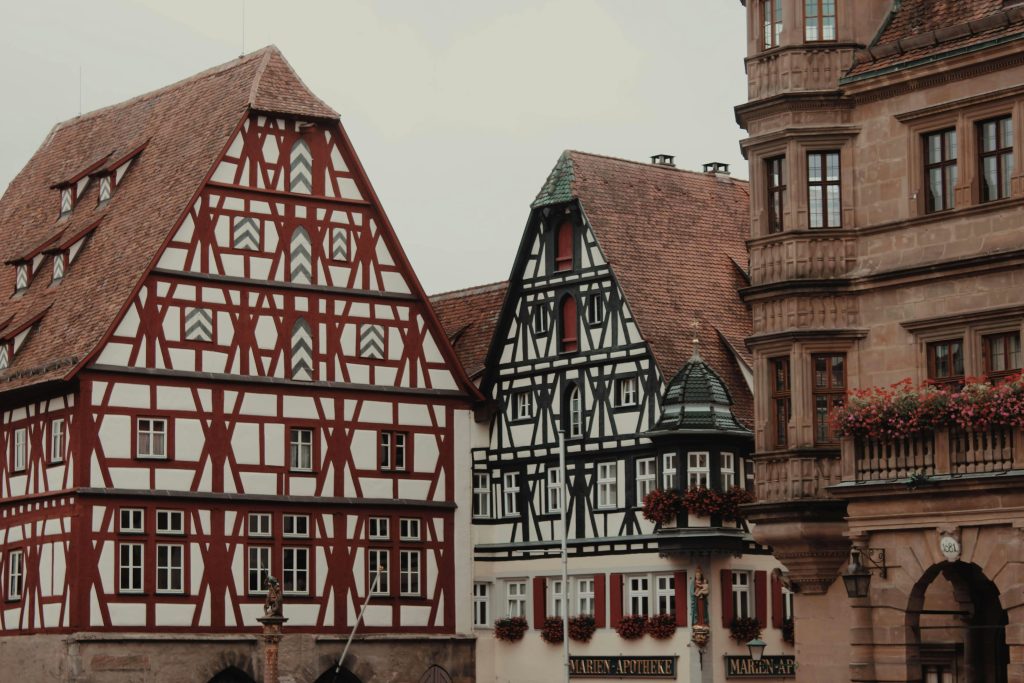
Start in Würzburg with the Würzburg Residence. It is the main reason to give the city several hours rather than treating it only as the route’s northern starting point.
After the palace, walk through the center and cross the Old Main Bridge if time allows. Würzburg also introduces travelers to Franconian wine culture, which makes it feel different from the Bavarian towns farther south.
Choose One Stop Between Würzburg and Rothenburg
Weikersheim is the strongest intermediate stop for most travelers. Its palace, formal garden, and compact center can be combined without turning the day into a long detour.
Bad Mergentheim makes more sense for travelers interested in spa towns or those adding an extra day. It is easy to skip on a five-day itinerary.
Arrive in Rothenburg by mid-afternoon. Prioritize the town walls, Market Square, and the lanes around Plönlein, then stay for the quieter evening period after many day visitors leave.
The Night Watchman Tour can add useful historical context, but current tour times and seasonal operation should be checked before arrival.
Where to Stay in Rothenburg
Staying inside the walls provides easier access to the old town before and after the busiest hours. Hotels outside the walls tend to offer simpler parking and may be better for travelers with heavy luggage.
Skip if time is short: A second intermediate town. Extra time in Rothenburg is more valuable than another brief old-town stop.
Day 2: Rothenburg to Dinkelsbühl
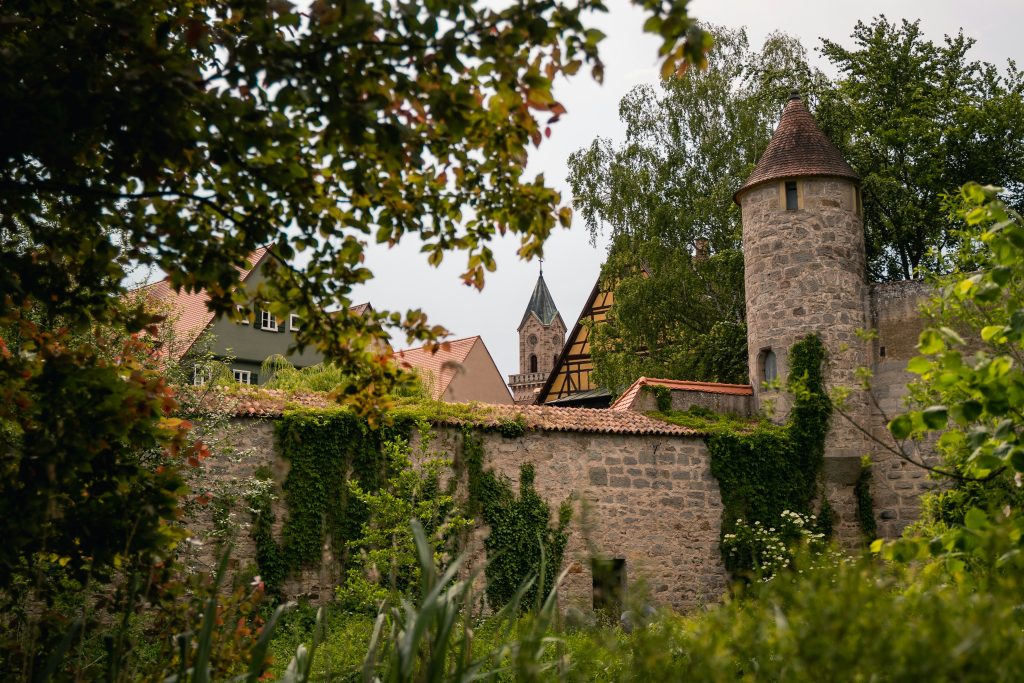
Use the early morning for a final walk in Rothenburg before shops and tour groups become active. This is the best time for the walls and the streets around the market square.
Leave late morning and continue south.
Feuchtwangen or Schillingsfürst
Feuchtwangen works as a short coffee or lunch stop. Its center is compact, but it should remain a supporting stop rather than the focus of the day.
Schillingsfürst is more specialized. The castle and falconry program may appeal to families, but schedules and operating dates require verification. Travelers without a specific interest can skip it.
Spend the afternoon and evening in Dinkelsbühl. The Weinmarkt, St. George’s Minster, and the preserved gates create a strong walking route through town.
Dinkelsbühl is a useful counterpoint to Rothenburg. It offers a similarly intact medieval setting but usually feels less dominated by day-trip traffic.
Dinkelsbühl or Nördlingen for the Night?
Choose Dinkelsbühl for a quieter medieval overnight and a compact evening walk.
Choose Nördlingen for the meteor-crater setting, a complete circular wall, and a more unusual historical framework.
This itinerary uses Dinkelsbühl overnight and saves Nördlingen for the next morning.
Day 3: Dinkelsbühl to Augsburg
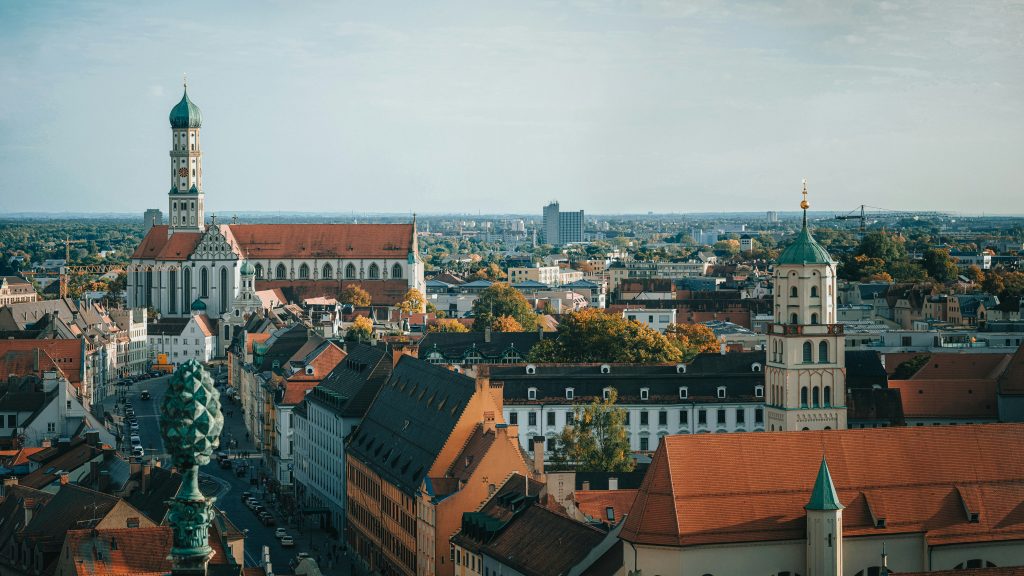
Drive first to Nördlingen. The town sits within the Nördlinger Ries impact crater, which gives it a clear point of difference from the other medieval stops.
The most useful visit combines the old town, part of the wall circuit, and Daniel Tower if it is open and the climb suits the traveler. Current access conditions should be checked before relying on the tower as the main activity.
Continue to Augsburg after lunch.
What to Prioritize in Augsburg
Augsburg provides a needed change of scale after two days of smaller towns. Focus on the Fuggerei, Rathausplatz, and the area around Augsburg Town Hall.
The Fuggerei matters because it is not just another historic building. It is a residential social-housing complex with origins in the early sixteenth century and remains closely tied to the Fugger family’s role in Augsburg.
Travelers with limited time do not need to cover the entire center. The main value of Augsburg is the contrast between merchant-city history and the smaller walled towns farther north.
Food in Augsburg
Look for Swabian dishes such as Käsespätzle and Maultaschen. A specific restaurant list should be checked close to the trip because businesses, opening days, and reservation requirements change.
Skip if time is short: Minor museums or a long shopping detour. The Fuggerei and central civic buildings provide the clearest introduction to the city.
Day 4: Augsburg to Füssen
Leave Augsburg after breakfast and drive toward Landsberg am Lech.
Stop in Landsberg am Lech
Landsberg is the best major stop on this day because it combines a compact historic center with the Lech River. A practical visit includes the main square, a short riverside walk, and lunch.
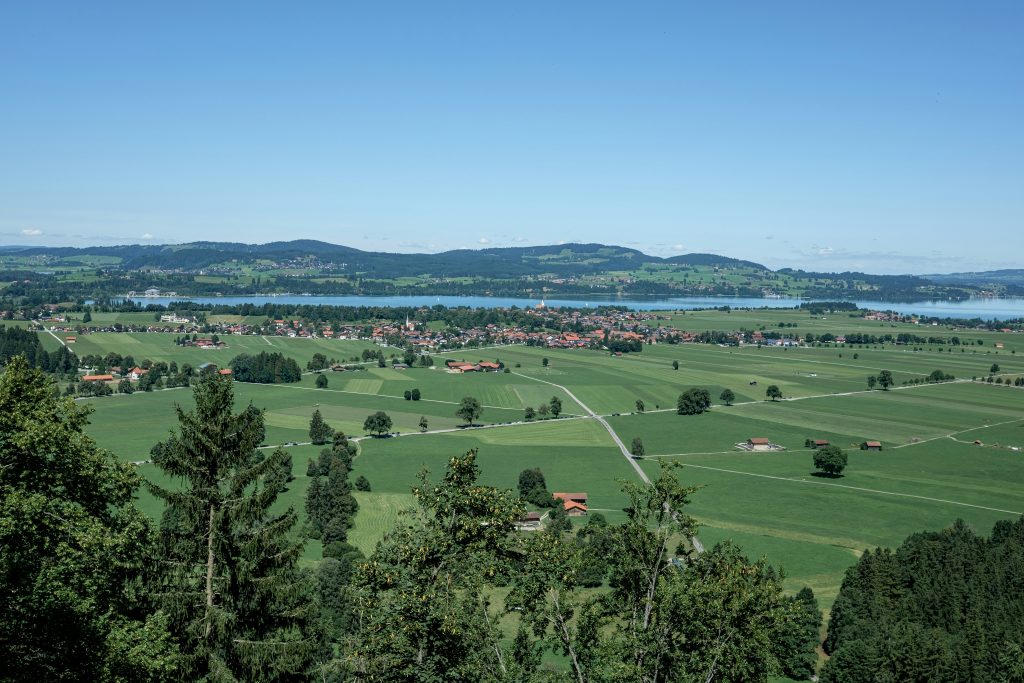
Do not overfill the day with additional villages. The southern portion of the route becomes more rewarding as the landscape opens toward the Alps, and Füssen deserves time before dinner.
Afternoon in Füssen
Walk through Füssen’s old town and the area around the former St. Mang monastery. The Lech River paths provide an easy alternative for travelers who have had enough churches and historic centers.
Füssen works better as a two-night base than as a quick castle stop. It reduces pressure on the Neuschwanstein day and gives travelers more flexibility if weather affects outdoor plans.
Prepare for the Castle Day
Neuschwanstein and Hohenschwangau use timed entry. Tickets, access rules, transport options, and parking arrangements should be confirmed on official websites before the trip.
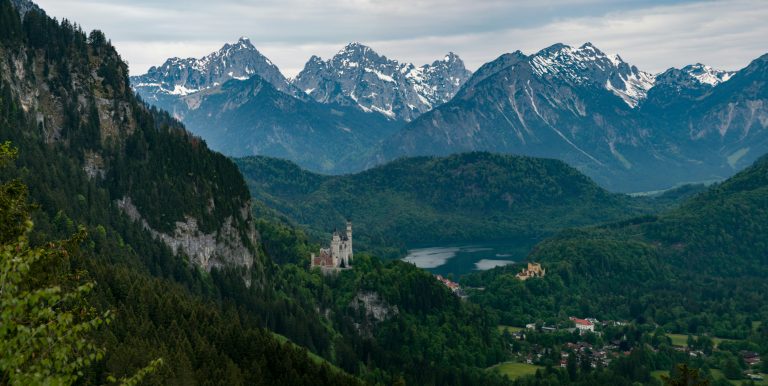
The castles are in Hohenschwangau, not central Füssen. Travelers should allow time for parking, ticket collection requirements, uphill access, and the walk between transport drop-off points and the entrances.
Day 5: Neuschwanstein, Hohenschwangau, and the Füssen Area
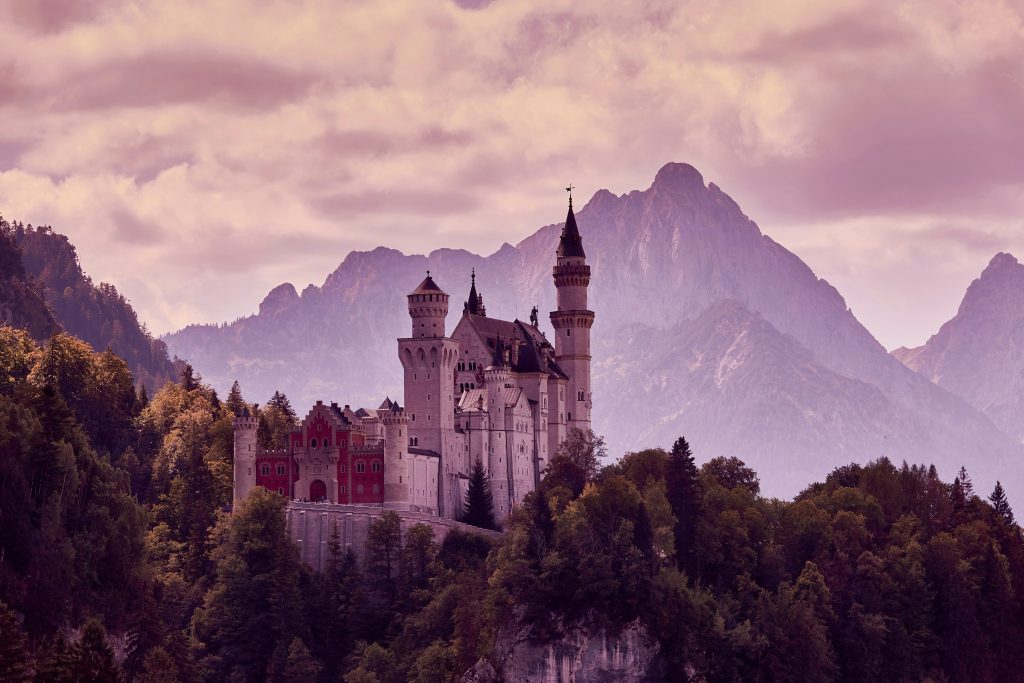
Neuschwanstein is the main priority for most first-time visitors, but the day works better when travelers choose two or three components instead of trying to do everything.
Option 1: Neuschwanstein and Hohenschwangau
Pairing both castles creates the strongest historical visit. Neuschwanstein offers the famous exterior and Ludwig II story, while Hohenschwangau provides more context on the royal family and the setting in which Ludwig grew up.
This option is best for castle-focused travelers. It may feel too structured for families with young children because both visits involve timed entry, walking, and limited flexibility.
Option 2: One Castle and Alpsee
Visit Neuschwanstein or Hohenschwangau, then use the remaining time for a walk near Alpsee.
This is the better-balanced choice for travelers who want the castle experience without spending most of the day indoors or following tour schedules.
Option 3: Füssen and an Outdoor Alternative
The Tegelberg cable car can provide mountain access with less hiking, while Forggensee offers seasonal lake activities. Weather, maintenance periods, and seasonal schedules can affect both options and should be verified.
Marienbrücke is the standard Neuschwanstein viewpoint, but access can close because of weather, maintenance, or crowd control. Do not build the entire day around guaranteed bridge access.
Skip if time is short: Trying to combine both castles, a long hike, the cable car, and a lake cruise in one day.
After Füssen, many travelers continue to Munich, the Austrian Tirol, or Lake Constance. Actual travel time depends on traffic and the onward destination.
Best Time and Ideal Trip Length
Spring and fall usually provide the best balance of moderate temperatures and fewer visitors. Summer offers long daylight hours and the widest range of services, but Rothenburg and the Füssen castle area can be busy.
Winter changes the character of the route. Christmas markets can be a reason to visit, but daylight is shorter, some attractions reduce hours, and road conditions require more flexibility.
Three Days
A three-day version should focus on Würzburg, Rothenburg, and Füssen. It requires faster roads and fewer signed-route detours.
Five Days
Five days is the best balance for most first-time visitors. It provides enough time for the key towns without requiring long sightseeing days.
Seven Days
Seven days allows a second night in Rothenburg or Füssen, more time in Augsburg, and room for hiking or bad-weather adjustments.
Travelers who dislike changing hotels should consider two bases instead: Rothenburg for the northern section and Füssen or Augsburg for the southern section. This reduces packing but creates some backtracking.
Romantic Road Planning and Driving Tips
Car or Public Transportation?
A car is the most practical way to follow the full route in five days. Rail and bus connections can reach the major towns, but the itinerary becomes less direct and intermediate stops are harder to combine.
Travelers who do not want to drive should build a train-based trip around Würzburg, Rothenburg, Augsburg, and Füssen rather than trying to reproduce every section of the signed road.
Follow the Signs or Use Faster Roads?
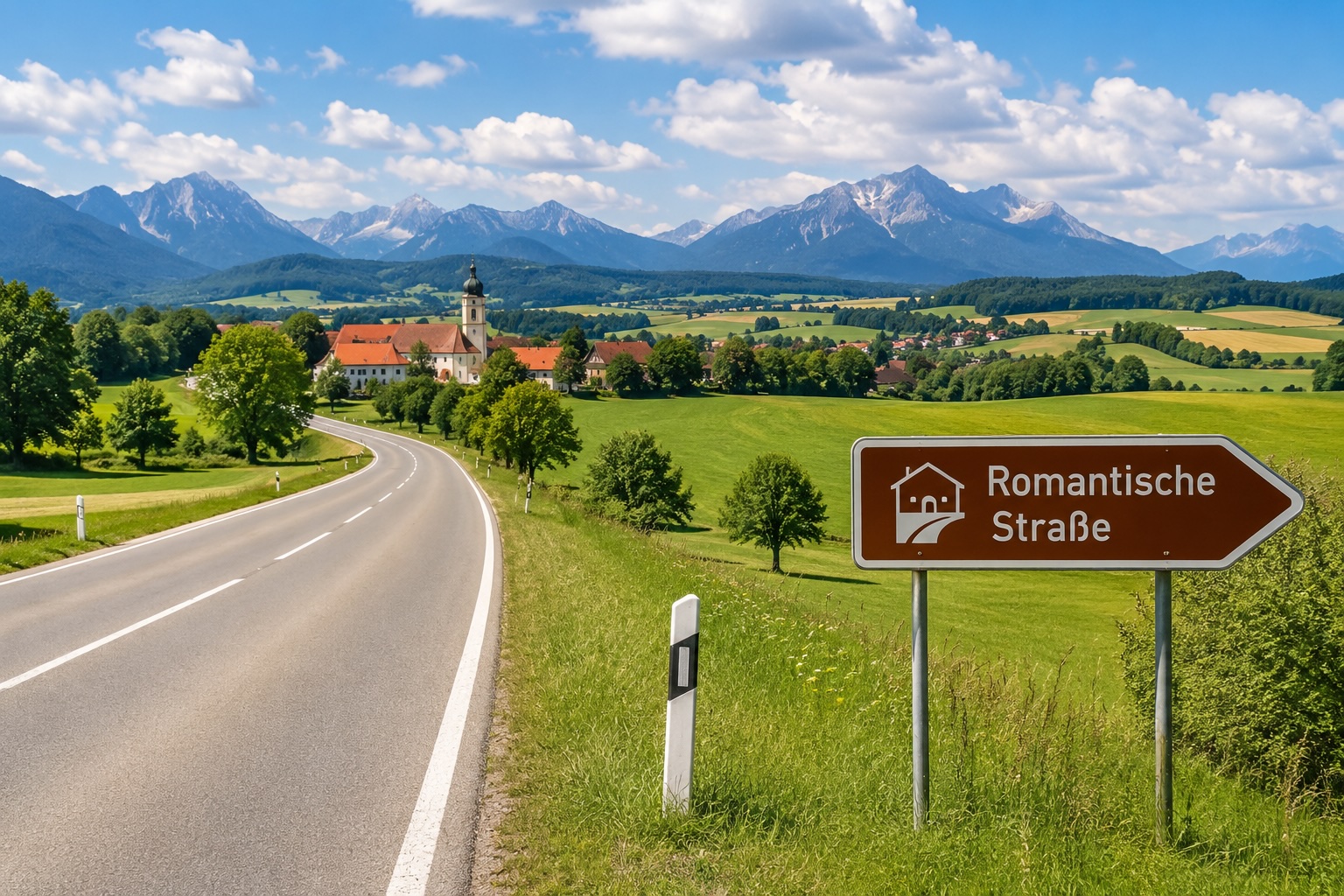
The brown Romantic Road signs help travelers stay on the themed route, but GPS may redirect to faster roads. The best approach is selective: follow the signed route on days with time for smaller towns, then use faster roads when reaching the next overnight base matters more.
Parking
Most historic centers restrict through traffic or have limited parking. Use signed public lots outside the old-town core and expect a short walk with luggage.
Hotels inside medieval centers may have special access instructions. Ask the hotel before arrival rather than assuming the property can be reached directly by car.
Rental Car Strategy
Würzburg is a logical pickup point for a north-to-south trip. Frankfurt can work for international arrivals, while Munich is often more convenient for travelers reversing the route or combining it with Bavaria.
One-way rental fees, transmission type, insurance terms, and cross-border rules should be checked before booking.
Driving Rules
Travelers should confirm license requirements for their country of residence, understand German parking signs, and watch for low-emission zones in larger cities.
Speed enforcement is strict, especially in towns and construction zones.
Budget
A fixed daily estimate is unreliable because hotel prices in Rothenburg and Füssen vary sharply by season. Build the budget from current accommodation, rental-car, fuel, parking, ticket, and meal prices rather than relying on a single per-day figure.
Best Visual Asset
A route map showing the five overnight segments, optional stops, and the stops to skip would make this itinerary easier to use on the road.
Natural internal-link opportunities include detailed guides to Rothenburg ob der Tauber, Augsburg, Neuschwanstein Castle, Füssen, Würzburg, and German castle routes.