Best Wine Festivals in Germany by Region
The best wine festivals in Germany are concentrated in the Mosel, Rheingau, Pfalz, Baden, and Franconia, but the right choice depends heavily on whether you care more about wine quality, festival atmosphere, or trip logistics.
This guide breaks down the best wine festivals in Germany by region so travelers can decide where to go based on timing, travel style, and the kind of experience they actually want. Some regions are better for serious wine tasting. Others work better for scenic evening events or larger group trips.
Germany’s Wine Festival Season at a Glance
The peak season for wine festivals in Germany runs from August through October. A few exceptions fall in May and June, most notably in Franconia. Harvest timing shifts slightly from year to year, so visitors should confirm exact dates closer to their travel window.
| Region | Top Festival(s) | Best Month | Atmosphere | Trip Type |
|---|---|---|---|---|
| Mosel | Weinfest der Mittelmosel | August | Village, intimate | Day trip / overnight |
| Rheingau | Rheingauer Weinwoche | August | Lively, accessible | Multi-day |
| Mittelrhein | Rhein in Flammen | May–Sept | Festive, scenic | Day trip / evening |
| Pfalz | Dürkheimer Wurstmarkt | September | Loud, carnival-style | Multi-day |
| Baden | Various village festivals | August–Oct | Local, low-key | Day trip |
| Franconia | Würzburg Weinfest | May–June | Historic setting | Evening / day trip |
For most travelers, the strongest wine festival regions in Germany are the Mosel for wine quality, the Rheingau for a well-organized first festival experience, and Franconia for travelers visiting in late spring. The Pfalz is best for large, lively festival energy, while Baden works better for slower, self-directed wine travel.
Mosel: Small Villages, Serious Riesling

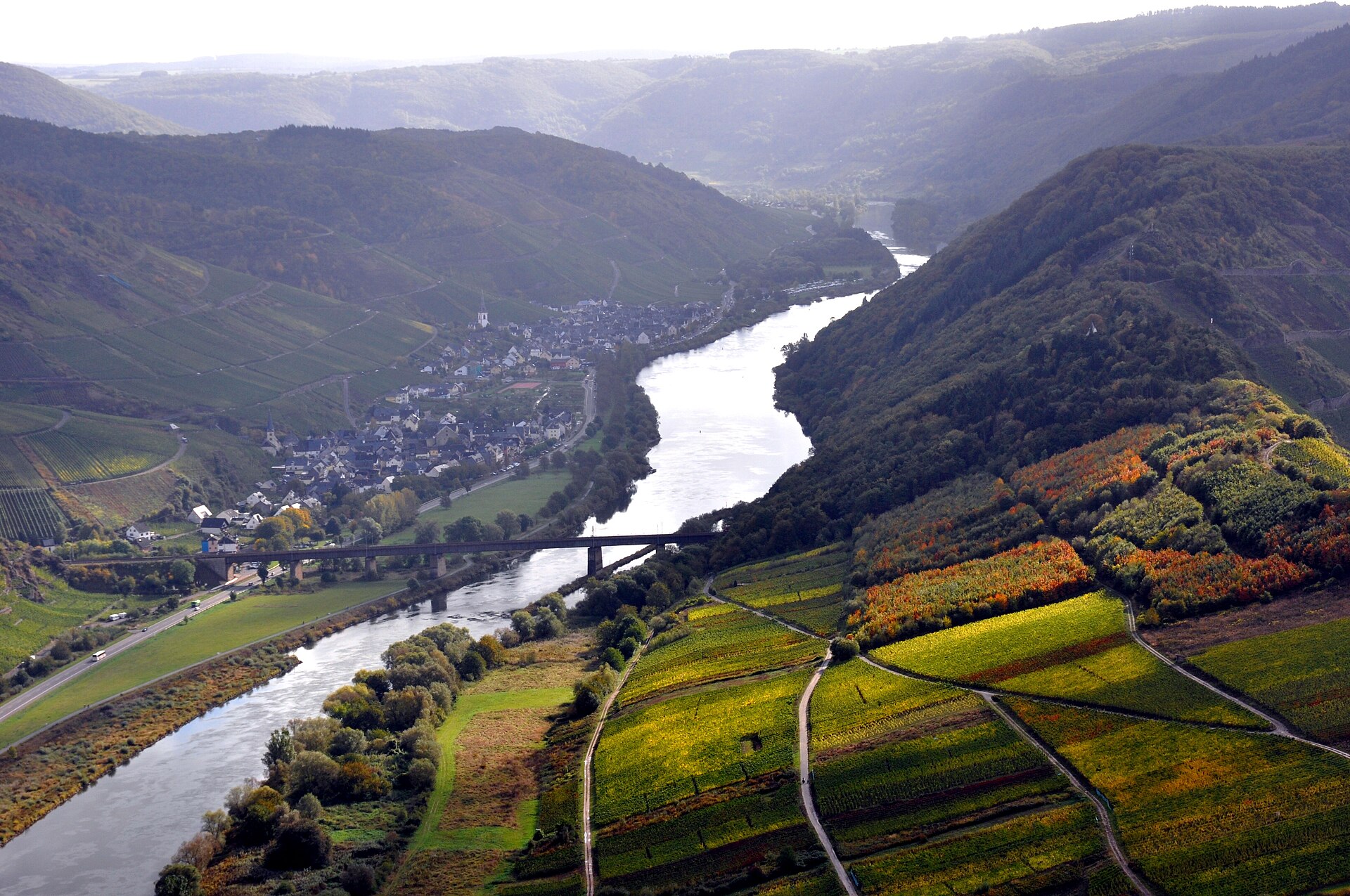
The Mosel is Germany’s most wine-focused festival region. Steep slate vineyards, a Riesling-dominant lineup, and events that stay close to producer culture make this the strongest destination for travelers who want wine at the center of the experience rather than the background.
Weinfest der Mittelmosel, held in Bernkastel-Kues in early September, is one of the most attended wine festivals in Germany. The riverside setting is well-suited to the event, and the producer presence is strong. Wine quality is genuinely high compared to more tourist-oriented festivals.
The trade-off is popularity. Weekend crowds at Bernkastel-Kues are significant. Weekday visits are noticeably calmer and allow for more direct engagement with producers.
Travelers who want to avoid the spectacle entirely have better options nearby. Smaller village festivals in Trittenheim and Piesport run during the same general season and attract a much lower volume of visitors. These events tend to feel more like local harvest celebrations than organized tourism products.
This region works best for wine-focused travelers, couples, and those already planning a Mosel Valley road trip or river cruise.
It is not a strong fit for travelers expecting music-festival energy or large group setups. For travelers extending the trip beyond the festival itself, this region pairs naturally with quieter stops along the Mosel River.
Rheingau: Germany’s Most Recognized Wine Festival Region
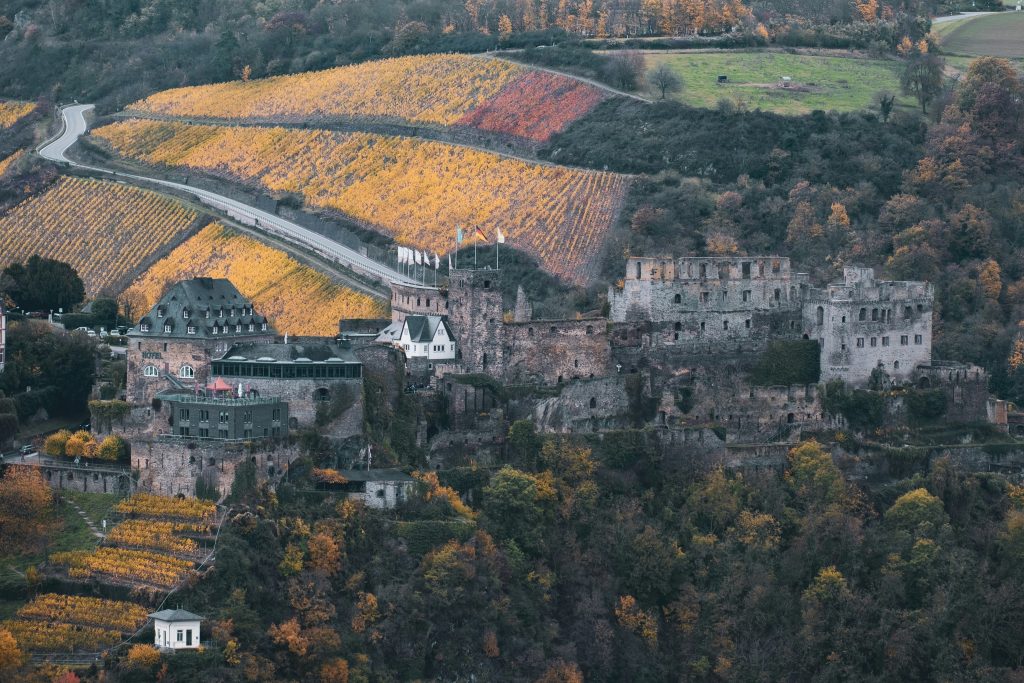
The Rheingau produces some of the most respected Riesling and Spätburgunder in Germany. Its festival scene reflects that standing — events here tend to take the wine seriously, and the producer names on pour lists are recognizable to anyone familiar with German wine.
Rheingauer Weinwoche in Wiesbaden runs in mid-August. It draws thousands of attendees but remains well-organized, with a wine list that is curated above the average street festival standard. Prices are fair. For first-time visitors to German wine festivals, this is one of the more forgiving entry points — large enough to offer variety, structured enough to be navigable.
Kloster Eberbach offers a different kind of wine event entirely. The medieval monastery hosts tastings and auctions that draw serious collectors and wine travelers rather than casual festival-goers. It is not a street festival, but it belongs in any wine-forward Rheingau itinerary.
Logistics favor the Rheingau. Wiesbaden is well-connected by train from Frankfurt, making the Rheingauer Weinwoche a realistic same-day trip or a comfortable overnight.
The Rheingau’s festival audience skews slightly older and more local than regions like the Pfalz. Travelers looking for a younger, louder crowd will likely find it quieter than expected.
This region works best for first-time visitors to German wine festivals, travelers based in Frankfurt, and those with a specific interest in Riesling or Spätburgunder.
Mittelrhein: Festivals with Scenery Built In
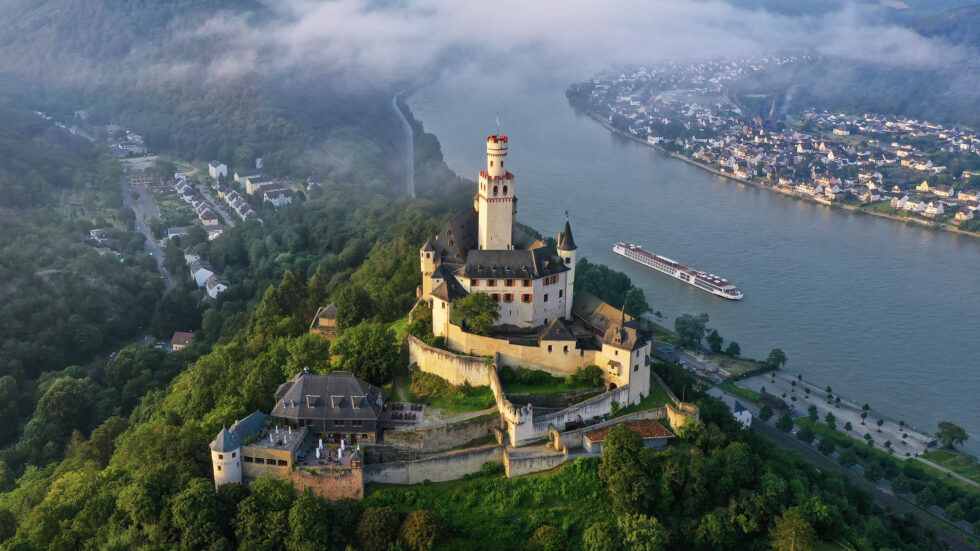
The Mittelrhein sits downstream from the Rheingau and offers fewer prestige producer names. What it provides instead is the Rhine Gorge — a UNESCO World Heritage landscape of castle-topped cliffs, river bends, and terraced vineyards that few wine regions in the world can match visually. Travelers combining wine with river scenery and castle stops should also see the best castles on the Rhine River for the broader regional context.
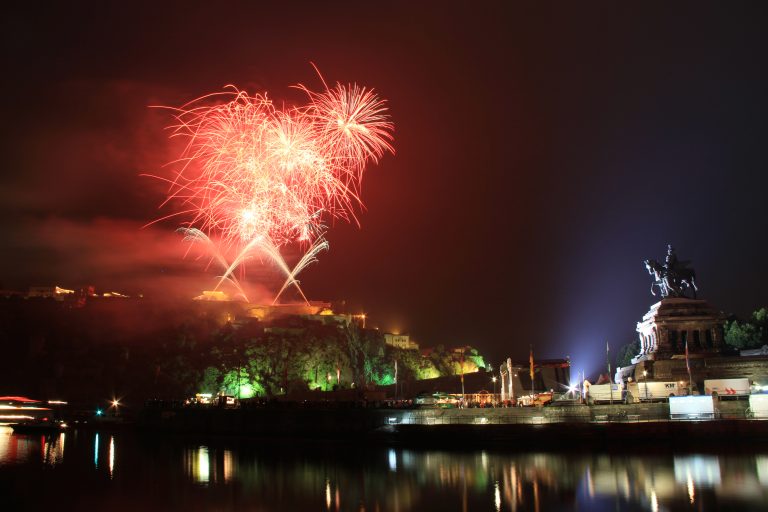
Rhein in Flammen runs at various towns from May through September. It is not strictly a wine festival, but wine is prominent throughout. The event is best known for fireworks displays over the Rhine and cruise components. The atmosphere is high. The wine depth is moderate.
For travelers who want a more wine-centric experience in this region, St. Goar and Bacharach host smaller local events that suit a Rhine Valley itinerary. These are quieter and more producer-focused than Rhein in Flammen, though still modest by Mosel or Rheingau standards.
The main drawback for wine-first visitors is the region’s honest orientation: the Mittelrhein rewards experience-seekers more than wine geeks.
This region works best for scenic travelers, those combining wine with Rhine castle sightseeing, and couples looking for an evening event with atmosphere.
Pfalz: The Biggest, Loudest Wine Festivals in Germany
The Pfalz is the high-volume counterpart to the Mosel’s restraint. The climate is warmer, the grape variety range is broader, and the festival culture leans heavily into celebration over connoisseurship. Visitors looking for Oktoberfest energy with wine rather than beer will find this region familiar.
Dürkheimer Wurstmarkt in Bad Dürkheim runs in September and claims to be one of the largest wine festivals in the world by attendance. Wine is served inside giant barrel-converted halls. The event is loud, crowded, and carnival-like. For travelers who want that kind of experience, it delivers.
The wine quality trade-off is real. Regional wines are poured throughout, but the event is built around volume and atmosphere rather than discovery or producer engagement.
Travelers who want more navigable Pfalz festival culture should look at Neustadt an der Weinstraße and the villages along the Deutsche Weinstraße (German Wine Route). These events are smaller, with better food pairing options and more meaningful producer contact.
This region works best for large groups, travelers who enjoy a fair-festival atmosphere, and those combining wine with the broader energy of a German autumn celebration.
It is not a strong match for travelers seeking curated wine experiences or quiet settings.
Baden: Low-Key Festivals Along Germany’s Warmest Wine Region
Baden gets less international attention than the Mosel or Rheingau, but it is one of Germany’s most capable wine regions. The climate — Germany’s warmest — supports excellent Pinot Noir (Spätburgunder) and Grauburgunder. Travelers who make the effort to visit will find wines that hold up well against the region’s more famous neighbors.
There is no single flagship festival. Instead, a network of village harvest festivals — known as Weinfeste and Herbstfeste — runs from August through October across the Kaiserstuhl, Ortenau, and Markgräflerland sub-regions.
Breisach am Rhein offers one of the more accessible entry points. It functions well as a wine tourism base and makes cross-border day trips into Alsace practical for travelers interested in comparing German and French wine cultures along the same river.
The practical limitation for most visitors is navigation. Baden rewards those who rent a car and follow local winery signage rather than relying on a single organized event. Travelers expecting a festival calendar similar to the Mosel or Rheingau may find the region harder to plan around.
This region works best for independent travelers, those combining Baden with a Black Forest itinerary, and wine visitors who prefer direct producer interaction over organized festival formats.
Franconia: Historic Settings, Underrated Wines
Franconia (Franken) sits inland in Bavaria, geographically separate from the Rhine wine regions. The dominant grape is Silvaner, wines are sold in flat-sided Bocksbeutel bottles, and the festival culture has a distinctly Bavarian character that sets it apart from anything in the Mosel or Rheingau.
Würzburg Weinfest runs in late May and early June in front of the Würzburg Residence, a UNESCO World Heritage site. The setting is arguably the most visually impressive of any wine festival in Germany. Wine quality is solid and prices are reasonable. Producer presence from Franken estates is consistent.
The timing matters. Würzburg Weinfest is one of the few high-quality wine festivals outside the August–October window, which makes it genuinely useful for travelers who are planning a spring trip to Germany and do not want to miss festival culture entirely.
Volkach and Iphofen are smaller Franconian towns with harvest-season festivals that reward travelers willing to move off the main tourist route. Both are manageable day trips from Würzburg.
This region works best for travelers combining wine with Romantic Road or Würzburg sightseeing, those planning a spring trip, and anyone with a specific interest in Silvaner.
How to Pick the Right Wine Festival for Your Trip
There is no single best wine festival in Germany. The right choice depends entirely on timing and trip style.
Three traveler profiles cover most situations:
- Best for wine-first travelers: Mosel (Bernkastel-Kues), Rheingau (Kloster Eberbach), or Franconia (Würzburg)
- Best for first-time visitors: Rheingau (Rheingauer Weinwoche)
- Best for atmosphere-first travelers: Rhein in Flammen (Mittelrhein) or Dürkheimer Wurstmarkt (Pfalz)
- Best for quieter, less obvious trips: Baden village festivals or smaller Franconian towns like Volkach and Iphofen
A few logistics apply across all regions.
Weekday visits almost always outperform weekend visits at major festivals. This is especially true at Bernkastel-Kues and Bad Dürkheim, where weekend crowds reduce the quality of the overall experience.
Accommodation books up fast. For any festival falling in September or early October, booking six to eight weeks in advance is realistic minimum planning. Popular dates sell out earlier.
Plan Around the Wine, Not Just the Festival
The festivals are an entry point into Germany’s wine regions, not the destination in themselves.
Germany’s wine regions reward slower travel — winery visits, time spent along wine roads, and days spent in harvest-season landscapes where most of the crowds never arrive. The Mosel, Rheingau, Pfalz, Baden, and Franconia all have enough depth to justify a multi-day stay outside of any specific festival event.
Travelers who use a festival as a starting point and then build time around the region’s broader wine culture tend to come away with a richer experience than those who visit only for the event.
The best wine encounter from a German trip rarely comes from the biggest festival. It usually comes from finding a small producer table no one else is queuing at.
For further planning, related content on fall in Germany, Mosel travel, and Rhine Valley itineraries covers the seasonal context in more detail.