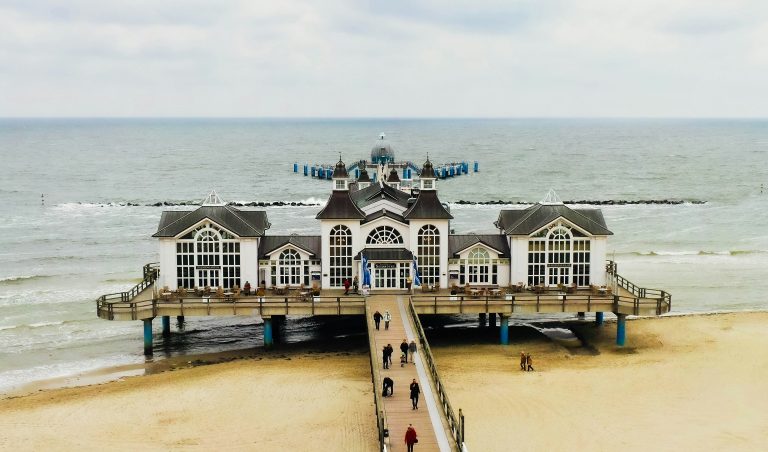
Best Beaches in Germany: Coast and Lake Spots to Visit
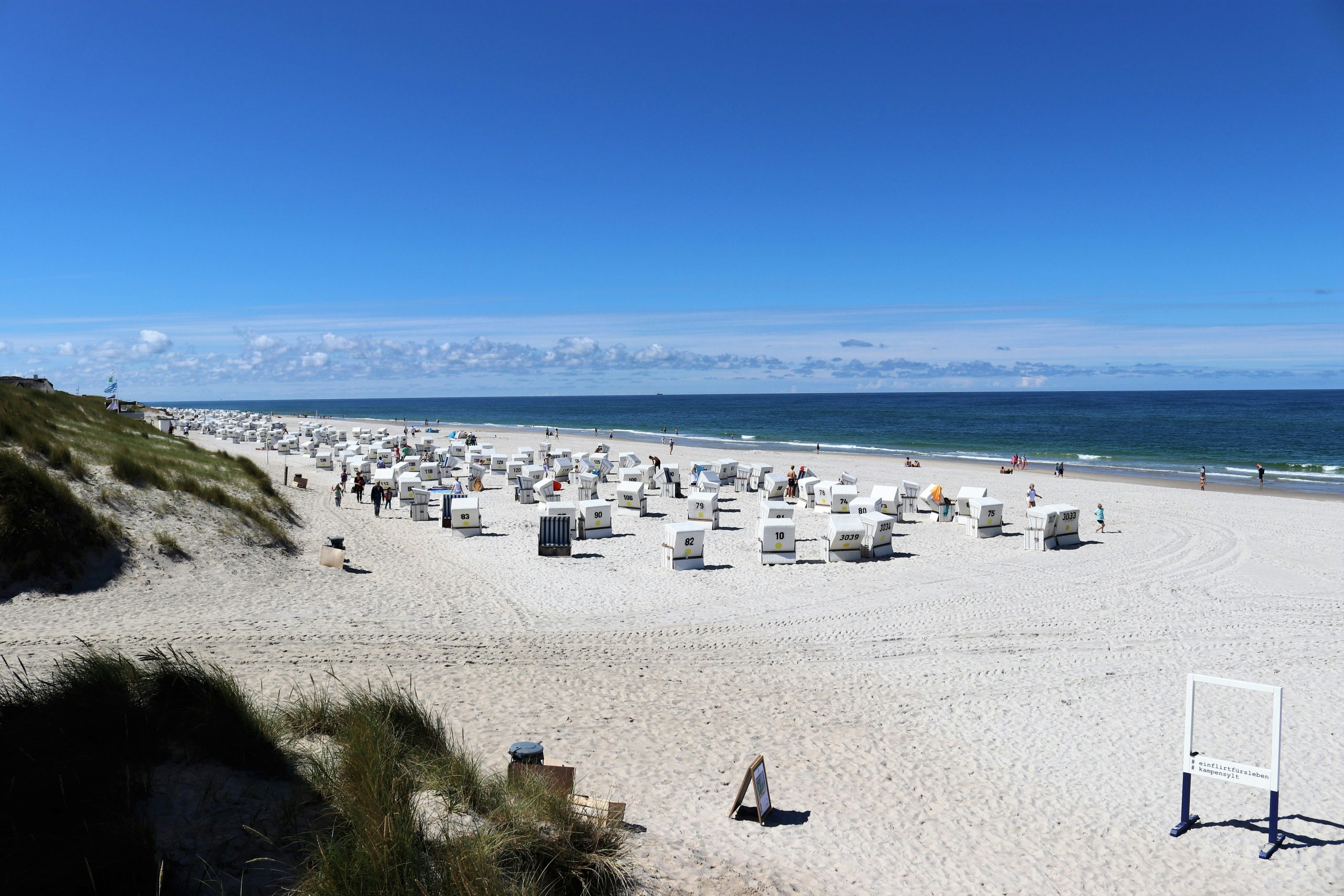
Yes, Germany has beaches, both along the North Sea and Baltic Sea, as well as on scenic lakes in Bavaria. The best beach destinations include Sylt, Rügen, Usedom, and alpine lakes like Eibsee and Chiemsee.
Does Germany Have Good Beaches? The honest answer is yes, but with context. Germany’s beaches are not Mediterranean beaches. The water is cooler, the peak season is shorter, and the culture around beach-going is distinctly its own. Travelers who arrive expecting warm water, all-day sunshine, and resort-style infrastructure may need to recalibrate.
That said, the variety is real. Germany has two coastlines with distinct characters, dozens of lake beaches that rival coastal options in summer, and a well-developed beach culture built around the Strandkorb, a hooded wicker chair that defines the look of nearly every North Sea and Baltic beach.
North Sea vs Baltic Sea vs Lake Beaches in Germany
| Type | Best for | Water temp | Vibe |
|---|---|---|---|
| North Sea | Wide beaches, dramatic tides | Cooler | Windy, raw |
| Baltic Sea | Calm swimming | Warmer | Family-friendly |
| Lakes | Scenic, mountains | Warmest | Relaxed |
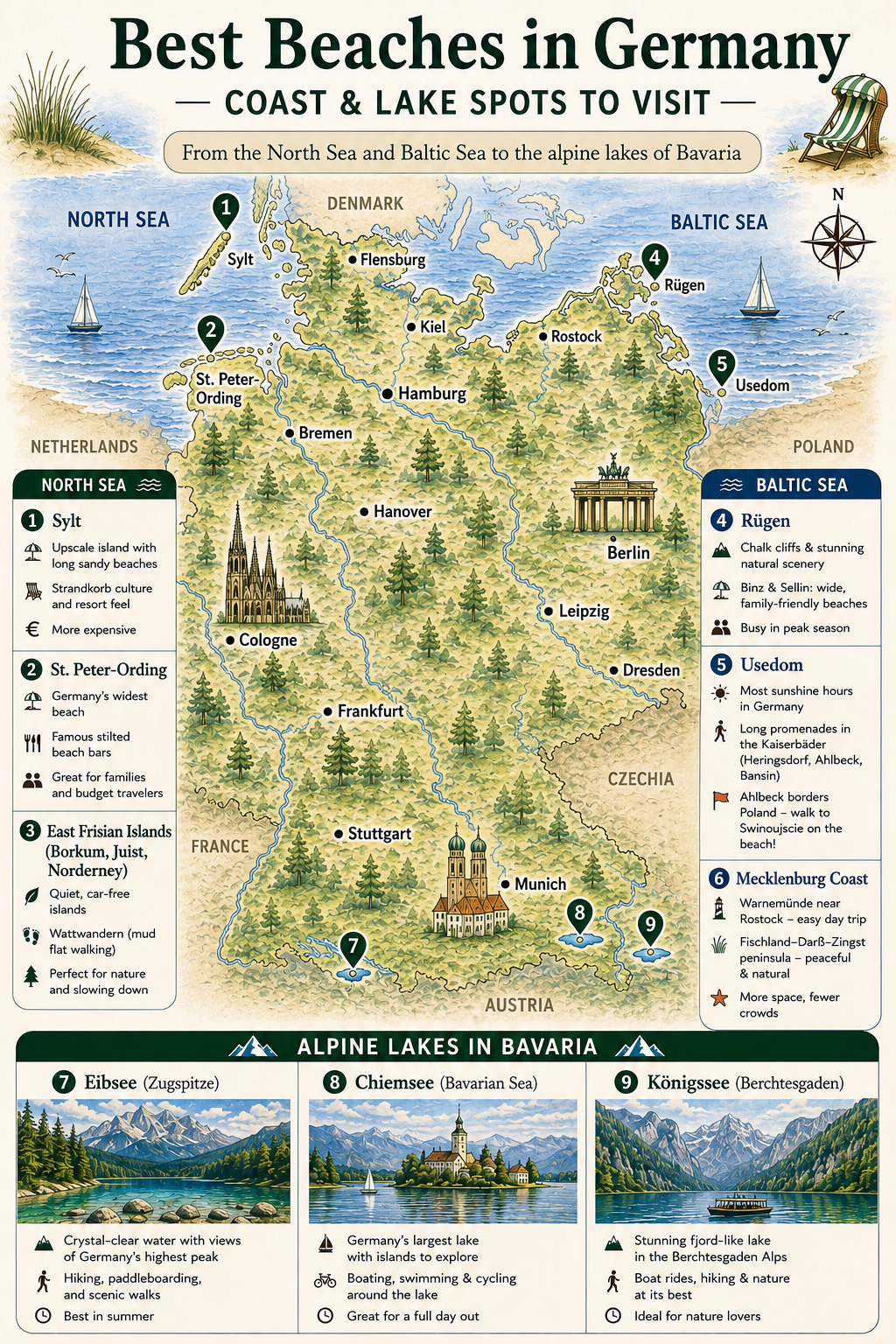
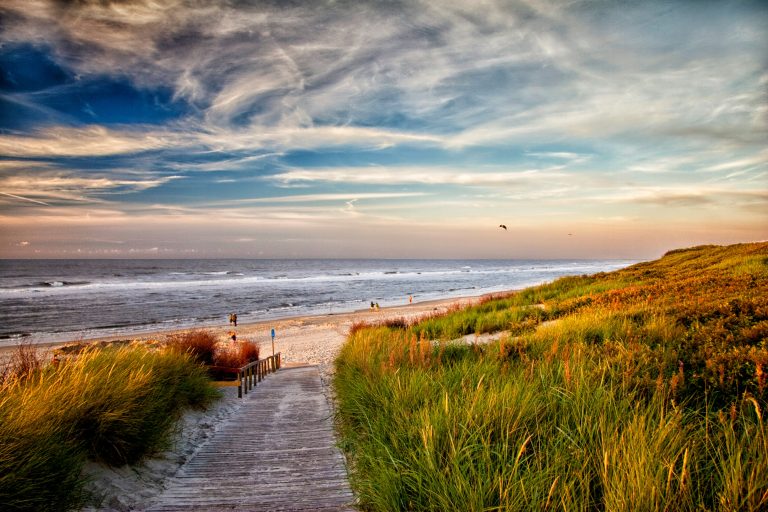
The North Sea coast is tidal, windswept, and better suited to walking and active recreation than lounging. The Baltic coast is calmer, slightly warmer, and consistently more popular with swimmers and families.
Lake beaches, particularly in Bavaria, offer clear water, mountain backdrops, and good swimming conditions. They work especially well for travelers who are already based in Munich or the southern part of the country.
Visitors who appreciate cooler climates, active outdoor settings, and less-crowded beach experiences will find Germany’s options genuinely worthwhile. Those prioritizing warm water above all else may want to set expectations accordingly.
North Sea Beaches: Sylt, St. Peter-Ording, and the Frisian Coast
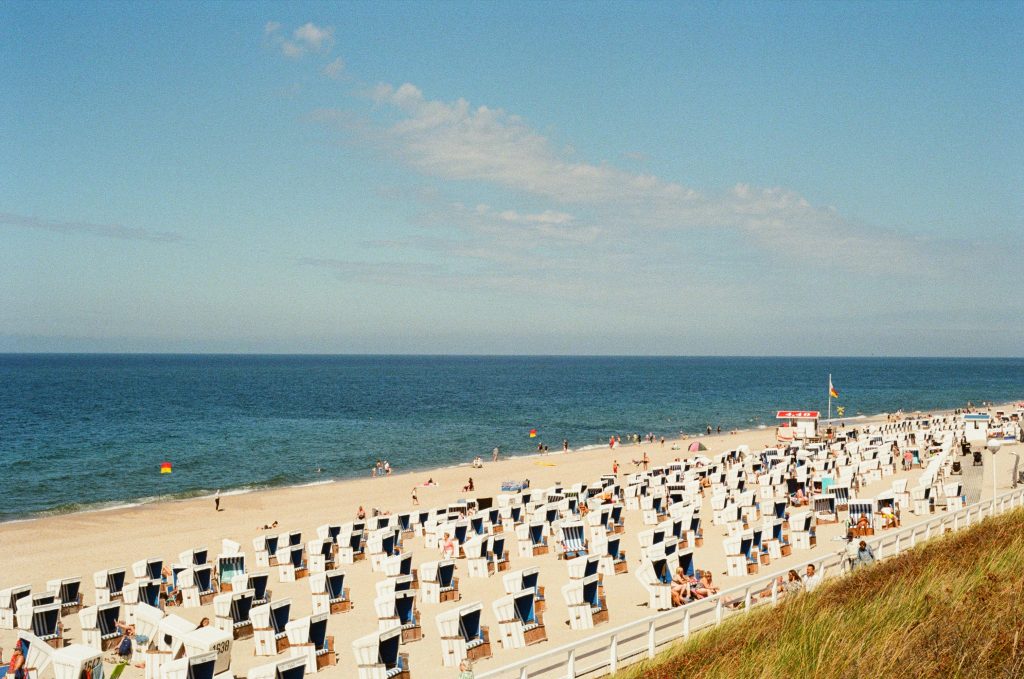
The North Sea coast is Germany’s most recognizable beach destination, but it suits a specific kind of traveler.
Sylt: One of the Best Beaches in Germany (North Sea)
Sylt is the flagship North Sea island and the most well-known Germany beach destination. It offers long white sand beaches, persistent wind, and an upscale beach culture that leans heavily resort-oriented. Strandkorb rentals line the beaches, and the overall atmosphere skews expensive. Visitors expecting an accessible, casual beach day may find Sylt better suited to longer stays with a higher budget.
The beaches at Wenningstedt, Kampen, and Westerland each have different characters, from family-friendly to more exclusive, but the overall island tone is consistent.
St. Peter-Ording: Germany’s Widest Beach on the North Sea
St. Peter-Ording is a more accessible alternative. Its defining feature is an unusually wide stretch of tidal flats that extends far beyond the dune line. The elevated beach bars, built on stilts above the sand, have made the town recognizable beyond the immediate region.
This area works better for families and those without a large travel budget. The infrastructure is solid, the beaches are genuinely wide, and the atmosphere is less resort-focused than Sylt.
East Frisian Islands: Quiet North Sea Beaches in Germany
The East Frisian Islands, including Borkum, Juist, and Norderney, offer a quieter alternative. Most are car-free or largely car-free, which changes the pace considerably. Mud flat walking, known as Wattwandern, is a central activity here. This is not a beach experience built around swimming. It is better for walking, nature observation, and slow-paced coastal access.
Practical notes for the North Sea:
- Water temperatures average 17 to 18°C in July and August
- Tides affect beach access and should be checked in advance
- Winds are consistent and strong, which is useful for kite surfing but less comfortable for casual sunbathing
- This coast rewards visitors who want activity over passive beach time
Baltic Sea Beaches: Rügen, Usedom, and the Mecklenburg Coast
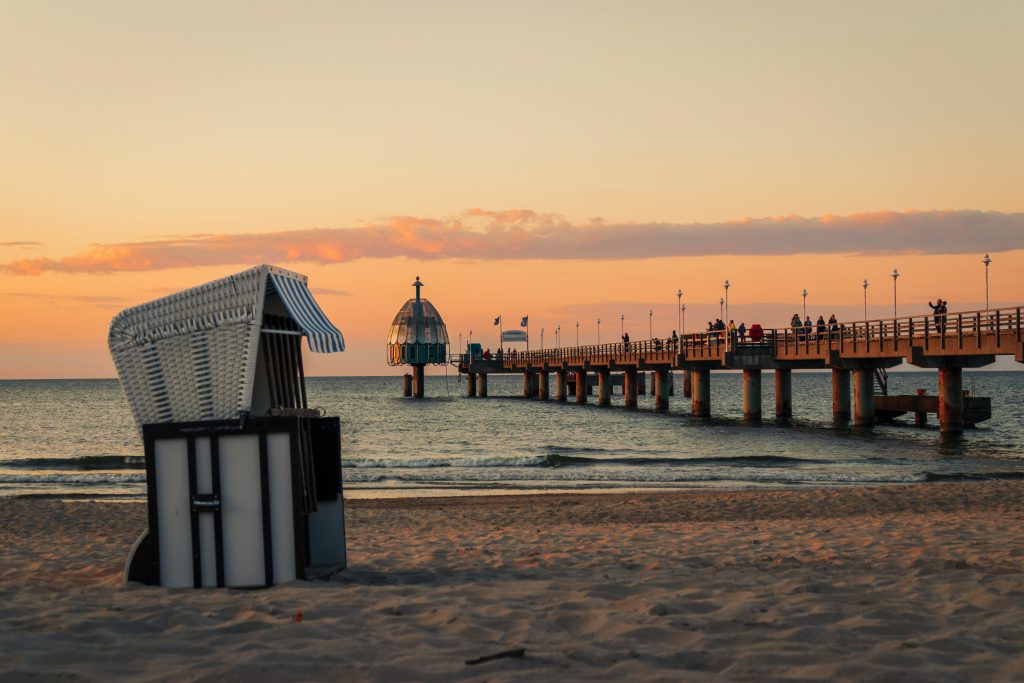
The Baltic coast is the better choice for most travelers looking for a conventional beach holiday in Germany.
Rügen: Chalk Cliffs and Some of the Best Beaches in Germany
Rügen is Germany’s largest island and the centerpiece of Baltic beach travel. The resort town of Binz offers a well-preserved Wilhelminian architecture backdrop alongside broad sandy beaches. The chalk cliffs at Jasmund National Park, visible from the water, give the island a visual identity that no other German beach destination can match.
The beaches here range considerably by location. Binz and Sellin are popular and well-developed, suitable for families. The northern parts of the island are quieter, with smaller coves that attract visitors looking to avoid the main crowds.
The main drawback for visitors is peak season crowding. Rügen in July and August is busy, and accommodation books up well in advance.
Usedom: Sunny Baltic Beaches in Germany with Long Promenades
Usedom holds the record for the highest sunshine hours in Germany, which matters on a coast where weather is variable. The connected beach strip running through the Kaiserbäder resort towns of Heringsdorf, Ahlbeck, and Bansin offers one of the longest uninterrupted walking promenades on the German coast.
A practical note: Ahlbeck sits directly on the Polish border, and the beach continues into Swinoujscie. Travelers staying on Usedom can walk across the border on the sand, which is a genuinely unusual logistical detail worth knowing.
The Broader Mecklenburg-Vorpommern Coast
Warnemünde, the beach suburb of Rostock, is the easiest coastal beach to reach from central or western Germany. It functions well as a day trip rather than a base.
The Fischland-Darss-Zingst peninsula is the most undervisited stretch of the Baltic coast. Zingst and Prerow attract German visitors but remain largely off the radar for international travelers. For anyone wanting fewer crowds and a more local atmosphere, this area is worth the effort.
Practical notes for the Baltic:
- Water temperatures peak at 20 to 22°C in a good summer
- Conditions are calmer than the North Sea and more suitable for swimming with children
- Crowds peak heavily in July and August, particularly on weekends
- Early September offers similar conditions with noticeably fewer people
Lake Beaches in Bavaria: Eibsee, Chiemsee, and Starnberger See

For travelers based in Munich or exploring the Bavarian Alps, lake beaches are the most practical beach option in Germany.
Bavaria’s alpine and pre-alpine lakes offer clear water, strong mountain scenery, and good swimming conditions in summer. The experience is different from coastal beaches, but the swimming quality is often better.
Eibsee: Germany’s Most Scenic Lake Beach
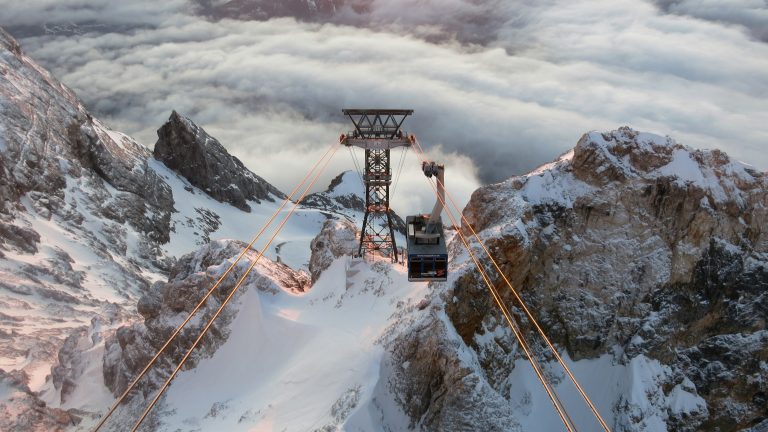
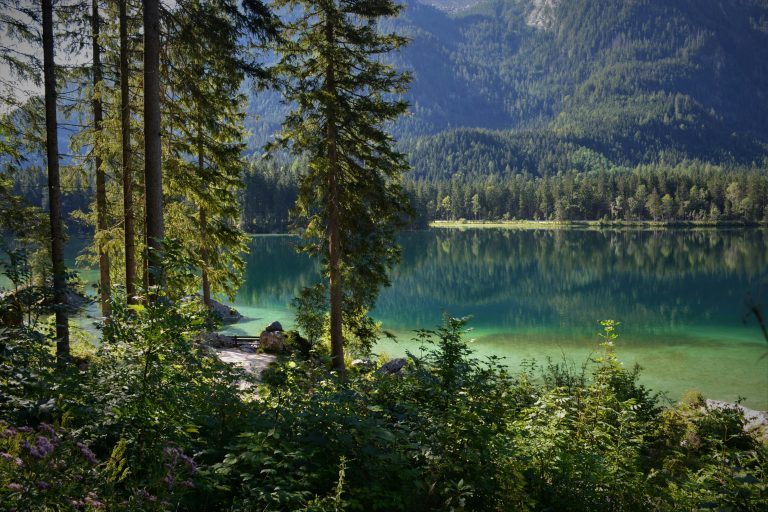
Eibsee sits at the foot of the Zugspitze, Germany’s highest peak. The water is exceptionally clear but stays cold, even in summer. It is better suited to a short dip than extended swimming.
The lake is small and its capacity is limited. Weekends in July and August see parking lots fill before 9am. Visitors should plan for an early arrival or a weekday visit. The visual setting is hard to match, but the practical experience requires some tolerance for crowds.
Chiemsee: Bavaria’s Largest Lake with Relaxed Beach Spots
Chiemsee is the largest Bavarian lake and the most practical choice for a full beach day. Water temperatures are warmer than the alpine lakes. Multiple shoreline towns, including Prien, Bernau, and Gstadt, each offer public beach access with different levels of infrastructure.
Chiemsee is reachable from Munich by train in under an hour. This makes it a reliable option for a spontaneous day trip or as part of a broader Bavarian itinerary. It is the better choice for families wanting a longer stay at the water.
Starnberger See: Easy Lake Beaches Near Munich
Starnberger See is the closest major lake to Munich and served directly by the S-Bahn. It is the go-to option for Münchners looking for water access without a long journey.
The main limitation: much of the shoreline is privately owned. Public access points exist but require knowing where to go in advance. First-time visitors are better served by checking specific town beaches in Starnberg or Seeshaupt rather than arriving and hoping to find an entry point.
Ammersee and Tegernsee are worth noting as alternatives with somewhat fewer visitors on a typical summer weekend.
Lake Beaches Beyond Bavaria
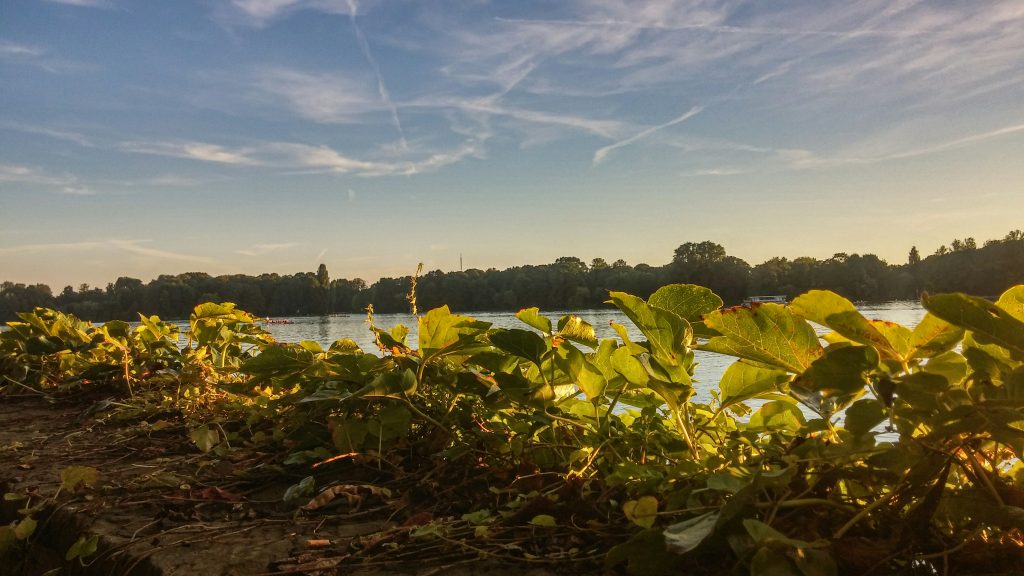
Lake swimming is not exclusive to Bavaria, and travelers based in other parts of Germany have options worth knowing about.
Schluchsee in the Black Forest is a good swimming lake with a relaxed pace. It suits visitors who are already exploring the southwest and want to add a half-day at the water without a major detour.
Maschsee in Hannover is an urban lake with a beach festival atmosphere in summer. The swimming experience is secondary to the social scene. It is honest about what it is, and useful for Hannover-based travelers, but not a reason to travel specifically.
Grosser Müggelsee in Berlin is the primary swimming lake for city residents. It is accessible by public transport from central Berlin and has a genuine local beach culture rather than a tourist infrastructure. Travelers spending time in Berlin in summer will find it a straightforward option for a hot day.
When to Visit Germany’s Beaches
The reliable beach window in Germany is mid-June through late August.
July is the warmest and most crowded month across all beach types. School summer holidays in Germany’s federal states are staggered, which can shift peak crowds by a week or two depending on location, but the overall July and early August period is consistently the busiest.
Shoulder season timing works particularly well on the Baltic coast. Late May, early June, and September can offer good beach conditions with significantly fewer visitors. Water temperatures in September are often still acceptable after a warm summer, and accommodation is easier to find and cheaper.
Weather honesty matters here. German summers are variable. Rain and cool days are possible even in July. The North Sea coast is especially changeable, with strong shifts in conditions within a single day. Packing a layer for coastal visits is always a reasonable decision.
Bavarian lake beaches warm more slowly than coastal waters. Late June is generally the earliest point at which swimming feels comfortable at most lakes. Alpine lakes like Eibsee remain cold throughout the summer.
What to Expect at a German Beach
Several features of German beach culture are likely to be unfamiliar to first-time visitors.
- Strandkorb: The hooded wicker beach chair is a defining fixture of coastal beach culture in Germany. These are rented by the half-day or full day and provide shelter from wind. In peak season at popular beaches, booking in advance is a practical step rather than a precaution.
- Kurtaxe: Many public beaches, including coastal and lake options, charge a visitor’s fee or a Kurtaxe. Amounts vary by location. It is worth building this into a day trip budget.
- Water quality: German bathing waters generally perform well under EU standards. The Umweltbundesamt publishes annual quality data for individual sites, which is a useful check before visiting unfamiliar locations.
- FKK sections: Nudist bathing areas, marked as FKK, are common at both coastal and lake beaches. They are clearly signed and separate from the main family beach areas. First-time visitors should be aware these exist but will not encounter them unexpectedly.
Planning Tips for Families and First-Time Visitors
The Baltic coast is the most practical coastal option for families traveling with young children.
Usedom and the quieter parts of Rügen offer calmer water, long flat beach strips, and solid tourist infrastructure. The Kaiserbäder towns on Usedom in particular are well set up for family stays, with promenades, rental equipment, and accommodation in a range of price points.
For families not traveling to the coast, Chiemsee is the most reliable Bavarian lake option. It combines accessible public beaches, calm water, and a train connection from Munich.
Logistics to plan for:
- Parking at popular spots, including Eibsee, Binz, and Starnberger See, fills early on summer weekends. Public transport or arrival before 9am consistently avoids the worst of it.
- Accommodation near the most in-demand destinations, including Sylt, Binz, and the Kaiserbäder towns on Usedom, books out months in advance for July and August. This is not an exaggeration. Travelers planning a summer coastal stay should treat accommodation as the first booking, not an afterthought.
- Weekday visits to any popular beach deliver a noticeably better experience than weekend arrivals in peak season.
How to Choose: Coast vs Lakes
The choice between Germany’s coastal and lake beaches comes down to location, trip length, and what the visit is actually for.
Choose the coast if:
- The trip is specifically about a beach holiday with multiple days at the water
- Visitors want the full North Sea or Baltic experience, including Strandkorb culture and coastal walking
- Travel itineraries are already focused on northern Germany
Choose lake beaches if:
- The trip is based in Munich or another southern city
- A beach day is one element of a broader itinerary rather than the focus
- Warmer, calmer water is a priority, particularly with children
Both can be combined on a longer Germany trip. Travelers moving between northern and southern Germany have a natural opportunity to include a Baltic coast stay at one end and a Bavarian lake day at the other.
Finding the Right Beach for Your Trip
The best Germany beach depends on where the trip is based, when it is happening, and what kind of experience is actually wanted.
A few quick pairings to orient the decision:
- Munich-based: Chiemsee for a full day, Eibsee for the setting with an early start
- Berlin-based: Usedom for a longer beach stay, Grosser Muggelsee for a quick city escape
- Northern Germany base: Sylt for a premium coastal experience, Rügen for a more accessible and varied stay
Germany’s beach scene rewards advance planning more than most. Accommodation at the most popular coastal spots fills early, weekend crowds at lake beaches can be significant, and the best conditions in shoulder season go quickly. Travelers who lock in accommodation early and plan around weekdays will consistently get more out of any Germany beach trip.