A Guide to Germany’s Best Beer Gardens
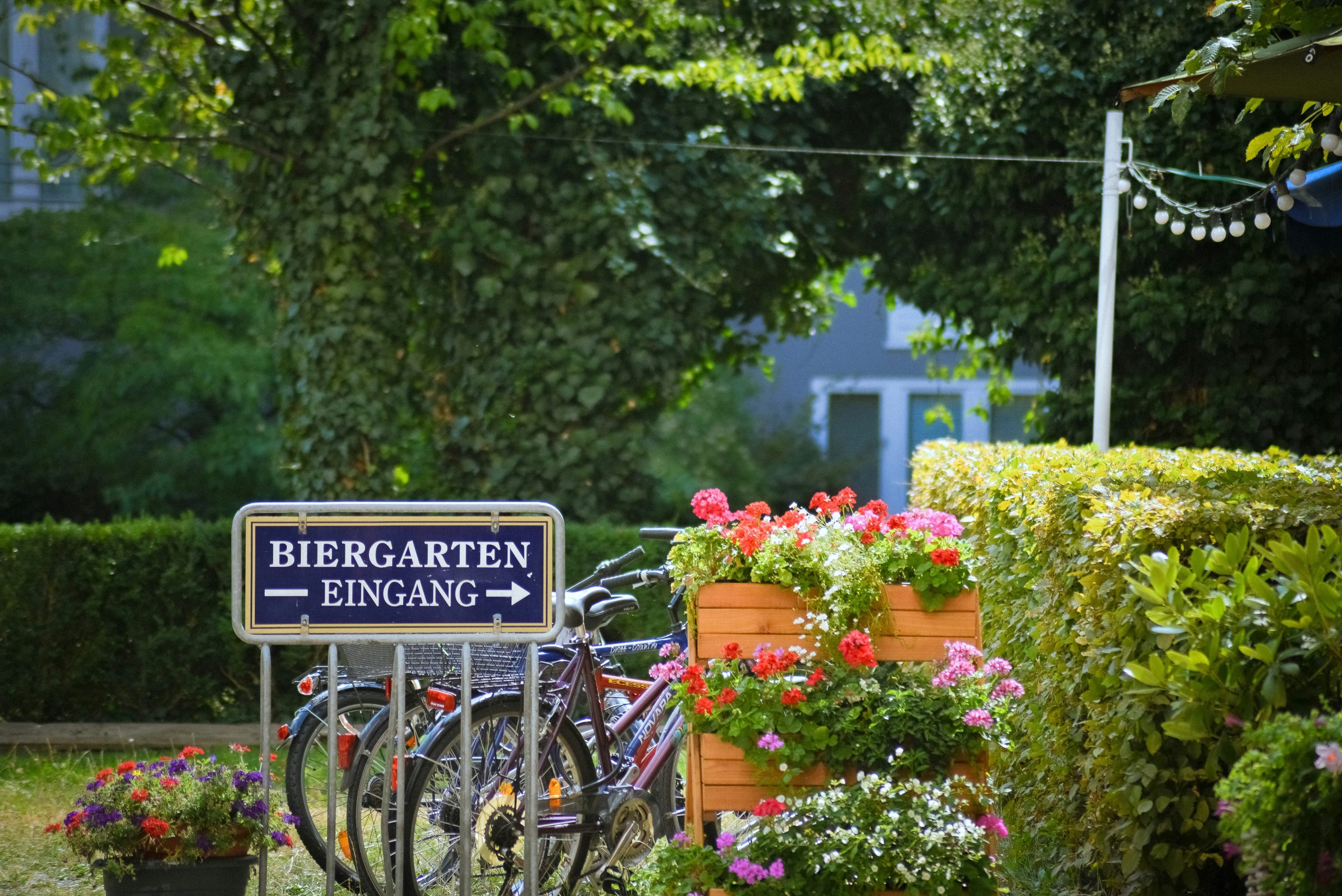
Germany’s beer gardens represent one of the country’s most enduring social traditions, but travelers often approach them with the wrong expectations. A beer garden is not simply an outdoor bar with picnic tables. It’s a regulated cultural institution with specific structural features, social protocols, and historical roots in 19th-century Bavarian brewing laws.
The term Biergarten carries legal weight in Bavaria. Traditional beer gardens must allow guests to bring their own food (Brotzeit), feature communal seating at long shared tables, provide shade through chestnut tree canopies, and offer distinct self-service and table-service zones. Many establishments across Germany use the label loosely, so travelers benefit from understanding what separates an authentic beer garden from a restaurant patio that happens to serve beer outdoors.
The format exists to facilitate socializing, not drinking. Beer gardens solve a specific problem: how to create a public space where strangers can sit together for hours without the formality of a restaurant or the anonymity of a bar. That function has remained consistent for nearly two centuries, which explains why the format resists modernization and why it doesn’t translate well to other contexts.
What Makes a Beer Garden a Beer Garden
The right to bring your own food is the defining legal characteristic of a traditional Bavarian beer garden. This regulation dates to an 1812 decree that allowed Munich breweries to sell beer directly to the public from their cellars, provided they didn’t offer full restaurant service. Guests brought their own meals, and the tradition stuck.
Communal seating at shared tables is the second structural marker. Tables are long, benches are backless, and the seating arrangement is designed to encourage interaction or at least proximity. Reserved tables don’t exist in self-service areas. Guests sit where space allows.
Chestnut trees provide the canopy in most historic beer gardens. Brewers originally planted them to shade underground beer cellars and keep storage temperatures stable before refrigeration. The trees remain because they’re deeply associated with the aesthetic, even though their cooling function is no longer necessary.
The distinction between self-service (Selbstbedienung) and table-service (bediente) zones matters. Self-service areas require guests to order and carry their own beer from a counter, usually in exchange for a deposit (Pfand) on the glass. Table-service areas function like outdoor restaurants, with waitstaff and higher prices. Both zones coexist in many beer gardens, but the self-service section is where the traditional format is most visible.
Many establishments across Germany label themselves beer gardens without meeting these criteria. Travelers visiting cities outside Bavaria will encounter outdoor seating areas that share the name but lack the structural features. That’s not inherently a problem, but it’s worth knowing the difference when planning which beer gardens to prioritize.
Munich’s Anchor: The Beer Gardens That Set the Standard
Augustiner-Keller
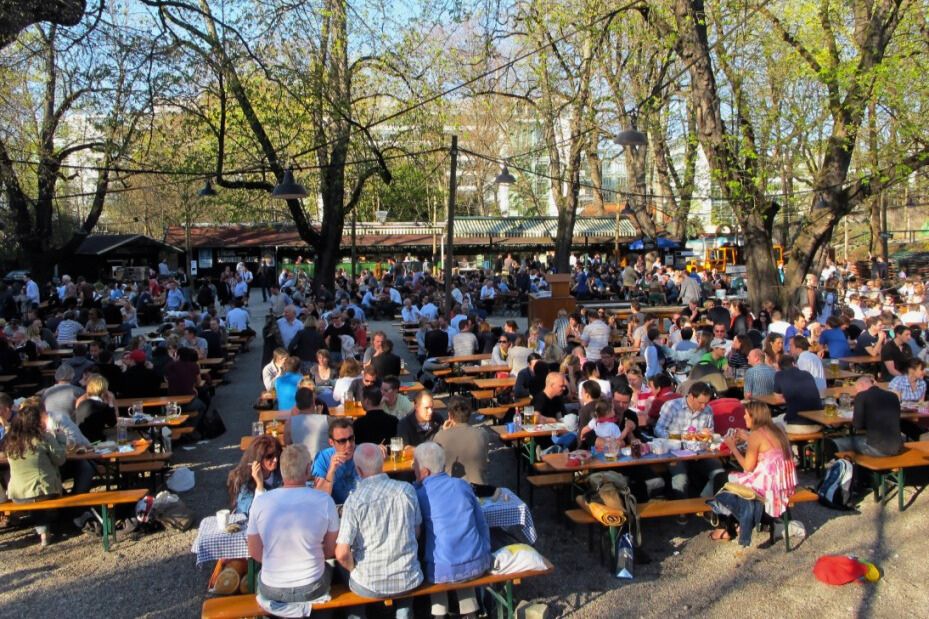
Augustiner-Keller is one of the most locally respected beer gardens in Munich, known for gravitating toward regulars rather than tourists. The self-service area under old chestnut trees is the main draw, and the beer — Augustiner, served from wooden barrels (Holzfass) — is widely considered the gold standard among Munich breweries.
The food is solid but unremarkable. The atmosphere is the reason to visit. Weekday afternoons and early evenings tend to feel more authentic than weekend crowds, which can become dense and loud.
Hirschgarten
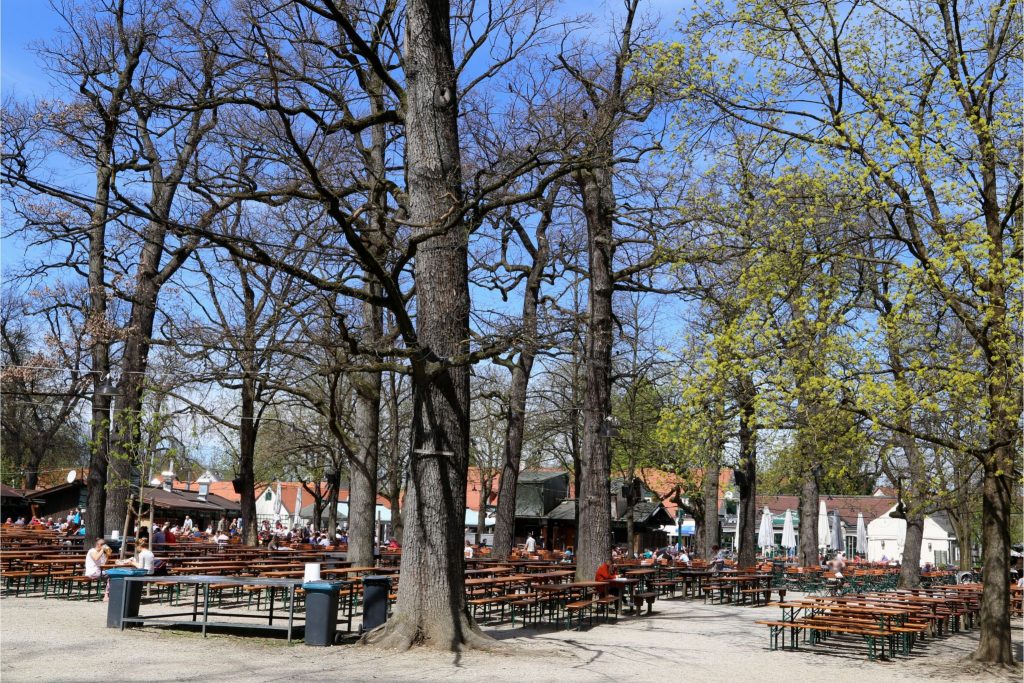
Hirschgarten is the largest beer garden in Munich by capacity, with space for roughly 8,000 guests. Scale is the defining feature. The beer garden includes a large playground and deer enclosure, which makes it popular with families. Food is functional rather than notable, and the experience is best understood as volume-oriented rather than intimate.
Hirschgarten works well for groups and families who want space to spread out, but travelers seeking a quieter or more atmospheric beer garden will likely prefer smaller options elsewhere in the city.
Chinesischer Turm (English Garden)
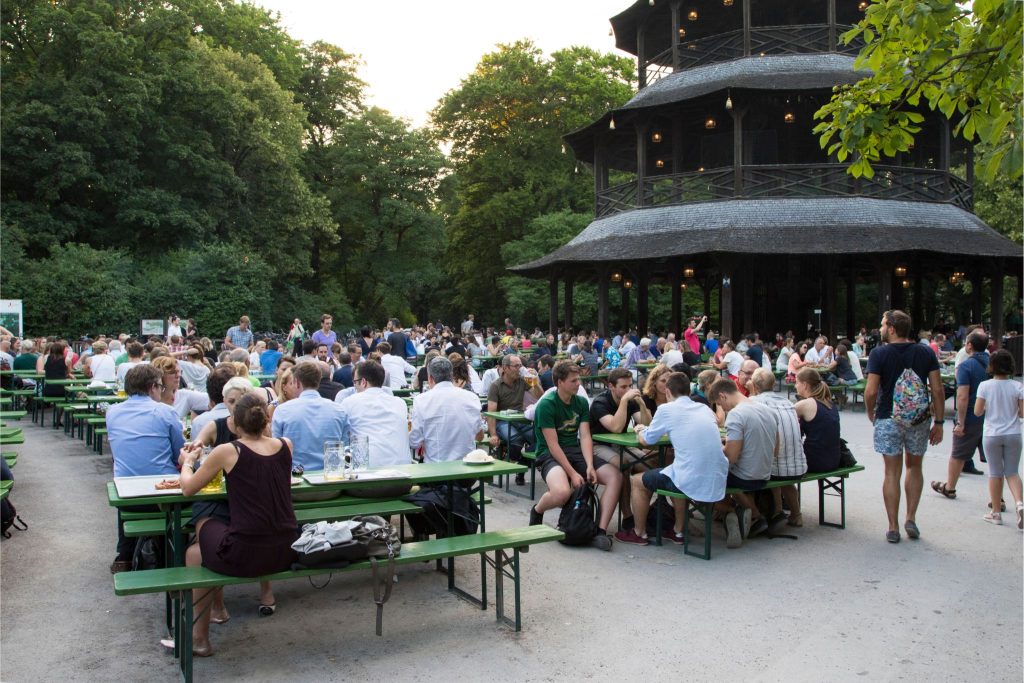
Chinesischer Turm is the most visited beer garden in Munich and the one most likely to appear in guidebooks. The atmosphere skews heavily toward tourists in summer, and the location in the English Garden makes it a convenient stop during a park visit. The experience is lively but less representative of traditional beer garden culture than Augustiner-Keller or smaller neighborhood options.
Still worth visiting for its central location and energy, but expectations should be calibrated accordingly. The beer garden functions more as a tourist landmark than a local gathering spot during peak season.
Munich has more than 100 beer gardens, and the best one on any given day often depends on proximity, weather, and timing rather than reputation. Travelers visiting for only a few days should prioritize convenience and atmosphere over completeness.
Bavaria Beyond Munich
Klosterschenke Weltenburg (Kelheim)
Klosterschenke Weltenburg sits inside the grounds of Weltenburg Abbey, the oldest monastic brewery in the world. The beer garden is accessible by boat through the Danube Gorge, which makes the arrival part of the experience. The signature beer is Barock Dunkel, a dark lager with a strong malt profile.
The beer garden is small and often crowded during peak season. Reaching it requires planning, either via a river cruise from Kelheim or a walking route along the gorge. The setting is more dramatic than most beer gardens in Munich, but the logistics make it a better fit for travelers already exploring the Altmühl Valley or Danube region.
Kloster Andechs
Andechs Monastery brewery occupies a hilltop south of Munich, with views of the Alpine foothills. The beer garden is part of a popular day trip that combines a short hike with a traditional beer garden stop. Food is canteen-style and solid, and the beer selection includes several Andechs varieties brewed on-site.
Crowds peak on weekends and holidays, when the combination of pilgrimage site, brewery, and scenic location draws large numbers of day-trippers. Weekday visits offer a calmer experience.
Schlenkerla Brewery’s Outdoor Area (Bamberg)
Schlenkerla in Bamberg is not a beer garden in the strict Bavarian legal sense, but the outdoor seating area of this historic Rauchbier (smoked beer) brewery anchors a visit to one of Germany’s most important beer cities. The beer is polarizing — smoked malt gives it a flavor profile closer to bacon than traditional lager — but it represents Franconia’s distinct beer culture, which is often overshadowed by Upper Bavaria.
Bamberg has dozens of breweries and beer-focused establishments, and Schlenkerla’s outdoor area functions more as a brewery patio than a beer garden. It’s included here because it’s culturally significant and because it challenges the assumption that Germany’s beer garden tradition begins and ends in Munich.
Northern and Western Germany: Beer Gardens Outside Bavaria
Prater Garten (Berlin)
Prater Garten has operated in Berlin since the 1830s, making it the city’s oldest beer garden. The shaded courtyard features a straightforward self-service setup and serves as proof that beer garden culture exists well beyond Bavaria, even if the format is less codified in the north.
The beer selection is broader than most Bavarian beer gardens, and the food menu includes options beyond traditional Brotzeit. The atmosphere is more casual and less structured than Munich’s beer gardens, but the communal seating and outdoor focus remain intact.
Hamburg’s Waterfront Beer Gardens
Hamburg’s beer garden equivalents tend to be more improvised and waterfront-oriented. Establishments like Strandpauli adapt the concept to fit the city’s geography and drinking culture, which prioritizes proximity to the Elbe and Alster over chestnut trees and self-service counters.
These spaces are less traditional in form but rooted in the same communal-drinking-outdoors impulse. Northern Germany adapts the beer garden concept rather than replicating it, and travelers visiting Hamburg should adjust expectations accordingly.
Biergarten am Rheinufer (Cologne/Düsseldorf)
The Rhineland has its own outdoor drinking culture, intertwined with Kölsch in Cologne and Altbier in Düsseldorf. Beer gardens here are often smaller, and the beer is served in smaller glasses (0.2L or 0.3L) rather than liter mugs. The social function is the same, but the aesthetic and pacing differ notably from Bavaria.
Purists may not consider all of these establishments “real” beer gardens, and that distinction matters to some travelers. But the shared cultural function — creating outdoor spaces for casual, extended socializing — is more important than adhering to Bavarian legal definitions.
Beer Gardens Across Germany
Beer gardens can be found in many parts of Germany, not just in Bavaria. The map below shows their geographic spread and highlights how beer garden culture extends across different regions.
How to Choose the Right Beer Garden for Your Trip
Proximity to your route, time of day, group composition, and tolerance for crowds should guide the decision more than reputation or rankings. A beer garden that’s a 10-minute walk from your accommodation will often provide a better experience than one that requires a 45-minute commute, even if the latter appears on more lists.
Travelers visiting Munich for fewer than three days should pick one well-known beer garden and one neighborhood option rather than trying to check off a list. The experience is meant to be slow and unstructured, and rushing between multiple beer gardens in a single afternoon defeats the purpose.
Outside Munich, beer gardens are often embedded in day trips — monastery visits, river cruises, hiking routes — rather than standalone destinations. Weltenburg and Andechs both function this way, and the beer garden visit becomes part of a broader itinerary rather than the sole reason for the trip.
Weekday visits almost always provide a better sense of what the beer garden tradition actually feels like. Weekends and holidays shift the atmosphere considerably, with denser crowds, longer lines at the counter, and less available seating. Travelers with flexible schedules should prioritize weekday afternoons.
The Unwritten Rules of the Communal Table
Sitting with strangers is expected, not awkward. The shared-table format is central to the beer garden experience, and guests who arrive expecting private seating often misread the social dynamic. The tables are long enough that conversation with neighbors is optional, but proximity is guaranteed.
Self-service zones require guests to carry their own beer from the counter, return their Maß (liter mug) for the deposit, and bus their own dishes. Table-service areas operate more like traditional restaurants, with waitstaff managing orders and payments. The boundary between the two is usually clear, marked by signage or the presence of tablecloths in served sections.
Tipping norms differ between zones. In self-service areas, tipping is uncommon because there’s no table service to reward. In bediente sections, rounding up the bill or leaving 5–10% is standard. Paying for each round as it arrives is more common than opening a tab.
This format suits travelers who are comfortable with informality, families with children, and groups looking for a low-pressure social setting. It’s less ideal for travelers who expect restaurant-level attentiveness, those who dislike crowds, or anyone hoping for a curated dining experience. The beer garden is designed to be functional and egalitarian, not polished.
What to Eat and Drink at a German Beer Garden
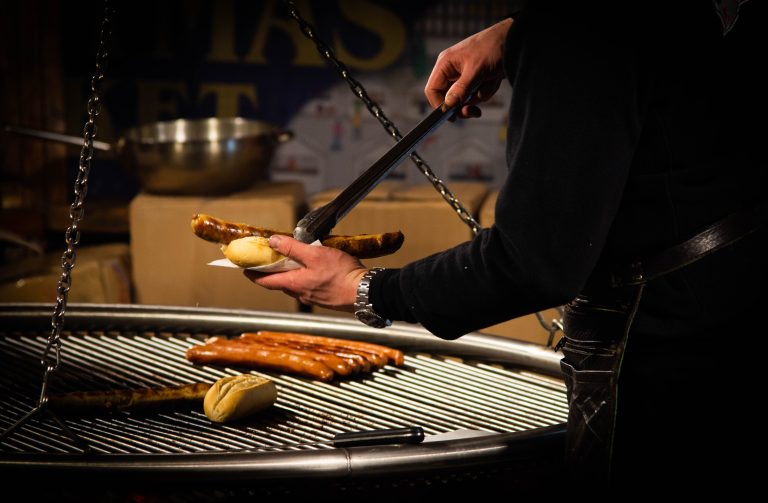
Standard self-service food offerings include Obatzda (a seasoned cheese spread), Radi (spiraled radish), Brezn (pretzels), half-chickens (Hendl), roast pork, and potato salad. The food is hearty, designed to be eaten with hands or minimal utensils, and meant for sharing. Quality varies significantly between beer gardens. Some operate full kitchens with respectable output; others offer minimal options that function more as an accompaniment to beer than a meal.
The bring-your-own-food tradition applies only in self-service areas, and only to food — outside drinks are not allowed. Travelers can pack sandwiches, cheese, or other portable meals and eat them at a communal table without issue. This is a practical option for families, budget-conscious travelers, or anyone with dietary restrictions that aren’t well-served by the standard menu.
Beer is sold by the liter (Maß) or half-liter, with Radler (a 50/50 mix of beer and lemonade) as the common lighter alternative. The beer selection is usually limited to the house brewery or a single brand. Non-alcoholic options exist but aren’t the focus. Travelers expecting craft beer variety or cocktail menus will be disappointed — beer gardens are not designed for beverage exploration.
Food quality and variety are not the priority. The format assumes guests are there to drink beer and spend time outdoors, with food serving a supporting role. Travelers seeking a memorable meal should plan to eat elsewhere and visit a beer garden for the atmosphere, not the cuisine.
The Long Table and the Short Afternoon
The beer garden is best understood not as a destination to be rated but as a format to be experienced — one that has persisted for nearly two centuries because it solves a simple problem: how to sit outside with strangers and feel at ease.
The best beer garden in Germany is often the one closest to where a traveler already is, on a warm afternoon, with an empty seat at a shared table. Reputation matters less than timing, and timing depends on weather, crowds, and proximity. The experience is designed to be spontaneous rather than planned, and travelers who approach it that way tend to have better outcomes.
The format works because it removes barriers. There’s no dress code, no reservation system, no expectation of lingering conversation or sustained silence. Guests arrive, order beer, sit where space allows, and leave when they’re ready. That simplicity is the point.