Fall in Germany: Castles, Forest Hikes, and Wine Harvest Season

Fall in Germany runs from mid-September through early November, and the experience shifts noticeably week by week. September offers mild temperatures, lower hotel rates than summer, and noticeably fewer crowds at major sites. By mid-October, foliage color peaks across most wine and forest regions. November brings cold, shorter days, and a quieter atmosphere that suits some travelers and frustrates others.
The practical advantages are real. Accommodation costs drop after the summer peak. Popular castles and wine towns are easier to move through. Regional markets and harvest festivals fill the calendar in ways that summer simply doesn’t offer.
The tradeoffs are also real. Weather is unpredictable from October onward. Some outdoor attractions, boat tours, and alpine cable cars reduce hours or close entirely after mid-October. Travelers who need reliable sunshine and full access to every site will find fall less dependable than June or July.
Fall in Germany tends to work best for travelers who prioritize atmosphere, regional food and drink, and outdoor walks over guaranteed warmth and maximum sightseeing efficiency.
Quick Facts
- Best timing: Mid-September through late October
- Key regions: Rhine Gorge, Mosel Valley, Black Forest, Bavarian Alps, Pfalz
- Transport: Train covers most wine and castle routes; car helps in the Pfalz and Black Forest
- Book ahead: Wine town accommodations fill up fast on October weekends
Where Autumn Color Shows Up First (and Best)
Germany doesn’t produce fall foliage on a single schedule. Elevation and latitude determine when color peaks, and that spread gives travelers some flexibility.
Higher elevations turn first. The Bavarian Alps foothills and upper Black Forest trails typically show strong color by early to mid-October. Lower river valleys, including the Rhine plains and much of the Mosel, tend to peak a week or two later.
Four regions worth planning around for fall color:
- Moselle Valley: Steep slate hillsides covered in vines, with river reflections and castle views
- Saxon Switzerland: Sandstone formations in the Elbe region, striking contrast between rock and autumn canopy
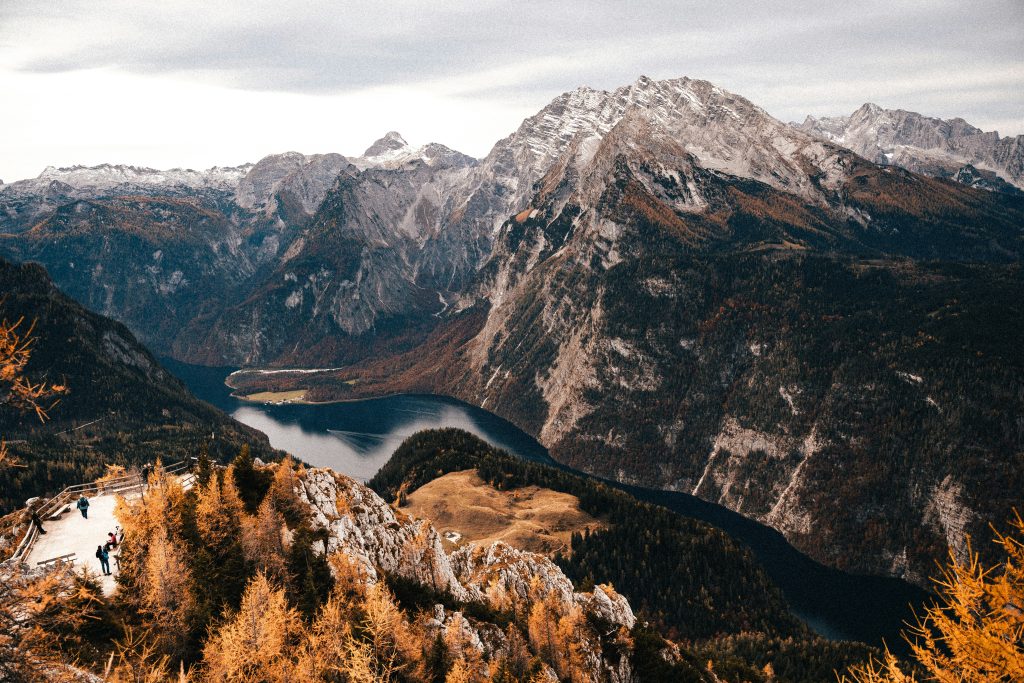
- Bavarian Alps foothills: Rolling terrain with alpine backdrop, accessible without high-altitude exposure
- Black Forest: Dense mixed forest that holds color well through late October
One logistical note: peak foliage in mid-October overlaps directly with peak wine harvest season. Accommodation in wine towns fills quickly during this window. Travelers targeting both foliage and harvest festivals should book the Mosel and Rhine wine villages at least three to four weeks in advance.
Most of these regions are reachable by train or regional transit, though the Black Forest interior benefits from a car.
Castle Visits in Autumn: What Changes and What Doesn’t
Fall changes the castle experience in ways that matter for planning.
On the positive side, interior crowds at major sites drop substantially after September. Guided tours move faster. Exterior viewpoints are less congested. The surrounding landscape, with trees changing color around castle walls, adds visual context that summer green doesn’t.
The practical concerns are worth knowing before arrival.
Several castles reduce opening hours after October 1, and a handful close entirely for the season by late October or early November. Checking current schedules directly with each site before visiting is worth the five minutes it takes.
Castles with strong fall visual payoff:
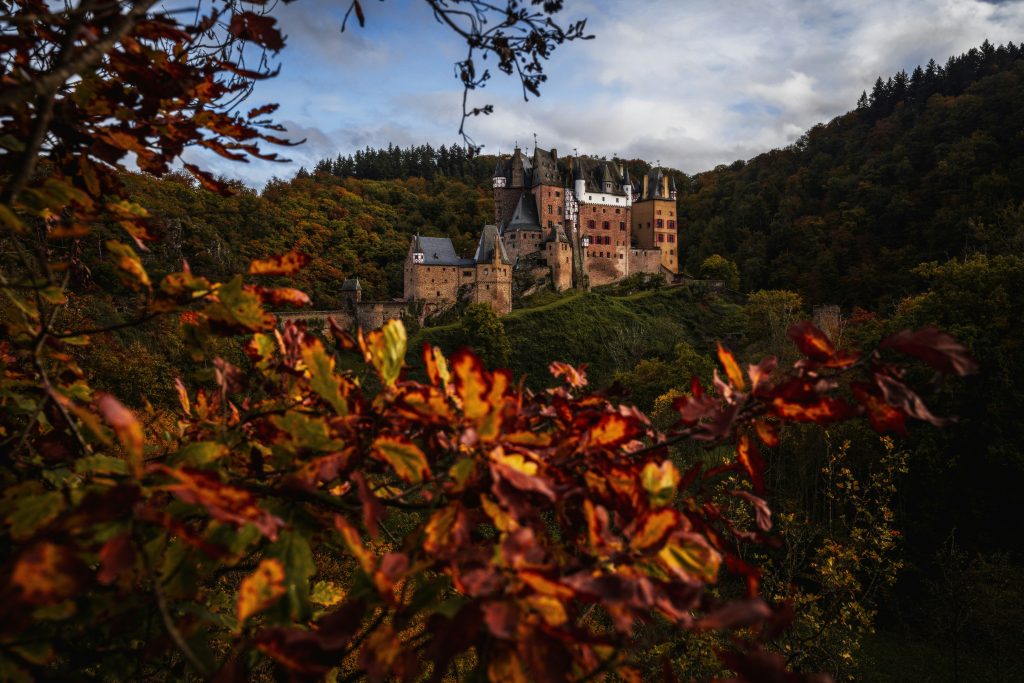
- Burg Eltz (Moselle hills): Set within a wooded gorge, Eltz is surrounded on three sides by forest. Fall color amplifies the effect considerably.
- Rhine Gorge castles (Rheinfels, Marksburg): The Rhine Valley concentrates multiple castles within a short stretch of river. Marksburg is the best-preserved medieval castle on the Rhine and remains open through fall.
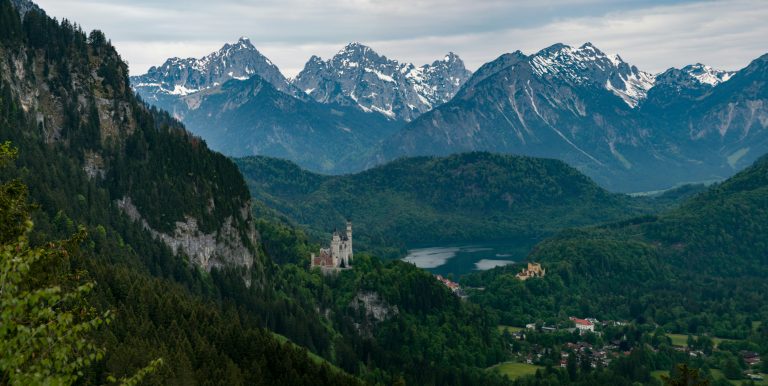
- Neuschwanstein (Bavaria): The alpine backdrop takes on different character in fall, though this castle requires advance tickets even in shoulder season.
On ticketing: Neuschwanstein requires timed entry tickets purchased ahead of time regardless of season. Most Rhine Gorge castles and Burg Eltz accommodate walk-in visitors in fall, though early arrival still helps.
Travelers primarily interested in photography rather than interior tours have a reasonable case for skipping the indoor portion at some sites. The exterior and surrounding grounds at Burg Eltz, for instance, offer a full visual experience without committing to a timed guided tour.
Forest Hiking in the Black Forest and Bavarian Alps

The Black Forest
The Black Forest is the more forgiving of the two regions for fall hiking. Mid-elevation trails stay accessible well into November, and the forest itself holds color longer than alpine terrain.
Trails around Triberg, Titisee, and along sections of the Westweg long-distance path are well-marked and navigable without specialized gear. The Westweg runs roughly 285 kilometers from Pforzheim to Basel, but day sections are easy to pull from without committing to the full route.
The main drawback for visitors is that the Black Forest is best explored with a car. Regional buses exist but run infrequently outside of larger towns. Freiburg works well as a base city with good rail connections, but reaching trailheads from there takes planning.
The Bavarian Alps
The alpine timing window is narrower. High-altitude routes above 1,500 meters can become icy or outright dangerous by mid-October. Trails that are straightforward in August require more caution, and some officially close.
Two areas that stay accessible and rewarding into fall:
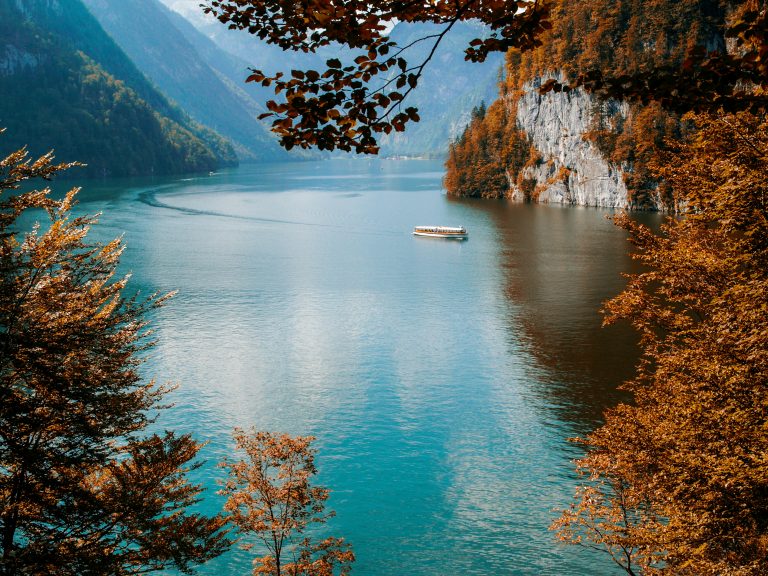
- Berchtesgaden National Park: Lower valley trails around the Königssee remain open and offer dramatic mountain scenery without the elevation risks of higher routes.
- Partnach Gorge (near Garmisch-Partenkirchen): A narrow gorge walk through rock walls and rushing water. Accessible, short, and visually distinctive.
On gear: waterproof layers and trail shoes are the practical standard for fall hiking in both regions. Sandals and light summer footwear are a liability on wet forest paths.
Germany’s Wine Harvest Season
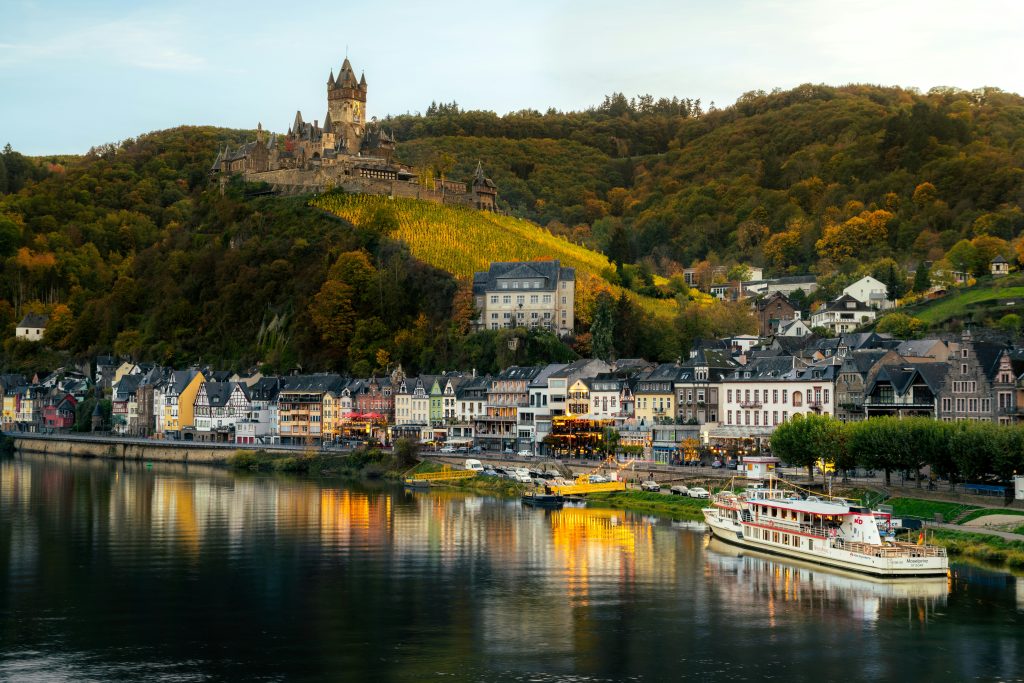
The German harvest season, known as Weinlese, runs roughly from September into October depending on the year and region. It’s the primary reason fall tourism concentrates in wine country, and it creates a different travel experience than visiting the same villages in summer.
Three wine regions worth planning around:
- Mosel: Germany’s most recognized wine region, known for Riesling grown on steep slate slopes above the river. The combination of dramatic hillside vineyards, castle ruins, and river towns makes this the most visually coherent wine-travel region in Germany.
- Rheingau (Rhine): Well-connected by rail, with a concentration of established estates and harvest festivals. More accessible for travelers without a car.
- Pfalz: Warmer and flatter than the Mosel, with a longer harvest season that can extend into November. The Pfalz wine route (Deutsche Weinstrasse) is well suited to cycling between villages.
Visitors can do a fair amount during harvest season: vineyard walks, winery tastings open to the public, and harvest festival attendance are all accessible. The actual picking is working agriculture, not a tourist activity, though some estates offer participation programs booked well in advance.
Wine festivals in small towns typically run on weekends only. Accommodation in and around festival towns fills up weeks ahead. Travelers who show up without a reservation on a mid-October Saturday in the Mosel will find options limited.
Wine Festival Culture: What to Expect on the Ground
German wine festivals are not Oktoberfest with wine instead of beer. The scale, setting, and tone are different.
Most regional wine festivals take place in village squares or along short pedestrian streets, with stalls run by local producers rather than large commercial operators. The food pairing reflects the season: Federweißer (partially fermented new wine) alongside Zwiebelkuchen (savory onion cake) is the standard combination that appears across wine regions in fall.
Well-regarded festivals with approximate timing:
- Bad Dürkheim Wine Festival (Pfalz): Typically mid-September. Known as one of the world’s largest wine festivals by attendance, which means crowds are substantial. Better for the experience of scale than for a relaxed afternoon.
- Bernkastel-Kues Wine Festival (Mosel): Early September. A more contained event in a well-preserved medieval town setting.
- Rüdesheim am Rhein (Rheingau): Various events through September and October in a Rhine river town with easy train access.
Travelers who prefer a lower-key atmosphere are generally better served by smaller village festivals than by Bad Dürkheim. The trade-off is that smaller festivals are harder to find information on in English and require more advance planning.
Combining Castles, Hikes, and Wine: A Rough Itinerary Framework
A 7 to 10 day fall trip through this part of Germany works best as a geographic arc rather than a hub-and-spoke arrangement out of a single city.
A logical flow:
- Rhine Gorge (2–3 nights): Castles, river views, and accessible wine towns. The stretch between Bingen and Koblenz concentrates the most within a short distance. Train service along the Rhine is frequent and reliable.
- Mosel Valley (2–3 nights): Slow down here. The Mosel rewards staying rather than passing through. Cochem or Bernkastel-Kues work well as base towns with day trips to vineyards and smaller villages.
- Pfalz or Rheinhessen (1–2 nights): Warmer, flatter, and good for cycling. A car becomes more useful here. The Pfalz wine route connects villages that aren’t reliably served by public transit.
- Black Forest extension (optional, 2 nights): Freiburg is the natural entry point. Best added for travelers who want hiking to be a primary activity rather than a complement to the wine-and-castles itinerary.
On transportation: the Rhine and Mosel are train-friendly. The Deutschland-Ticket (a monthly regional transit pass available to visitors) covers regional trains and buses and makes the Rhine and Mosel sections cost-effective without a car. The Pfalz and Black Forest benefit from renting a car, particularly for trailhead access and smaller village exploration.
The Mosel in particular is where most itineraries underestimate time. A single night in Cochem is enough to see the town but not enough to understand the valley.
Smaller Fall Experiences Worth Building Around
Beyond the main themes, fall in Germany offers a few experiences that don’t get as much coverage but fit naturally into a regional itinerary.
Open-air museums during harvest season: Freilichtmuseum Beuren (Baden-Württemberg) and Kommern (North Rhine-Westphalia) are open-air ethnographic museums that run harvest-themed programming in fall. These work well for travelers interested in rural German history outside of the castle circuit.
Rothenburg ob der Tauber in October: This medieval walled town gets crowded in summer. October, before the Christmas market season begins, is one of the few windows when it’s possible to walk the town walls without fighting through tour groups.
Guided mushroom foraging: Germany has a strong foraging culture, but independent foraging in national parks is regulated or prohibited. Guided walks are available in some Black Forest areas and offer a useful introduction to the season’s food culture without legal complications.
Martinsumzüge (St. Martin’s lantern processions): These lantern festivals take place in towns across Germany in the days around November 11. They’re primarily a local children’s event, but travelers in smaller towns during early November will likely encounter one. It’s one of the genuinely non-touristy seasonal events available to fall visitors.
Practical Logistics for a Fall Trip to Germany
Accommodation:
Wine region towns on October weekends fill up fast. Bernkastel-Kues, Cochem, and Rüdesheim should be booked three to six weeks ahead if the visit aligns with a harvest festival weekend. Hiking base towns like Freiburg and Garmisch-Partenkirchen are generally easier to book on shorter notice.
Weather by month:
- September: Usually mild and relatively dry. The most reliable month in the fall window.
- October: Variable. Warm stretches alternate with cold, grey periods. Rain is common.
- November: Cold, short daylight hours, and a noticeably quieter tourism landscape. Some visitors find this atmosphere appealing; others find it limiting.
Transportation:
The Deutschland-Ticket covers regional trains and buses for a flat monthly fee and is available to visitors. It works well for the Rhine, Mosel, and connections between wine towns. A car becomes more practical from the Pfalz onward and is generally necessary for Black Forest trailhead access.
Infrastructure wind-down:
Rhine river cruise boats typically reduce schedules after mid-October and some stop entirely. Alpine cable cars at higher elevations often close for the season by late October. Travelers with specific activities in mind should check operating dates before finalizing travel dates.
When Fall in Germany Is Worth the Trip — and When It Isn’t
Fall in Germany works well for a specific kind of traveler. It suits people who prefer atmosphere over guaranteed conditions, who are interested in regional food and wine as part of the trip rather than an afterthought, and who want to hike forest trails without sharing them with large crowds. The season also rewards travelers willing to stay in one area for several days rather than moving between cities daily.
It’s a less obvious fit for travelers expecting Oktoberfest to define the fall experience. Oktoberfest ends in early October, before peak foliage and harvest festivals hit their stride. The two events don’t align, and travelers who plan around Oktoberfest and then stay for “fall” often find the timing awkward.
Travelers who rely heavily on outdoor infrastructure — boat tours, cable cars, guided alpine hikes — may also find that mid-to-late October reduces their options more than they expect.
The clearest way to frame it: fall in Germany tends to reward slower travel and regional depth. A 10-day trip that moves through two or three connected regions will feel more coherent than an itinerary that tries to cover the country.