Deutsche Bahn Guide: How to Buy Train Tickets in Germany

Germany’s rail system is usually the easiest way to travel between major cities, but buying the right ticket requires understanding three things: the train type, the fare rules, and whether a seat reservation is worth adding.
For most visitors, the practical setup is simple. Plan and buy long-distance tickets through the official Deutsche Bahn website or DB Navigator, book ICE and IC journeys once the itinerary is fixed, and use DB Navigator during the trip for platforms, delays, and alternative connections.
This guide explains how Deutsche Bahn tickets work, which fare type suits different trips, when regional passes make sense, and how to handle delays without buying an unnecessary replacement ticket.
Quick recommendation: Use ICE or IC trains between major cities, regional trains for smaller towns and local day trips, and DB Navigator throughout the journey. Reserve seats for longer or busier long-distance trips, especially when traveling with children or substantial luggage.
Deutsche Bahn at a Glance
| Question | Practical answer |
|---|---|
| Where should travelers buy tickets? | Use DB Navigator or the official Deutsche Bahn website. |
| Which trains connect major cities? | ICE and IC trains handle most long-distance travel. |
| Which trains reach smaller towns? | RE, RB, and S-Bahn services cover regional and local routes. |
| Does a ticket guarantee a seat? | No. A separate seat reservation may be needed on long-distance trains. |
| Can the Deutschland-Ticket be used on ICE trains? | No. It is intended for most regional and local public transportation, not standard ICE, IC, or EC journeys. |
| Should long-distance tickets be booked early? | Usually yes. Discounted fares are limited and may rise as departure approaches. |
| What should travelers do during a delay? | Check DB Navigator before buying another ticket. The app often displays the updated connection and available alternatives. |
Deutsche Bahn, usually shortened to DB, operates much of Germany’s long-distance rail network and many regional services. Other operators also run regional trains, but their connections generally appear in DB Navigator and on the Deutsche Bahn website.
The most useful distinction is between long-distance and regional trains.
| Train | Meaning | Best use |
|---|---|---|
| ICE | Intercity Express | Fast travel between major German cities |
| IC | Intercity | Long-distance routes where ICE service is limited or unavailable |
| EC | EuroCity | International long-distance routes |
| RE | Regional Express | Faster regional travel with fewer stops |
| RB | Regionalbahn | Local regional routes with more stops |
| S-Bahn | Suburban rail | Travel within cities and metropolitan areas |
ICE trains work best for routes such as Berlin to Munich, Frankfurt to Cologne, or Hamburg to Berlin. Regional trains handle the final part of many trips to castles, lakes, wine towns, hiking areas, and smaller cities.
A trip to Neuschwanstein Castle, for example, may combine a long-distance train toward Munich with regional services to Füssen. That type of transfer is normal and should not be treated as a booking mistake.
Best for: Travelers moving between central city stations or combining several German cities.
Less suitable for: Rural itineraries with remote trailheads, scattered villages, or accommodation far from a station. A rental car may be more practical in those cases.
How to Buy Deutsche Bahn Tickets
Travelers can buy tickets through four main channels:
- DB Navigator
- The official Deutsche Bahn website
- Ticket machines at stations
- Staffed DB travel centers, called Reisezentrum
Buying directly from Deutsche Bahn is usually the simplest option for trips within Germany. It keeps the ticket, journey updates, platform information, and passenger-rights process in the same system.
DB Navigator
DB Navigator is the most useful rail app for a Germany trip. It can be used to:
- Search schedules and compare routes
- Buy and store digital tickets
- Check platforms and coach order
- Receive delay and cancellation updates
- Find alternative connections
- Review transfer times
- Use supported check-in features on eligible trains
The app matters most during the journey. Even travelers who prefer booking on a laptop should load the ticket into DB Navigator or keep a digital backup available.
Deutsche Bahn website
The official website is easier for comparing several routes, travel dates, and fare categories on a larger screen. The fares should generally match those shown in DB Navigator for the same journey and booking conditions.
The website works best for planning. DB Navigator works best during the trip.
Ticket machines and DB travel centers
Ticket machines are useful for last-minute regional tickets, printed tickets, or situations where a phone is unavailable. Most large stations also have a staffed Reisezentrum.
A travel center is worth using when:
- The itinerary includes several international legs
- A cancellation has created a complicated rerouting problem
- The traveler needs help understanding fare restrictions
- A passenger-rights claim cannot be handled digitally
For a straightforward domestic trip, the app or website is faster.
Third-party booking sites
Platforms such as Trainline, Omio, and Rail Europe can simplify multi-country comparisons. For a trip entirely within Germany, booking directly through Deutsche Bahn usually provides cleaner access to live updates and support.
The tradeoff is convenience versus control. A third-party platform may put several European rail operators in one itinerary, but direct booking reduces the number of companies involved when plans change.
When to Book and How to Compare Connections
Long-distance ICE and IC tickets should usually be booked once the itinerary is fixed. Discounted fare inventory is limited, and waiting may increase the price.
Regional fares often require less advance planning. Many regional tickets are not tied to a specific train in the same way as discounted long-distance tickets.
The exact booking window and available fare conditions can change. Travelers should compare prices directly in DB Navigator or on the official website rather than relying on a fixed rule such as “always book four months ahead.”
When comparing connections, look beyond the cheapest fare.
Check:
- Total journey time
- Number of transfers
- Transfer duration
- Train type
- Fare flexibility
- Seat reservation status
- Expected construction or schedule changes
- Arrival station, especially in cities with several major stations
A six-minute transfer may work on paper but become stressful with luggage, children, or a platform change. A slightly longer route with one fewer transfer is often the better choice.
Practical rule: Allow more transfer time at large stations such as Frankfurt Hauptbahnhof, Munich Hauptbahnhof, Berlin Hauptbahnhof, Hamburg Hauptbahnhof, and Cologne Hauptbahnhof. Travelers with limited mobility, strollers, or large bags should prioritize calmer connections over the shortest scheduled journey.
Same-day tickets are usually available, but a long-distance fare may cost more and still not include a seat. Buying a ticket does not guarantee that an unreserved seat will be available.
Deutsche Bahn Ticket Types
The three main long-distance fare categories are Flexpreis, Sparpreis, and Super Sparpreis. The seat and train may be the same. The difference is primarily price, flexibility, and cancellation conditions.
| Fare | Flexibility | Best for |
|---|---|---|
| Flexpreis | Highest flexibility, subject to the booked route and current conditions | Travelers whose departure time may change |
| Sparpreis | Usually tied to a specific long-distance train, with limited cancellation options | Most vacation travelers with a mostly fixed itinerary |
| Super Sparpreis | Usually tied to a specific long-distance train and commonly offers the least cancellation flexibility | Travelers with fixed plans who prioritize the lowest fare |
Flexpreis
Flexpreis costs more but offers greater freedom to choose an eligible connection on the booked route. It suits travelers arriving on an uncertain flight, attending a meeting that may end late, or keeping the day deliberately flexible.
It is usually poor value when the itinerary is fixed and a discounted fare is available.
Sparpreis
Sparpreis often provides the best balance for visitors. It reduces the fare while retaining more cancellation flexibility than Super Sparpreis, subject to the exact booking conditions shown during purchase.
This is the first fare most tourists should compare.
Super Sparpreis
Super Sparpreis is generally the lowest-priced long-distance option. It works best when the travel date and train are locked in.
The main drawback is inflexibility. A cheap fare loses its value if the traveler later needs to change the departure for personal reasons.
Zugbindung
Zugbindung means that the ticket is tied to a specific long-distance train. Sparpreis and Super Sparpreis tickets commonly include this restriction.
If Deutsche Bahn causes a qualifying disruption, the train-specific restriction may be lifted and the passenger may be allowed to use another suitable connection. Travelers should confirm the updated status in DB Navigator or with DB staff rather than assuming that any later train is automatically valid.
Seat Reservations, Classes, and Luggage
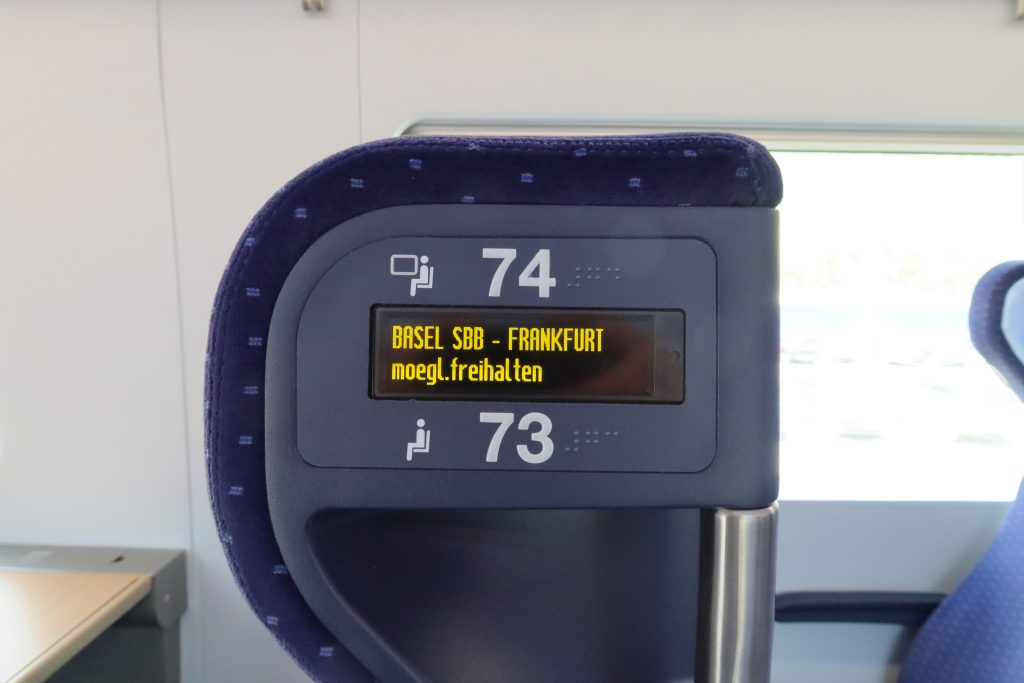
A seat reservation is usually separate from a Second Class long-distance ticket. Passengers can travel with a valid ticket without reserving a seat, but they may have to change seats or stand if the train is busy.
A reservation is worth considering for:
- ICE or IC trips longer than about two hours
- Friday or Sunday travel
- School holidays and major holiday periods
- Family trips
- Groups that need to sit together
- Travelers carrying several bags
- Journeys connected to an important onward booking
A reservation adds less value on short, quiet trips. Regional trains generally do not offer standard seat reservations.
Reading seat displays
Displays above or beside long-distance seats may show the cities between which the seat is reserved. A seat marked for Frankfurt to Cologne may be available before Frankfurt or after Cologne.
A blank display often indicates availability, but technical faults and last-minute reservations can occur. Passengers should remain prepared to move if a reservation holder arrives.
The Ruhebereich is intended for quiet travel. Families with young children should look for a family area or Kleinkindabteil when available rather than choosing the quiet zone.
First Class versus Second Class
Second Class is sufficient for most tourists. It generally includes standard seating, luggage storage, and access to onboard services available on that train.
First Class may provide more space, a quieter environment, and additional benefits depending on the fare and train. It becomes more attractive when the upgrade price is modest on a long journey.
The correct decision is price-sensitive. Travelers should compare the actual fare difference rather than assuming First Class is always poor value or always worth the upgrade.
Luggage
Deutsche Bahn does not operate a standard checked-luggage system for ordinary rail trips. Passengers carry and store their own bags.
Common storage areas include:
- Overhead racks
- Shelves near the doors
- Luggage towers within the coach
- Gaps between back-to-back seats
Keep passports, medication, electronics, and other valuables at the seat. Large suitcases make transfers slower and can be difficult to place on a crowded train.
What to skip: Do not pack as though a railway employee will handle the luggage. Every bag must be moved through stations, onto trains, and sometimes up or down stairs during a transfer.
Regional Tickets, Deutschland-Ticket, and BahnCard
Regional products can save money, but they only work when the itinerary matches their restrictions.
Deutschland-Ticket
The Deutschland-Ticket covers most regional trains and local public transportation across Germany. It generally includes RE, RB, S-Bahn, U-Bahn, trams, and many buses.
It does not normally cover standard ICE, IC, or EC travel.
The ticket is usually sold as a monthly subscription. Visitors using it for a short trip need to understand the cancellation deadline and accepted payment method before purchasing.
It works best for travelers who:
- Stay in Germany for an extended period
- Use local transit most days
- Travel mainly by regional train
- Visit several smaller towns at a slower pace
It works poorly for travelers who:
- Move quickly between Berlin, Munich, Hamburg, Cologne, or Frankfurt
- Depend on ICE trains
- Spend only a few days in Germany
- Value travel time more than the lowest possible transport cost
Do not buy the Deutschland-Ticket solely because it sounds comprehensive. Build the route first and calculate which journeys it actually covers.
Länder-Tickets
Länder-Tickets are regional day passes associated with individual German states or groups of states. Examples include the Bayern-Ticket, Niedersachsen-Ticket, Sachsen-Ticket, and Baden-Württemberg-Ticket.
They can work well for a regional day trip, particularly for groups. A Bayern-Ticket may be worth comparing for trips from Munich toward Füssen, Garmisch-Partenkirchen, or Chiemsee when the journey uses eligible regional transport.
Restrictions can include train type, geographic validity, weekday start times, and passenger limits. Check the current rules before purchase.
BahnCard
A BahnCard provides percentage discounts on eligible Deutsche Bahn fares. The main versions are BahnCard 25, BahnCard 50, and BahnCard 100.
Most short-term visitors do not need one. A discount card becomes more relevant for a longer stay with several long-distance journeys, but subscription and renewal conditions require careful review.
Best for: Repeat or extended travelers who can calculate a clear saving.
Not for: A short trip with one or two discounted long-distance tickets.
Delays, Missed Connections, and Passenger Rights
Deutsche Bahn remains practical for travel around Germany, but delays and missed connections are common enough to plan for.
The best response is not to panic or immediately buy another ticket. Open DB Navigator first.
Check:
- Updated departure and arrival times
- Platform changes
- Cancelled trains
- Alternative connections
- Whether the original itinerary is still realistic
- Whether a train-specific restriction has been lifted
Missed connections
If a connection is missed because an earlier train in the itinerary was delayed, the ticket may remain valid for another suitable route. The correct option depends on the fare, the disruption, and how the journey was booked.
Confirm the alternative in DB Navigator or with DB staff. Buying a new ticket too quickly can create an unnecessary expense and a more complicated reimbursement claim.
Delay compensation
Passenger-rights rules may provide compensation when arrival at the final destination is substantially delayed. The draft’s commonly cited thresholds are 25 percent of the ticket price after a delay of at least 60 minutes and 50 percent after at least 120 minutes, but these rules and exceptions should be checked against the current official Deutsche Bahn passenger-rights page before publication.
Claims can often be started digitally for tickets stored in the DB system.
Connections to flights, cruises, and timed entries
Do not treat a train connection to an airport or cruise departure like an ordinary sightseeing trip. Build in a substantial buffer or travel to the departure city the previous day when the cost of missing the onward connection would be high.
The same principle applies to prepaid tours and timed museum entries. A cheap, tightly timed train itinerary is not a good deal when one delay can erase the savings.
Stations and First-Time Travel Tips
Large German stations are generally well signed, but their size and platform layout can surprise first-time visitors.
| German word | English meaning |
|---|---|
| Gleis | Platform or track |
| Abfahrt | Departure |
| Ankunft | Arrival |
| Verspätung | Delay |
| Ausfall | Cancellation |
| Richtung | Direction |
| Wagen | Coach |
| Ausgang | Exit |
Use these practical habits:
- Download DB Navigator before leaving home
- Create an account and test a sample route
- Check the train number, not only the final destination on the board
- Recheck the platform shortly before departure
- Use the coach-position display to stand near the correct part of the platform
- Keep a PDF or screenshot backup of the ticket
- Carry a portable charger
- Bring food and water rather than relying on onboard service
- Let passengers exit before boarding
- Keep aisles and luggage areas clear
- Use headphones and respect quiet zones
- Allow extra time with children, strollers, or heavy bags
For a long-distance trip, arriving 15 to 20 minutes early is a reasonable target. This is not an airline check-in requirement. It simply gives travelers time to find the platform, check for changes, and position themselves near the correct coach.
Routes that work particularly well by train
Train travel is strongest when both ends of the route have central stations and the trip avoids complicated rural transfers.
Examples include:
- Berlin to Hamburg
- Berlin to Munich
- Frankfurt to Cologne
- Frankfurt to Heidelberg
- Munich to Nuremberg
- Hamburg to Bremen
- Cologne to Düsseldorf
Munich to Salzburg is also a common rail trip, but it crosses an international border and may involve different ticket options. Travelers should compare the exact connection and fare conditions.
For smaller towns, castles, beaches, and hiking destinations, expect to combine long-distance and regional services. Some final connections may run infrequently, especially in rural areas or later in the evening.