Visiting Burg Eltz: A Practical Guide to Timing, Tours, and Nearby Stops

I still remember the first time I saw Burg Eltz emerge from the morning mist in the Elzbach valley. The towers appeared almost suspended between the fog and the forest, like something that existed outside of time. Unlike most German castles that were destroyed in wars or rebuilt as romantic fantasies, Burg Eltz has remained in the same family for over 850 years, virtually unchanged since medieval times. You might recognize it from German currency (it graced the 500 Deutsche Mark note) or from countless photographs, but standing there in person reveals why this castle deserves far more than an Instagram stop.
Why Burg Eltz Survived When Others Didn’t

What makes Burg Eltz exceptional isn’t just its age, it’s that the castle never fell. While 90% of German castles were destroyed during the Thirty Years’ War, Napoleonic campaigns, or simply abandoned to ruin, Burg Eltz survived intact. The secret? Strategic neutrality and a valley location that kept it off major conflict routes.
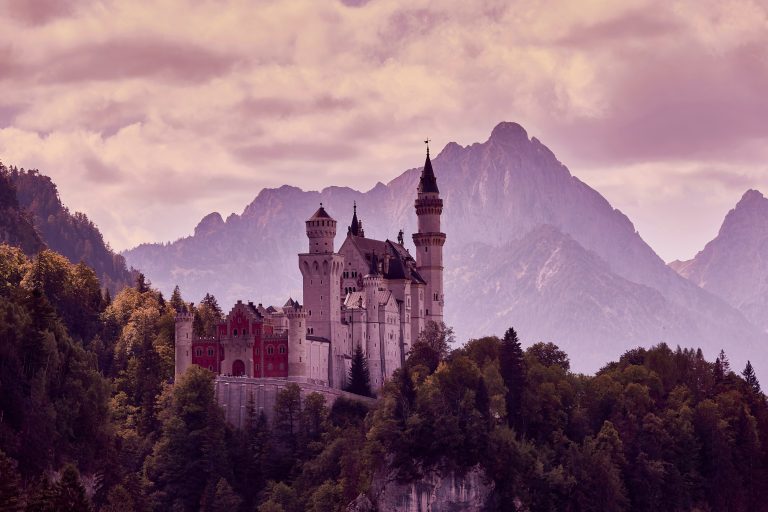
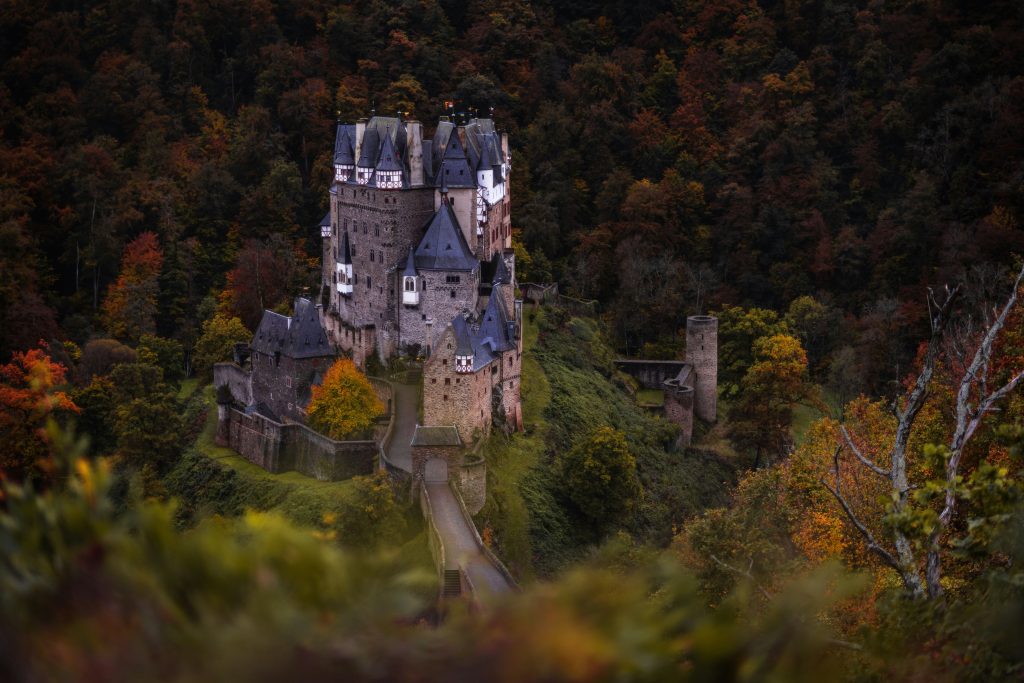
The castle’s unusual structure stems from a medieval arrangement where three branches of the Eltz family—the Rübenach, Rodendorf, and Kempenich lines—shared the fortress. Each family built their own section, resulting in the asymmetrical towers and architectural patchwork you see today. This wasn’t a unified design like you’d find at Neuschwanstein; it was three families adding rooms as needed over centuries.
What sets it apart architecturally:
- Built directly into bedrock in a valley rather than on a hilltop
- Eight towers reaching up to 40 meters, no two alike
- Over 100 rooms spanning 850 years of construction
- Original medieval features including kitchens, armories, and yes, toilets
The castle’s position in the Elzbach valley protected it from cannon fire (attackers would need to shoot upward from the creek bed), and its strategic insignificance meant larger armies simply bypassed it. When Burg Eltz appeared on German currency, it became a symbol of continuity, something genuinely old in a country where so much was rebuilt after World War II.
This isn’t a “fairy tale castle” in the Bavarian style. There are no white towers or Disney-like turrets. Burg Eltz is dark stone, cramped staircases, and rooms that were actually lived in by medieval families. That authenticity is exactly what makes it worth your time.
The Best Time to Visit Burg Eltz (And When to Avoid)
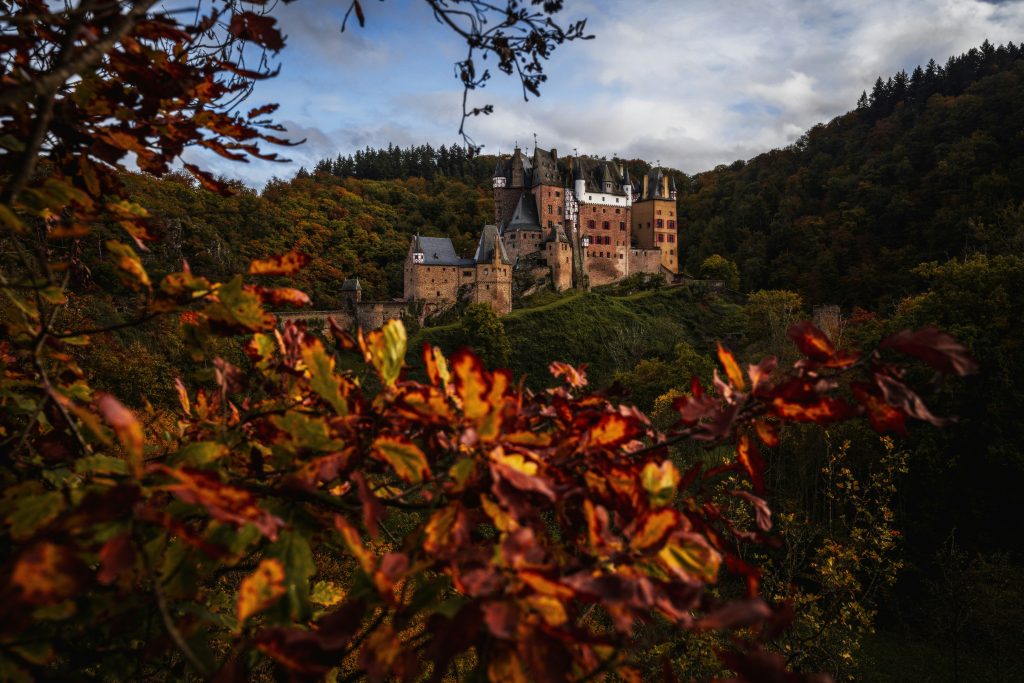
Timing matters more here than at almost any other German castle.
Best months by what you value:
- April-May: Wildflowers line the forest path, fewer crowds than summer, but tours run on limited schedule early in season
- June-August: Full tour schedule and longest hours, but expect tour groups and 30+ minute wait times by midday
- September-early October: Perfect weather, autumn colors in the forest, smaller crowds after German school holidays end
- Late October-early November: This is the secret window. Most tourists assume the castle closes for winter, but it stays open until early November.
Daily timing that changes everything:
The castle opens at 9:30 AM, and most tour buses arrive between 10:30 AM and 2:00 PM. If you arrive right at opening or after 4:00 PM (last entry is usually 5:30 PM), you’ll experience a completely different castle.
The Tuesday-Thursday advantage is real. Weekend visits to Burg Eltz can mean 90-minute waits just to enter. Mid-week visits in shoulder season? You might get a semi-private tour experience.
Weather considerations matter because the forest walk can become treacherous when wet. The trail from Moselkern involves stream crossings on stepping stones—manageable in dry conditions, slippery after rain. The valley also creates microclimates where it can be 10 degrees cooler than surrounding areas.
When Burg Eltz closes:
- November through March (exact dates vary by year)
- Check the official website before planning winter visits
- The castle occasionally closes for private family events
Special events worth timing your visit around:
- Medieval festival (typically July)
- Knight’s feast dinners (select evenings, reservation required)
- Christmas market (if open, usually first two weekends in December)
Getting to Burg Eltz: Three Routes Compared

How you reach the castle shapes your entire experience. I’ve done all three approaches multiple times, and each reveals something different.
The Forest Walk from Moselkern
This 40-minute hike through the Eltz Forest is the romantic option everyone photographs. The trail follows the Elzbach stream through dense woods, crosses it several times, then delivers you to a viewpoint where Burg Eltz suddenly appears.
The reality behind the romance:
- Distance: 2.5 km (1.5 miles) each way
- Time: 40-50 minutes up, 30-40 minutes down
- Elevation gain: 200 meters (650 feet)
- Trail surface: Dirt path, roots, some rocky sections
This isn’t a paved park trail. You need actual hiking shoes, not sandals or city sneakers. The tourist information will call this walk “easy,” but it’s moderate by any honest standard. I’ve seen people in flip-flops struggling on the steep sections.
What to bring:
- Water (no water sources on trail)
- Hiking shoes with ankle support
- Trekking poles if you have knee issues
- Rain jacket (the valley traps weather)
- Cash for castle admission
The payoff is arriving at Burg Eltz the way medieval travelers did—on foot, through forest, with the castle revealing itself gradually. If you only have energy for one direction, hike up and take the shuttle down. Going uphill when you’re fresh makes more sense.
The Shuttle Bus from Parking Lot
A shuttle bus runs from a parking area near the castle, cutting the walk to about 10 minutes. It costs around €2 per person each way and runs every 10-15 minutes during peak season.
What they don’t tell you: The shuttle parking lot is still a 15-minute walk from Moselkern train station. You’re not avoiding walking entirely—you’re avoiding the steep forest trail. The shuttle itself is a small bus that fills quickly during midday, and locals know to avoid the 11 AM-2 PM window when wait times can hit 30 minutes.
The Wierschem Route (The Secret Shortcut)
From the village of Wierschem, there’s a lesser-known path that reaches Burg Eltz in about 20 minutes. It’s shorter and less steep than the Moselkern route, making it better for anyone with mobility concerns who still wants to walk.
The catch? Wierschem has limited parking, and the trail isn’t as well-marked. You’ll need to look for signs toward “Burg Eltz Fußweg” near the town church. This route saves your knees but lacks the drama of the forest approach.
Parking situation reality:
- Moselkern has free parking near the train station but limited spaces
- The main parking lot charges €2-5 depending on season
- Arrive before 10 AM or parking becomes difficult
- Wierschem has street parking only (free but very limited)
Coming by train: From Koblenz, take the train to Moselkern station (about 35 minutes). The station is unstaffed with no luggage storage. If you’re traveling with bags, you’ll need to carry them or find a locker at a larger station like Koblenz before arriving.
Inside Burg Eltz: What the Tours Actually Show You
Tours of Burg Eltz are mandatory—you cannot explore the castle independently. This frustrated me initially until I realized why: the castle contains €500 million worth of original furnishings, weapons, and art. The Eltz family still uses parts of the castle, and unsupervised access would be chaos.
Tour basics:
- Duration: 40 minutes advertised, usually 50-60 minutes in reality
- Languages: German and English tours alternate throughout the day
- Cost: Around €12 for adults (check current prices on burg-eltz.de)
- Photography: Prohibited inside the castle rooms
The German-language tours include stories the English versions skip. On a German tour, I learned about the family feuds that led to different architectural styles in each section, and the guide pointed out medieval graffiti left by servants in the Electoral Hall. English tours hit the major points but move faster to accommodate larger groups.
Treasury (Schatzkammer) highlights you’ll see:
- Medieval weapons collection including crossbows and swords
- Original jewelry and ceremonial pieces spanning five centuries
- A portable altar from the 13th century with incredible detail work
- Armor that shows how small medieval knights actually were
Room-by-room standouts:
The kitchen still has original utensils and a smoke system that preserved meat. The Rübenach Lower Hall features 15th-century paintings that survived because the family couldn’t afford to update the room (poverty accidentally preserved history). The bedroom chambers show how medieval nobles slept—often multiple people per room, in beds that look impossibly short because people slept semi-upright fearing that lying flat caused death.
The bathroom situation: Medieval Burg Eltz had surprisingly sophisticated waste systems with chutes that deposited into the creek below. The tour shows one of these original toilet rooms, which is both fascinating and unsettling. Modern bathrooms exist near the ticket office—use them before the tour starts.
Photography rules: No photos inside the furnished rooms, period. Guards enforce this strictly. You can photograph the courtyard and exterior, and honestly, the interior rooms are too dark for phone photos anyway. The treasury has slightly different rules that guides explain.
Tour duration reality: They advertise 40 minutes, but factor in 50-60 minutes from when your tour begins. Groups that ask lots of questions can push toward 70 minutes. Build this extra time into your schedule.
Hidden Details Most Visitors Miss at Burg Eltz
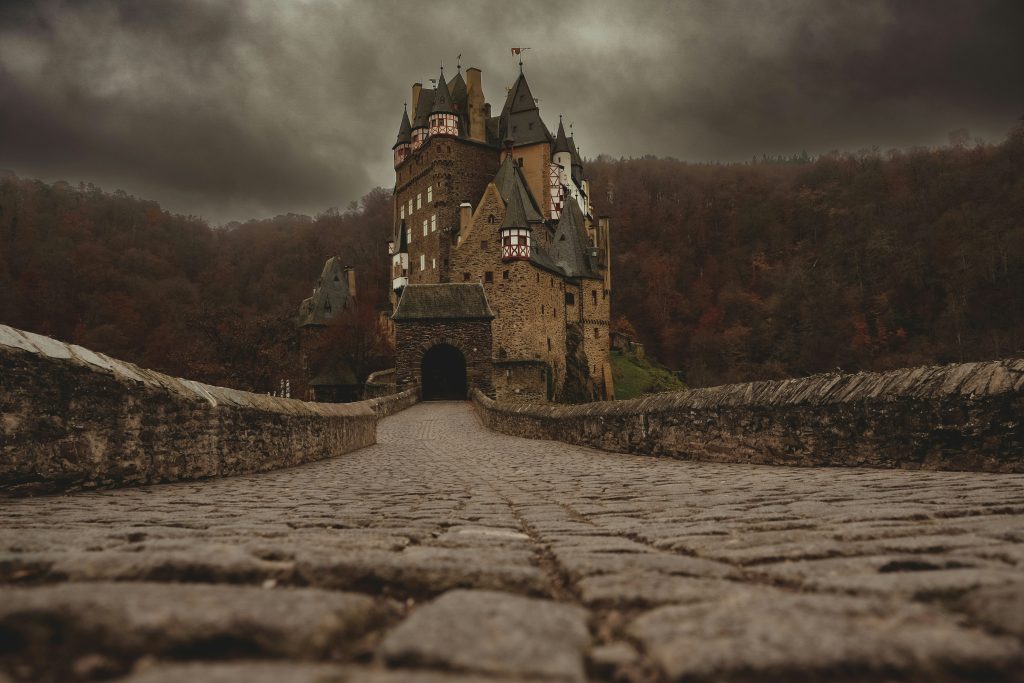
The standard tour hits the famous rooms, but if you pay attention, there’s a second layer of details that most people walk past.
Medieval graffiti in the Electoral Hall: Look for scratched names and dates on the stone walls, left by servants and workers over centuries. Some dates back to the 1400s. Guides mention this quickly, but if you linger at the back of the tour group, you can spot dozens of these markings.
The castle well story: Burg Eltz has a well that drops 45 meters to reach water—a remarkable feat of medieval engineering since they had to dig through solid rock. During sieges, access to water meant survival. The well room isn’t always part of standard tours but sometimes guides will show it if asked.
Seasonal changes in the courtyard gardens: The small courtyard garden shifts dramatically by season. Spring brings bulbs, summer roses, and fall sees the Virginia creeper that covers parts of the walls turn brilliant red. Winter visits (when open) reveal the castle’s bare bones without foliage softening the stone.
The family chapel’s unusual features: The chapel contains windows that intentionally don’t align with architectural symmetry because they were added by different family branches at different times. Each family had their own altar space, creating this patchwork of religious architecture within one small room.
The armor collection’s surprises: Beyond the obvious suits of armor, look for the parade shields—purely decorative pieces that show family heraldry. One helmet in the treasury has a dent from an actual battle. The guide pointed this out on a German tour but I’ve never heard English guides mention it.
Best interior photo opportunities (within rules): You can’t photograph inside the furnished rooms, but the courtyard offers incredible angles of the towers. The entrance hall before tours begin allows photos. And from specific spots on the walking trail, you can capture the castle with morning mist if you time it right.
Where to Eat Near Burg Eltz
Food options around Burg Eltz range from castle restaurant to forest picnic. Here’s what actually works.
The castle’s own restaurant (Schloss-Schänke) serves traditional German food in a building adjacent to the castle. The Flammkuchen (Alsatian flatbread) is solid, and they do a decent Riesling selection from local Mosel vineyards. Skip the schnitzel—it’s overpriced and underwhelming. Best strategy: order something light, enjoy the location, and save serious dining for elsewhere.
The picnic approach: There are several spots along the Moselkern trail with rocks and logs perfect for spreading out food. Pack sandwiches, fruit, and water in Moselkern or Wierschem before starting your hike. The forest setting beats any restaurant, and you’ll save €15-20 per person.
In Moselkern village: If you’re arriving by train, grab food before the hike. The Gasthof Alte Post serves solid regional food, and Ristorante Pizzeria (yes, Italian food in a German wine village) has faster service if you’re pressed for time. Both get busy during lunch hours when castle visitors return.
Wine tasting nearby: You’re in the Mosel Valley—one of Germany’s premier wine regions. The village of Hatzenport (10 minutes by car) has several wine estates offering tastings. Weingut Kröber and Weingut Gebrüder Steffes both welcome walk-ins during afternoon hours. Pair a castle morning with wine tasting afternoon for a perfect combination.
Budget picnic setup: Buy supplies in Koblenz before taking the train to Moselkern. A bakery, grocery store, and butcher shop can provide everything you need for under €10 per person. The castle has no food restrictions on the grounds (though not inside tours).
Three Ways to Build a Day Around Burg Eltz
The “Castle Only” Half-Day
Best for: Cruise passengers, road trippers, anyone with limited time
- 9:00 AM: Arrive Moselkern, start forest hike
- 9:45 AM: Reach Burg Eltz, join first tour
- 11:00 AM: Tour treasury, explore grounds
- 12:00 PM: Forest picnic or quick castle restaurant meal
- 1:00 PM: Hike back or take shuttle
- 1:45 PM: Depart Moselkern
Transportation note: This works perfectly with train connections from Koblenz (35 minutes) or Frankfurt (2 hours). Early start means you beat crowds and finish before afternoon heat.
The “Eltz + Mosel Valley” Full Day
Best for: Photographers, wine enthusiasts, first-time Mosel visitors
- 9:00 AM: Start at Burg Eltz (as above)
- 1:00 PM: Drive to Cochem (25 minutes)
- 1:30 PM: Lunch in Cochem’s old town
- 2:30 PM: Walk Cochem or quick Reichsburg Cochem tour
- 4:00 PM: Drive to Beilstein (15 minutes)
- 4:30 PM: Explore Beilstein village, wine tasting
- 6:00 PM: Dinner at riverside restaurant
- 7:30 PM: Return to accommodation
Alternative: Swap Cochem/Beilstein for the Burg Pyrmont ruin (15 minutes from Eltz)—a complete opposite experience. Pyrmont is a ruined castle where you can climb freely, no tours required.
The “Castle Connoisseur” Two-Day Adventure
Best for: History enthusiasts, castle collectors, anyone who wants depth over breadth
Day 1:
- Morning: Burg Eltz (full experience, both tours if possible)
- Afternoon: Burg Pyrmont ruins, Ehrburg ruins
- Evening: Stay in Moselkern or Hatzenport
- Dinner: Wine estate restaurant
Day 2:
- Morning: Thurant Castle near Alken (20 minutes from Moselkern)
- Afternoon: Mosel riverside cycling or wine village exploration
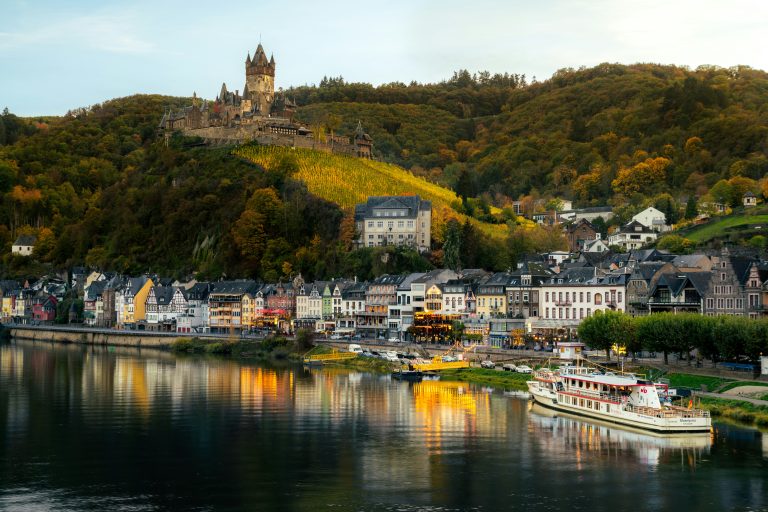
- Evening: Koblenz (where Rhine and Mosel meet)
Overnight recommendations:
- Moselkern: Limited options, best is Pension Alte Post
- Hatzenport: More choice, better restaurants
- Cochem: Most tourist infrastructure, busiest
Realistic driving times:
- Burg Eltz to Cochem: 25 minutes
- Burg Eltz to Koblenz: 35 minutes
- Burg Eltz to Rhine Valley (Boppard): 40 minutes
What Nobody Tells You About Visiting Burg Eltz
It’s not a fairy tale castle—it’s a fortress. If you’re expecting Neuschwanstein’s white towers and mountain backdrops, you’ll be disappointed. Burg Eltz is dark stone, cramped spaces, and military architecture. That’s what makes it authentic, but know what you’re getting.
Accessibility is extremely limited. The official site mentions this politely, but let me be direct: Burg Eltz has narrow spiral staircases, uneven stone floors, and no elevator. If you have mobility issues, the tour will be challenging or impossible. The courtyard is accessible, but that’s a fraction of the experience.
The actual cost breakdown:
- Castle admission: ~€12
- Parking: €2-5
- Shuttle bus (if used): €4 roundtrip
- Treasury: included in admission
- Guidebook: €8-12 (optional)
- Photos in costume: €5-10 (skippable)
Total realistic cost: €15-25 per person, more if you eat at the castle restaurant. It’s not cheap, but you’re supporting a privately-owned historic site.
Photography restrictions are seriously enforced. Guards will confiscate phones. They mean it. The courtyard and exterior are fair game, but inside is off-limits.
Crowd size depends wildly on season. Official estimates say 300,000+ visitors per year. In peak July-August, that might mean 2,000 people per day. In late October, maybe 200. The experience changes completely based on when you visit.
The Moselkern walk is harder than advertised. Tourist materials call it “easy” or “suitable for families.” I’d call it moderate. The stream crossings on stepping stones are genuinely tricky, especially going downhill when you’re tired. Kids under 8 might struggle. The trail surface is natural with roots and rocks, it’s not a groomed path.
Weather in the valley is unpredictable. The Eltz valley creates its own weather patterns. You may start a hike in sunshine and then get caught in the rain at the castle. Bring layers and rain gear regardless of forecast.
Souvenir shop quality vs. prices: The castle shop sells high-quality items (books, reproductions, postcards) but at premium prices. The best value is the official guidebook if you want to read more after your visit. Skip the generic “Germany” merchandise and look for items specific to Burg Eltz.
Why Burg Eltz Belongs on Your Germany List
Most tourists visit Germany for beer halls and reconstructed castles. Burg Eltz offers something different: authenticity that hasn’t been sanitized or rebuilt. When you stand in the medieval kitchen where servants prepared meals 600 years ago, or look at the family portraits of 34 generations of Eltz descendants, you’re experiencing actual continuity of history.
The castle isn’t trying to be beautiful in the modern sense. It’s asymmetrical, dark, and architecturally confusing because three families built it over eight centuries according to their needs, not aesthetic principles. That messiness is what makes it real.
Practical final tips for first-time visitors:
- Book nothing in advance (tickets sold at door only)
- Arrive early or late to avoid crowds
- Wear hiking shoes, not city shoes
- Bring cash (some services don’t take cards)
- Allow 3-4 hours total including hiking and touring
- Check official website for current hours before visiting
What surprised me most about Burg Eltz wasn’t the architecture or the treasury, it was standing in a bedroom where 33 generations of the same family slept. That kind of continuity doesn’t exist in many places, especially in Germany where so much history was destroyed. The current owner, Karl Graf von und zu Eltz-Kempenich, is the 34th generation maintaining this castle.
If you want Instagram photos with alpine backdrops, visit Neuschwanstein. If you want to understand how medieval nobles actually lived, fought, and died, visit Burg Eltz. The castle doesn’t perform history—it simply is history. That’s rare enough to be worth your time.