Best Swimming Lakes in Germany: Where to Go and What to Expect
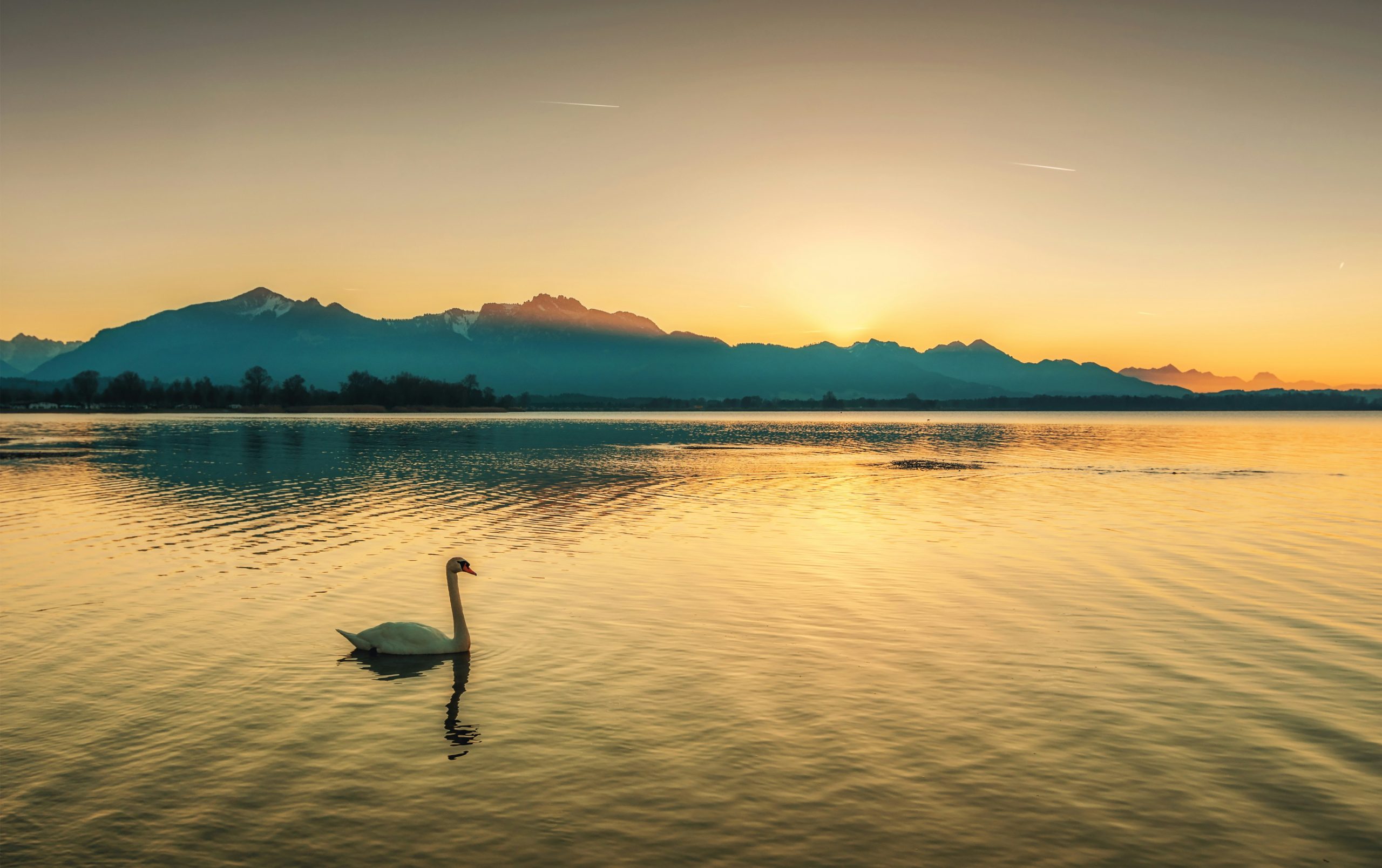
Germany has some of the best lakes in Europe for swimming, especially in Bavaria where clear alpine water and easy lake access make summer travel simple. The best lakes in Germany for swimming include Eibsee, Walchensee, and Chiemsee, each offering a different balance of scenery, water temperature, and accessibility.
This post is focused on swim-ability, not just scenery. Lakes are assessed here on water quality, realistic temperatures, crowd levels, accessibility, and practical facilities. The goal is to help travelers make a real decision, not just admire a list.
Quick Picks: Best Lakes in Germany
- Best overall: Eibsee (clear water, mountain setting)
- Best for families: Chiemsee (facilities, accessibility)
- Best for quiet swimming: Walchensee (less crowded, deeper water)
- Best near a major city: Starnberger See (easy from Munich)
- Best for scenery: Königssee (but limited swimming areas)
Quick Comparison: Germany’s Top Swimming Lakes at a Glance
| Lake | Region | Avg. Summer Temp | Crowd Level | Best For | Nearest City |
|---|---|---|---|---|---|
| Königssee | Bavaria (Alpine) | 16–18°C | High | Scenery, short swim | Berchtesgaden |
| Walchensee | Bavaria (Alpine) | 17–20°C | Moderate | Cold-water swimmers | Munich (1.5 hrs) |
| Eibsee | Bavaria (Alpine) | 16–18°C | High | Scenic swim stops | Garmisch-Partenkirchen |
| Chiemsee | Bavaria (Foothills) | 20–24°C | Moderate–High | Families, day trips | Munich (1 hr) |
| Ammersee | Bavaria (Foothills) | 20–23°C | Moderate | Quieter alternative | Munich (1 hr) |
| Starnberger See | Bavaria (Foothills) | 20–24°C | High | Quick half-day | Munich (30 min) |
| Müritz | Mecklenburg | 20–24°C | Low–Moderate | Multi-day slow travel | Rostock (2 hrs) |
| Wannsee | Berlin | 22–26°C | Very High | City-based day trips | Berlin (30 min) |
“Best” varies significantly depending on whether someone is visiting solo, with children, or relying on public transport.
Bavaria’s Alpine Lakes: Cold, Clear, and Worth the Effort

Bavaria’s alpine lakes are the most visually striking swimming destinations in Germany. Königssee, Walchensee, Eibsee, and Sylvenstein Reservoir each offer clear water and mountain surroundings that no lowland lake can match.
The tradeoff is water temperature. Even in peak summer, these lakes typically sit between 16°C and 20°C — cold enough to limit comfortable swimming time for casual visitors. Travelers who prefer warm, long soaks will likely find the alpine lakes frustrating.
Königssee, near Berchtesgaden, is one of the most visited lakes in Germany. It matters for swimmers to know that swimming is restricted in large sections of the lake, which is a national park. Visitors arriving expecting a full beach experience will be disappointed. The lake rewards those who come for a short dip and a boat trip rather than an all-day swim.
Walchensee is better suited to swimming than Königssee. It has a cleaner shore access, more reliable bathing areas, and boat and paddleboard rentals available in summer. Water clarity is exceptional. The cold temperature is the main barrier.
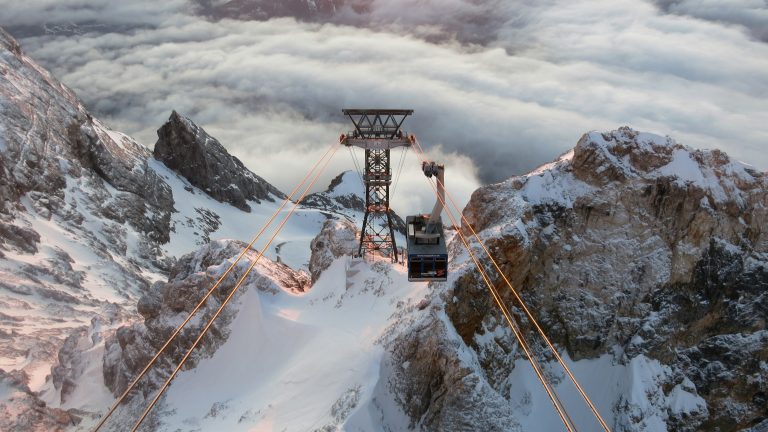
Eibsee, beneath the Zugspitze, attracts heavy day-tour traffic between 10 a.m. and 3 p.m. in July and August. Parking fills quickly. It works better as a scenic swim stop during a larger mountain itinerary than as a standalone lake day.
Sylvenstein Reservoir is the least visited of the group and has fewer facilities. It suits travelers who want alpine scenery without the crowds rather than those looking for a structured beach setup.
For casual swimmers, the alpine lakes are scenic detours. For cold-water enthusiasts, they are genuinely compelling.
Bavaria’s Warmer Lakes: Chiemsee, Ammersee, and Starnberger See
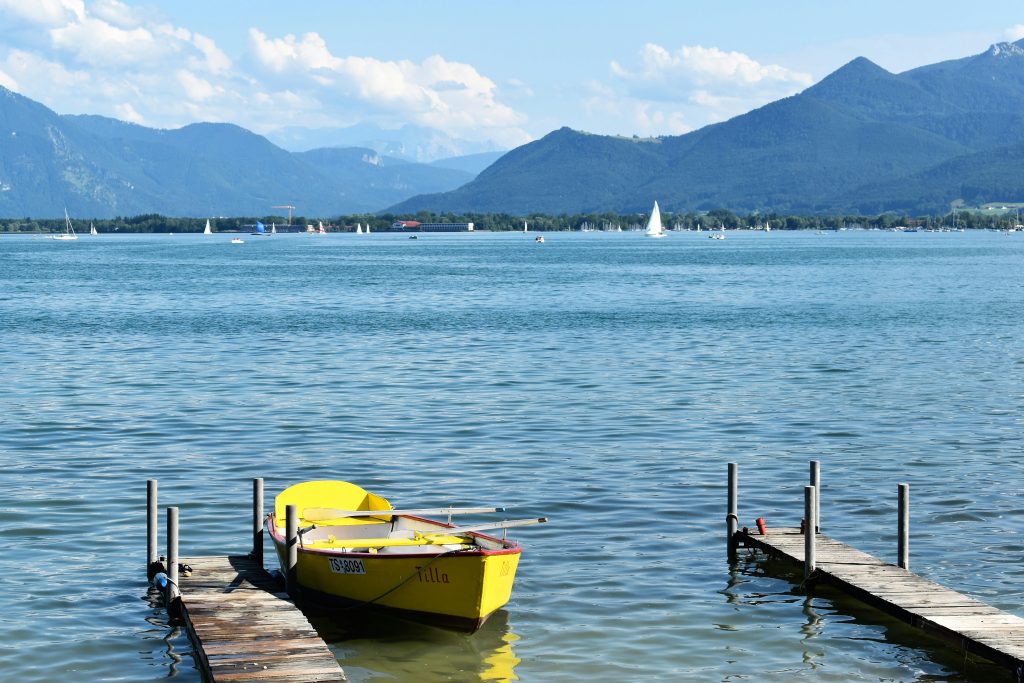
These three lakes offer a different experience entirely. Water temperatures regularly reach 20–24°C in July and August, facilities are well-developed, and all three are reachable from Munich by regional train without a car.
Chiemsee is the largest lake in Bavaria and the most varied. Multiple designated swimming beaches sit around its shoreline, and the lake’s islands — accessible by ferry — add a reason to stay longer. Chiemsee handles crowds reasonably well given its size. It suits families, groups, and anyone who wants reliable infrastructure alongside the water. The main drawback is that it is firmly on the tourist trail, and summer weekends bring visitor volumes to match.
Ammersee is the quieter alternative. It draws a strong local following and has a noticeably more relaxed atmosphere than either of the other two lakes on a typical summer day. Facilities are solid without being overbearing. Travelers looking to avoid the most crowded destinations should consider Ammersee before Starnberger See.
Starnberger See is the closest of the three to Munich, roughly 30 minutes by S-Bahn. That proximity is both its strongest selling point and its main limitation. On hot weekends in July and August, it becomes one of the most crowded swimming destinations in the region. Arriving before 10 a.m. or visiting on a weekday makes a significant difference. For visitors with limited time who want a lake day without a long journey, it is the practical choice.
This group of lakes works well for families with children, first-time visitors to Bavaria, and travelers without a car.
Northern Germany’s Lakes: The Mecklenburg Lake District
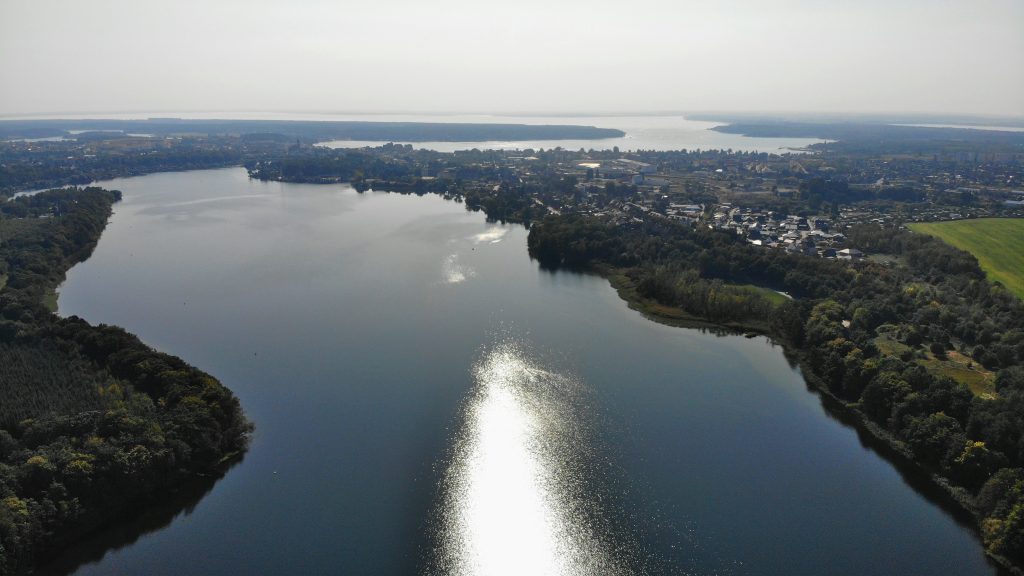
The Mecklenburg Lake District (Mecklenburgische Seenplatte) is one of the most underrated swimming regions in Germany. It receives far less international tourism than Bavaria’s lakes, water temperatures in summer are typically 20–24°C, and the sheer density of swimmable lakes rewards travelers who stay for several nights rather than rushing through.
Müritz is the largest lake in the district and one of the largest in Germany. A significant portion of its shoreline falls within the Müritz National Park, which means access is restricted in protected areas. Swimmers need to identify designated bathing zones in advance rather than assuming they can enter freely from any point.
Plauer See and Kölpinsee are more straightforward for swimming. Both have accessible bathing areas and are less subject to the access restrictions that apply to parts of Müritz.
The honest note on logistics: this region works best with a car. Public transport connections are limited, and the dispersed geography of the lakes does not suit city-based day-trippers. Hiring a canoe or kayak is one of the better ways to explore the area, as many lakes connect via inland waterways.
The Mecklenburg Lake District suits travelers spending multiple nights, those interested in wildlife and flatwater paddling, and anyone actively looking to avoid crowded summer destinations. It is not a strong fit for travelers based in Berlin or Hamburg wanting a single-day lake trip.
Day-Trip Lakes Near Major German Cities
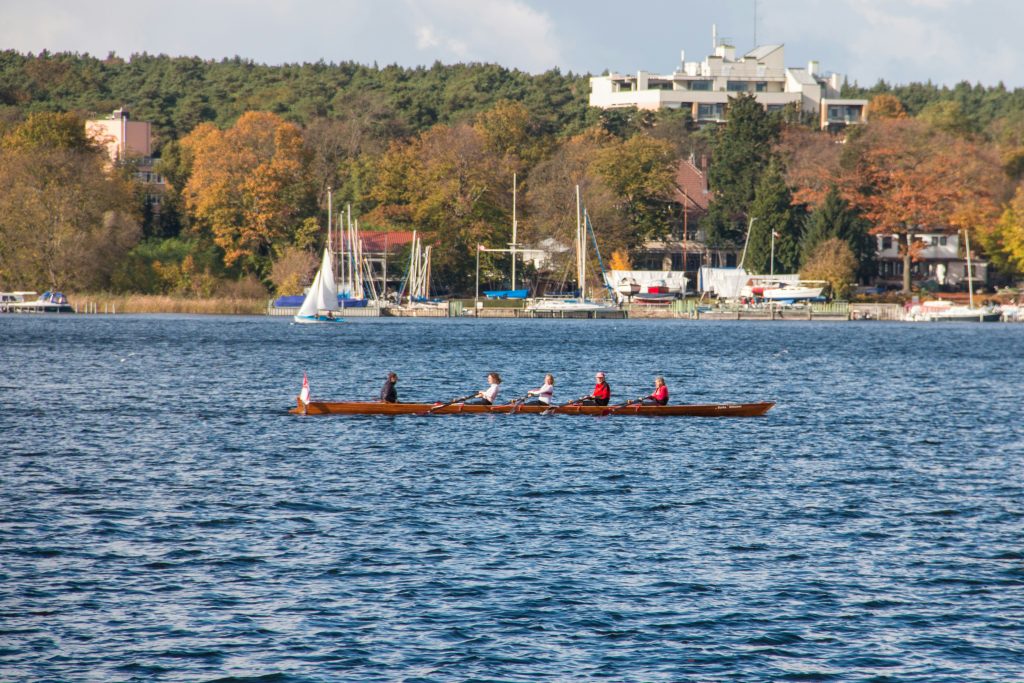
Not every traveler is building a trip around a lake. For visitors based in Berlin, Hamburg, Frankfurt, or Cologne, there are accessible options within a short journey.
Berlin offers two well-known options: Wannsee and Müggelsee. Both are reachable by public transport, both have warm summer temperatures, and both get very busy on hot weekends. Müggelsee is the larger of the two and tends to be slightly less congested than Wannsee, though neither should be expected to feel quiet in peak summer.
Hamburg is worth addressing carefully here. The Alster lakes in the city center are scenic but not open for swimming. Travelers looking for actual lake swimming near Hamburg should look toward lakes in the Sachsenwald area to the southeast.
Frankfurt and the Rhine-Main region have several functional swimming options, including Langener Waldsee and a number of former gravel pits around the Darmstadt area. These are not particularly scenic by alpine or northern German standards, but they are clean, well-monitored for water quality, and genuinely popular with locals during summer.
These are convenience lakes, not destination lakes. They serve a clear purpose — a spare afternoon in the water without significant travel — but they are not worth building a trip around. Travelers who have flexibility should use them as a backup rather than a primary goal.
Water Quality and What the EU Bathing Water Ratings Actually Mean
Germany monitors its designated bathing waters under the EU Bathing Water Directive, which classifies water quality annually as Excellent, Good, Sufficient, or Poor. Most established lake swimming areas in Germany consistently rate Excellent, which reflects low levels of bacterial contamination and reliable monitoring.
Water quality can fluctuate, however. Two conditions are worth knowing about before visiting:
- Heavy rainfall can temporarily raise bacterial levels at some lakes, particularly those near agricultural land. Bathing may be temporarily discouraged after significant rain events.
- Algae blooms occur in warmer, shallower lakes, typically in late July and August. Blue-green algae in particular can make swimming inadvisable or temporarily prohibited.
The DLRG (German Life Saving Association) operates supervised bathing areas at many popular lake beaches during peak season. Their presence is marked by flag systems — red flags indicate a swimming ban, yellow advises caution.
Before visiting any lake, current water quality ratings can be checked via the Bayern Atlas (for Bavarian lakes) or the national bathing water portal operated by the German Environment Agency. These are updated regularly and are the most reliable pre-trip resources for confirming conditions.
Realistic Expectations: Timing, Temperatures, and Crowds
Most German lakes are genuinely swimmable from late June through early September. July and early August represent the warmest period. Before mid-June, even southern lakes can feel uncomfortably cold for casual swimmers, and some facilities will not yet be open.
Crowd patterns follow a predictable rhythm. Any lake within 90 minutes of a major city will see heavy local use on hot weekends in July and August. Arriving before 10 a.m. or visiting on a weekday makes a practical difference to parking, space on the shore, and the overall experience.
Facilities vary widely and are worth checking in advance:
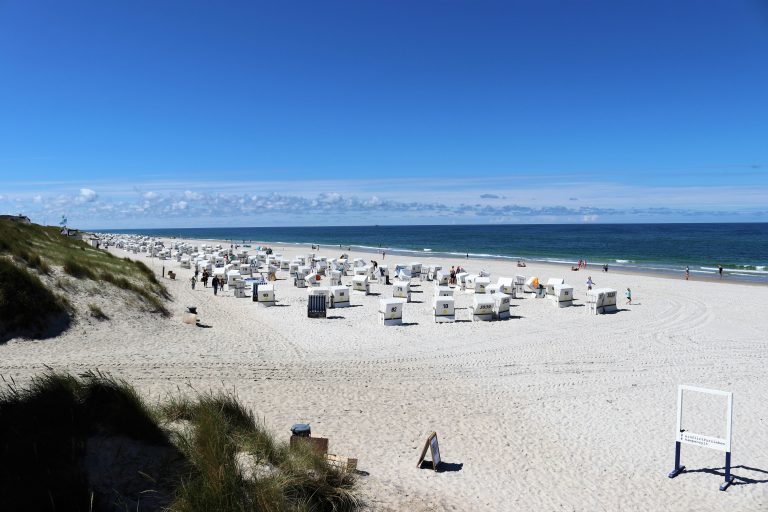
- Popular managed lake beaches (Freibäder am See) near cities often have changing rooms, kiosks, toilets, and lifeguard cover
- Remote or lesser-known lakes may have nothing beyond a grassy bank and a car park
- Entry fees at managed beaches typically run €3–6 per person
- Many lakes have free-access entry points alongside paid zones — these are usually less well-equipped
Travelers should factor facilities into their planning, particularly when visiting with children or spending a full day at the water.
Popular vs. Lesser-Known Lakes: How to Choose
Popular lakes offer infrastructure, reliability, and a social atmosphere. Lesser-known lakes offer solitude but require more planning and a willingness to go without facilities.
The most photographed lakes — Königssee and Eibsee in particular — attract day-tour volumes that peak between 10 a.m. and 3 p.m. Arriving early or late shifts the experience considerably, though it does not eliminate crowds entirely in peak season.
“Lesser-known” in Germany is a relative term. A lake that feels calm on a Tuesday can feel like a festival on a Saturday in August. Travelers should not assume that a smaller or less-published lake will be quiet just because it is not in every guidebook.
A practical approach for travelers who want to balance both: anchor a trip around a reliable, well-serviced lake, then build in one exploratory day at a smaller alternative nearby. This reduces the risk of arriving at an unknown location with no facilities and no swimming access.
How to Pick the Right Lake for Your Trip
Germany’s lakes are a genuinely strong summer travel option, but the right choice depends on where a traveler is based, how they are getting around, and what they actually want from a day at the water.
Four clear traveler profiles cover most situations:
- Families with young children: Chiemsee or Ammersee. Warm water, good facilities, manageable crowds at Ammersee, and train access from Munich without needing a car.
- Cold-water or scenery-focused travelers: Walchensee or Eibsee. Exceptional clarity and mountain settings, with the understanding that water will be cold and facilities limited.
- Multi-day slow travelers: The Mecklenburg Lake District. Best explored over several nights with a car, focused on paddling, nature, and swimming at a relaxed pace.
- City-based day-trippers: Wannsee or Müggelsee from Berlin, or local gravel lake options near Frankfurt. Functional, accessible, and best treated as a half-day option rather than a trip anchor.
Conditions also change year to year. Water quality portals and local tourism boards are the most reliable sources for same-season planning, particularly for travelers visiting in late summer when algae risk is higher.