Austria vs Switzerland for Skiing: Costs, Resorts and the Better Value
Austria is the lower-cost choice in the dated planning models below, but Switzerland does not lose every price comparison. In the flagship pairing, Verbier’s published six-day lift pass costs less than Ski Arlberg’s before any advance discount. The Austrian advantage appears only after lodging, meals, transportation, and other trip costs are added.
The right country depends on what matters after price. Austria suits travelers who want lively ski villages, strong intermediate terrain, practical apartments, and a deeper après-ski culture. Switzerland earns its premium for car-free rail logistics, high-mountain settings, famous peaks, and resorts where the journey itself becomes part of the trip.
Austria vs Switzerland Skiing: Quick Verdict
| Decision | Austria | Switzerland | Better choice |
|---|---|---|---|
| Lower total in this model | Lower lodging and meal allowances | Higher lodging and meal allowances | Austria |
| Six-day flagship lift pass | Ski Arlberg: €468 adult | 4 Vallées: CHF 409 adult | Depends on exchange rate and advance discount |
| Intermediate skiers | Broad networks and many groomed red runs | Strong options, but resort choice matters more | Austria |
| Expert terrain | St. Anton and Arlberg are serious choices | Verbier and other high-alpine resorts are major draws | Tie |
| Families | Strong value in apartment-based resorts such as SkiWelt | Excellent transport and family infrastructure at a higher total cost | Austria for value |
| Car-free travel | Good in rail-served resorts | The strongest national rail-to-resort system of the two | Switzerland |
| Après-ski | Louder, earlier, and more central to the trip | More variable by resort | Austria |
| Famous mountain setting | Strong mountain scenery | Zermatt and the Jungfrau Region carry more international recognition | Switzerland |
- Best overall value in these examples: Austria.
- Best for a first European ski trip with a generous budget: Switzerland, especially when car-free travel and a famous mountain setting matter more than controlling daily costs.
- Best compromise: Choose Austria, stay near a lift or village bus, and spend the savings on a better apartment, ski school, or an extra night.
How This Cost Comparison Works
No single total can represent every American ski trip. Airfare changes by departure airport and purchase date. Lodging can double during Christmas, New Year, and school-holiday weeks. Lessons, rentals, and meals also depend on age, ability, and service level.
The model below uses January 16 to 23, 2027, researched on August 28, 2026, about 20 weeks before arrival. It assumes seven nights and six ski days. The primary comparison is St. Anton am Arlberg against Verbier because both are major resorts with serious terrain and active villages. A second model checks the result against SkiWelt and the Jungfrau Ski Region for families and intermediates.
Planning assumptions
- Travel party: either two adults or two adults with two school-age children
- Dates: January 16 to 23, 2027
- Research date and lead time: August 28, 2026, about 20 weeks before arrival
- US gateway: New York City, with the same $900 round-trip airfare allowance in both countries
- Stay: seven nights in one unit
- Skiing: six consecutive days
- Ground transport: public transportation from a major international airport
- Lodging: a planning allowance, not a live quote
- Meals: breakfast at the lodging, a mix of mountain lunches and packed lunches, and a mix of restaurant and self-catered dinners
- Equipment: standard ski, boot, and pole rental
- Lessons: one published five-day group product for each child in the family model
- Currency conversion: European Central Bank reference rates from August 27, 2026, when €1 equaled $1.1645 and CHF1 equaled about $1.24
The flight placeholder prevents a cheap fare to Zurich or Munich from distorting the country comparison. Travelers should replace it with a live fare from their home airport before making a decision.
The lodging, ground-transport, rental, food, activity, insurance, and contingency numbers are deliberately ranges. They are planning allowances entered on the research date, not observed market averages or live package quotes. The lift passes and family lesson examples use published 2026/27 prices. Replace every allowance with a final checkout price before choosing a country.
The family lesson products are not identical. Ski School Alpine in Hopfgarten lists a five-day children’s course from age four at €265, with four scheduled instruction hours per day and a minimum of four participants. Grindelwald Sports lists five morning group lessons at CHF339, totaling 15 scheduled hours. Lift access and lunch terms also differ. The model uses those published products because they fit the selected resorts, but it does not treat their prices as proof that one country always has cheaper instruction.
What the model excludes
The totals do not include premium cabins, checked-bag fees, private transfers, private lessons, premium equipment, nightlife, shopping, medical treatment, or major flight disruption. They also exclude credit-card foreign transaction fees and any difference between a bank’s conversion rate and the ECB reference rate.
The comparison assumes travelers already own suitable ski clothing. A first ski trip that requires jackets, pants, helmets, goggles, gloves, and base layers needs a separate gear budget.
Seven-Night Ski Trip Costs
Austria’s advantage appears in the complete trip, not in every line item. The official 2026/27 six-day Ski Arlberg adult pass costs €468, about $545 at the dated reference rate. The full 4 Vallées pass in Verbier costs CHF 409, about $508, and the resort advertises a 10 percent online discount when purchased at least ten days ahead.
That makes the Swiss flagship pass slightly less expensive in this particular pairing. It also shows why comparing countries through one lift-ticket screenshot produces a weak conclusion.
Couple budget for seven nights
| Cost for two adults | St. Anton, Austria | Verbier, Switzerland | What drives the difference |
|---|---|---|---|
| Round-trip flights | $1,800 placeholder | $1,800 placeholder | Replace with live fares |
| Airport-to-resort transport | $250 to $450 | $300 to $500 | Route, fare type, and booking date |
| Seven nights lodging | $2,100 to $3,500 | $2,800 to $4,550 | Unit type, location, and cancellation terms |
| Six-day lift passes | About $1,090 | About $1,015 before online discount | Official 2026/27 window prices and dated exchange rates |
| Standard equipment rental | $400 to $600 | $500 to $700 | Shop, package, and equipment tier |
| Meals and groceries | $1,050 to $1,550 | $1,400 to $2,050 | Self-catering frequency and mountain lunches |
| One non-ski activity | $100 to $250 | $150 to $350 | Activity selected and transport |
| Insurance and contingency | $400 to $700 | $450 to $800 | Coverage, deductibles, and traveler risk tolerance |
| Estimated total before flights | $5,390 to $8,140 | $6,615 to $9,965 | Austria is about $1,525 lower at the midpoint |
| Estimated total with flights | $7,190 to $9,940 | $8,415 to $11,765 | Same gap because airfare is held equal |
The midpoint calculation puts St. Anton near $8,565 and Verbier near $10,090. That is an illustrative difference of about $1,525 for two adults under these inputs, not an average savings claim. Change the lodging choice or add lessons and the gap can move substantially.
The practical lesson is to compare like with like. For the January week in this model, map St. Anton accommodation options against Verbier accommodation options for the same party size, bedroom layout, and cancellation flexibility. St. Anton center or Nasserein can reduce morning travel, while an outlying address may add a ski-bus or taxi step. In Verbier, a lower price in Le Châble can mean an evening gondola or bus constraint. Compare the complete seven-night checkout total and the actual route to the first lift, not just the nightly rate.
Family-of-four budget for seven nights
| Cost for two adults and two children | SkiWelt, Austria | Jungfrau Ski Region, Switzerland | What drives the difference |
|---|---|---|---|
| Round-trip flights | $3,600 placeholder | $3,600 placeholder | Replace with live fares |
| Airport-to-resort transport | $350 to $650 | $450 to $750 | Arrival airport, child fares, and route |
| Seven nights apartment | $2,450 to $4,200 | $3,150 to $5,250 | Bedrooms, kitchen, village, and booking terms |
| Six-day lift passes | About $1,445 | About $1,455 to $1,505 | Two adults and two eligible children at published 2026/27 rates |
| Standard equipment rental | $750 to $1,050 | $900 to $1,250 | Child packages and equipment tier |
| Five-day group lessons for two children | About $620 | About $840 | Published products differ in hours and terms |
| Meals and groceries | $1,550 to $2,350 | $2,050 to $3,000 | Kitchen use and on-mountain meals |
| Non-ski activity | $150 to $350 | $250 to $500 | Activity and included transport |
| Insurance and contingency | $650 to $1,000 | $750 to $1,100 | Coverage and risk tolerance |
| Estimated total before flights | $7,965 to $12,065 | $9,845 to $14,145 | Austria is about $1,980 lower at the midpoint |
| Estimated total with flights | $11,565 to $15,665 | $13,445 to $17,745 | Same gap because airfare is held equal |
The SkiWelt total uses its published high-season six-day rate of €413.50 per adult and €207 per eligible child. The Jungfrau range uses the published 2026/27 six-day rate of CHF404 per adult in regular periods or CHF424 in peak periods, plus CHF183 per eligible child. At the dated exchange rate, the two-adult, two-child totals are about $1,445 for SkiWelt and $1,460 to $1,510 for Jungfrau.
The lesson line uses about $620 for two five-day Ski School Alpine children’s courses and about $840 for two five-morning Grindelwald Sports courses. The Austrian course schedules more instruction hours, while the Grindelwald product is morning-only. Compare lesson hours, lunch supervision, meeting point, class-size rules, start days, and lift-ticket requirements before treating either as the better buy.
Families should check age rules rather than assuming the same definition of a child. SkiWelt lists child tariffs for birth years 2011 through 2020 for 2026/27. The Jungfrau booking page publishes its own child categories. Birth-year cutoffs can change, and proof of age may be required.
SkiWelt also lists FamilySkiWeeks during specified early and late-season dates when children can ski free on qualifying multi-day passes. That can change the result for a family willing to accept the snow and operating-risk tradeoff of shoulder dates. Confirm the promotion’s conditions and open terrain before booking.
The costs most likely to break the budget
Lodging is first. Resort center, lift access, bedroom count, and refundable terms matter more than the flag outside the building. Search one set of dates, map every property, and compare the final price including cleaning and local taxes.
Lessons are second for families. Compare total instruction hours, lunch supervision, meeting point, language, start-day rules, minimum class size, and lift-ticket requirements. A cheaper course with shorter sessions is not automatically the better value.
Food is third. An apartment kitchen gives a family control over breakfast, snacks, and several dinners. That choice matters more in Switzerland because every avoided restaurant meal protects a larger daily allowance.
Currency is fourth. Austria uses euros. Switzerland uses Swiss francs. A one-cent change is minor on coffee and material on a four-person lodging bill. Use a no-foreign-transaction-fee card if available, decline dynamic currency conversion, and let the card network convert the local currency.
Matching Resorts Fairly
Austria should not win because the comparison chooses a modest Austrian village and an elite Swiss resort. The useful question is whether similar travelers receive similar skiing, lodging access, and village life at different total costs.
St. Anton am Arlberg vs Verbier
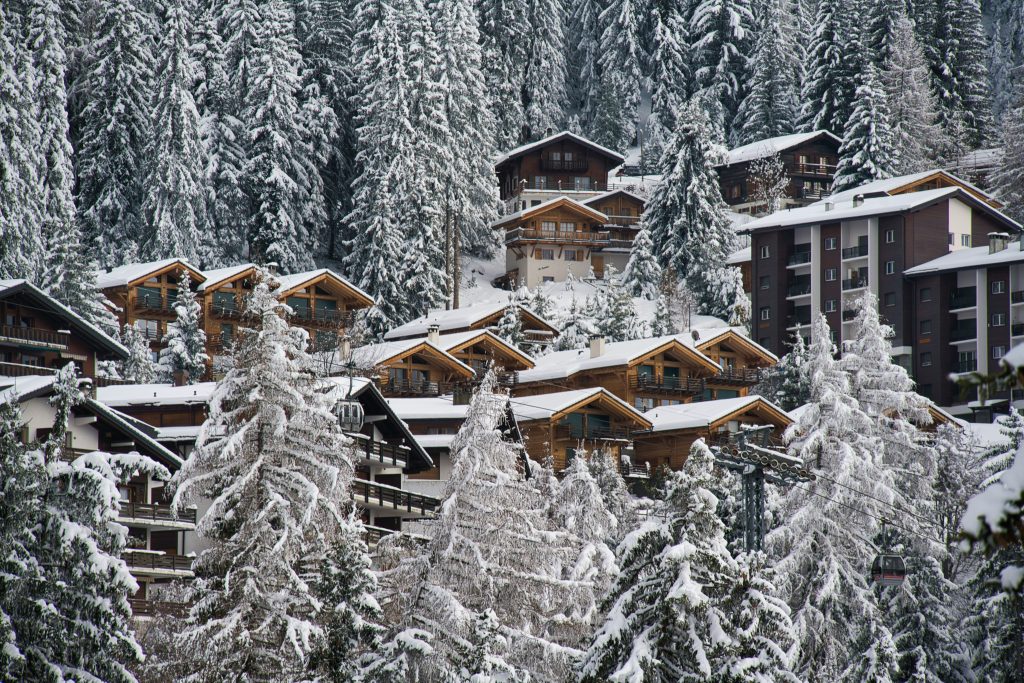
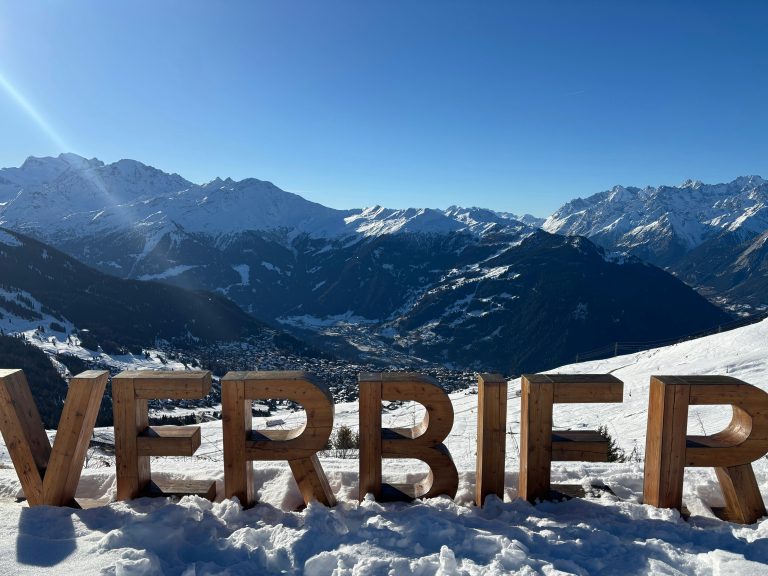
This is the strongest flagship pairing for advanced groups and adults who want a social village. Ski Arlberg publishes 300 kilometers of runs and 85 lifts across the connected area. Verbier sits within the 4 Vallées network, with a full-area pass designed for skiers who want to move well beyond the local sector.
St. Anton is the better value when the group wants broad linked skiing and active après-ski without paying Verbier lodging and meal allowances. It is not the automatic choice for cautious beginners. The scale, weather, and busy return routes can make the week feel demanding.
Verbier makes more sense when strong skiers prioritize high-alpine terrain, a Swiss resort identity, and a rail-based trip through Geneva. The higher total can be rational for travelers who care about those features. It is harder to justify for a mixed group that will spend most days on easy local slopes.
- Book St. Anton if: the group is comfortable navigating a large area, likes an energetic village, and wants to spend less across the full week.
- Book Verbier if: the group values the Swiss setting and transport system enough to accept higher lodging and daily-spending allowances.
- Skip both if: most travelers are new skiers, several people will not ski, or the group wants a quiet early night near simple learning terrain.
SkiWelt vs Jungfrau Ski Region
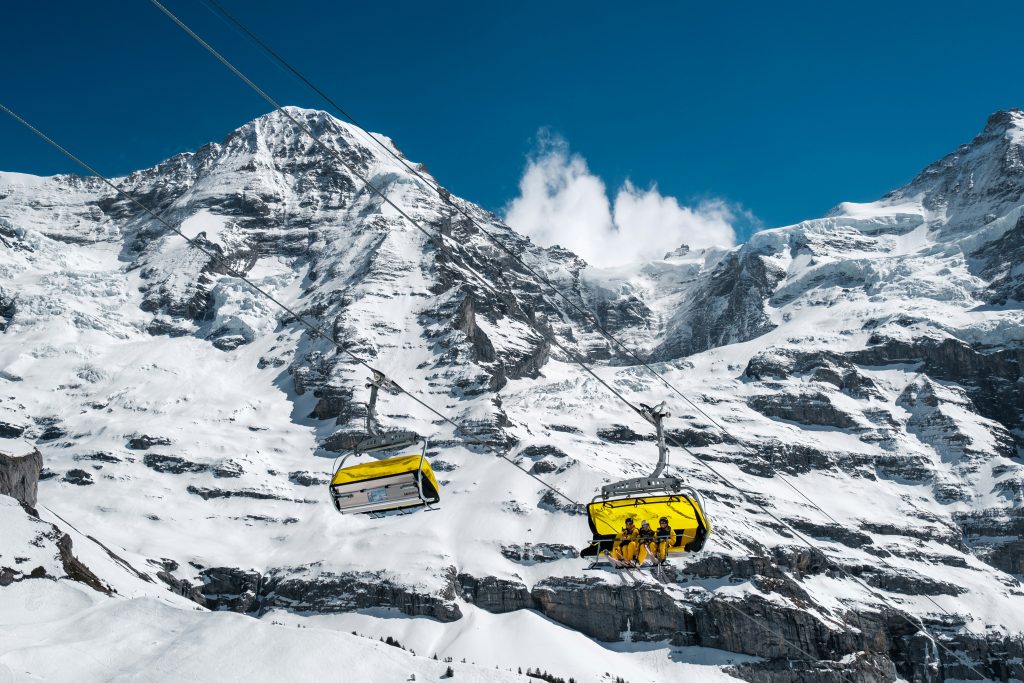
This pairing is more useful for families and intermediates. SkiWelt publishes 275 kilometers of slopes and 81 lifts across several Tyrolean villages. The Jungfrau Ski Region publishes 211 kilometers across Grindelwald-Wengen, Grindelwald-First, and Mürren-Schilthorn.
SkiWelt offers several villages on one pass, so choose the base before the property. Söll accommodation options suit a group that wants more evening energy; Ellmau or Going may fit a family seeking a quieter village rhythm, while Westendorf offers a smaller base connected to the wider network. A low regional room price is less useful if the family needs a long morning transfer to its lesson meeting point. The area’s lower elevation also makes date choice and current snow coverage important.
The Jungfrau Region offers a clearer car-free plan, but the base changes the daily routine. Grindelwald accommodation options give a family more services and several lift approaches; Wengen or Mürren suit travelers who want a quieter car-free village and accept a rail or cable transfer with luggage. Compare the walk to ski school, the first lift, and the last practical evening connection. Check which mountain railways and excursions the ski pass actually includes before using them to justify a higher lodging quote.
- Book SkiWelt if: the family wants a large intermediate network, an apartment, village choice, and a lower complete-trip target.
- Book Jungfrau if: the train journey, car-free villages, and non-ski mountain excursions are central to the vacation.
- Skip SkiWelt in a marginal early or late week if: the group would be disappointed by limited lower-mountain coverage. Check operating reports before committing.
- Skip the Jungfrau Region if: the family expects every famous mountain railway or sightseeing trip to be included in the ski pass. Confirm each inclusion before purchase.
Lech Zürs vs Zermatt
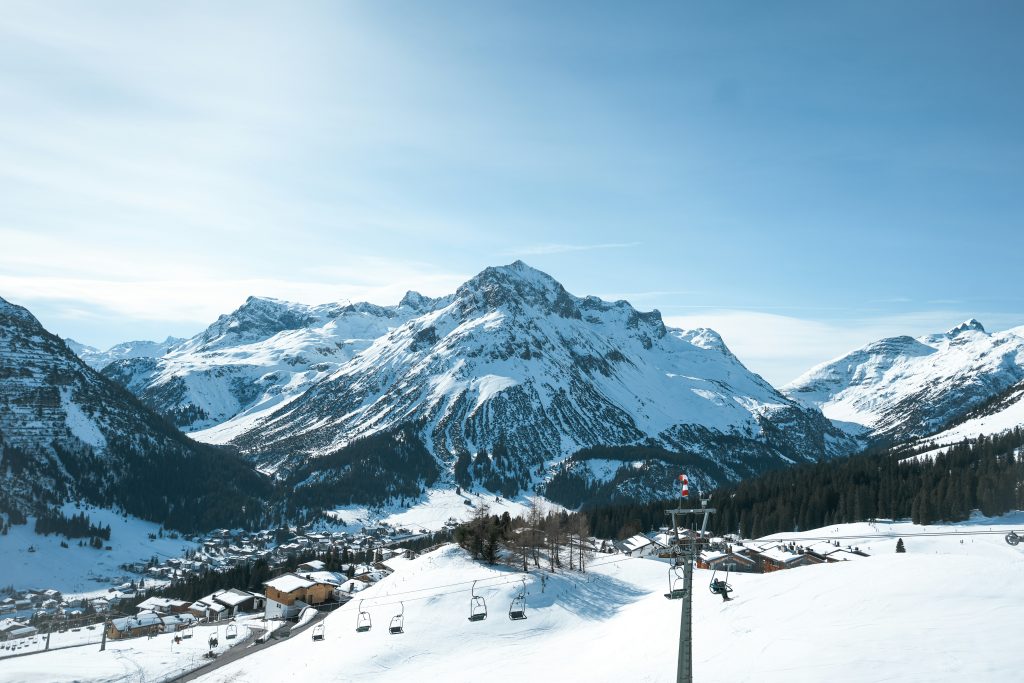
This is the premium comparison. Both can produce a costly week, and neither should represent the budget end of its country.
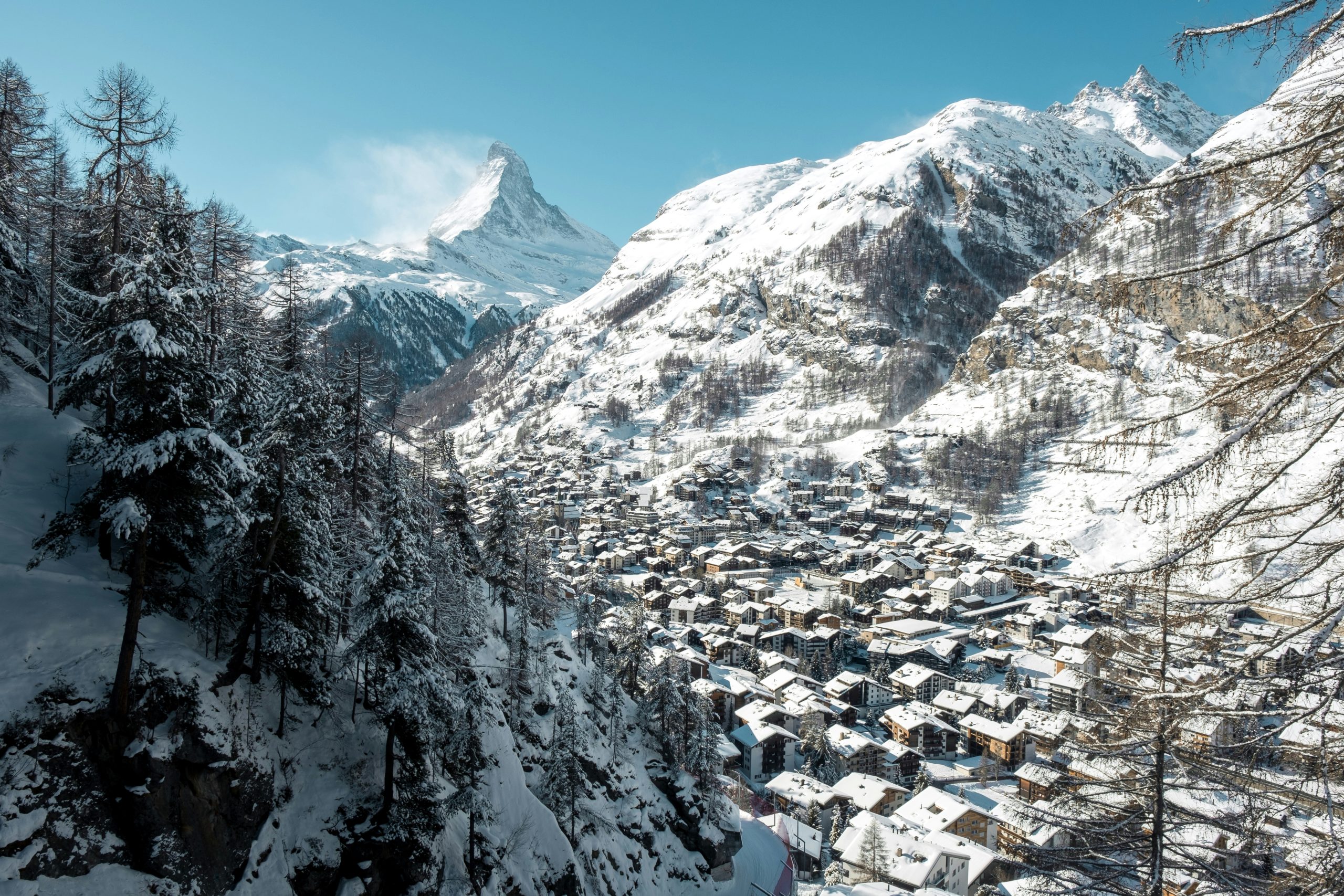
Lech Zürs shares the Ski Arlberg pass and offers direct access to the same large network as St. Anton, with a more polished and quieter village feel. Zermatt offers a car-free resort, high-altitude skiing, and the Matterhorn as a constant visual anchor.
The better-value answer is usually Lech only when a suitable room or apartment is available. The broader Austria conclusion does not guarantee Lech will be cheap. Zermatt is the better fit for travelers who consider the railway arrival, village, mountain excursions, and Matterhorn setting part of what they are buying.
Skiing on the Mountain
The two countries are more alike than many American travelers expect. Both have extensive lift systems, marked pistes, mountain restaurants, ski schools, rentals, and villages built around winter travel. Both can deliver easy learning zones, long intermediate days, and expert terrain if the resort is chosen well.
The main difference is not national quality. It is resort fit.
Terrain and resort structure
Austria often organizes a ski vacation around linked valleys and villages. A pass can cover a large circuit, but returning to the starting village may require attention to lift closing times and weather. SkiWelt’s village choice and Ski Arlberg’s linked network are good examples.
Switzerland often combines skiing with railways, gondolas, and separate mountain sectors. In the Jungfrau Region, the transport network is part of daily movement. In Verbier, a full-area pass matters only if the group has the ability and interest to use the broader 4 Vallées terrain.
American skiers should learn the European piste colors before day one. Blue is generally easier, red is intermediate, and black is difficult, but grading remains local and conditions can change the experience. A red piste can feel manageable when groomed and much harder when scraped, crowded, or covered by new snow.
Beginners and families
Beginners should prioritize the lesson meeting point, learning-area access, and route home over total trail mileage. A 300-kilometer network provides little value if the first three days happen on one beginner slope.
Families should map four locations before booking lodging: ski school, rental shop, nearest lift, and grocery store. A short walk on a map can become a tiring trip in ski boots with two children.
SkiWelt is the strongest value recommendation in this comparison for a family of intermediate skiers. The Jungfrau Region becomes more compelling when non-ski relatives, trains, and car-free villages carry equal weight.
Advanced and expert skiers
St. Anton and Verbier both deserve serious consideration for advanced skiers. Neither country has a monopoly on difficult terrain.
Off-piste skiing changes the safety calculation. Open terrain beyond marked and controlled pistes can involve avalanche and navigation risk. Hire a qualified local guide, review the regional avalanche bulletin, carry the appropriate equipment, and confirm that insurance covers the planned activity. A resort being open does not make every slope safe.
Snow, altitude, and weather tradeoffs
Altitude supports colder conditions but does not guarantee powder, visibility, or full operation. Wind can close high lifts. Lower resorts can have better visibility during a storm while higher lifts remain shut.
This creates a practical contrast. High Swiss resorts can offer strong elevation and late-season options, but exposed lifts can be vulnerable to wind. Lower Austrian networks can offer sheltered tree-lined skiing, but early and late dates require closer attention to snow coverage.
For any country, check the official operating report, weather forecast, and avalanche bulletin each morning. Build one non-ski day into the budget rather than treating six lift days as guaranteed.
Where to Stay and Daily Logistics
The best lodging is not always beside the main gondola. It is the place that makes the group’s repeated tasks easy.
Choosing an Austrian base
In St. Anton, a central location can reduce bus dependence and make restaurants and the railway station easier to reach. Nasserein can be practical for lesson access and morning starts. A cheaper outlying property may still work if the ski-bus frequency and final return time fit the group.
Around SkiWelt, choose the village before choosing the property. Each base has its own lift entry, atmosphere, and evening options. A family should not book the lowest regional price and assume every village experience is interchangeable.
Apartments are a major Austria value lever. A kitchen, a separate sleeping area, and boot storage can matter more than hotel services during a family week.
Choosing a Swiss base
Verbier gives immediate access to the resort village, but Le Châble can reduce lodging costs and sits on the rail-and-gondola approach. The tradeoff is the need to plan evening transport back down the valley.
In the Jungfrau Region, Grindelwald offers more services and several lift approaches. Wengen and Mürren provide car-free stays but require rail or cable connections with luggage. Those transfers are manageable when planned and frustrating when treated as an afterthought.
In Zermatt, the car-free village supports a coherent stay, but travelers arriving by car must leave it outside the resort and continue by train. That is a benefit for village atmosphere and a constraint for heavy luggage.
Lodging checklist before payment
- Final price including cleaning, linen, and local visitor taxes
- Refund and cancellation deadline
- Walking route to the lift or exact bus stop
- Last practical connection after dinner
- Ski-school meeting point
- Boot room, ski storage, and drying space
- Kitchen equipment and nearest grocery store
- Bedroom layout rather than advertised guest capacity
- Elevator access if stairs and luggage are a concern
A sofa bed for two children is not equivalent to a second bedroom. A nominally ski-in property may still require a route that a beginner cannot comfortably ski.
Food, Après-Ski, and Non-Ski Days
The model gives Austria the lower food allowance, but travelers should test that assumption with menus and grocery access for the exact village. Bakery breakfasts, grocery lunches, apartment dinners, and casual mountain huts provide several spending levels. Traditional choices include dumplings, schnitzel, soups, sausages, and Kaiserschmarrn.
Switzerland offers its own strong mountain-food identity through raclette, fondue, rösti, soups, and regional cheese dishes. The issue is not quality. It is how often the group wants restaurant meals at Swiss resort prices.
A realistic meal strategy
For a couple, plan two or three dinner reservations and self-cater or eat casually on the other nights. For a family, make breakfast and snacks at the lodging, pack at least two lunches, and reserve restaurants for the days when convenience matters most.
Check whether a mountain restaurant takes reservations and whether the route back suits every skier. A memorable lunch loses its appeal if a beginner faces a difficult final run.
Après-ski
Austria wins for travelers who want après-ski to be a major part of the week. St. Anton is known for a social scene that begins on the mountain and continues in the village. That energy can be a reason to go or a reason to stay in a quieter part of town.
Switzerland varies more. Verbier supports bars and nightlife, while Wengen and Mürren feel more restrained. Families and early-rising skiers may prefer that distinction.
Alcohol, altitude, fatigue, and an icy walk home are a poor combination. Choose lodging and transport before treating après-ski as spontaneous.
Non-ski days
Do not make a famous paid excursion the only bad-weather plan. High mountain railways and viewpoints can also lose value in cloud or wind.
Build a two-level backup list:
- Low-cost plan: pool, village walk, café, grocery run, or rest afternoon
- Paid plan: sledding, spa, museum, indoor climbing, or a mountain railway when operating and visibility justify it
Switzerland has the advantage when the rail journey and car-free village exploration are themselves activities. Austria often wins when the goal is a simple rest day that does not add much to the total.
Getting There From the United States
Both countries work without a rental car when the resort is chosen for rail access. Switzerland makes the process more consistent across the country, while Austria can be equally easy in specific rail-served resorts.
Austria arrival plan
St. Anton has a railway station in the village. Depending on the flight and timetable, travelers may route through Zurich, Innsbruck, or Munich and continue by train. The best airport is the one that produces a reliable same-day connection, not automatically the geographically nearest airport.
For SkiWelt, rail travelers typically connect through regional stations and finish by bus or taxi, depending on the chosen village. Confirm the final connection and how late it operates before booking an evening arrival.
Switzerland arrival plan
Verbier tourism lists a rail journey of roughly two and a half hours from Geneva and about four hours from Zurich. The usual route reaches Le Châble, followed by a gondola or bus toward Verbier. Check the live SBB timetable for the exact travel date because construction and seasonal schedules can alter a connection.
The Jungfrau Region is built around rail access from Interlaken Ost. Grindelwald and Wengen continue by train, while Mürren requires an additional mountain connection. Zermatt is reached by rail because the resort is car-free.
The Swiss Travel Pass can simplify broader train, bus, and boat travel, but it is not automatically the cheapest choice for a ski week. It does not turn every mountain railway or ski lift into an included trip. Price the exact itinerary against point-to-point tickets and any relevant advance fares.
Arrival rules that prevent a bad first night
- Avoid the last practical connection of the day.
- Allow time for immigration, baggage, and a delayed transatlantic flight.
- Confirm whether skis require a reservation or special handling on each carrier.
- Keep one night of essentials in carry-on luggage.
- Verify the final bus, gondola, or hotel transfer.
- Save the lodging address and arrival instructions offline.
A rental car can help a multi-resort itinerary, but it adds winter-driving risk, parking, tolls or road fees, fuel, and possible equipment requirements. For one resort, it often solves fewer problems than expected.
Which Country Is Better for Each Skier?
Choose Austria for the best overall value
Austria is the default recommendation for travelers who want a complete European ski week at a controlled cost. The advantage is strongest for families, intermediate skiers, apartment stays, and groups that enjoy active villages.
The compromise is that the best-value resort may not have Switzerland’s most famous rail journey or highest terrain. Travelers also need to choose dates carefully in lower areas.
Choose Switzerland for a landmark first trip
Switzerland is the better choice when the vacation is as much about the train, village, and mountain setting as the skiing. Zermatt, the Jungfrau Region, and Verbier each make a strong case for a trip with a larger budget.
The compromise is less room for casual spending. A traveler who resents every restaurant bill will not enjoy paying more simply to say the trip happened in Switzerland.
Choose Austria for families focused on skiing
SkiWelt is the clearest value pick for an intermediate family. Its official 2026/27 pass prices and selected family promotions can keep the lift portion competitive, while apartment choices create control over meals and daily rhythm.
Choose the Jungfrau Region instead when car-free movement, train-loving children, or non-ski relatives are central to the plan.
Choose either country for experts
Strong skiers should compare St. Anton with Verbier rather than compare flags. Terrain, guide availability, snow, exposure, and the group’s actual ability matter more than national stereotypes.
Austria is likely to deliver the lower total. Switzerland may deliver the more compelling personal wish-list trip.
Choose Switzerland for the easiest car-free concept
Switzerland wins at the national level for travelers who want rail to define the vacation. Austria narrows the gap in St. Anton, where the station sits in the village.
Do not buy a national rail pass by reflex. Build the route first, compare ticket options, and confirm which mountain transport is included.
Final verdict
Austria delivers most of the core ski-vacation experience for less in both sample models. It does not offer inferior skiing simply because the modeled trip costs less. The difference comes mainly from the lodging, meal, and daily-spending inputs, not the published lift passes or a universal national price rule.
Switzerland’s higher cost can still be worth paying. It buys access to a transport system and resort settings that can be part of the vacation rather than mere logistics. Travelers who value those features should choose Switzerland deliberately, not apologize for the premium.
For most American families and value-conscious couples, price Austria first. For a Matterhorn-focused trip, compare Zermatt accommodation options with a similar Austrian unit, then account for the train into the car-free village and the route to the chosen lift. Zermatt suits travelers who value the village and mountain setting beyond ski hours; it is a weaker fit for a group seeking the lowest cost per ski day. If comparable Swiss lodging is within about $100 per night of the Austrian option, rerun the model because the conclusion may narrow or reverse.
Frequently Asked Questions (FAQs)
Sources
- Ski Arlberg 2026/27 prices, age categories, season dates, and resort size
- Verbier 4 Vallées 2026/27 prices and advance-purchase discount
- SkiWelt 2026/27 prices, family offers, resort size, and season bands
- Jungfrau Ski Region 2026/27 ski-pass prices and operating notes
- Ski School Alpine 2026/27 children’s group-course prices, hours, and minimum group size
- Grindelwald Sports 2026/27 children’s group-course prices, hours, and terms
- Verbier official arrival guidance
- St. Anton official accommodation search
- St. Anton tourism press guide with railway-station location
- Jungfrau official accommodation booking notes
- Jungfrau official guidance for car-free Wengen and Mürren
- Zermatt tourism guidance for the car-free village
- Swiss Federal Railways Swiss Travel Pass inclusions
- European Central Bank reference exchange rates
- European Avalanche Warning Services