Germany’s Castle Road: A Practical 7-Day Itinerary
Seven days is enough for a selective Germany Castle Road itinerary from Heidelberg to Bayreuth, but it is not enough for every official stop. The strongest trip limits most days to one major interior, uses historic towns as overnight bases, and treats several castles as viewpoints or short exterior visits.
The Castle Road association describes a route of roughly 770 kilometers from Mannheim to Bayreuth and recommends exploring it in stages. This itinerary starts in Heidelberg because it is a practical arrival point and one of the route’s strongest opening visits. It then follows the Neckar Valley and crosses Franconia through Rothenburg ob der Tauber, Nuremberg, Bamberg, and Bayreuth.
This is primarily a driving trip. Several towns have useful rail connections, but rural castles often require an uphill walk, a bus connection, or a different route plan. Travelers who want the Alps and Neuschwanstein should choose the Romantic Road or a Bavarian Alps itinerary instead.
Germany Castle Road Itinerary at a Glance
| Day | Route or Base | Main Priority | Optional Stop | Driving Burden | Main Tradeoff |
|---|---|---|---|---|---|
| 1 | Heidelberg | Heidelberg Castle | Old Town walk | Light | A busy first stop, but easy to organize |
| 2 | Neckar Valley to Bad Wimpfen | Guttenberg Castle or a lighter valley route | Mosbach | Moderate | Too many short detours can consume the day |
| 3 | Bad Wimpfen area to Rothenburg | Rothenburg walls and old town | Schwäbisch Hall | Moderate | An extra interior means less time in Rothenburg |
| 4 | Rothenburg to Nuremberg | Cadolzburg or early Nuremberg arrival | Ansbach | Moderate | Choose one intermediate stop |
| 5 | Nuremberg | Imperial Castle and old town | Franconian Switzerland detour | Light or moderate | A detour reduces time in Nuremberg |
| 6 | Bamberg | Historic center and regional beer culture | Altenburg | Light | Another interior may add little by this point |
| 7 | Kulmbach to Bayreuth | Plassenburg or a longer Bayreuth visit | Thurnau exterior stop | Moderate | Coburg requires an earlier overnight or a separate route day |
The table measures driving burden rather than promising fixed journey times. The official route often favors secondary roads, and parking plus uphill access can add more time than the distance suggests. Download the current Castle Road driving route and recalculate each day for the actual travel dates.
Before Driving the Castle Road
What the Castle Road Includes
The official Castle Road runs from Mannheim to Bayreuth. Its six broad touring sections connect palace cities, river valleys, medieval towns, fortresses, and smaller rural sites.
The route is not a checklist. The association says trips can range from two days to two weeks and recommends traveling in sections. A seven-day trip therefore needs a clear selection rather than an attempt to cover all 60-plus castles, palaces, and ruins listed by the route organization.
The road route, cycle route, and public transport suggestions are not interchangeable. Download the correct GPX file for driving. A cycling closure or stage length should not be applied automatically to a car itinerary.
When to Go
Spring through fall gives travelers the broadest planning flexibility. Gardens, outdoor areas, seasonal services, and longer daylight make the route easier to manage.
Winter can work, but it needs a town-focused plan. Some gardens close, rural attractions reduce their operating days, and darkness arrives earlier. Christmas markets can add value, but they also affect parking and hotel demand.
There is no single month that guarantees every attraction will operate. Check each official site after setting the travel dates, especially for Monday closures, guided-tour schedules, renovation work, and holiday exceptions.
Rental Car and One-Way Planning
A car is the practical choice for this exact route. It gives travelers control over hilltop attractions, optional valley stops, luggage, and the decision to cut a visit when the day is running late.
A compact vehicle is easier in older towns and parking structures. Travelers who need an automatic transmission should reserve it explicitly rather than assume one will be available.
One-way rental works best when the trip begins near Frankfurt or Heidelberg and finishes with rail travel from Bayreuth or Nuremberg. It can reduce backtracking, but the fee and available return location depend on the rental company.
Germany uses low-emission zones in some cities. The Federal Environment Ministry explains the sticker system, but travelers still need to check the current local zone map and confirm that the rental vehicle is compliant.
Where to Stay
The itinerary works best with practical bases, not a castle hotel every night. Heidelberg, Rothenburg, Nuremberg, and Bamberg give travelers evening dining choices and reduce the risk of arriving at an isolated property after service has ended.
Historic-center lodging is convenient for evening walks but may come with narrow access, remote parking, steps, or small elevators. Edge-of-center lodging can be easier for families and drivers, provided the walk or transit connection is realistic.
A castle hotel makes sense when the property sits on the route and functions as the day’s main experience. It is less useful when it forces a long detour or an early departure.
Seven-Day Heidelberg-to-Bayreuth Castle Road Itinerary
Day 1: Heidelberg Castle and an Easy Arrival
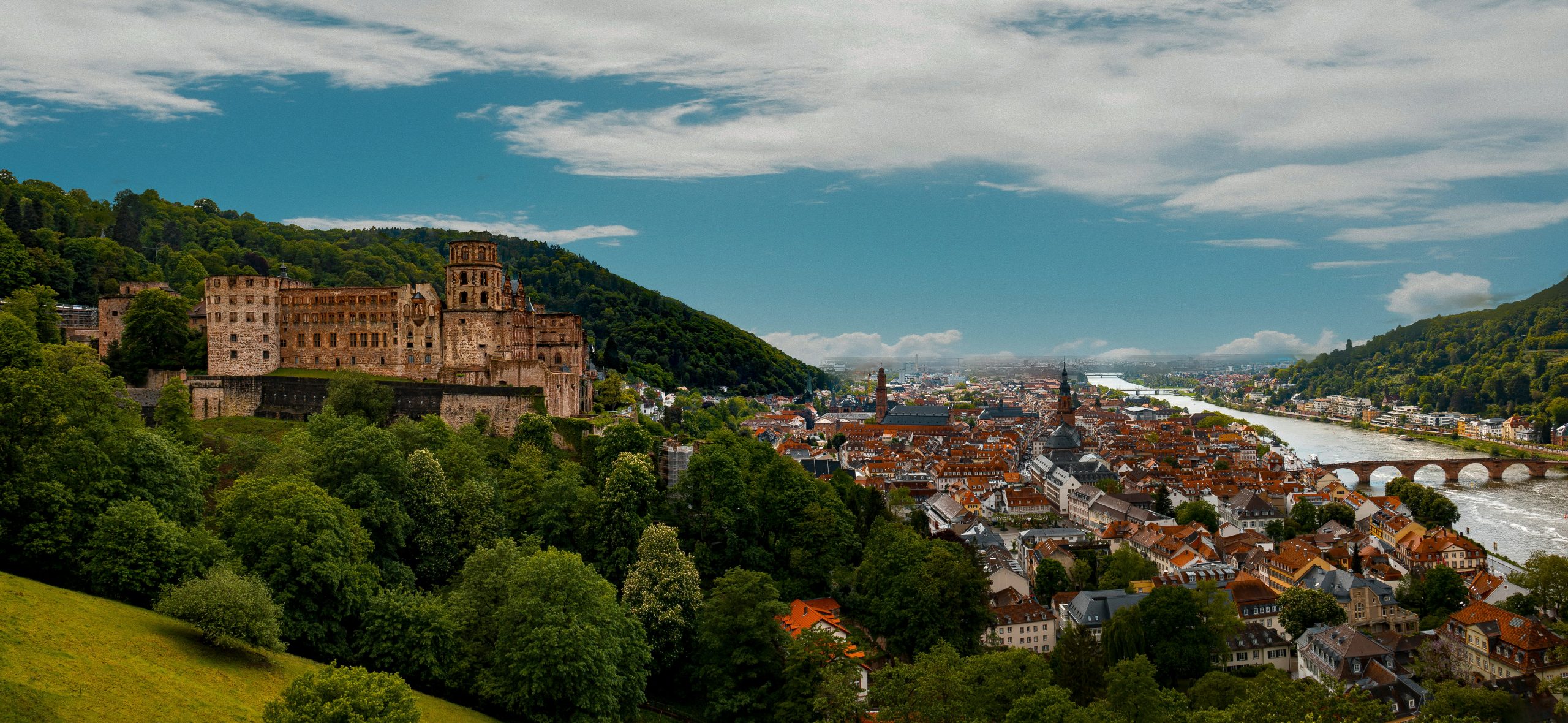
Heidelberg Castle should be the only formal attraction on the first day. It has enough historical weight to start the route, while Heidelberg offers the hotel, rail, and dining infrastructure that international arrivals usually need.
The lower funicular connects the Kornmarkt area with the castle stop. The standard castle ticket includes the lower funicular and access to the courtyard, Great Tun, and German Pharmacy Museum. The palace rooms themselves require a guided tour, according to the official Heidelberg Castle visitor information.
That distinction matters. A traveler can see the grounds and major public areas without committing to another timed experience. Anyone arriving late, traveling with tired children, or expecting several interiors later in the week should consider skipping the palace-room tour.
Allow time for the Old Town, a meal, and the route back to the hotel. The climb and historic surfaces can be tiring even when the funicular is used.
For a deeper plan, use the existing Heidelberg Castle day guide. This article should not duplicate it.
Best for: First-time visitors who want a major castle with straightforward city logistics.
Skip or adjust if: The flight or train arrives late. Protect dinner and sleep instead of forcing the interior tour.
Day 2: Neckar Valley Castles and Bad Wimpfen
The Castle Road follows the Neckar Valley after Heidelberg, where several castles sit above the river. The planning mistake is treating each one as a required admission stop.
Choose one of two versions.
History and family version: Make Guttenberg Castle the main visit. Its official site combines a castle museum with the German Falconry Center, and demonstrations follow a seasonal schedule. Check the Guttenberg Castle website for the exact date before building the day around it.
Lighter valley version: Use Dilsberg, Neckarsteinach viewpoints, or Mosbach as shorter stops, then continue to Bad Wimpfen. This version suits travelers who prefer walking, town centers, and exterior views over another museum.
Do not attempt Dilsberg, Mosbach, Guttenberg, and Bad Wimpfen as four equal visits. Parking, walks from the car, fixed programs, and meal breaks make that plan more demanding than the map suggests.
Bad Wimpfen works as an end-of-day town or overnight base. Its compact historic center provides a clear stopping point before the route turns toward Hohenlohe and Franconia.
The Castle Road organization also publishes public transport connections for much of the Neckar Valley. These are useful for a separate rail-based short trip, but hilltop access may still finish on foot.
Best for: Travelers who want river-valley scenery and one less formal castle experience than Heidelberg.
Skip or adjust if: A falconry program or interior requires the whole day to revolve around a fixed time. Families should choose the program or the longer town walk, not both.
Day 3: Schwäbisch Hall or Hohenlohe to Rothenburg
Day 3 needs an early decision: another formal castle visit or more time in Rothenburg ob der Tauber.
Schwäbisch Hall is a useful town stop when the route and overnight location line up. A Hohenlohe palace or castle may appeal more to travelers interested in interiors, but it should replace the town stop rather than accompany it.
Rothenburg is more rewarding as an overnight base than a quick photograph. Arriving with time to walk part of the walls, cross the market area, and eat without rushing is worth more than adding a second museum earlier in the day.
The city recommends that most drivers use the large parking areas outside the old town. It also notes traffic restrictions within the historic core. Check the official Rothenburg parking page before choosing a hotel or arrival route.
Families do not need to walk the complete wall. A shorter section gives the experience without turning the evening into an endurance test. Travelers with limited mobility should use Rothenburg’s accessible visitor map and avoid assuming that every wall section or tower is practical.
Rothenburg also appears on the Romantic Road. That overlap does not make the two routes identical. The Castle Road continues east toward Nuremberg and Franconian fortresses, while the Romantic Road ultimately heads south to Füssen.
Best for: Travelers who value a fortified town as much as a castle interior.
Skip or adjust if: The morning stop runs long. Cut it and reach Rothenburg earlier.
Day 4: Rothenburg to Nuremberg via Cadolzburg
Cadolzburg is the strongest intermediate stop for travelers who want a modern museum interpretation of medieval rule. Its exhibition uses objects, reproductions, and interactive elements inside a Hohenzollern castle.
It also offers better documented access than many historic fortifications. The official accessibility information describes ramps, a lift, accessible toilets, and the areas that still have narrow passages, cobbles, or steps.
That does not make the whole property barrier-free. The castle garden and some rooms remain restricted. The detail is useful because it lets travelers evaluate the visit before arrival.
Ansbach is the alternative for travelers more interested in a residence and court culture. Do not schedule Ansbach and Cadolzburg on the same day unless one is clearly an exterior stop.
Reach Nuremberg with enough time to check in and eat near the old town. The Imperial Castle belongs on Day 5, when it can be visited without watching the clock.
Best for: Families, museum-oriented travelers, and visitors who want an interior that differs from Heidelberg.
Skip or adjust if: Rothenburg still needs the morning. Drive directly to Nuremberg and use the afternoon for the old town.
Day 5: Nuremberg Imperial Castle or a Rural Detour
The Imperial Castle is the priority. Its Palas and Imperial Castle Museum are self-guided, while the Deep Well is visited on a guided tour, according to the official castle information.
The site sits above the old town, so the visit includes slopes and historic surfaces. Official accessibility information indicates that only part of the complex is accessible without stairs. Travelers should check the current access details for the exact rooms they want to see.
After the castle, choose between more Nuremberg and a rural detour.
Stay in Nuremberg: Best for first-time visitors, poor weather, families managing museum fatigue, and anyone interested in the city’s broader history.
Drive toward Franconian Switzerland: Best for repeat visitors who would rather see a rural fortress or cave-region landscape than another city museum. The Castle Road passes places such as Pottenstein and Rabenstein, but the attraction, route, and operating day must be checked before departure.
The rural option is not an automatic upgrade. Nuremberg supports a full day, and leaving after lunch adds parking and driving friction.
Best for: Travelers who want a major imperial site with a deep city context.
Skip or adjust if: The group has already reached castle fatigue. Keep only the exterior courtyards that are open and shift the rest of the day to Nuremberg.
Day 6: Bamberg and Altenburg
Bamberg should be the slowest day of the itinerary. The Castle Road connection is Altenburg, but the city itself is the main reason to stay.
Start with the historic center, cathedral area, river crossings, and a proper lunch. Bamberg has narrow streets and limited central driving space, so use current municipal parking or park-and-ride information rather than searching for a space near every sight. Bamberg Tourism maintains current parking guidance.
Altenburg sits above the city. It works best as a viewpoint and exterior castle stop unless the current program offers an interior visit that genuinely fits the day. The uphill location matters for travelers with strollers or walking limitations.
Bamberg’s beer culture deserves time, but it should not become a brewery checklist. Bamberg Tourism’s smoked beer guide explains the city’s continuing Rauchbier tradition. Travelers who want to try it should choose one brewery tavern, confirm its current opening day and food service, and keep the rest of the day flexible.
The better family plan is lunch, a shorter central walk, and only then a decision about Altenburg. Another long museum visit adds less value after five days of castles.
Best for: Travelers who want food, beer, and a historic city break between fortress days.
Skip or adjust if: The hill trip creates too much walking. Keep the day in the center and preserve energy for Day 7.
Day 7: Kulmbach and Bayreuth
Kulmbach is the practical final fortress because the official Castle Road places it directly before Bayreuth. The route association lists Kulmbach to Bayreuth at about 24 kilometers, while its own Coburg, Kronach, Kulmbach, and Bayreuth plan spreads those northern fortresses across four days.
Choose Plassenburg when one more fortress still adds value. It contains several museums, but the hill position creates a real access constraint. The Bavarian Palace Administration says the fortress can be explored only to a limited extent by wheelchair users and travelers with severe walking difficulties.
Skip Plassenburg when the group already has castle fatigue or Bayreuth has a fixed train or rental return. A short exterior stop in Thurnau can add a different castle-town setting without another museum, but it should be dropped when the schedule is tight. The current Castle Road route downloads include the Kulmbach to Bayreuth alternatives.
Finish in Bayreuth according to the next travel step. The Margravial Opera House is a UNESCO World Heritage property and a distinct final interior after a week dominated by defensive buildings. The New Palace offers another view of court life.
Do not force both Bayreuth interiors into a day that also includes Plassenburg and a car return. Choose the Margravial Opera House for theater architecture, the New Palace for palace rooms, or a short center walk when onward travel takes priority.
Veste Coburg remains worthwhile for fortress and collection enthusiasts, but it is not a clean Day 7 substitute. Travelers who prioritize it should leave Bamberg earlier on Day 6, sleep in Coburg, and then treat Kulmbach as optional. The official Veste Coburg information also advises allowing about 20 minutes from the Brandensteinsebene visitor parking area to the museum entrance.
Best for: Plassenburg suits travelers who want one final fortress without breaking the route into Bayreuth.
Skip or adjust if: A train or rental return sets a hard deadline. Make Bayreuth the only visit.
Which Castle Interiors Are Worth Paying For?
Not every castle needs an admission ticket. A useful one-week plan pays for interiors that offer a different experience from the previous day.
| Site | Best Reason to Enter | Exterior-Only Option | Access Constraint | Skip If |
|---|---|---|---|---|
| Heidelberg Castle | Major route opener and palace history | Courtyard and viewpoints, subject to ticketed access | Slopes, steps, guided tour for palace rooms | Arrival is late |
| Guttenberg Castle | Museum plus seasonal falconry program | Use a lighter Neckar Valley route instead | Hill access and fixed program times | The schedule controls the whole day |
| Cadolzburg | Interactive medieval rule exhibition | Courtyard where current access permits | Some narrow or stepped areas remain | Rothenburg needs more time |
| Nuremberg Imperial Castle | Imperial history tied directly to the city | Open courtyards and old-town views where available | Uphill approach and partial stair access | The group prefers city history outside another museum |
| Veste Coburg | Major fortress and art collections | Limited value without allowing time for the hilltop site | Uphill approach and partial accessibility | The final day has a hard deadline |
| Plassenburg | Fortress setting and several museums | Town view from below | Steep approaches and limited wheelchair access | Veste Coburg is already the main fortress |
A history-heavy traveler might choose Heidelberg, Guttenberg, Cadolzburg, Nuremberg, and one eastern fortress. Most families and general travelers should cut at least one of those interiors.
The main rule is simple: pay for one principal interior per day at most. Exterior walls, valleys, old towns, courtyards, and viewpoints create variety without adding another two-hour museum block.
Five-Day Castle Road Alternative
A five-day itinerary should remove regions, not compress seven days into longer days.
A workable version is:
- Day 1: Heidelberg. Visit Heidelberg Castle and sleep in the city.
- Day 2: Neckar Valley. Choose Guttenberg or a lighter valley route, then sleep near Bad Wimpfen or Heilbronn.
- Day 3: Rothenburg. Drive through Schwäbisch Hall only if timing allows, then give Rothenburg the afternoon and evening.
- Day 4: Nuremberg. Skip the intermediate castle and focus on the Imperial Castle plus the old town.
- Day 5: Bamberg or Bayreuth. Choose Bamberg for a balanced city and beer day. Choose Bayreuth when the final transport plan points east.
This cut removes Coburg and Kulmbach. What it loses is the sequence of large eastern fortresses. What it gains is a trip that does not require constant early departures.
A western five-day version from Frankfurt can end in Rothenburg or Nuremberg. An eastern version can begin in Nuremberg and include Bamberg, Coburg, Kulmbach, and Bayreuth. Those are separate routes, not add-ons to the same five-day plan.
Castle Road vs. Romantic Road
The two routes overlap at Rothenburg, but they serve different trips.
| Decision | Castle Road | Romantic Road |
|---|---|---|
| Primary appeal | Castles, fortresses, palaces, and historic towns | Town sequence, cultural landscapes, and an Alpine finish |
| General direction | Mannheim to Bayreuth | Würzburg to Füssen |
| Best for | History-focused road trips and varied fortifications | First-time southern Germany trips ending near the Alps |
| Car-free practicality | Possible in selected sections, weaker for rural sites | Possible between major towns, but the road-trip form still favors a car |
| Family tradeoff | Greater risk of museum and castle fatigue | Greater risk of too many similar town stops |
| Do not choose it for | Neuschwanstein or an Alpine ending | A dense study of castle types and Franconian fortresses |
Choose the Castle Road when castles are the organizing idea of the trip. Choose the Romantic Road when Rothenburg, Nördlingen, Augsburg, Füssen, and the Alpine edge form the stronger route.
Combining both in one week is a mistake. It creates repeated historic-town stops and long repositioning days. Travelers with more time can connect selected sections around Rothenburg, but each day still needs one clear priority.
See the full five-day Romantic Road itinerary before deciding.
Practical Castle Road Planning
Budget Without False Precision
The main cost categories are:
- Rental car and any one-way return fee
- Fuel
- Parking
- Hotels
- Castle, palace, and museum admissions
- Guided tours
- Meals
Exact totals vary too much by date and party size to support one reliable budget. Travelers can control costs by choosing fewer paid interiors, staying outside pedestrian centers, and using bakeries or supermarkets for some lunches.
Check official admission and parking pages shortly before travel. A price copied months earlier is less useful than a direct link.
Parking and Arrival Friction
The time between reaching a town and entering a castle is part of the itinerary. Parking outside old centers, walking uphill, finding the correct entrance, and waiting for a timed tour can turn a short drive into a half-day commitment.
Rothenburg’s large parking areas outside the old town are a good example. Veste Coburg adds a hill walk from standard visitor parking. Plassenburg’s topography limits access even after a traveler reaches the site.
Keep luggage out of sight and follow the rental company’s security guidance. Do not plan frequent roadside unpacking in public lots.
Accessibility
Historic buildings require attraction-specific research. “Accessible” may refer to the ticket office while towers, gardens, upper rooms, or approach paths remain difficult.
Check these parts separately:
- Parking or drop-off point
- Route to the entrance
- Ticket office
- Courtyards and gardens
- Museum floors
- Guided-tour route
- Towers and wells
- Restrooms
Cadolzburg documents substantial step-free museum access but also identifies narrow or stepped spaces. Nuremberg, Veste Coburg, and Plassenburg each have different limits. Contact the operator when a particular room or mobility device will determine whether the visit works.
Family Pace
One principal interior per day is enough for most families. Protect lunch, restrooms, and unstructured walking time before adding another museum.
Children do not need to enjoy every castle for the trip to work. A wall walk, courtyard, short viewpoint, or town stop can replace a lengthy tour.
The most family-friendly itinerary is not the one with the most child-oriented attractions. It is the one that leaves enough time to eat, reset, and abandon an optional stop without damaging the day.
Frequently Asked Questions (FAQs)
Sources
- Castle Road official FAQ
- Castle Road route downloads and GPX files
- Castle Road official castle and palace overview
- Castle Road public transport guidance
- Heidelberg Castle visitor information
- Guttenberg Castle
- Rothenburg parking and traffic information
- Cadolzburg accessibility information
- Nuremberg Imperial Castle visitor information
- Bamberg parking information
- Bamberg Tourism smoked beer guide
- Veste Coburg visitor FAQ
- Plassenburg accessibility information
- Bayreuth New Palace
- UNESCO Margravial Opera House Bayreuth
- Federal Environment Ministry low-emission zone guidance
- German National Tourist Board Romantic Road overview