Berchtesgaden or Garmisch-Partenkirchen: Which Is Better?
Garmisch-Partenkirchen is generally the better choice for a first Bavarian Alps trip, a short stay, or a car-free visit from Munich. Berchtesgaden is usually better for travelers who place Königssee, Ramsau, and national park landscapes above town convenience and do not mind traveling between separate valleys and villages.
That distinction matters more than any universal ranking. Both destinations offer mountain access, family activities, Bavarian food, and worthwhile hiking, but they create different trips. This Berchtesgaden vs Garmisch-Partenkirchen comparison covers transportation, lakes, hikes, lodging bases, wet-weather options, costs, crowds, and seasonal fit.
Berchtesgaden vs Garmisch-Partenkirchen: Quick Answer
Garmisch-Partenkirchen wins on convenience. Its rail connections, larger town center, restaurant choice, and concentration of major outings make it easier to plan around limited time or uncertain weather.
Berchtesgaden wins for a nature-led stay. Königssee, Ramsau, Hintersee, Jenner, and the national park provide a strong reason to spend several days in Germany’s southeastern corner, especially when the trip also includes Salzburg.
| Comparison | Berchtesgaden | Garmisch-Partenkirchen |
|---|---|---|
| Best overall fit | Nature-focused stays and Königssee | First visits and short Alpine trips |
| Better gateway | Salzburg and southeastern Bavaria | Munich and western Bavaria |
| Without a car | Possible, but buses require planning | Easier overall |
| Main lake experience | Königssee boat journey and national park access | Eibsee walk, swimming, and Zugspitze pairing |
| Mountain access | Jenner and national park routes | Zugspitze, Alpspitze, Wank, and lift-assisted outings |
| Easy walks | Strong, but spread among several areas | More options that are simple to combine |
| Serious hiking | Excellent national park terrain | Broad range with strong lift support |
| Younger families | Good for boats, the salt mine, and short nature walks | Easier logistics and more flexible backup plans |
| Wet-weather flexibility | Salt mine, Haus der Berge, and historical sites | Larger town base and more indoor alternatives |
| Restaurants and evenings | Better in Berchtesgaden town than in outlying villages | Wider selection overall |
| Winter | Better for winter landscapes and selected activities | Better for conventional lift-served skiing |
| Useful stay length | Three to four nights | Two to three nights |
Choose Garmisch-Partenkirchen when the priorities are easy access from Munich, a broad activity menu, conventional ski infrastructure, or a compact stay.
Choose Berchtesgaden when Königssee is nonnegotiable, Salzburg is part of the route, or the goal is a quieter trip built around one major nature outing each day.
Best Overall Choice for Most First-Time Visitors
Garmisch-Partenkirchen is the safer default for most first-time visitors. It asks less of the traveler: the station is useful, the town supports evenings without much planning, and several headline experiences can be organized from one base.
The drawback is popularity. Zugspitze, Eibsee, and Partnachklamm attract concentrated visitor traffic, especially on clear summer days and holiday weekends.
Best Choice for a Nature-Focused Trip
Berchtesgaden is the better choice when the landscape is the trip rather than a backdrop. Königssee, Ramsau, Hintersee, and the national park reward travelers who are comfortable committing most of a day to one area.
Its main limitation is geography. A hotel in Berchtesgaden town is not at Königssee, Ramsau, or the Eagle’s Nest departure point, so daily transport deserves more attention.
Getting There and Getting Around
Garmisch-Partenkirchen fits naturally into a Munich-based itinerary. Berchtesgaden sits much farther east and pairs more logically with Salzburg, the Chiemgau area, or a broader southeastern Bavaria trip.
Travelers should check current rail and bus schedules for their exact date. Engineering work, seasonal services, and missed connections can change the practical comparison even when the map stays the same.
Reaching Each Destination from Munich and Salzburg
From Munich, Garmisch-Partenkirchen is usually the simpler rail trip. This makes it easier to arrive after a flight, add the Alps to a city break, or avoid renting a car.
Berchtesgaden generally requires a longer journey from Munich, often with connections. That does not make it a poor choice, but it reduces the value of a two-night stay.
From Salzburg, the logic reverses. Berchtesgaden is close enough to fit naturally before or after an Austrian itinerary. Garmisch-Partenkirchen requires a more involved cross-Alpine transfer and is rarely the efficient choice for a brief Salzburg add-on.
Anyone arriving with several suitcases should consider more than total journey time. Each transfer adds stairs, platform changes, and missed-connection risk. A direct or simpler route can be worth more than a nominally faster one.
Which Destination Is Easier Without a Car?
Garmisch-Partenkirchen is easier without a car. The train station, local buses, and mountain rail connections support a trip that includes the town, Zugspitze area, Eibsee, and several walking routes.
Where a visitor stays still matters. Grainau is useful for Eibsee and Zugspitze, while central Garmisch or Partenkirchen provides better evening flexibility. A hotel chosen only for its mountain view may add unnecessary bus trips.
Berchtesgaden can also work without a car, but it requires a deliberate plan. Königssee, Ramsau, Hintersee, Obersalzberg, and trailheads sit in different directions. Local buses connect many visitor areas, yet the day often depends on timetables and the final return service.
A car is most useful in Berchtesgaden when the group wants early starts, flexible stops, or accommodation outside town. It is less helpful when the plan centers on one busy attraction with constrained parking.
Driving and Parking Tradeoffs
Driving provides flexibility but does not remove crowd pressure. Parking near Königssee, Eibsee, trailheads, and cable cars can fill during high-demand periods.
An early start is useful for both destinations. It improves parking odds, reduces queue exposure, and leaves time to change plans if high mountain weather turns.
Do not schedule two parking-dependent headline attractions on the same day. One substantial outing, followed by an easy meal or town walk, is a more reliable family pace.
Low-Friction Ways to Organize the Days
In Garmisch-Partenkirchen, group Eibsee and Zugspitze because they share the same side of the destination. Keep Partnachklamm and the town for another day rather than racing between both mountain corridors.
In Berchtesgaden, give Königssee its own day. Use a second day for Ramsau, Hintersee, and an appropriate walk, then keep the salt mine or Haus der Berge available when mountain visibility is poor.
Travelers with only three full days should not try to cover both destinations. The transfer and repeated hotel logistics remove the main benefit of choosing a single Alpine base.
Lakes, Mountains, and Signature Experiences
The strongest comparison is not “which destination has better mountains?” Both do. The useful question is how travelers want to experience them.
Berchtesgaden centers its trip around a national park, a boat-accessed lake, and dispersed valleys. Garmisch-Partenkirchen offers a more developed mountain resort base with Germany’s highest summit, a highly accessible lake, gorges, and several lift-assisted choices.
Königssee vs Eibsee
Königssee is the more structured experience. Most visitors see it by passenger boat, choose a stop, and organize the day around sailing times. The trip can open access to St. Bartholomä and, when seasonal service permits, the southern end of the lake.
That structure is both its strength and weakness. The boat makes the journey accessible to non-hikers, but queues and fixed return options reduce flexibility. Families should avoid treating the lake as a quick photo stop.
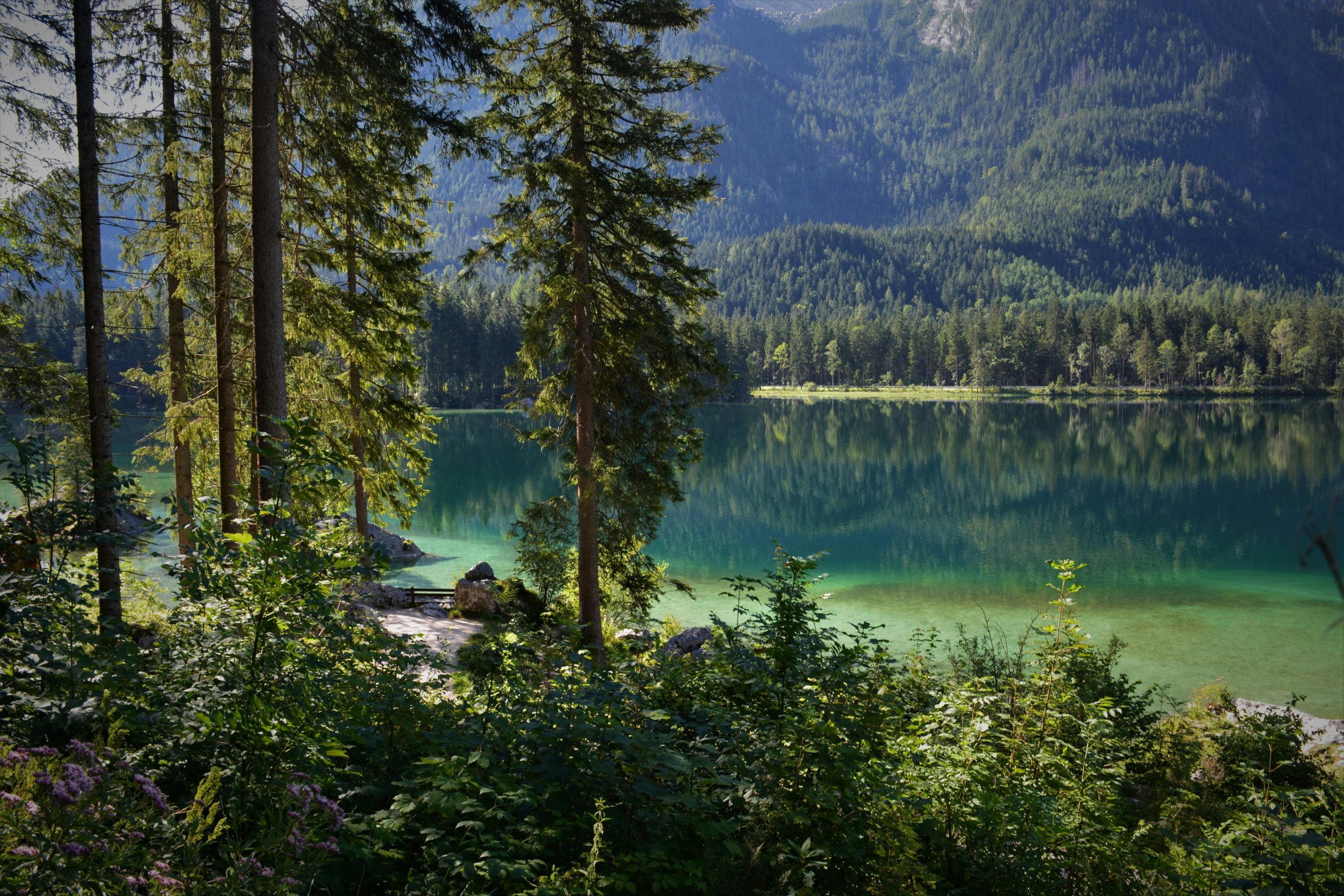
Eibsee is easier to use on individual terms. Visitors can walk part or all of the shoreline, find a place to pause, combine the lake with Zugspitze, or leave when energy drops.
Eibsee is usually the better fit for a flexible half-day and for families who want walking and water time. Königssee is the stronger choice for a full destination experience that feels distinct from an ordinary lake visit.
Swimming should not be the deciding factor at Königssee. Alpine lake water remains cool, conditions vary, and boat traffic shapes where swimming is sensible. Travelers prioritizing family swimming should compare designated access and current local guidance before departure. The broader guide to the best lakes in Bavaria provides more lake choices by trip type.
Jenner vs Zugspitze
Zugspitze is the larger and more famous summit outing. At 2,962 meters, it is Germany’s highest mountain and offers a high-elevation experience that does not require a summit hike.
It also demands a meaningful budget and a good visibility check. Paying for a summit trip when cloud covers the upper mountain rarely makes sense. Travelers should reserve enough schedule flexibility to move the outing to the clearest day.
Jenner is lower and more closely tied to the Königssee landscape. It works well for visitors who want mountain access without making Germany’s highest point the focus of the trip.
The two mountains are not direct substitutes in winter. Garmisch-Partenkirchen has conventional lift-served skiing through the Zugspitze and Garmisch-Classic areas. Jenner should not be assumed to provide an equivalent groomed downhill ski day.
Non-hikers will generally find more infrastructure and a bigger summit production at Zugspitze. Travelers who care more about the relationship between lake, valleys, and national park may prefer Jenner.
Ramsau and the National Park vs Partnachklamm and the Wetterstein Mountains
Ramsau works best as an area, not a single roadside stop. Hintersee, the Zauberwald forest route, Wimbach valley access, and village viewpoints can form an unhurried day.
This is where Berchtesgaden’s slower rhythm makes sense. Moving too quickly between photo locations misses the advantage of staying nearby.
Partnachklamm provides Garmisch-Partenkirchen with a strong, concentrated outing that can be extended into longer walking routes. The gorge is easier to combine with the town than Berchtesgaden’s separate valleys are to combine with each other.
Gorge conditions, trail access, and mountain transport can change with weather and maintenance. Current official notices should always take priority over a saved itinerary.
Hiking: Easy Walks, Family Routes, and Serious Trails
Neither destination needs to win hiking outright. Berchtesgaden has outstanding national park terrain, while Garmisch-Partenkirchen makes a wider range of routes easy to organize from one base.
The better choice depends on whether the group values deep valley routes and national park character or convenient access to several grades of walking.
Best Easy Walks
Around Berchtesgaden, Malerwinkel near Königssee and the Hintersee and Zauberwald area suit travelers who want a meaningful outing without a demanding ascent. Portions can be adjusted when younger walkers lose interest.
Kneifelspitze requires more climbing and should not be grouped with flat family strolls, but it can work as a manageable mountain objective for active families with appropriate footwear and time.
Around Garmisch-Partenkirchen, the Eibsee circuit is the clearest lake walk. The Kramerplateau area also offers options above town that avoid committing to a major summit.
Partnachklamm can suit families, but a gorge is not automatically an easy stroller outing. Wet surfaces, confined sections, steps, weather, and current access rules must be checked before treating it as universally suitable.
Easy does not mean effortless. Even lower Alpine routes benefit from sturdy shoes, water, rain protection, and a turnaround point agreed upon before the walk begins.
Best Moderate Day Hikes
Berchtesgaden’s Wimbach valley and Jenner area support moderate days that can be scaled according to conditions and transport. The appeal comes from sustained time in the landscape rather than checking off multiple attractions.
Garmisch-Partenkirchen offers lift-assisted walks and routes around Wank, Kramer, and the Alpspitze area. Cable cars can reduce ascent, but they also impose last-descent times and do not remove exposure or weather risk.
For a mixed-energy group, the best moderate hike has a clear payoff, a comfortable lunch break, and a shorter fallback. A route that consumes every available hour leaves no margin for slow walkers or changing weather.
Readers seeking food-focused hiking ideas can also compare family-friendly mountain huts in Bavaria and Bavarian mountain hut hikes.
Better Base for Experienced Hikers
Berchtesgaden has the edge for hikers who want sustained national park routes and are prepared for more complicated trailhead logistics. Serious tours require current maps, condition reports, suitable equipment, and honest ability assessment.
Garmisch-Partenkirchen remains a strong hiking base, especially for travelers who want to use lifts to reach higher terrain or mix demanding days with easier outings.
No article can make an exposed Alpine route safe for an unprepared group. Trail classification, elevation gain, descent difficulty, snow, thunderstorms, and the last cable-car time matter more than a route’s popularity.
Families and Bad-Weather Options
Garmisch-Partenkirchen is generally easier for a first family trip. It offers simpler transportation, more dining flexibility, and a wider menu of substitutions when energy or weather changes.
Berchtesgaden can be better for families who prefer one major activity per day. A Königssee boat day, a salt mine visit, and a Ramsau nature day create a clear three-day structure without constant attraction hopping.
Best Choice with Younger Children
Younger children benefit from flexible exits and predictable meals. Garmisch-Partenkirchen makes those needs easier to manage when accommodation is central.
Eibsee allows a family to turn around, shorten the walk, or stop by the water. A Zugspitze trip can also provide a mountain experience without a long climb, although altitude, temperature, visibility, and cost require planning.
Berchtesgaden offers strong child appeal through the boat journey and the salt mine. The tradeoff is that fixed departure times and bus connections can make a tired afternoon harder to simplify.
Families staying around Berchtesgaden should avoid booking remote lodging solely for quiet surroundings. A limited evening restaurant choice and another drive after a full day may outweigh the benefit.
Best Choice with Older Children and Teenagers
Older children may appreciate the salt mine, gorges, summit transport, and longer walks more than a sequence of village viewpoints.
Berchtesgaden suits teenagers interested in boats, caves, history, and national park hiking. Documentation Obersalzberg can add important historical context, but families should assess content and attention span rather than treating it as a casual attraction.
Garmisch-Partenkirchen works well for active teenagers who want a broader range of mountain choices. It also provides more freedom for an evening walk through town without another vehicle transfer.
What to Do When the Mountains Are Clouded In
Low cloud should change the plan. It makes little sense to pay for a major summit ride when the main benefit is the view.
In Berchtesgaden, the salt mine and Haus der Berge are the strongest starting points for a wet day. Documentation Obersalzberg may also fit, especially for older children and adults prepared to engage with the site’s history.
In Garmisch-Partenkirchen, use the larger town base, indoor facilities, and lower-elevation walks when conditions permit. Specific opening times and temporary closures should be checked on the day.
Persistent rain is not a reason to force a gorge walk. Water levels, falling debris, slippery surfaces, and official closures can turn an ordinary route into a poor decision.
Where to Stay, Eat, and Budget
Garmisch-Partenkirchen offers the easier lodging decision. Central Garmisch provides shops, restaurants, and station access. Partenkirchen has its own center and traditional streets. Grainau is better positioned for Eibsee and Zugspitze but offers less evening variety.
Berchtesgaden requires a more explicit choice. Berchtesgaden town works best for public transport and restaurants. Schönau am Königssee provides better access to the lake. Ramsau suits travelers prioritizing Hintersee, valley walks, and quiet evenings.
No base provides every advantage. Staying near the next morning’s attraction may save time, while staying near dinner options may improve every evening.
Best Area for a Car-Free Stay
Central Garmisch-Partenkirchen is the strongest car-free base overall. Choose accommodation within a comfortable luggage walk or simple bus ride of the station, then check the exact route to planned mountain connections.
In the Berchtesgaden area, the town is the safest car-free choice. It provides access to buses traveling toward major visitor areas and reduces the chance of being stranded without dinner options.
A guest card may include or reduce the cost of some local transportation, depending on accommodation and current rules. Travelers should confirm benefits with the lodging provider instead of assuming every visitor receives the same coverage.
Best Area for Quiet Evenings
Ramsau offers the quieter Berchtesgaden-area stay, but quiet also means fewer spontaneous choices. It works best with a car and a plan for dinner.
Grainau creates a similar tradeoff near Garmisch-Partenkirchen. It improves access to Eibsee and Zugspitze while giving up some of the larger town’s convenience.
Families often get more value from a comfortable apartment, breakfast access, and an easy grocery stop than from a remote hotel with a dramatic outlook. Practical evenings matter after long outdoor days.
Which Destination Is Better Value?
Neither destination is consistently cheaper across all seasons and dates. Lodging prices vary with school holidays, weekends, snow conditions, and local events.
Garmisch-Partenkirchen can cost more when a trip includes several cable-car outings. Berchtesgaden can add boat tickets, attraction admission, parking, and more driving or bus use.
Compare the full plan, not the room rate. A less expensive hotel becomes poor value if it requires daily parking fees, long transfers, and dinner drives.
Travelers should price the two or three activities they will actually do. Skipping an expensive summit on a cloudy day is a planning success, not a missed obligation.
Best Time to Visit and Ideal Trip Length
Summer provides the broadest access in both destinations, but also brings the highest demand at lakes, cable cars, and headline attractions. Early starts and one main outing per day make the season more manageable.
Late spring and fall can provide quieter days, yet trail snow, cool lake water, limited boat schedules, cable-car maintenance, and shorter daylight may restrict plans. Operations must be checked for the exact dates.
Winter produces the clearest difference. Garmisch-Partenkirchen is better for a conventional ski trip. Berchtesgaden works better as a winter nature base with selected activities, subject to snow and seasonal access.
Best Destination for a Two-Night Trip
Garmisch-Partenkirchen is usually better for two nights, particularly from Munich. The compact schedule can include one mountain or lake day and one shorter outing without spending too much time in transit.
Berchtesgaden can work for two nights from Salzburg when Königssee is the central objective. It becomes less efficient from Munich because the transfer consumes more of a short stay.
Weather remains the weakness of either two-night plan. With only one full day, visitors may have to accept poor mountain visibility or choose a lower-elevation alternative.
Best Destination for Four or More Nights
Berchtesgaden improves substantially with three or four nights. Extra time allows separate days for Königssee, Ramsau or Hintersee, a mountain outing, and a wet-weather or historical option.
Garmisch-Partenkirchen also rewards a longer stay, but its main advantages appear sooner. Four nights work well for families combining Zugspitze, Eibsee, Partnachklamm, and a hiking day without rushing.
Longer stays provide weather insurance. In the Alps, an unscheduled half-day can be more valuable than another fixed reservation.
Final Verdict: Who Should Choose Each Destination?
Choose Garmisch-Partenkirchen for the easiest first trip to the Bavarian Alps. It is the stronger option for short stays from Munich, car-free visitors, conventional skiing, restaurant choice, and families who need flexible backup plans.
Choose Berchtesgaden for a trip built around Königssee, Ramsau, and the national park. It fits travelers arriving through Salzburg, groups that prefer a slower daily rhythm, and hikers willing to plan transportation between valleys.
The practical decision guide is straightforward:
- First Bavarian Alps visit: Garmisch-Partenkirchen
- Two-night trip from Munich: Garmisch-Partenkirchen
- Trip combined with Salzburg: Berchtesgaden
- Car-free convenience: Garmisch-Partenkirchen
- Königssee and boat travel: Berchtesgaden
- Flexible family logistics: Garmisch-Partenkirchen
- One major nature outing per day: Berchtesgaden
- Conventional downhill skiing: Garmisch-Partenkirchen
- National park hiking: Berchtesgaden
- Broader restaurant and evening choice: Garmisch-Partenkirchen
What to Skip When Time Is Limited
In Berchtesgaden, the Eagle’s Nest is not an automatic priority. Travelers focused on lakes and hiking, or visiting during poor high-mountain visibility, may get more value from Königssee and Ramsau. Anyone who does visit should treat the Obersalzberg history seriously rather than approaching the stop only as a viewpoint.
In Garmisch-Partenkirchen, skip a costly Zugspitze ascent when the summit is covered by dense cloud. Eibsee, a lower walk, or time in town is a better use of the day.
Do not force Königssee, Ramsau, the salt mine, and the Eagle’s Nest into one day. Do not force Eibsee, Zugspitze, and Partnachklamm into one day either. Both plans trade useful time for parking, queues, and transport.
Travelers should choose according to the two experiences that matter most. Counting attractions produces a less useful answer than matching the destination to transport, pace, and priorities.