Underrated Stops Along the Mosel River
The best underrated stops along the Mosel River in Germany include Traben-Trarbach, Beilstein, Ediger-Eller, Neumagen-Dhron, and Alken, along with a few stronger anchor points like Trier and Koblenz that help structure the route.
Most travelers on the Mosel focus on obvious names like Cochem and Bernkastel-Kues. This guide looks beyond those headline stops and highlights quieter towns, viewpoints, and smaller villages that add more texture to the route without requiring major detours.
The focus here is the German stretch of the Mosel from Trier in the south to Koblenz in the north. These places are not undiscovered, but they are less crowded, less stage-managed for tourism, and more likely to feel like places people actually live. If you are planning a Mosel itinerary and want a few stops that go beyond the standard list, these are the ones worth considering.
Quick Picks: Underrated Mosel Stops Worth Adding
The stops below are organized south to north, following a logical driving or cycling route along the Mosel in Germany.
| Stop | Location on River | Best Known For |
|---|---|---|
| Trier | Southern anchor | Roman ruins, city infrastructure |
| Neumagen-Dhron | South-central | Oldest wine village, Roman monument replica |
| Traben-Trarbach | Central | Art Nouveau architecture, WWII bunkers |
| Beilstein | Central | Small-scale village, Metternich Castle ruin |
| Calmont Ridge (Bremm) | Central | Steepest vineyard in Europe, river views |
| Ediger-Eller | Central | Working wine village, intact old town walls |
| Alken | Northern | Thurant Castle, medieval fortress |
| Koblenz area | Northern anchor | Transport hub, confluence with the Rhine |
Who This Route Is Best For
This route works best for travelers who already know the headline Mosel stops and want a trip that feels quieter and less obvious. It is especially strong for people traveling by car, cyclists following the Mosel Radweg, and visitors who enjoy wine villages, viewpoints, and smaller towns more than checklist sightseeing.
It is less useful for travelers who want a one-day highlights trip built entirely around major landmarks. In that case, the classic stops like Cochem and Bernkastel-Kues usually make more sense.
Trier as a Southern Anchor, Not Just a Day Trip
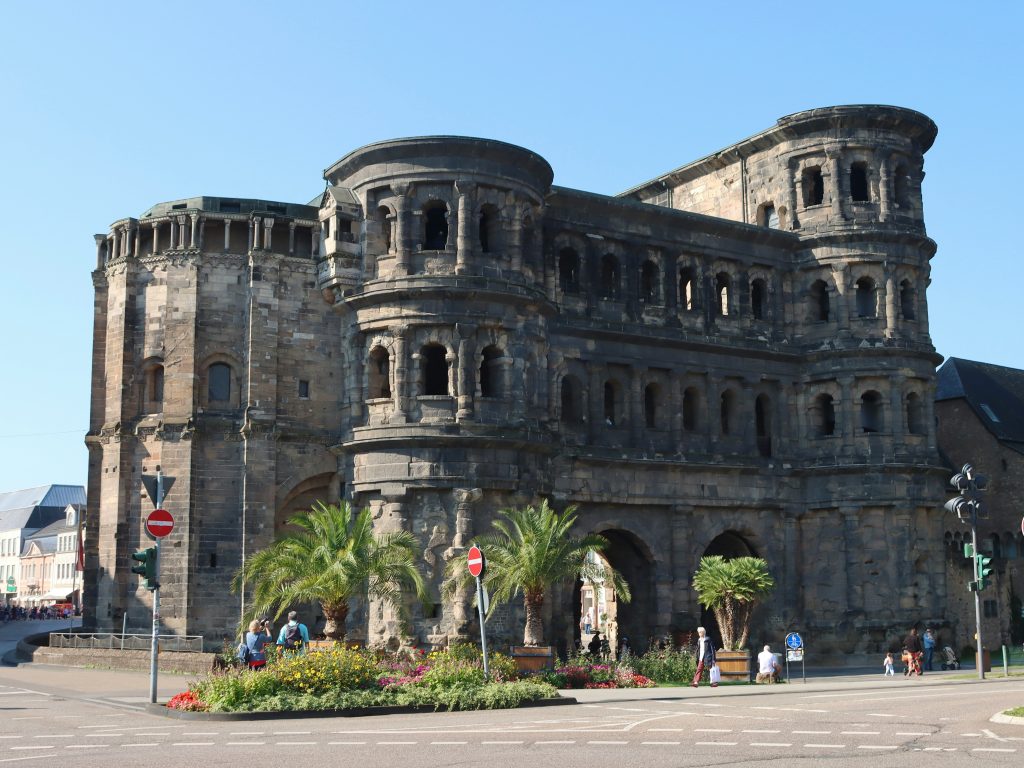
Trier is Germany’s oldest city and a practical starting point for the southern Mosel. Most visitors treat it as a detour, which undersells what it adds to a longer route.
The city holds the Porta Nigra, the best-preserved Roman city gate north of the Alps, along with Roman baths, an amphitheater, and the Karl Marx House for those with an interest in 19th-century history. The compact old town is easy to navigate on foot, and accommodation options range from budget guesthouses to larger hotels.
What Trier adds that smaller Mosel towns cannot is infrastructure. Rainy-day options exist here. Restaurants stay open later. Transport connections to Luxembourg and the broader rail network are straightforward.
The tradeoff is that Trier draws significant visitor numbers, particularly around its Roman sites. It is not a quiet stop. What it offers is a functional and historically rich entry point to the region.
This works best for first-time visitors to the southern Mosel, travelers arriving by train without a car, and anyone combining the Mosel with Luxembourg or the Eifel region.
Neumagen-Dhron: The Oldest Wine Village in Germany
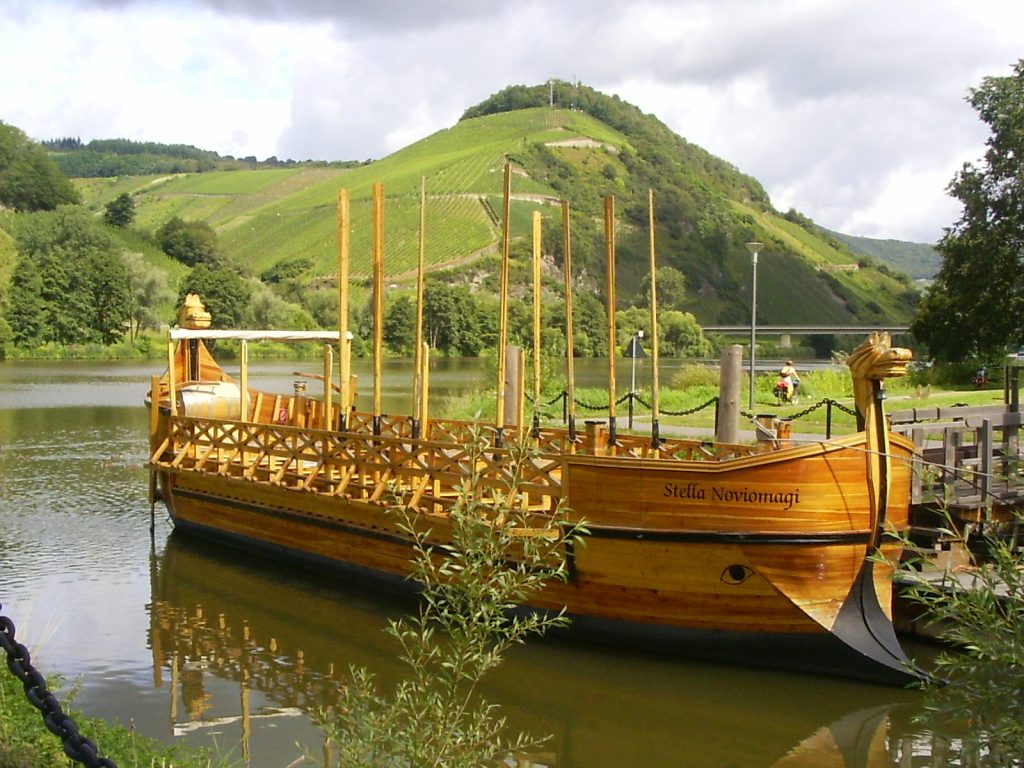
Neumagen-Dhron sits between Trier and Bernkastel-Kues and carries a historical claim that most visitors drive past without stopping. Roman wine ship reliefs were discovered here, and a replica of the most famous one sits at the riverbank. The original is held in the Rheinisches Landesmuseum in Trier.
The village is small and genuinely low in traffic. What there is to do is clear: walk the compact streets, find the Roman ship replica, and visit one of the local wineries that operate with little fanfare and no tour bus infrastructure.
The limitation is real. Neumagen-Dhron has very little in the way of restaurants or lodging options. Travelers looking for a place to eat dinner or spend the night will be disappointed. This is better treated as a planned stop on a driving or cycling route than as a base.
For history-focused travelers, the Roman connection here is more tangible than at most stops along the river. For wine buyers who want to try a tasting without a scripted experience, the small local producers here are worth the detour.
Traben-Trarbach: Art Nouveau Architecture and a Quieter Wine Scene
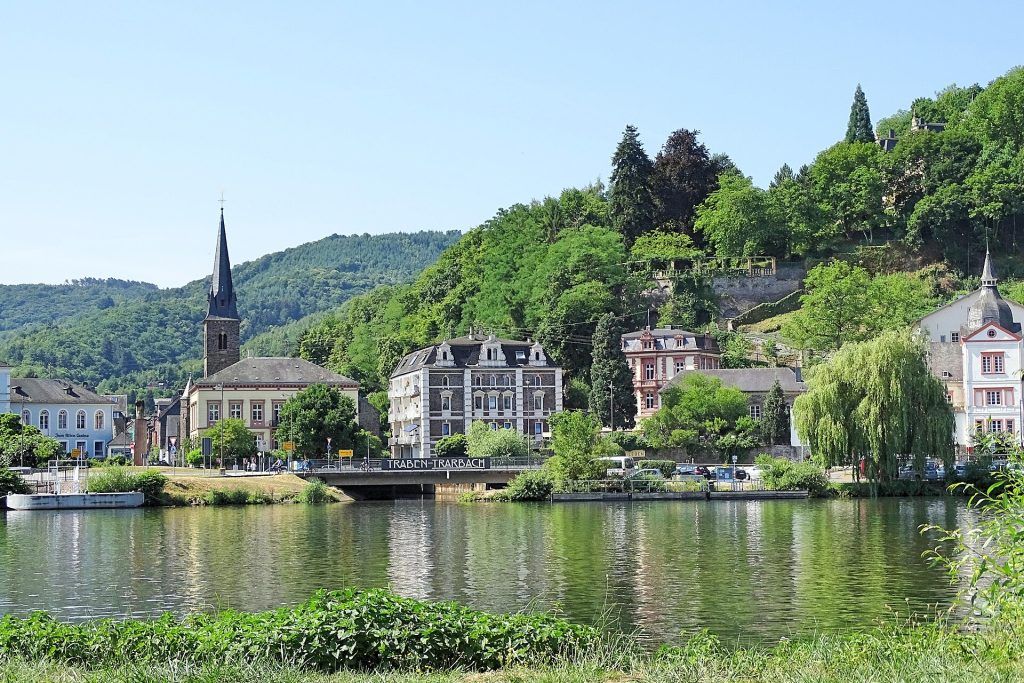
Traben-Trarbach is one of the more visually distinct towns on the Mosel in Germany. Most river towns share a familiar half-timbered look. Traben-Trarbach is different.
The town spans both banks of the river and is lined with Art Nouveau buildings, a legacy of the wine trade boom at the turn of the 20th century. When the region was producing wine at significant commercial scale, wealthy merchants built accordingly. Walking through the town center is a reliable way to understand what that era looked like in built form.
The architectural walking route is the main draw, and it holds up. Travelers who have spent time in Cochem or Bernkastel-Kues will notice immediately that the visual language here is different.
Beneath the town, a network of WWII-era bunkers adds an unexpected layer. Tours run from the local museum and offer a different kind of attraction for travelers who want more than scenery and wine tastings.
This works well for a half-day visit or a relaxed overnight. It tends to appeal more to travelers with an interest in architecture or local history than to those simply looking for a classic Mosel wine-village experience.
Beilstein: Small Scale, High Atmosphere
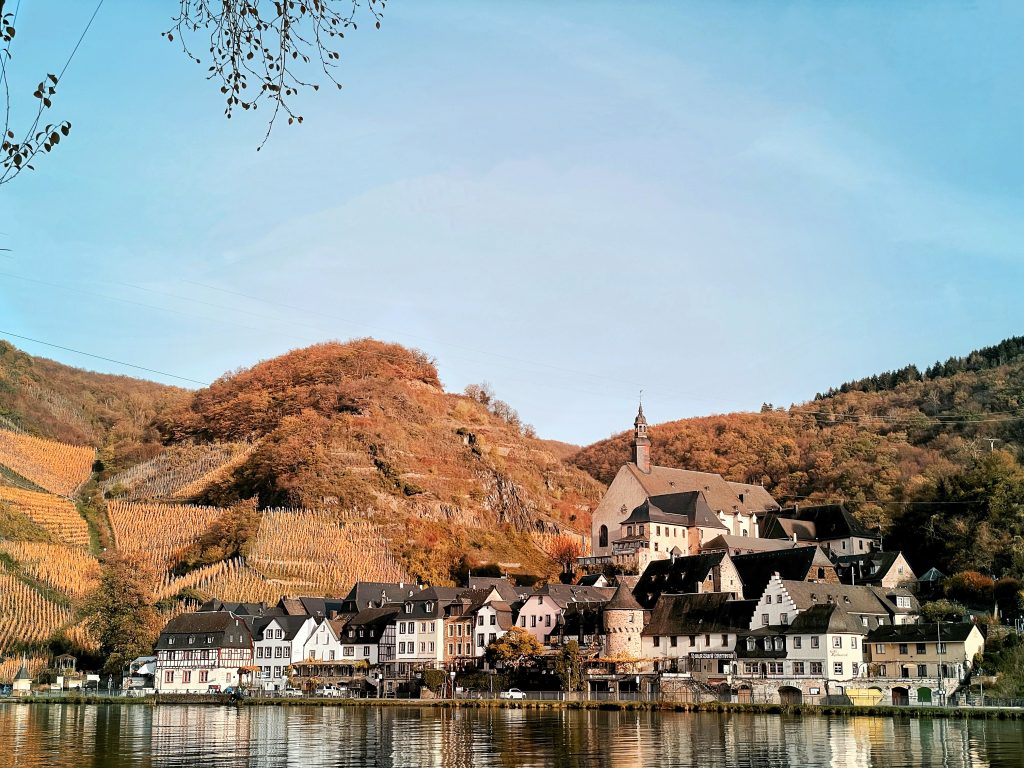
Beilstein is one of the most visually concentrated villages on the Mosel. The center is largely car-free, the scale is very small, and the ruins of Metternich Castle sit directly above. The whole place can be seen in under an hour.
That is not a criticism. Beilstein works because it does not try to be more than it is. A short walk, a glass of wine at one of the few taverns along the main lane, a look up at the castle ruin from the square below.
The castle ruin is accessible by cable car or a short hike. The views from the top over the Mosel loop below are among the better river viewpoints in the central stretch, and they see far fewer visitors than the overlooks near Cochem.
The main practical consideration is timing. Tour groups from Cochem arrive here on day trips, and the village fills quickly on weekend afternoons. Visiting midweek or early in the morning makes a noticeable difference.
This is a stop, not a base. Travelers looking to overnight in this area are better served by a nearby town with more services.
The Calmont Ridge: Best Viewpoint on the Mosel, Least Visited
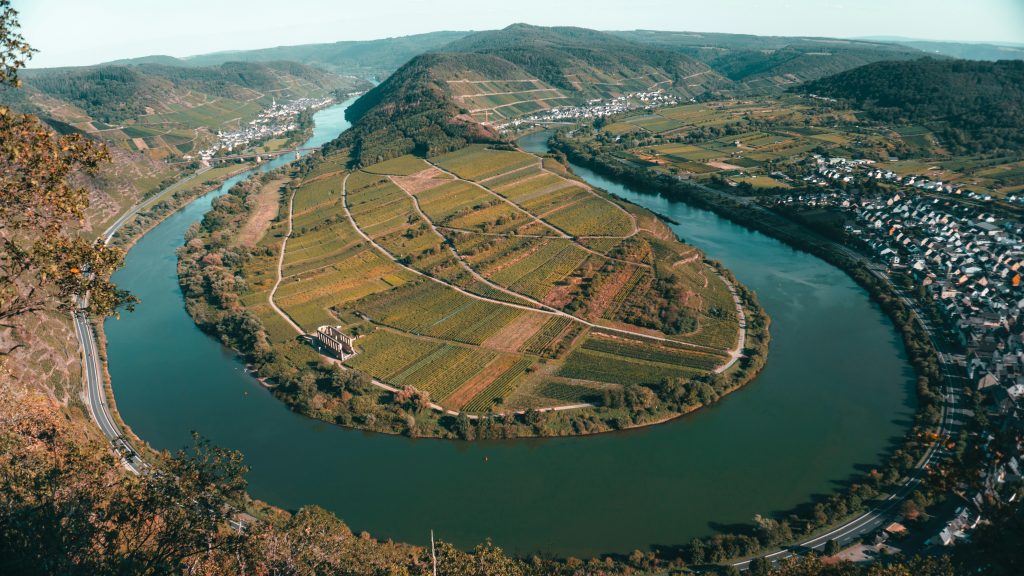
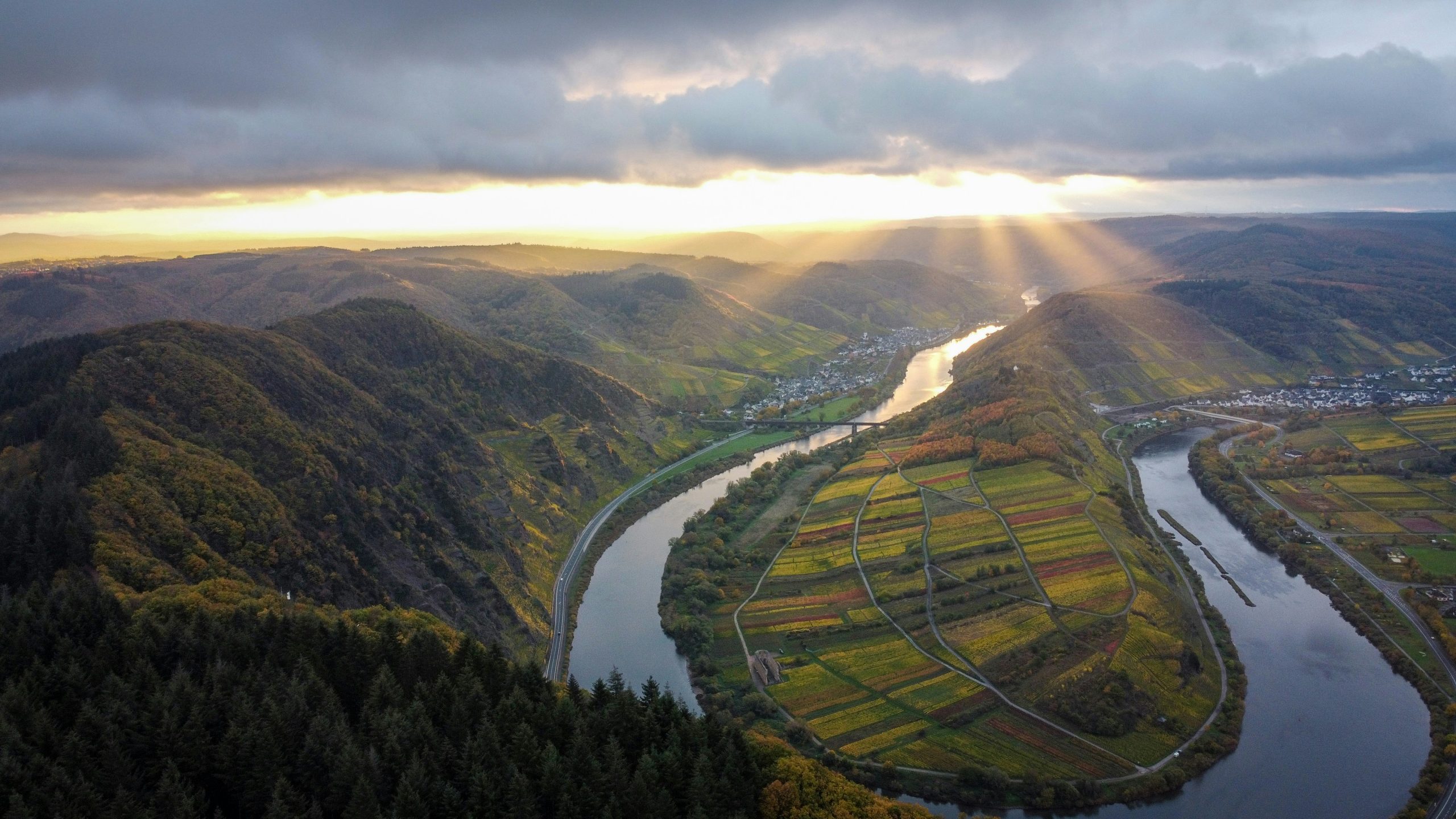
The Calmont Ridge, near the village of Bremm, is a geographic feature rather than a town. It holds the steepest vineyard in Europe, with slope gradients reaching 65 degrees on the outer edge of a sharp river bend.
The Mosel loop visible from the Calmont is among the most striking landscapes on the entire river. The near-vertical slate vineyard faces south, dropping almost directly to the water. There is no commercial infrastructure at the viewpoint itself.
Hiking options here split clearly by ability. The Calmont Klettersteig is a via ferrata route requiring equipment and experience. It is not appropriate for casual walkers. Shorter paths to the upper viewpoints above the Bremm loop are accessible to most reasonably fit hikers and require no special gear.
Practical notes for planning:
- Nearest parking is in Bremm or Ediger-Eller
- No food or facilities on the trail itself
- Late afternoon offers the best light for photography
- Allow two to three hours for the roundtrip to the main viewpoint
This is most relevant for travelers who have a car and at least half a day free. It does not work as a public transport stop.
Ediger-Eller: A Working Wine Village Without the Performance
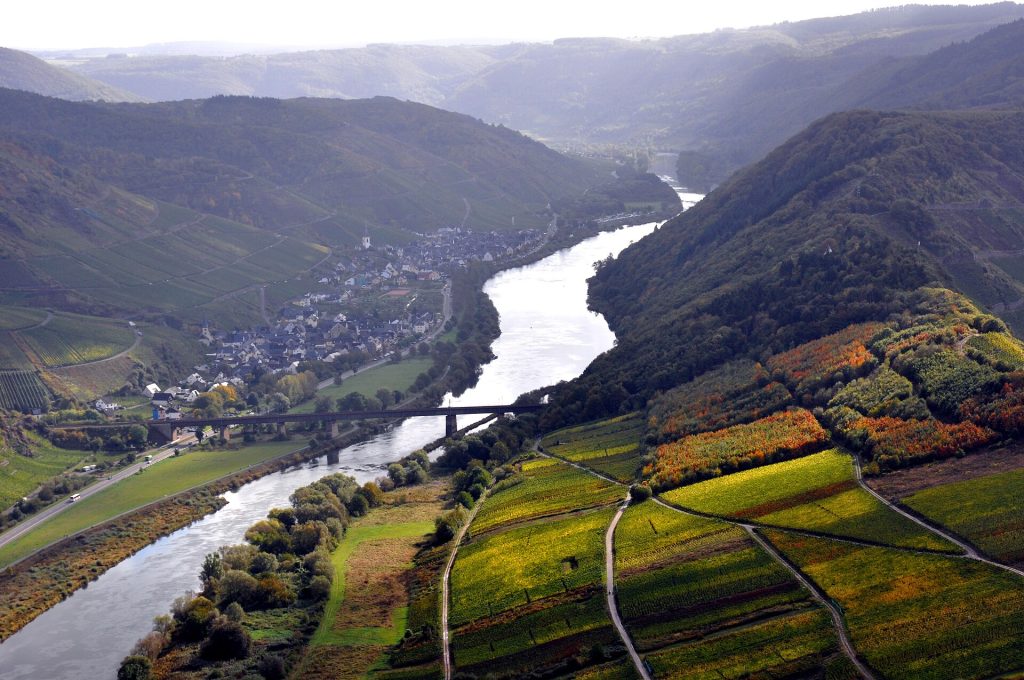
Ediger-Eller has not been styled for tourism. That is its main attribute.
The old town walls are intact. The half-timbered houses along the main lane are genuinely old rather than restored for visitor appeal. The small church has medieval frescoes that most guides do not mention. Local wineries sell directly from the property with no tasting-menu format or booking requirement.
What to look for: the old town gate on the southern approach, the “Lay” vineyard rising above the village, and the low-key producers along the main street whose wines rarely appear in English-language travel media.
The tone here is quiet in a way that will divide travelers. Those looking for activity, open restaurants in the evening, or any kind of evening scene will find very little. Those looking for a place to slow down, buy wine directly from a producer, and walk the Moselsteig trail the next morning will find it exactly right.
Ediger-Eller works well as an overnight stop for wine buyers and hikers using the Moselsteig long-distance trail. It pairs naturally with a visit to the Calmont Ridge, which is accessible on foot or by car from here.
Alken and Thurant Castle: The Mosel’s Overlooked Medieval Fortress
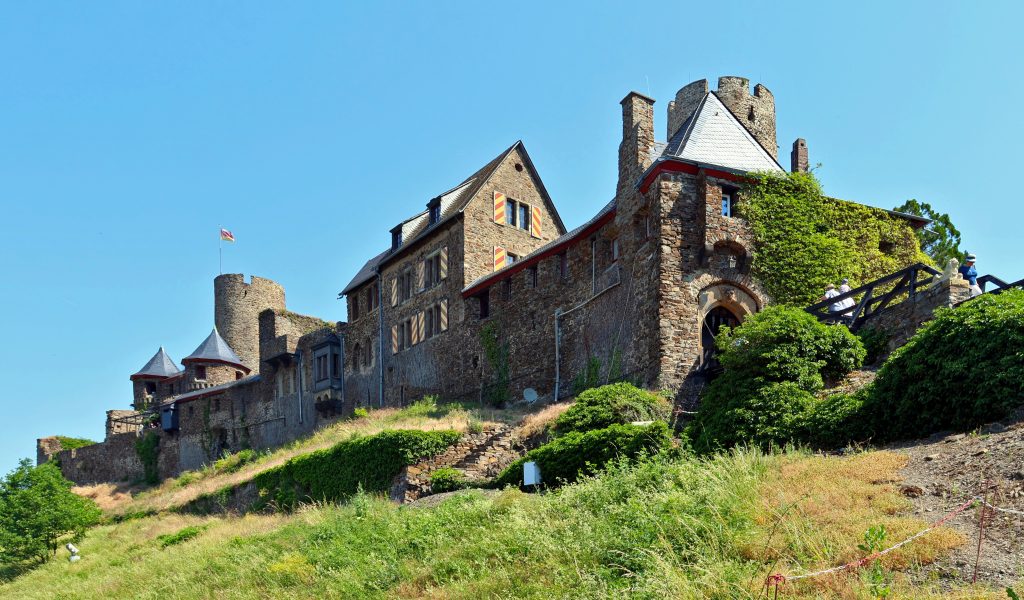
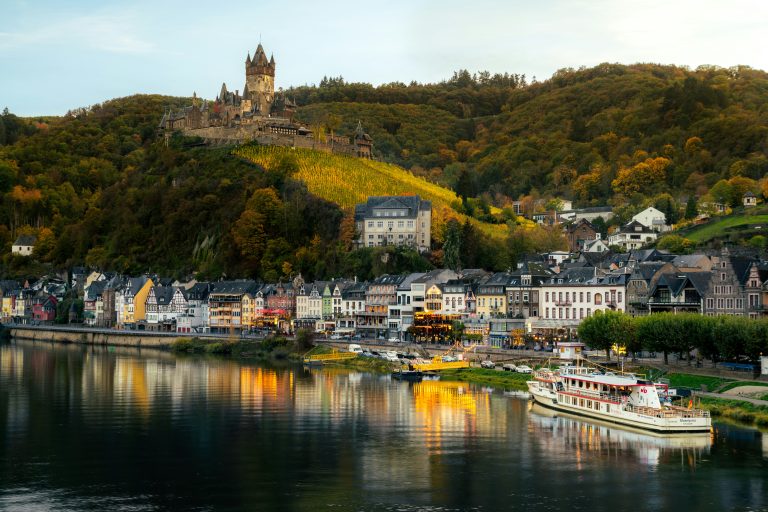
Alken sits in the lower Mosel, north of Cochem, in a section of the river that most itineraries skip in favor of a direct drive to Koblenz.
Above the village stands Thurant Castle, one of the few medieval castles on the Mosel that remained structurally intact through the centuries. Most Mosel castles are shells. Thurant is not. The castle is privately owned and open to visitors, with a modest admission fee.
Access is straightforward: a short, steep walk from the village center. The interior is more complete than what travelers find at better-known Mosel fortresses. The view from the walls over the lower Mosel valley is broad and relatively undisturbed by development.
Alken itself is a small village with limited services. There is little reason to stay overnight here unless accommodation has been specifically arranged.
The comparison that matters for planning: Thurant Castle sees a fraction of the visitors that Cochem’s Reichsburg draws on a typical summer day. The experience is more self-directed, less managed, and for many travelers, more satisfying as a result. Travelers who want a castle without the organized crowd will find Alken worth the deliberate stop.
Planning a Mosel Route That Actually Works
Getting around the Mosel in Germany requires a decision about transport early in the planning process.
Driving is the most flexible option and the only realistic one for reaching places like the Calmont Ridge or Ediger-Eller on a tight schedule. The river road (B53 and connecting routes) is well maintained and easy to follow.
Cycling is a strong alternative. The Mosel Radweg runs the full length of the German Mosel and is well-signposted. The terrain is mostly flat along the valley floor, though side routes into the hills involve significant climbing. Most stops in this guide are accessible by bike.
Train service exists along parts of the route but does not reach all towns. Beilstein, Ediger-Eller, and Alken are not served directly by rail. Travelers without a car who want to reach these stops will need to combine train and bus or rent bikes.
Timing is worth thinking through carefully.
May through June and September through October offer the best conditions: good weather, open wineries, and manageable visitor numbers. August is the busiest month and also the hottest. Winter along the Mosel is quiet but many small wineries and guesthouses close from November through March.
Overnight strategy matters more than most guides acknowledge. The northern and southern Mosel have noticeably different characters. Staying in two or three different towns across a multi-day route gives a more complete picture than using a single base.
The wine calendar is a useful planning tool. Many small villages hold harvest festivals in September and October. These events are local in character, rarely promoted in English-language travel media, and tend to draw regional visitors rather than international tour groups.
Beyond the Famous Bend: Why the Mosel Rewards Slower Travel
The Mosel works best for travelers willing to slow down, park the car, and spend an hour in places that do not dominate every itinerary. That is where the region starts to feel less like a scenic corridor and more like a sequence of lived-in wine towns with distinct character. Adding two or three of these stops to a Mosel route is usually enough to make the trip feel noticeably richer and less predictable.