Historic Towns in Germany Worth Visiting: Old Town Squares and Castle Views
Germany has some of the best-preserved historic towns in Europe. Travelers looking for medieval streets, half-timbered houses, castle views, and intact town walls will find dozens of options across the country. The most notable historic towns in Germany include Rothenburg ob der Tauber, Bamberg, Quedlinburg, Wernigerode, Regensburg, Cochem, and Dinkelsbühl. Each offers a different version of the classic German old town: some are UNESCO-protected cities with centuries of layered architecture, while others are smaller walled towns where the historic center remains largely unchanged.
This guide highlights several of the most beautiful historic towns in Germany worth visiting, explains what makes each one distinctive, and offers practical planning advice. Some towns are famous stops on major routes like the Romantic Road, while others remain quieter destinations that reward travelers willing to venture slightly off the main tourist corridor.
Below you’ll find a quick comparison table followed by detailed sections on each town, including what to see, why the town stands out, and how easy it is to reach by train or regional rail.
Historic Towns in Germany at a Glance
| Town | Region | Known For | Why Visit |
|---|---|---|---|
| Rothenburg ob der Tauber | Bavaria | Intact medieval walls, Christmas market | Best-preserved walled town on the Romantic Road |
| Bamberg | Bavaria | UNESCO status, Romanesque cathedral | Old town built across seven hills with no WWII damage |
| Quedlinburg | Saxony-Anhalt | 1,300+ half-timbered houses | One of the densest collections of medieval architecture in Europe |
| Wernigerode | Saxony-Anhalt | Colorful facades, Harz castle | Compact, walkable, and less visited than Bavarian alternatives |
| Regensburg | Bavaria | Roman ruins, medieval merchant towers | A functioning city with a genuinely ancient street plan |
| Cochem | Rhineland-Palatinate | Reichsburg castle, Moselle vineyards | Hilltop castle views with river valley context |
| Dinkelsbühl | Bavaria | Walled town, Romantic Road | Quieter and less commercial than Rothenburg |
Rothenburg ob der Tauber: Germany’s Most Famous Historic Town
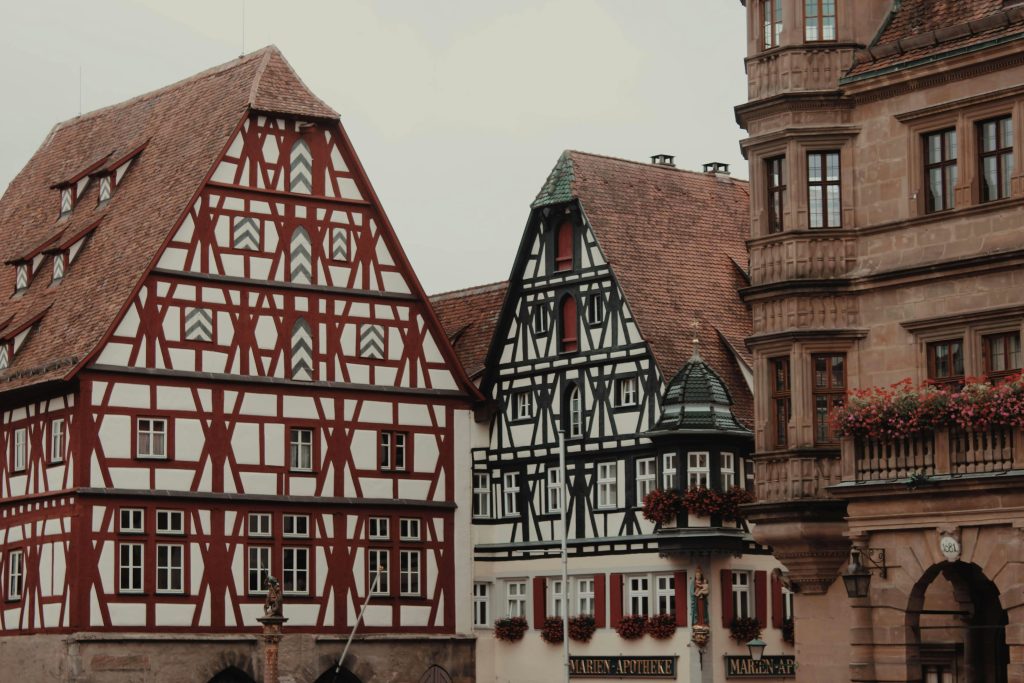
Rothenburg ob der Tauber earns its reputation on a specific basis: the town walls are almost entirely intact, and the medieval street grid has survived largely unchanged since the 15th century. Few historic towns in Germany can make a comparable claim.
The Marktplatz (market square) anchors the old town, flanked by the Rathaus (town hall) with its Renaissance facade and accessible tower. The Plönlein, a forked junction framed by two towers, is the most-photographed spot in town. Both are worth seeing, though neither requires extended time.
Rothenburg is crowded. Summer brings tour buses by the hour, and midday visits during peak season mean navigating large groups through narrow streets. Early morning and late evening visits read as a different place entirely.
The main drawback for independent travelers is the commercial density. Souvenir shops and Christmas-themed stores now occupy much of the old town center. The historic fabric remains, but the visitor experience is heavily shaped by tourism infrastructure.
Rothenburg suits first-time visitors to Germany particularly well. Travelers who have already seen it once may find Dinkelsbühl or Nördlingen more rewarding on a return trip.
Practical note: Rothenburg ob der Tauber sits on the Romantic Road. It is accessible by train via a connection at Steinach (bei Rothenburg).
Bamberg: A UNESCO Old Town Built on Seven Hills
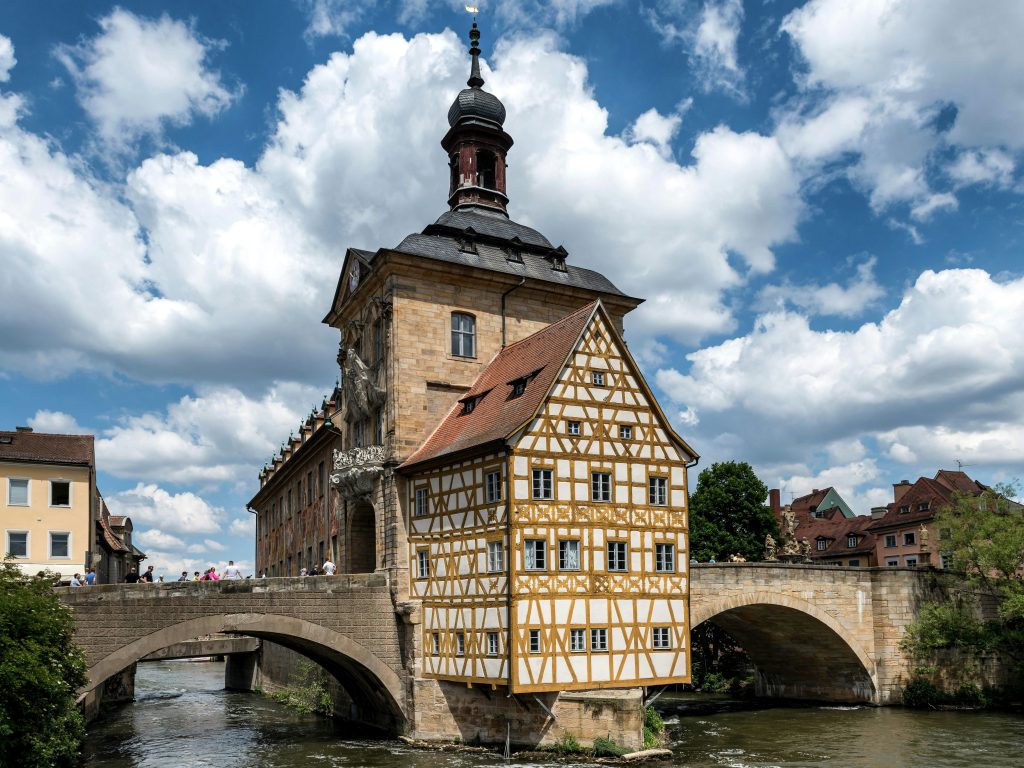
What makes Bamberg stand apart from other historic towns in Germany is the completeness of its preservation. The entire old town holds UNESCO World Heritage status, and Bamberg sustained no significant bomb damage during World War II. The urban fabric reflects nearly uninterrupted centuries of construction.
The Bamberger Dom (Imperial Cathedral) is the most significant landmark, a four-towered Romanesque cathedral containing the tomb of Emperor Heinrich II. The Altes Rathaus sits on an artificial island in the Regnitz River, accessible by two bridges. The Klein-Venedig (Little Venice) fishing quarter lines the riverbank with a row of half-timbered houses that backs directly onto the water.
Bamberg also functions as a working city. The town has more breweries per capita than almost anywhere else in Germany, and the local Rauchbier (smoked beer) is specific to the region. This gives Bamberg a lived-in quality that purely tourist-facing towns often lack.
The terrain is genuinely hilly. Visitors with mobility considerations should plan accordingly, particularly for access to the cathedral quarter and the rose garden on the hill above.
Bamberg works best for travelers who want historic depth alongside everyday city character. It is less suited to those seeking a tightly curated, walkable old town with a single clear focal point.
Quedlinburg: Half-Timbered Houses and Medieval Streets

Quedlinburg holds over 1,300 half-timbered buildings spanning roughly six centuries of construction. That concentration makes it one of the most architecturally layered small towns in Germany, and among the most undervisited relative to its significance.
The Stiftskirche St. Servatius (collegiate church) sits on the castle hill above the town. The church dates from the 11th century and contains the burial site of King Heinrich I. Below the hill, the Neustadt district holds the most concentrated sections of timber-frame architecture, with winding streets that have remained largely intact since the medieval period.
Quedlinburg sits in the eastern Harz foothills, which explains its lower international profile. Fewer international tourists means lower prices, less competition for accommodation, and a noticeably more local atmosphere than comparable Bavarian towns.
The main limitation is practical: Quedlinburg is not on a major rail corridor. Reaching it typically involves a regional connection and some additional travel time from larger cities.
This town works best for travelers interested in architectural history, slow travel, or anyone building an itinerary around the Harz region. It is less suited to those prioritizing convenience or proximity to major transport hubs.
Wernigerode: A Colorful Harz Mountain Town
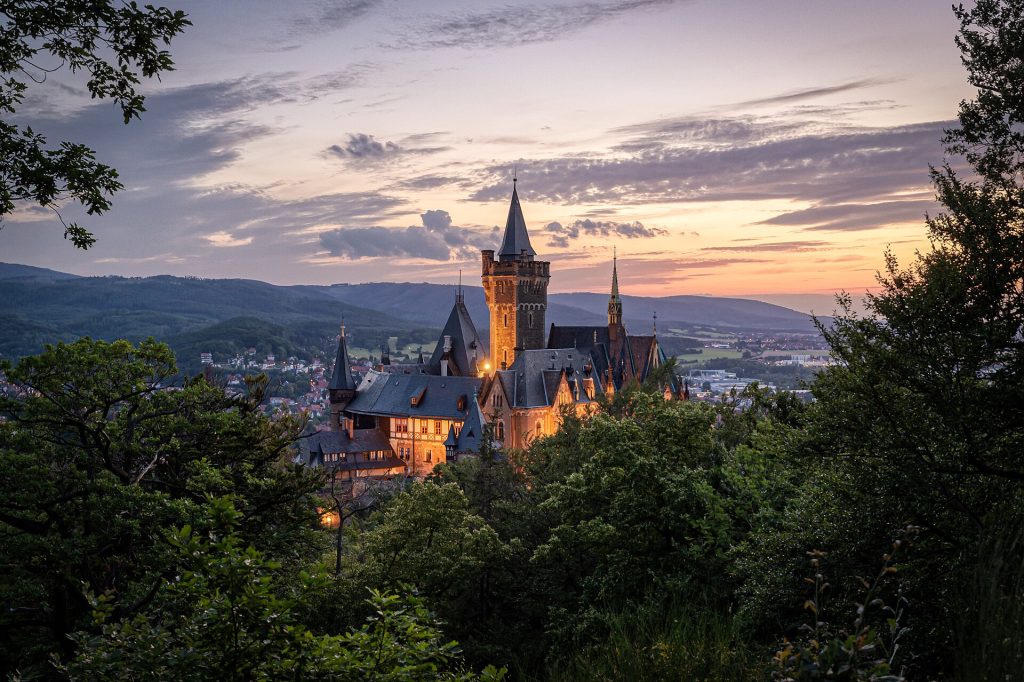
Wernigerode is distinct among Harz towns for two reasons. First, the painted half-timbered facades give the old town an unusually vivid street-level appearance. Second, Wernigerode Castle sits directly above the town on a forested hillside, providing a clear vertical orientation that most flat-center towns cannot match.
The Marktplatz is compact and easy to cover on foot. The Rathaus, which fronts the square, is one of the more distinctive town halls in northern Germany, with a late Gothic facade that has become the visual shorthand for the town.
The historic narrow-gauge Harzer Schmalspurbahn (Harz Railway) still operates through the region. It connects Wernigerode to Quedlinburg and runs up to the Brocken summit, making a two-town stop or a mountain excursion a practical combination.
Wernigerode works well as part of a broader Harz itinerary rather than as a standalone destination. Travelers coming only from major western German cities may find the journey disproportionate for a single stop.
Regensburg: A Roman-Era City with a Preserved Old Town
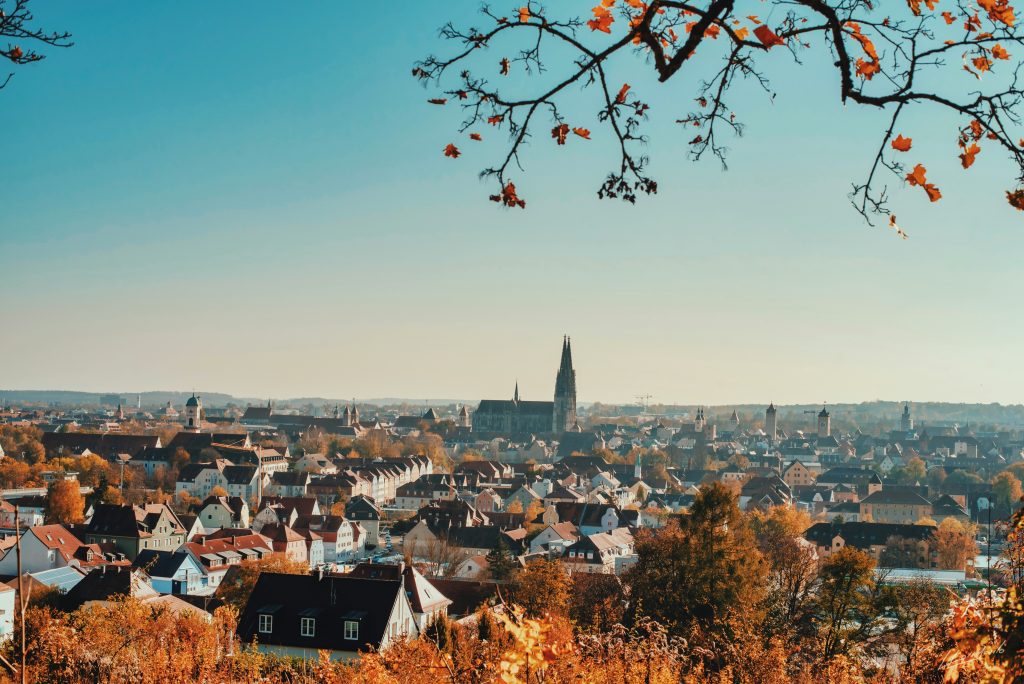
Regensburg carries more historical range than most German cities its size. It began as Castra Regina, a Roman military camp established in 179 AD. It became a medieval imperial city and one of the most important early trading centers in the German-speaking world. Those layers are still readable in the surviving structures and the street plan.
The Steinerne Brücke (Stone Bridge) is one of the oldest surviving medieval bridges in Germany, completed in the 12th century. The Dom St. Peter is a Gothic cathedral whose twin towers are visible across much of the old town. The cluster of medieval merchant towers in the center gives Regensburg’s skyline a character more common in northern Italy than in Germany.
Regensburg functions as a real mid-sized city. It has a university population, active commercial districts, and a working economy that extends beyond tourism. This means the old town feels less preserved-for-display than Rothenburg, which is either an advantage or a drawback depending on what a traveler is looking for.
This town suits travelers who want historic depth with real-city context. It is less suited to those who prefer a compact, clearly defined pedestrian old town with limited modern intrusion.
Practical note: Direct trains from Munich reach Regensburg in approximately 90 minutes. It makes a reasonable day trip or overnight stop on a Bavarian itinerary.
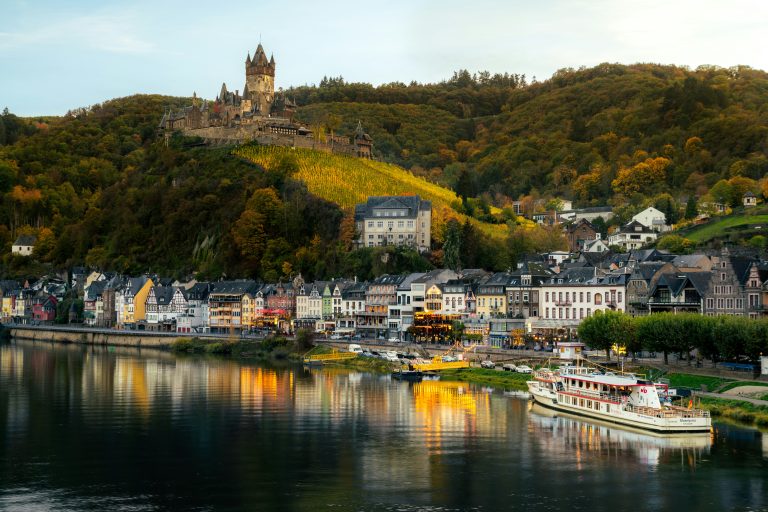
Cochem: A Moselle Valley Town with a Hilltop Castle
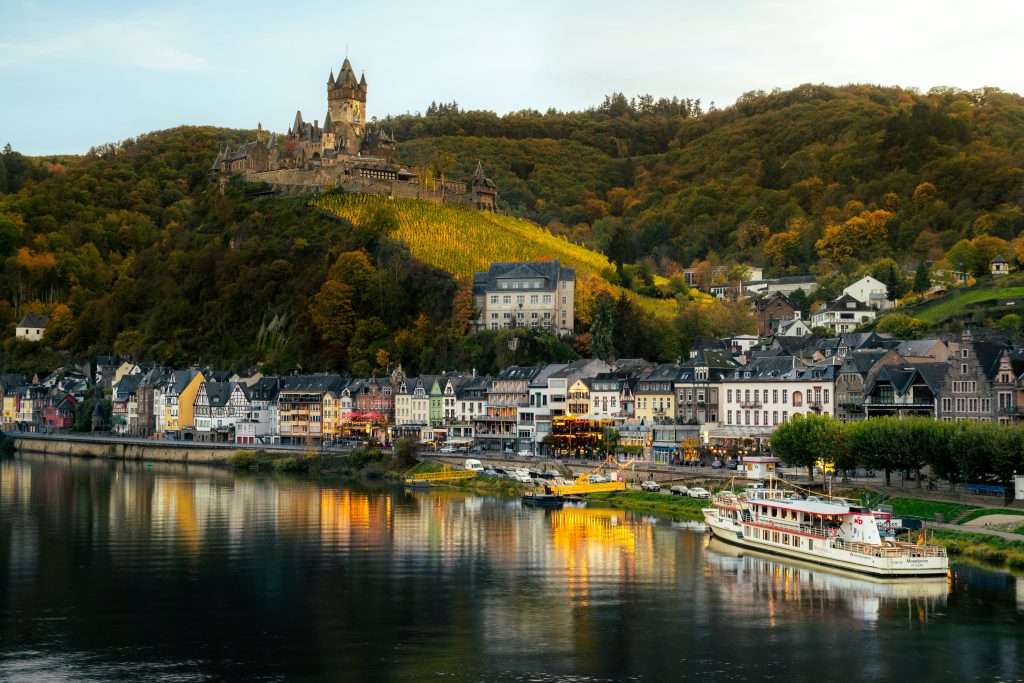
Reichsburg Cochem sits on a steep, vineyard-covered hill directly above the old town and the Moselle River. The combination of castle, river, and hillside town is one of the more immediately striking in western Germany. Visitors approaching by train get the full effect as the valley narrows and the castle appears above the roofline.
One important clarification: the current Reichsburg Cochem is largely a 19th-century reconstruction, not a fully medieval original. The original fortress was destroyed in 1689. Visitors who calibrate expectations accordingly will find it an interesting example of Historicist-era castle restoration. Those expecting authentic medieval interiors may be disappointed.
The old town itself is compact. The Marktplatz is small, and the surrounding streets have a characteristic Moselle valley character, with wine taverns and narrow lanes running toward the river.
Cochem sits on the Koblenz-Trier rail line and is easy to incorporate into a Moselle Valley itinerary. Wine tourism is a significant draw in the area, and that shapes the visitor profile noticeably, particularly in late summer and autumn.
Dinkelsbühl: One of Germany’s Best-Preserved Walled Towns
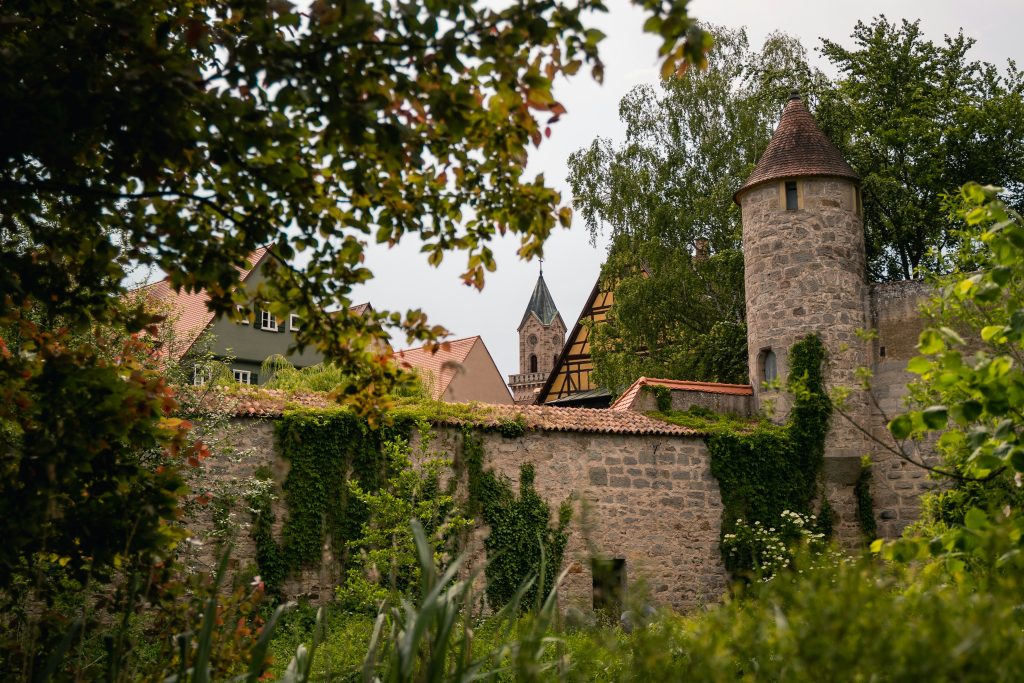
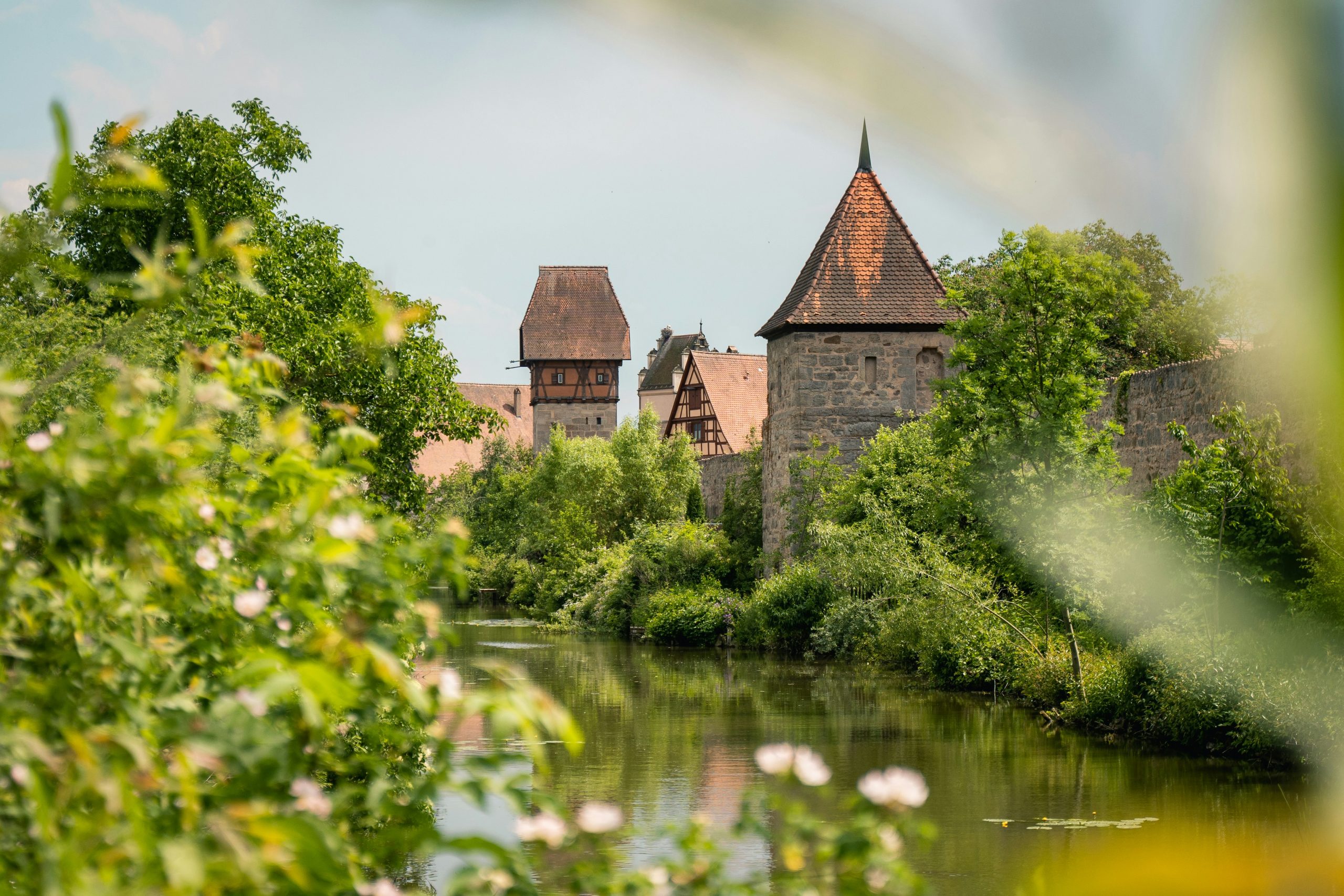
Dinkelsbühl is the clearest alternative to Rothenburg ob der Tauber on the Romantic Road. It is less famous, less crowded, and, for many travelers, a more satisfying experience precisely because the historic streets are not filtered through layers of souvenir commerce.
The town walls are almost entirely intact, with towers and gatehouses that can be walked in under an hour. The circuit gives a clear sense of the town’s original scale and position.
St. Georg Minster, a late Gothic church, dominates the market square. The Weinmarkt is the most photogenic part of the old town, with a cluster of well-preserved buildings around a central fountain. Both are short walks from the main gate.
The primary drawback is accessibility. Dinkelsbühl has no direct train connection. Reaching the town requires either a car or a specific routing via the Romantic Road Bus service. This makes it impractical for rail-only travelers unless they plan carefully around the bus schedule.
Dinkelsbühl is the right choice for travelers who want walled-town atmosphere without the crowds. It is not the right choice for anyone relying entirely on Deutsche Bahn.
Planning a Trip Around Historic German Towns
Most towns on this list fall into practical regional groupings. The Bavarian Romantic Road cluster includes Rothenburg ob der Tauber, Dinkelsbühl, and Nördlingen. The Harz cluster covers Quedlinburg and Wernigerode. The river valley towns sit separately: Cochem on the Moselle and Regensburg on the Danube.
A focused itinerary covering four to five stops is achievable in seven to ten days. Attempting to cover all of them in one trip tends to dilute the experience. Historic town fatigue is real, particularly when the architectural character is similar across stops.
The tradeoff between popularity and atmosphere is consistent across this list. The most-visited towns have the most infrastructure, the most English-language signage, and the easiest logistics. Lesser-known towns reward slower, more independent travel but require more planning.
Spring (April-May) and autumn (September-October) offer the best balance across all these destinations. Crowds are manageable, most attractions are open, and the light is generally better for navigating old town streets than in midsummer.