Cochem Castle: A Scenic Stop in the Mosel Valley
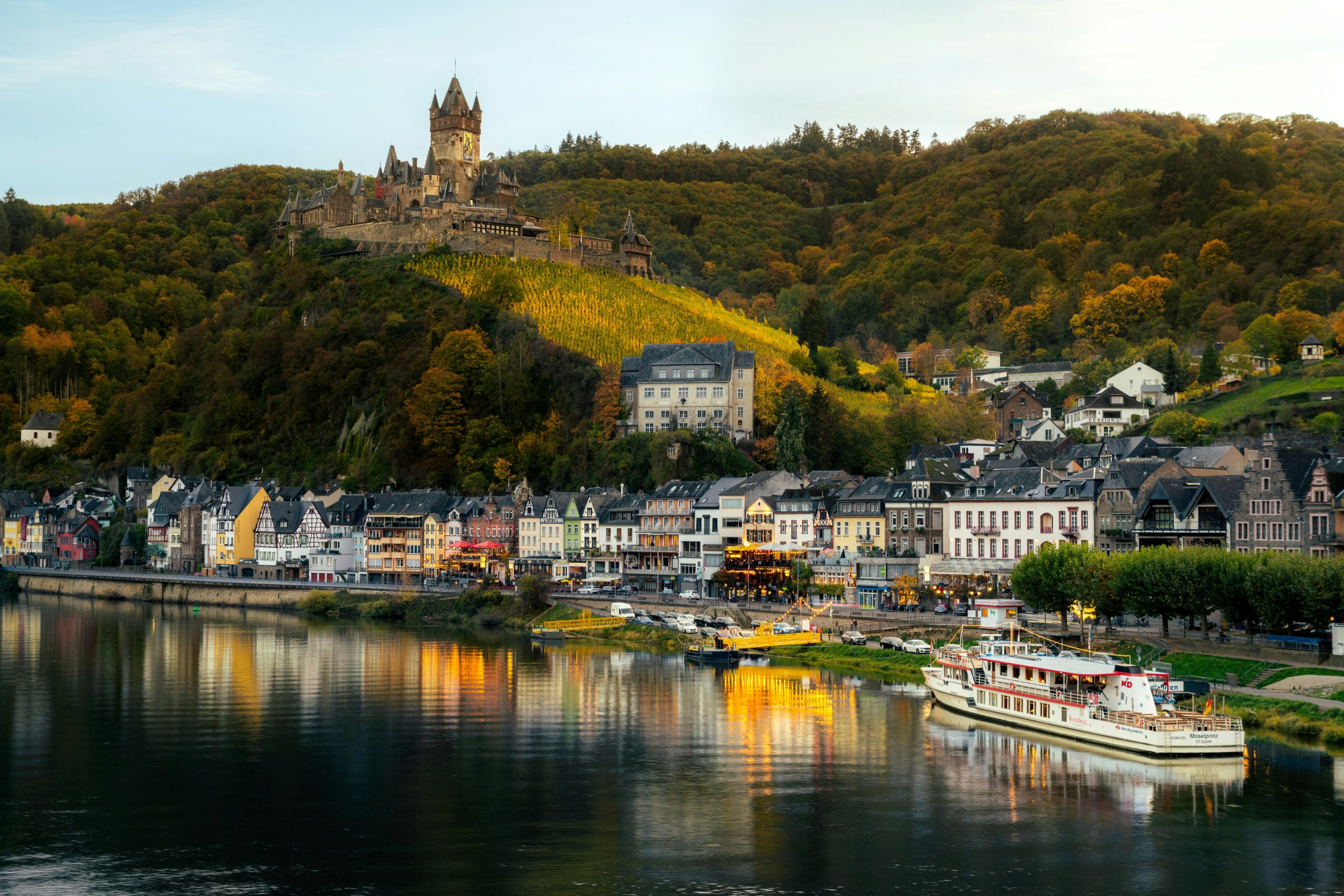
Cochem Castle, known in German as Reichsburg Cochem, is one of the most recognizable hilltop landmarks along the Mosel River. It sits above the town of Cochem in Rhineland-Palatinate, visible from the riverbank and the surrounding valley roads.
The castle draws visitors for its setting and visual profile, not for deep historical complexity. Travelers who arrive expecting a major medieval archive or a museum-scale interior will likely find it modest. Those who come for the combination of river views, a well-preserved old town, and a compact guided tour tend to find it a worthwhile stop.
Cochem Castle works best as part of a broader Mosel Valley itinerary. It is a half-day destination, not a full-day one.
What Makes Cochem Castle Worth Visiting
Reichsburg Cochem earns its place on Mosel itineraries primarily because of where it stands, not what it contains.
The castle rises steeply above Cochem’s old town, offering a visual anchor to the river bend and vineyard slopes that define this stretch of the Mosel. From below, the silhouette is striking. From the castle terrace, the valley view is the main reward.
The interior is accessible only through a guided tour, which covers a manageable number of rooms staged to reflect 19th-century aristocratic taste. It is atmospheric without being extensive.
For travelers moving through the Mosel Valley on a driving or cycling route, Cochem Castle offers strong visual impact relative to the time and effort required. It is not the most historically rich castle in Germany, but it is one of the more accessible.
The Hilltop Setting and What It Actually Looks Like
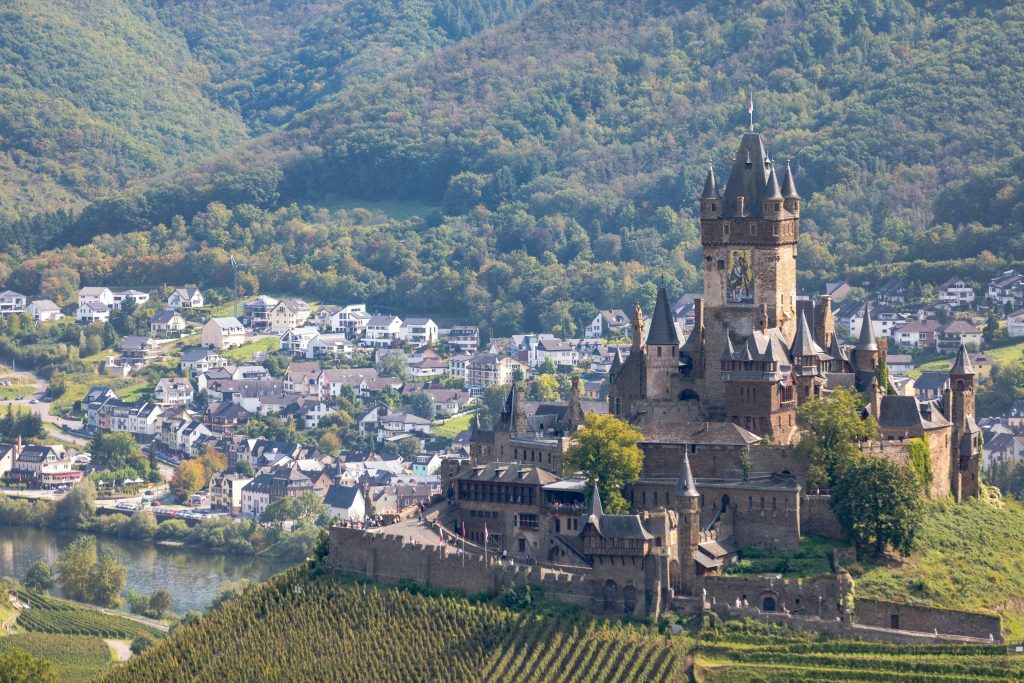
Cochem Castle occupies a ridge directly above the town, rising roughly 100 meters over the rooftops. The Mosel bends around this section of the valley, and the castle’s position means it appears prominently from the river, from the opposite bank, and from boats passing through.
The exterior silhouette is often considered more impressive than the interior. Travelers on river cruises frequently photograph the castle from the water before ever visiting on foot.
The current structure reflects a neo-Gothic reconstruction completed in the late 19th century. After the original medieval fortress was destroyed in 1689 during the War of the Grand Alliance, the ruin sat largely abandoned for nearly two centuries. A wealthy Berlin merchant purchased and rebuilt it between 1868 and 1877. The result is a castle that photographs well, with towers, battlements, and a profile that reads as a fairytale fortress. It differs noticeably from older, less restored medieval structures where the wear of centuries is more evident.
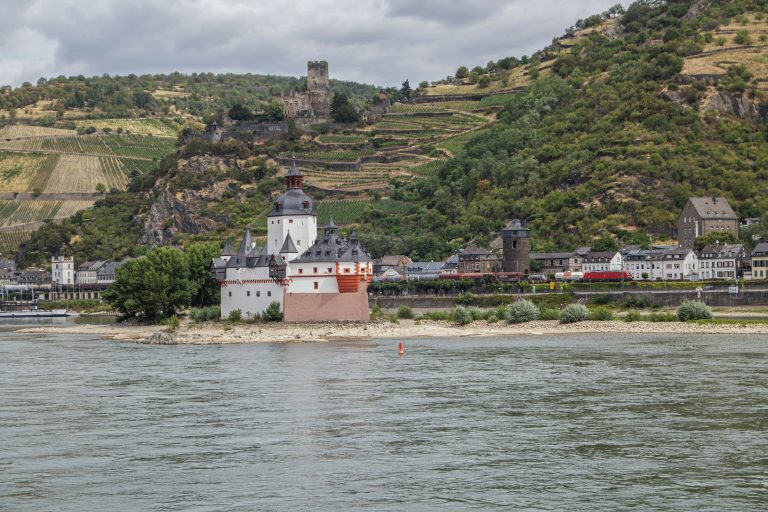
Vineyard terraces line the slopes below and around the castle. These are part of the approach on foot and contribute to the overall character of the setting. The view from the castle terrace, looking out over the river and the valley, is the experience most visitors find memorable.
The Walk Up: Town to Castle

Getting from Cochem’s town center to the castle entrance takes roughly 15 to 20 minutes on foot. The route passes through the old town, where half-timbered buildings, narrow lanes, and wine-focused shop fronts are a consistent feature. The walk itself is part of what makes the visit feel worthwhile.
The climb is genuine. The path becomes steep in places, and sections involve cobblestones. Visitors with mobility limitations should note that the route is not well-suited without vehicle access. A shuttle or taxi service is available for those who prefer not to walk, and there is a road that reaches the castle area by car for drop-off purposes.
Comfortable footwear is a practical requirement. The walk down is easier than the ascent but still requires steady footing on uneven surfaces.
For most physically able visitors, the walk is straightforward. It is not a hike. But it is also not a flat stroll.
Inside the Castle: Guided Tours and What to Expect
The interior of Cochem Castle is only accessible through a guided tour. Independent exploration is not permitted. Tours run in German and English, with English-language options more frequent during the main tourist season from May through October.
A typical tour lasts around 45 to 60 minutes and covers roughly a dozen rooms. The rooms are staged with period furniture, decorative armor, painted ceilings, and furnishings that reflect the 19th-century tastes of the family who rebuilt the castle. This is not a collection of original medieval artifacts. The atmosphere is that of a restored aristocratic residence, not an archaeological site.
Visitors with a casual interest in castle interiors will find the tour engaging and appropriately paced. Those seeking deeper historical interpretation, original medieval fabric, or a more scholarly treatment of the site’s pre-destruction history may find the experience underwhelming.
The tour is the only way to see the interior, so travelers who skip it are limited to the courtyard, terrace, and exterior views.
Pre-booking is advisable during high season, particularly on summer weekends. Tours can fill up, and timing a visit around an available English tour requires some advance planning. The castle’s official website is the most reliable source for current schedules and booking options.
How Long to Spend at Cochem Castle
A realistic visit breaks down as follows:
- Walk up from town: 15 to 20 minutes
- Guided tour: 45 to 60 minutes
- Time on the terrace or in the courtyard: 20 to 30 minutes
- Walk back down: 15 to 20 minutes
That puts the total castle visit at approximately 2 to 2.5 hours, not counting time spent in the town itself.
Most travelers combine the castle with at least a short walk along the Mosel riverfront, lunch in the old town, or a wine tasting at one of the local producers. Adding those elements makes a half-day the natural planning unit.
Travelers passing through on a driving or cycling route along the Mosel can fit a visit comfortably without committing a full day. Those arriving by train from Koblenz and spending the afternoon before returning have a workable structure.
Staying overnight in Cochem is an option for those who want a more relaxed pace, though the castle itself does not require it.
Cochem in the Mosel Valley Context
Cochem Castle is one of several notable castle stops along the Mosel, but it is neither the most historically complex nor the most secluded.
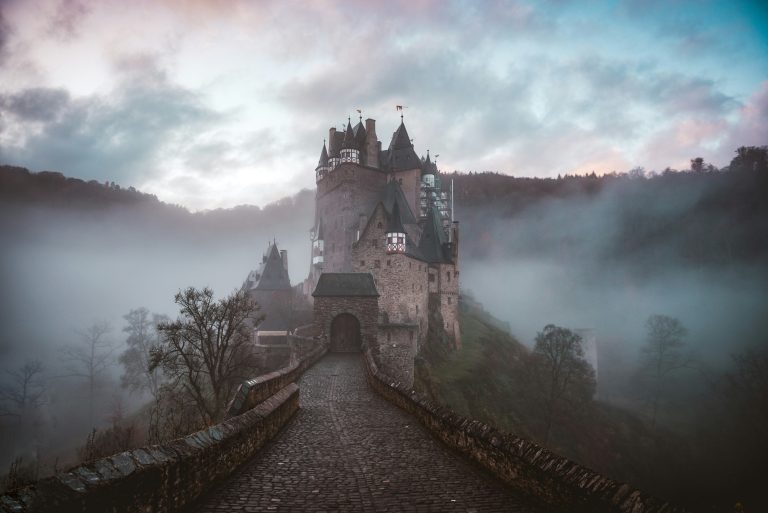
The strongest comparison is Burg Eltz, located in a forested side valley roughly 30 to 40 minutes by car from Cochem. Burg Eltz is more remote, more authentically preserved, and widely considered the more rewarding interior experience. It has remained in the same family for over 800 years and was never destroyed or significantly rebuilt. For travelers with a serious interest in castle interiors and medieval architecture, Burg Eltz is the more compelling destination. It also requires more planning and a longer time commitment.
The Grevenburg Castle ruins in Traben-Trarbach, located further down the Mosel, offers a different kind of appeal. It is largely in ruin, with less formal tourism infrastructure but a stronger archaeological character. It suits travelers interested in the unrestored remains of a fortress rather than a dressed interior.
Marksburg, near Koblenz, is another intact castle worth noting for those combining a Rhine and Mosel itinerary. It is notable as one of the few medieval Rhine-area castles never destroyed, and it offers a more historically layered interior than Cochem.
The practical framing for planning purposes: Cochem works well for travelers who want an accessible, well-maintained castle stop on the main Mosel road without committing to a half-day excursion off-route. Burg Eltz rewards those willing to put in more effort.
Combining Cochem with Burg Eltz: Can It Work in One Day?
Yes, Cochem Castle and Burg Eltz can be visited in a single day. It requires an early start and efficient pacing.
Cochem works better as the first stop. The logistics are simpler: parking is available in town, and morning tours at Cochem tend to be less crowded. Arriving at Burg Eltz in the afternoon is feasible, though the afternoon crowds during summer can be significant.
The driving distance between the two is roughly 30 to 40 minutes, depending on the route taken.
The key constraint is Burg Eltz. Tour slots there fill up quickly, especially between June and August. Advance booking for Burg Eltz is strongly recommended when planning this combination. Arriving without a reservation risks waiting or missing the interior tour entirely.
This combination suits travelers with a car, a genuine interest in castles, and a schedule that allows for a full day out. It is not well-suited to families with young children who may find two castle visits in one day too demanding. Travelers on a tight itinerary with multiple stops along the Mosel will likely find it too compressed.
Practical Information: Getting There, Timing, and Entry
Getting there: Cochem is reachable by train from Koblenz on the Mosel Valley line, with a journey time of approximately one hour. By car, the B49 follows the river and provides direct access. Driving allows greater flexibility, particularly for travelers combining Cochem with Burg Eltz or continuing south toward Traben-Trarbach.
Parking: No parking is available at the castle itself. Visitors park in Cochem town and walk up from there. Several parking areas are located near the town center and the riverfront.
Opening hours: The castle is generally open from April through November. It is closed during the winter months. Opening hours vary by season. Visitors should verify the current schedule on the official Reichsburg Cochem website before planning a visit.
Tickets and tours: Admission is charged. English-language guided tours are available, with frequency depending on the season. In peak summer months, English tours typically run several times per day. Outside of July and August, availability is more limited.
Best timing: Shoulder season visits in April, May, September, or October offer better tour availability, fewer crowds, and more comfortable walking conditions. Summer weekends, particularly during Mosel wine festivals, can be busy in both the town and at the castle.
Weather note: The terrace view over the valley depends heavily on conditions. Overcast or rainy days reduce the impact of the vineyard panorama that defines the experience from the top.
One Stop Among Many: Where Cochem Fits in a Mosel Itinerary
Cochem Castle is most useful as a well-placed stop within a multi-day Mosel Valley drive or a Rhineland itinerary that combines river towns, vineyard landscapes, and historical sites.
Travelers routing between Koblenz and Trier will find Cochem a natural addition rather than a detour. The castle sits directly on the main road through the valley, the town is compact and walkable, and the visit does not require more than half a day.
The castle is compact and the guided tour is modest in scope. But the combination of hilltop position, river backdrop, and old town character gives Cochem a distinct quality that fits well within a broader regional picture.
The decision framework for most travelers is straightforward. Cochem suits the generalist traveler moving through the Mosel who wants a castle visit without significant logistical overhead. Burg Eltz suits the castle-focused traveler willing to invest more time and planning for a richer interior experience.
Both can be done in one day. But they serve different travel priorities, and understanding that distinction helps travelers decide whether to include one, both, or neither based on what their itinerary actually needs.