Best Castles on the Rhine River: A Planning Guide for Visitors
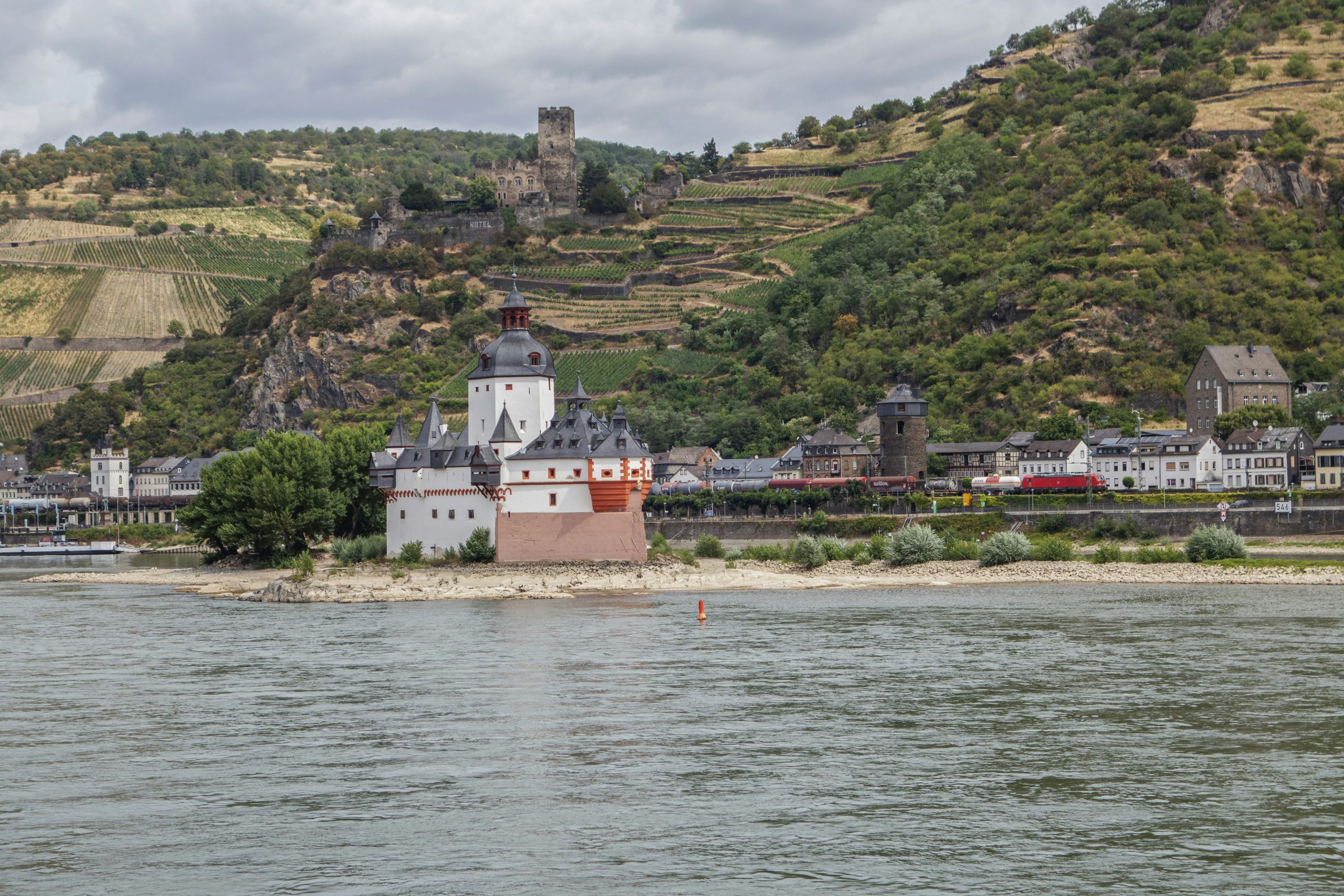
The best castles along the Rhine River are concentrated between Koblenz and Rüdesheim, where travelers can find more than 40 medieval fortifications. This guide explains which Rhine River castles you can visit, which are best seen from the water, and how to plan a realistic itinerary.
Not every castle is fully accessible or equally worth a dedicated stop. This post covers which castles are worth visiting in person, which are better appreciated from the river or a viewpoint, and how to work them into a realistic itinerary.
Quick Reference: Rhine Castle Overview
The table below covers the major castles addressed in this post. All fall within or near the UNESCO-designated Upper Middle Rhine Valley, a 65-kilometer corridor recognized for its concentration of medieval fortifications, vineyard landscapes, and historic river towns.
| Castle Name | Nearest Town | Interior Access | Best Viewed From | Crowd Level |
|---|---|---|---|---|
| Marksburg | Braubach | Yes (guided tours) | Land or river | High |
| Rheinfels | St. Goar | Yes (self-guided) | Land | High |
| Pfalzgrafenstein | Kaub | Limited (seasonal ferry) | River or Kaub bank | Moderate |
| Gutenfels | Kaub | No (private) | River or Kaub bank | Low |
| Katz Castle | St. Goarshausen | No (private) | River | Low |
| Maus Castle | Wellmich | No (private) | River | Low |
| Stahleck | Bacharach | Limited (youth hostel) | River | Moderate |
| Schönburg | Oberwesel | Partial (hotel) | River or land | Moderate |
The Middle Rhine Valley: What Makes This Stretch Different
The geographic conditions along the Middle Rhine Valley are a direct reason for the castle density. The river narrows considerably through this section, forcing shipping traffic into a single navigable lane between steep, terraced slopes. Whoever controlled the high points above the river controlled trade.
During the medieval period, regional lords built fortifications at nearly every defensible bend and ridge. Toll collection from river traffic was a significant revenue source, which made the positions worth defending and rebuilding over centuries.
The UNESCO World Heritage designation, granted in 2002, covers the 65-kilometer stretch between Koblenz and Bingen. In practical terms for visitors, this means the landscape is actively preserved, development is restricted, and tourism infrastructure is well-established. It also means summer crowds in the core towns are substantial.
Getting around the valley is manageable by several means. The KD Rhine Line operates passenger cruises between Rüdesheim and Koblenz with stops at towns including Bacharach, Oberwesel, St. Goar, and Braubach. Regional rail runs along both banks. Driving gives the most flexibility for reaching specific castles on a schedule, but parking near hillside sites can be limited.
For a deeper look at logistics and transport options through the region, a dedicated Rhine Valley travel guide covers the full planning picture.
Marksburg Castle: The Only Rhine Castle Never Destroyed
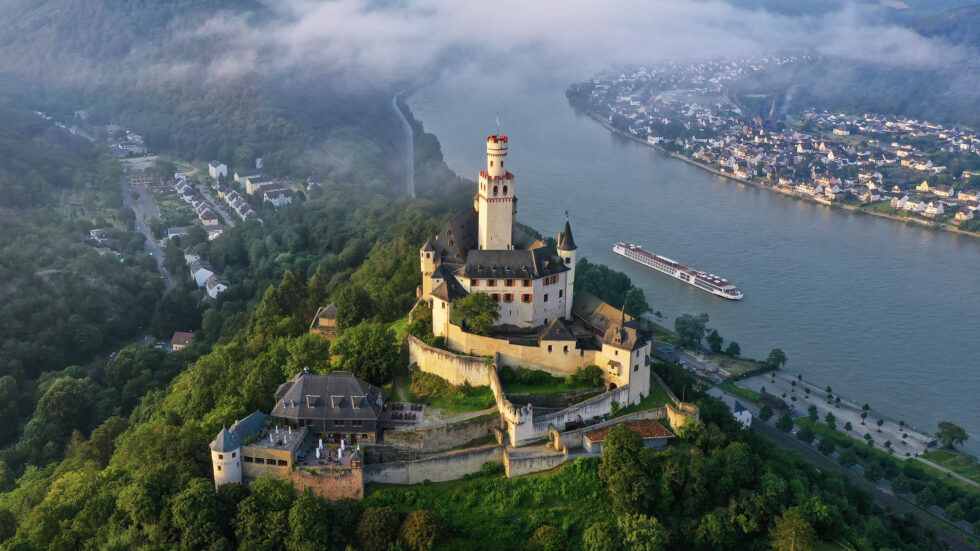
Marksburg Castle is the most structurally authentic castle on the Rhine. It is the only fortification along the river that was never destroyed or significantly rebuilt, which makes it structurally distinct from most other Rhine castles, many of which were partially demolished during the French Revolutionary Wars and later restored in the 19th century.
The interior reflects genuine medieval use rather than romantic reconstruction. Rooms include an armory with period weapons, a great hall, a kitchen, and a torture chamber. The level of preservation is considered unusual for the region.
Getting there requires effort. Marksburg sits above the town of Braubach on a hill, and reaching it means either a steep uphill walk of around 20 to 30 minutes or using a shuttle service that operates in season. Interior visits are guided only. English-language tours are available but run on a limited schedule, so checking times in advance is worthwhile.
This castle works best for history-focused visitors who want an interior experience that reflects authentic medieval conditions rather than a later interpretation. It is also a common stop on Rhine river cruises that dock at Braubach.
It is less suited for visitors with mobility limitations, those traveling with very young children, or anyone with only an hour to spend. Plan for at least two hours including the walk and the tour.
Rheinfels Castle: The Largest Ruin on the Rhine
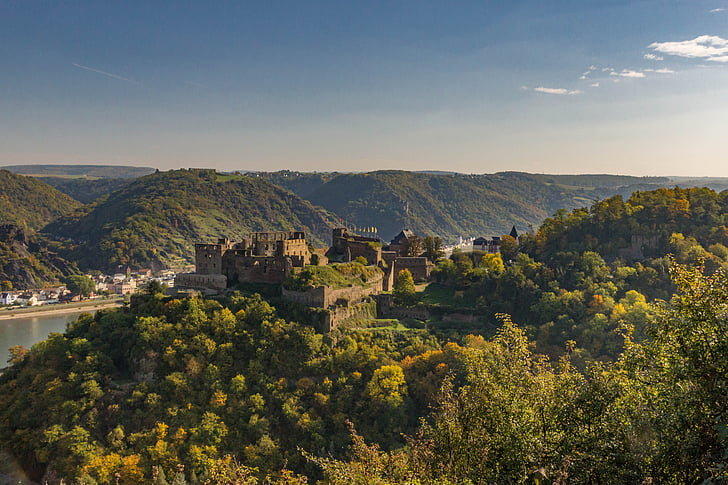
Rheinfels Castle above St. Goar was once one of the most powerful fortresses on the Rhine. At its height in the medieval period, it was large enough to resist sieges that overwhelmed other Rhine fortifications. French forces partially demolished it in 1797, and it has remained a ruin since.
The scale is the main reason to visit. Unlike smaller ruins that amount to a single tower or a section of wall, Rheinfels has multiple levels, tunnels, ramparts, and a series of connected spaces that take two to three hours to explore properly. A small museum on site provides context, and a hotel occupies part of the complex for those considering an overnight stay.
Staying at the hotel within the castle is a practical option for visitors who want to avoid peak daytime crowds. Summer weekends at Rheinfels attract significant numbers of day-trippers, and arriving in the evening or early morning makes a considerable difference.
Access from St. Goar is straightforward. The castle is walkable from the ferry landing, though the uphill path is steep. A shuttle operates in high season for those who prefer not to walk.
This is the better choice for visitors who want a self-guided experience with room to explore independently. It is less suitable for anyone expecting a fully restored interior or a quick stop.
Pfalzgrafenstein and Gutenfels: The River Castle Pair Near Kaub
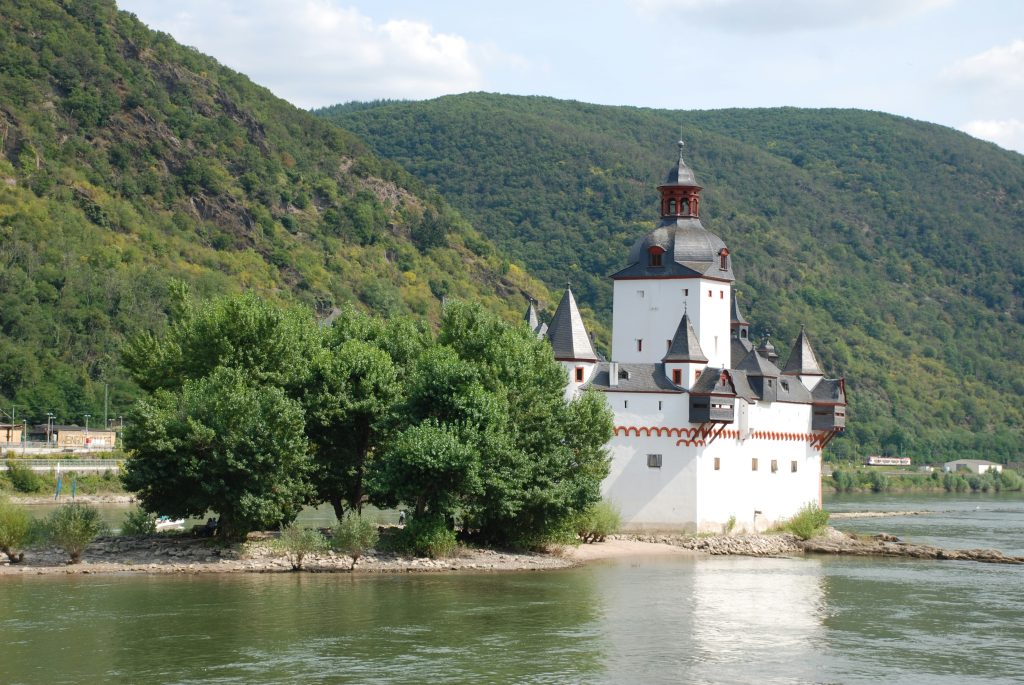
Pfalzgrafenstein is one of the more structurally unusual castles on the Rhine. It was built on a small island in the middle of the river and operated as a toll station, functioning in combination with Gutenfels Castle on the hillside above Kaub to control river traffic from both directions.
Reaching Pfalzgrafenstein requires a short ferry ride from Kaub. The ferry runs seasonally, typically from April through October, and the island itself is compact. Interior access is limited. The main draw is the setting and the exterior architecture rather than an in-depth guided experience.
Gutenfels Castle is privately owned and not open to the public, but it remains highly visible from the river and from Kaub itself. Together, Pfalzgrafenstein and Gutenfels form one of the most photographed views along the entire Rhine corridor.
This pairing works best for travelers arriving by river cruise or those specifically interested in castle typology and the mechanics of medieval toll collection. It is not a full-day stop.
Lorelei Rock and Nearby Castles: Managing Expectations
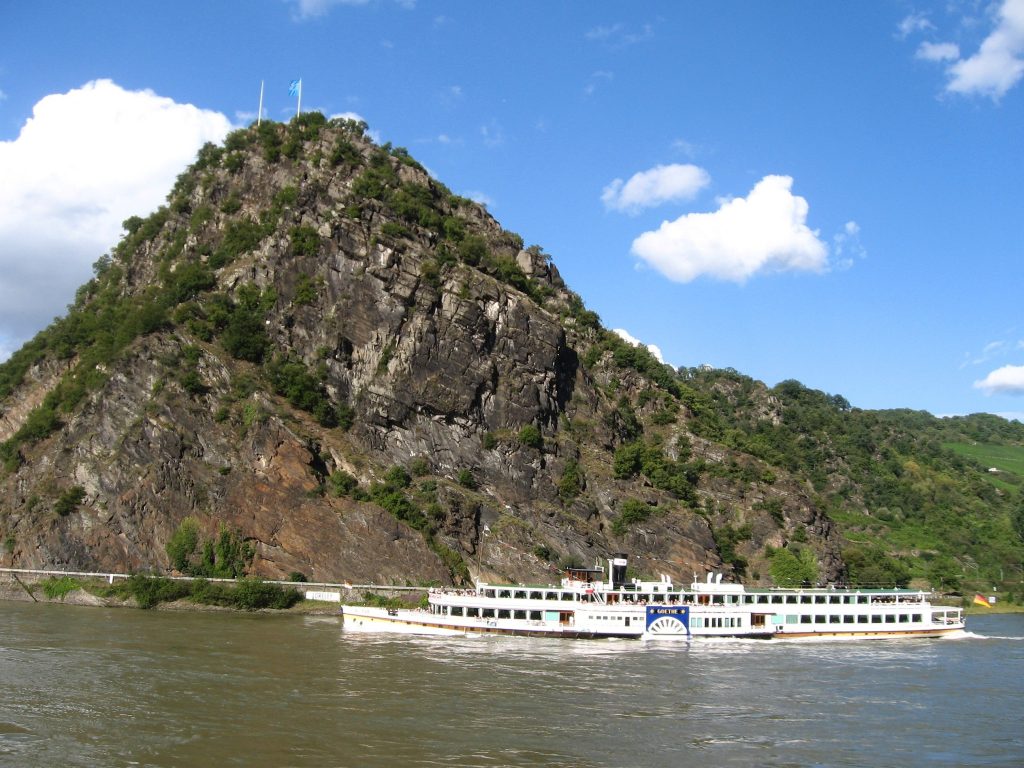
The Lorelei is one of the most referenced points along the Rhine, and it is worth addressing directly. The Lorelei is a 132-meter slate rock formation on the east bank of the river, not a castle. It is a viewpoint and a geographic landmark associated with German Romantic-era legend.
Several castles are visible from or near the Lorelei area. Katz Castle (Burg Katz) sits above St. Goarshausen, directly across from St. Goar. Maus Castle (Burg Maus) is located a short distance to the north near Wellmich. Both are privately owned and are not open to the public for regular visits.
Visitors hoping to enter multiple castles in this area will find limited options. The Lorelei viewpoint itself is worth a stop for the river panorama, and the two castles are best appreciated from the water or the opposite bank.
For interior access, Marksburg Castle near Braubach and Rheinfels Castle above St. Goar are both within a short drive or boat journey and represent better choices for hands-on visits.
Viewing Castles from the Rhine: When the Boat Is the Better Option
For a significant number of castles along the Rhine, a river cruise provides a better overall experience than attempting a land visit. This applies particularly to castles that are privately owned, partially collapsed, or positioned on slopes without public access routes.
Castles best seen from the water include:
- Stahleck Castle above Bacharach, now operating as a youth hostel with limited access for non-guests
- Schönburg Castle above Oberwesel, partially converted into a hotel and restaurant
- Gutenfels Castle above Kaub, privately owned and closed to visitors
- Katz Castle and Maus Castle, both privately held near the Lorelei
- Reichenstein Castle near Trechtingshausen, occasionally open but best viewed from the river
The KD Rhine Line runs scheduled passenger services between Rüdesheim and Koblenz with intermediate stops. The full downstream journey from Rüdesheim to Koblenz takes approximately four to five hours, passing the bulk of the castle corridor. Travelers can also book shorter segments between specific towns.
From the water, a large number of fortifications pass in sequence within a few hours. The visual density is genuinely difficult to replicate by land, where individual castles require separate drives and parking.
This approach works well for travelers on tighter schedules, those visiting with older adults or younger children, and anyone already on a river cruise itinerary.
Fitting Rhine Castles Into a Realistic Itinerary
A single focused day can cover one or two interior visits plus river or viewpoint sightings of several others. Two days allows for a more complete experience of the valley.
A practical one-day approach: base in Koblenz or Rüdesheim, take a morning boat toward the middle of the valley, visit Marksburg Castle in Braubach or Rheinfels Castle in St. Goar for an interior experience, then return by train or boat in the afternoon while observing additional castles from the water.
For two days, Koblenz and Rüdesheim work well as anchors at each end of the valley. St. Goar and Bacharach are smaller towns in the middle of the corridor and are well-suited for overnight stays for travelers who want to explore the valley’s core at a slower pace.
A few planning notes that travelers often overlook:
- Most castles require uphill walking. Several approach paths are unpaved or uneven. Footwear suited for uneven terrain is worth considering.
- Elevation changes are significant. What looks like a short walk on a map often involves 15 to 30 minutes of continuous climbing.
- Summer weekends at Marksburg and Rheinfels are noticeably busy. Shoulder season, specifically April through May and September through October, offers better conditions without significant loss of access.
- Tour schedules at Marksburg are fixed. Arriving without checking English tour times in advance is a common source of frustration.
Where the Rhine Castle Region Fits in a Broader Germany Trip
The Middle Rhine Valley connects logistically to several other strong travel destinations. Koblenz, at the northern end of the valley, sits at the confluence of the Rhine and the Moselle and offers Ehrenbreitstein Fortress as an additional fortification worth visiting. The Moselle Valley wine towns, including Cochem and Bernkastel-Kues, are accessible from Koblenz within an hour by road.
Frankfurt is the nearest major city and functions as a practical transit point. The drive from Frankfurt to Rüdesheim takes under an hour, and regular rail connections serve both ends of the valley.
The region works well as a two- to three-day detour within a longer Germany itinerary rather than a standalone destination for most international travelers. It pairs naturally with a Frankfurt city stay, a Moselle Valley loop, or a trip continuing north toward Cologne.
The towns along the Rhine also have independent character worth engaging with. Bacharach has a well-preserved medieval town center. Oberwesel retains significant sections of its original town wall. Rüdesheim is the most visitor-oriented of the Rhine towns, with a wine-focused pedestrian street and easy boat access. Treating these towns purely as castle access points means missing a meaningful part of what the valley offers.
The Rhine castle corridor is one of the most visually concentrated medieval landscapes in Central Europe. It is worth planning around rather than treating as a passing scenic drive.