Things to Do in Freiburg: What’s Actually Worth Your Time
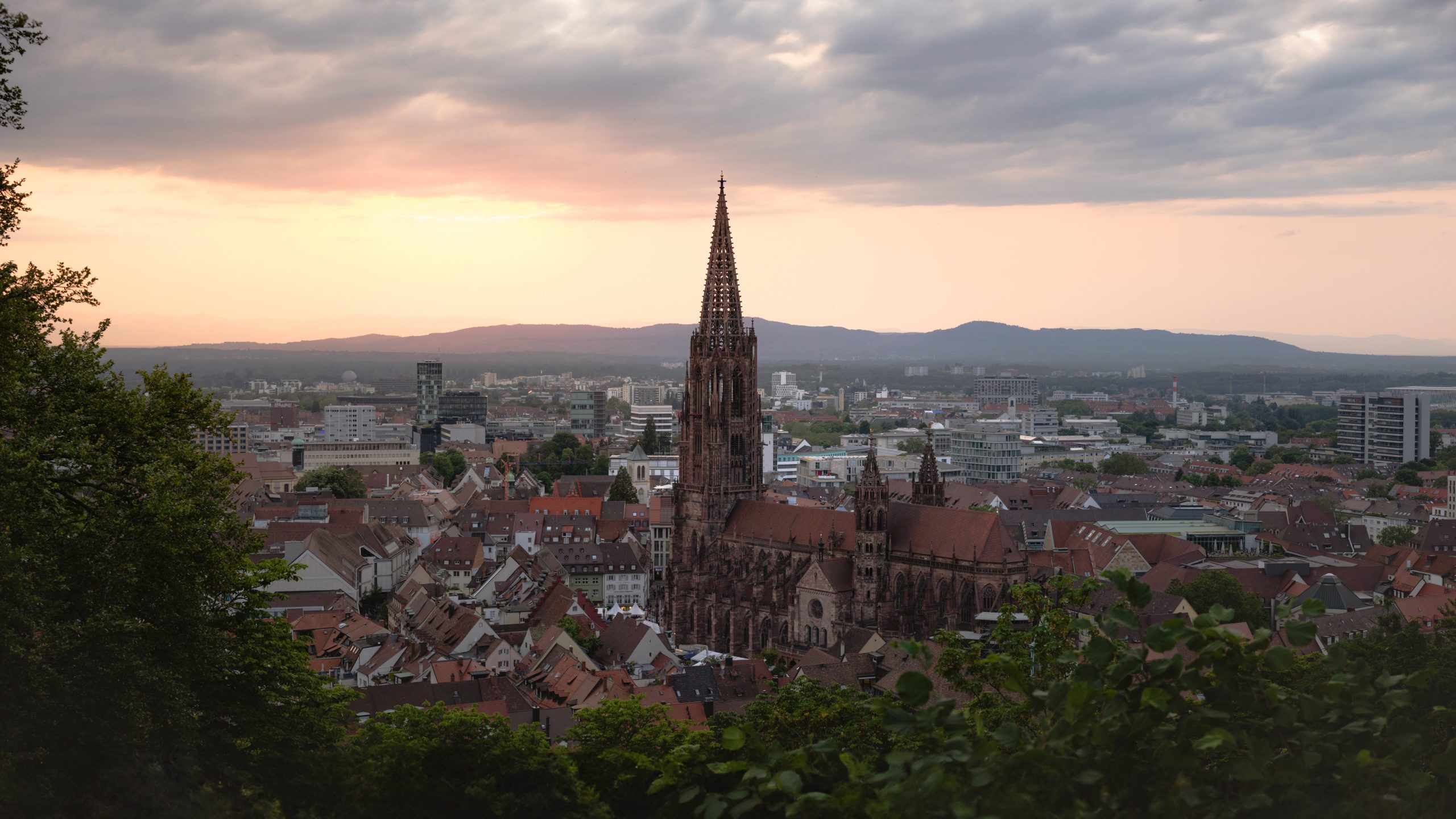
The best things to do in Freiburg are the Münster, the Münstermarkt, a walk through the old town, and the Schlossberg viewpoint. For most visitors, that is enough for a strong half-day or full-day stop without overcomplicating the city.
This guide focuses on the things to do in Freiburg that are actually worth your time, especially if your schedule is short. It prioritizes what to see first, what can be skipped, and how to structure a practical route through the city without wasting time on lower-value stops.
Freiburg at a Glance: What’s Actually Worth Prioritizing
| Activity | Est. Time | Cost | Skip If Short on Time? |
|---|---|---|---|
| Münstermarkt (market days) | 1–1.5 hrs | Free | No |
| Freiburg Münster (interior) | 20–30 min | Free | No |
| Münster tower climb | 30–45 min | Small fee | Yes (if doing Schlossberg) |
| Schlossberg viewpoint | 45–60 min | Free (walk) or small fee (funicular) | No |
| Augustinermuseum | 1–2 hrs | Paid entry | Yes (short visits) |
How Much Time Do You Actually Need in Freiburg?
Half a day covers the essentials. A full day is the practical sweet spot for most visitors. Anything beyond that requires either a deep interest in specific museums or a plan to use the city as a base for Black Forest excursions.
With half a day, travelers can cover the Münster, walk the old town, and get up to Schlossberg. A full day adds the market, more time in the Altstadt (old town), and a relaxed lunch without feeling rushed.
Freiburg’s compact center works in the visitor’s favor. The main sights sit within easy walking distance of each other, so no significant transit time is lost between stops.
For those planning regional day trips, Freiburg functions well as an overnight base. Visiting the Black Forest or nearby wine villages extends a trip without requiring extra time in the city itself.
For travelers using Freiburg as a base, see our Black Forest itinerary for the most efficient way to structure 3 to 5 days in the region.
Who Freiburg Is Best For
Freiburg works best for travelers who want a compact city with a genuinely pleasant old town, a strong local market, and easy access to the Black Forest without committing multiple days to urban sightseeing.
It is especially good for:
- first-time visitors to southwest Germany
- travelers combining city time with nature or day trips
- people looking for a manageable half-day or one-day stop
It is less compelling for travelers who want a long list of major attractions or a city break centered on museums and nightlife.
Freiburg’s Old Town: Where to Spend Most of Your Time
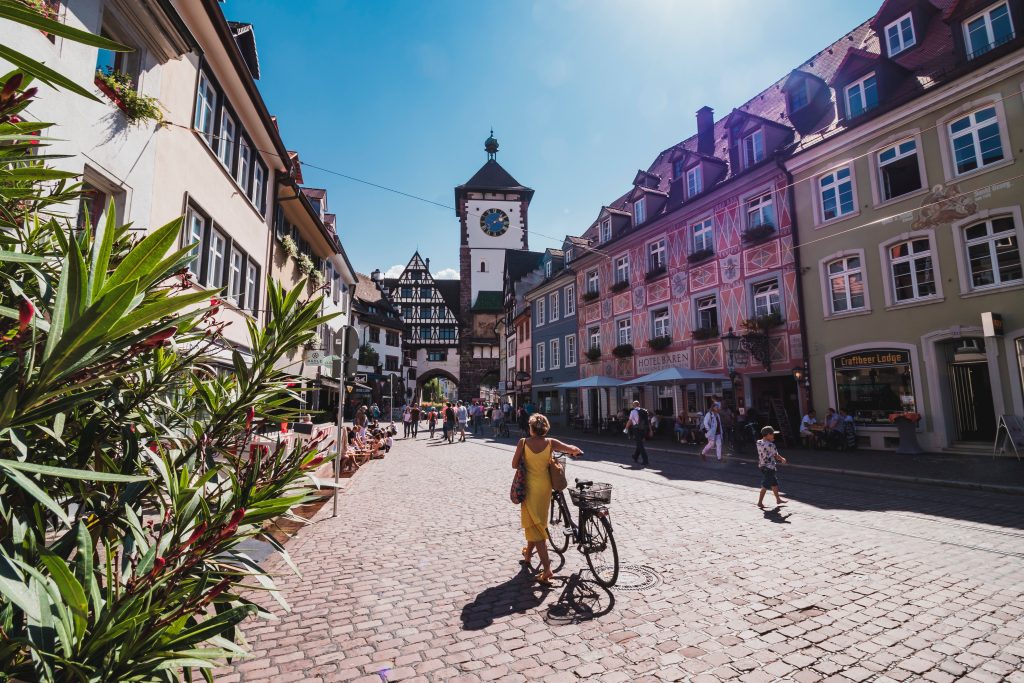
The Altstadt (old town) is the core of any Freiburg visit. It covers on foot in two to three hours without feeling rushed, and most of the city’s worthwhile sights sit within or directly adjacent to it.
One of Freiburg’s most distinctive features is the Bächle: narrow water channels that run along the streets throughout the old town. Visitors who don’t know about them in advance often miss what makes them: they’re functional historic infrastructure, not a decorative feature, and they’re genuinely unusual in a German city context.
Münsterplatz is the natural anchor. The main square surrounds the cathedral and hosts the market on trading days. Rathausplatz (town hall square) is a secondary stop worth a few minutes, a short walk from Münsterplatz through the old town lanes.
The Old Town is at its best on market days. Timing a visit around Tuesday, Thursday, or Saturday morning makes the Altstadt significantly more rewarding than on a quiet afternoon.
Freiburg Münster: What to Expect Inside and Out
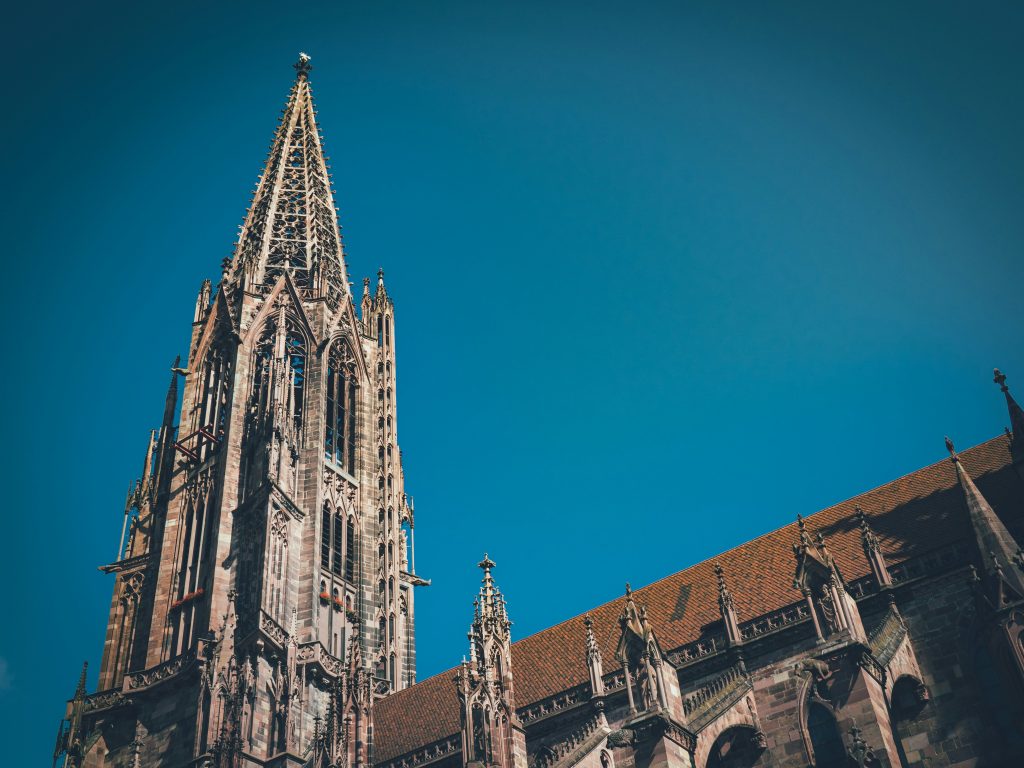
The Freiburg Münster is the single most important sight in the city. It’s not the largest cathedral in Germany, but at close range it’s genuinely impressive, and it’s integrated into the daily rhythm of the square around it in a way that makes it feel lived-in rather than purely touristic.
The interior is free to enter and worth around 20 to 30 minutes. It’s well-preserved and has notable stained glass, but it won’t overwhelm visitors who have already seen major German or European cathedrals.
The tower climb is a separate matter. There’s a modest entry fee, capacity is limited, and the ascent offers good views over the city and toward the Black Forest. It’s worth doing for visitors who want a high vantage point without committing to a full Schlossberg hike.
Visitors planning to go up Schlossberg can reasonably skip the tower. The views are comparable, and the Schlossberg experience is more expansive overall. Those with mobility considerations should also factor in the climb’s narrow stone staircase before deciding.
The Münstermarkt: Freiburg’s Best On-Ground Experience
The market that surrounds the Münster on Tuesday, Thursday, and Saturday mornings is one of the most rewarding things to do in Freiburg. It’s not a tourist market. It’s a functioning local market that happens to take place in front of one of Germany’s better medieval cathedrals.
Stalls carry regional produce, Black Forest specialties, cheese, bread, and flowers. The selection is practical rather than curated for visitors, which is exactly what makes it worth attending.
Timing matters. Arriving by mid-morning gives the best experience. Vendors begin clearing out before early afternoon, and the atmosphere drops off quickly once the stalls thin.
Saturday is the busiest and most visually complete version of the market. It’s the better choice for food-focused travelers or anyone with a flexible morning schedule. Tuesday and Thursday are quieter, which suits visitors who prefer browsing without crowds.
Schlossberg: The Most Efficient Way to Get a View
Schlossberg is the forested hill that rises directly above the Old Town. It’s Freiburg’s most accessible elevated viewpoint, and for most visitors it’s the right choice if a panoramic view of the city is on the list.
Two access options are available. The main walking path takes around 20 to 30 minutes from the center at a moderate pace. The Schlossbergbahn (funicular) provides a quicker ascent for those who prefer it or are short on time.
At the top, visitors find open viewpoints, a tower, benches, and a restaurant. The view over the city toward the Rhine plain and the Vosges mountains in France on clear days is the main payoff. There’s nothing elaborate up there, but that’s appropriate for what it is.
Schlossberg is pleasant and easy, not dramatic alpine scenery. It works best as a 45 to 60 minute addition to the day. Treating it as the main event leads to disappointment. Treating it as a logical extension of the Old Town walk makes it exactly the right length.
What You Can Skip (or Keep Very Short)
Several places appear on standard Freiburg recommendation lists but offer limited return for visitors with half a day or less.
The Augustinermuseum is worthwhile only for travelers with a specific interest in medieval art and religious objects. The collection is well-regarded, but it requires a meaningful time commitment to get value from it. Visitors on short schedules are better served staying in the Altstadt.
The Colombipark area is pleasant and walkable but unremarkable. It doesn’t offer anything that the Old Town or Schlossberg can’t provide with more context and visual interest.
The university quarter is lively, and it gives a real sense of Freiburg as a student city. For visitors spending multiple days, it’s worth an afternoon wander. For those on a single-day visit, it competes directly with more distinctive options.
The Stadtgarten (city garden) is a fine place to sit if time allows. It’s not worth going out of the way for.
These aren’t poor choices in absolute terms. They simply offer lower value per hour compared to the Münster, market, and Schlossberg combination that forms the core of a strong Freiburg visit.
Eating and Drinking: Where the Old Town Actually Delivers
Food and drink in Freiburg doesn’t require extensive research for a short visit. The practical question is when and where to stop, not which specific restaurant to book.
Münsterplatz and its immediate surroundings are the natural place to eat. Quality varies across the sit-down options around the square, and some lean toward tourist pricing. On market days, the stalls themselves are the better option. Fresh bread, regional cheese, and local produce eaten near the cathedral costs less and delivers more.
The Viertel (student quarter), a short walk from the Altstadt center, offers a livelier and more local-feeling alternative for lunch or early evening. The options there tend to be more affordable and less oriented toward one-time visitors.
Freiburg sits in the heart of Baden wine country. The regional wine culture is worth engaging with, and a proper Weinstube (wine tavern) is the right place to do it. The beer garden on Schlossberg is a reasonable option for those already up the hill.
Baden beer is also well-regarded, and the city has enough good options that visitors don’t need to settle for generic alternatives. The bar and cafe density in the Viertel makes it the easier area to find something worth sitting down for.
Using Freiburg as a Base for the Black Forest
For many visitors, Freiburg’s most practical role is as a launchpad into the surrounding region. The city has good rail connections and sits close enough to several Black Forest destinations to make day trips genuinely feasible.
Three options stand out for first-time visitors to the region:
- Schauinsland is the nearest mountain summit, accessible by gondola from the edge of the city. It’s the most efficient way to get into the Black Forest landscape without a long drive or walk.
- Titisee, a lake town about 30 minutes by train, is popular and easy to reach. It skews heavily toward tourism in the town center but the surrounding landscape is worth the trip.
- Staufen im Breisgau, a quieter wine-country village about 20 minutes south by train, appeals to visitors who want a slower pace and a more local atmosphere.
The tradeoff is straightforward: time spent on a Black Forest day trip is time not spent in Freiburg itself. For most travelers, that is the right trade. Freiburg is a strong base and a worthwhile city stop, but it rarely needs more than one focused day unless the surrounding region is part of the plan.
For a broader route through the region, including Freiburg, Feldberg, the B500, and Baden-Baden, see our full Black Forest itinerary.
A Practical Half-Day Route Through Freiburg
This route works comfortably in four to five hours at a relaxed pace. It covers the city’s strongest offerings without unnecessary detours.
- Münstermarkt (if visiting on a Tuesday, Thursday, or Saturday morning): Arrive by 9:30 or 10:00. Browse the stalls, pick up something to eat or drink, and use the setting to orient to the square before the crowds build.
- Freiburg Münster: Enter the cathedral after the market. Allow 20 to 30 minutes for the interior. Add the tower climb here if a high vantage point is a priority and Schlossberg isn’t planned.
- Bächle walk through the Altstadt: Walk the old town lanes with the Bächle channels as a point of reference. Stop at Rathausplatz. This stretch takes 30 to 45 minutes at an easy pace.
- Schlossberg: Ascend via the walking path or the Schlossbergbahn. Spend 30 to 45 minutes at the top. Return the same way or loop back through the lower hill paths into the old town.
- Viertel for lunch or a drink: Finish in the student quarter with something to eat and a glass of Baden wine or local beer.
Tighter timing is possible if the tower climb is skipped. For a full day, one museum visit in the afternoon or a longer stay in the Viertel extends the itinerary without overloading it.
Freiburg rewards a focused visit more than a long one. For most travelers, the difference between a satisfying stop and an underwhelming one comes down to prioritizing the Münster, the market, the old town, and one elevated viewpoint rather than trying to turn the city into a full checklist destination.
If Freiburg is only the starting point for a larger regional trip, it pairs naturally with a longer Black Forest itinerary rather than another full city day.