Neuschwanstein Castle and a Few Days in the Bavarian Alps
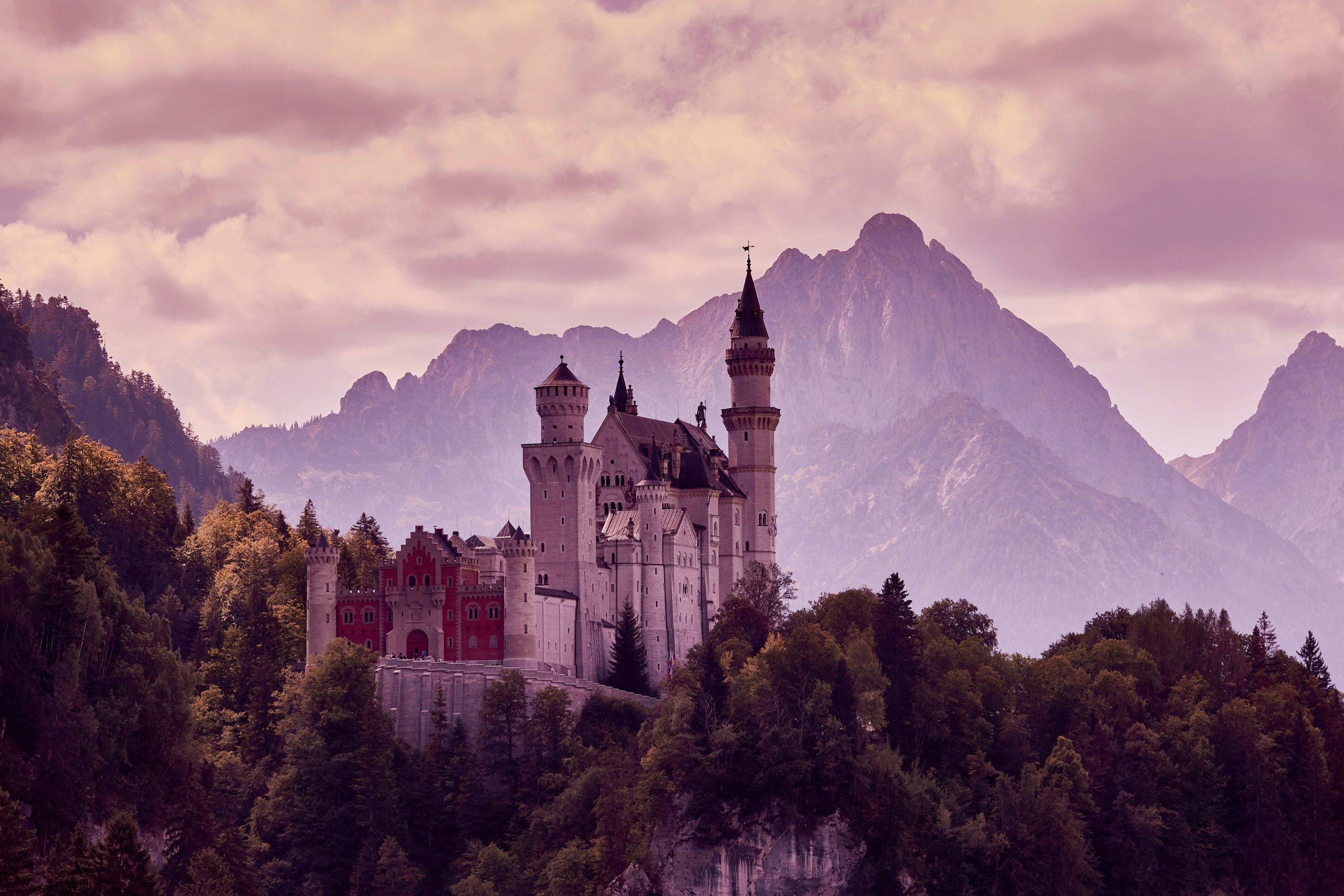
Most visitors to Neuschwanstein Castle treat it as a single stop on a day trip from Munich. That approach works, but it leaves a lot on the table. Within a roughly 60 km radius of Füssen, travelers can combine Neuschwanstein Castle with Linderhof Palace, the village of Oberammergau, the Alpsee lake, and Germany’s highest peak, the Zugspitze. Each stop has its own logic. Together, they form a coherent trip.
The case for spending multiple nights in this part of Bavaria comes down to geography and density.
Füssen sits at the southern end of the Romantic Road, directly below the castles, with the Allgäu Alps as its backdrop. The cluster of worthwhile stops in this region is unusually compact. Neuschwanstein Castle, Linderhof Palace, Oberammergau, the Alpsee, and the Zugspitze are all accessible within a reasonable radius without long driving days.
The central tension is this: Neuschwanstein Castle is one of the most visited sites in Germany, and most people allocate a single morning to it. That misses the point of being here.
Travelers willing to base themselves locally for two to four nights get something different: a region where castle history, alpine scenery, and Bavarian village culture sit alongside each other in a way that a day-trip checklist cannot replicate.
How Much Time Does Neuschwanstein Castle Actually Require?
Planning a Neuschwanstein castle trip without understanding the time commitment is where most visitors go wrong.
The interior tour runs approximately 35 to 40 minutes. That is the timed entry window. It is not the total time on site.
Factor in the uphill walk from the ticket center, which takes 20 to 30 minutes at a reasonable pace, depending on route chosen. Add time for queuing at the entrance, a stop at Marienbrücke (the viewpoint bridge above the castle, which most visitors consider essential), and the walk back down. A realistic on-site visit runs three to four hours minimum, not counting travel from Füssen.
Booking Tickets for Neuschwanstein Castle
Same-day tickets are largely unavailable in the main visitor season. Advance booking through the official Neuschwanstein ticket portal is now standard practice and should be treated as non-negotiable for any visit between May and October. Booking two to four weeks ahead is a reasonable minimum; earlier is safer for peak summer dates.
Third-party resellers add cost without benefit. The official portal is the correct place to book.
Who may find the visit underwhelming: travelers expecting a fully furnished royal interior will encounter sparse, unfinished rooms. Ludwig II died before the castle was completed.
Who will find it worthwhile: those drawn to the exterior architecture, the mountain setting, and the story of Ludwig II. The castle’s historical context is as much the experience as the building itself.
Füssen as a Base: What It Offers and What It Doesn’t
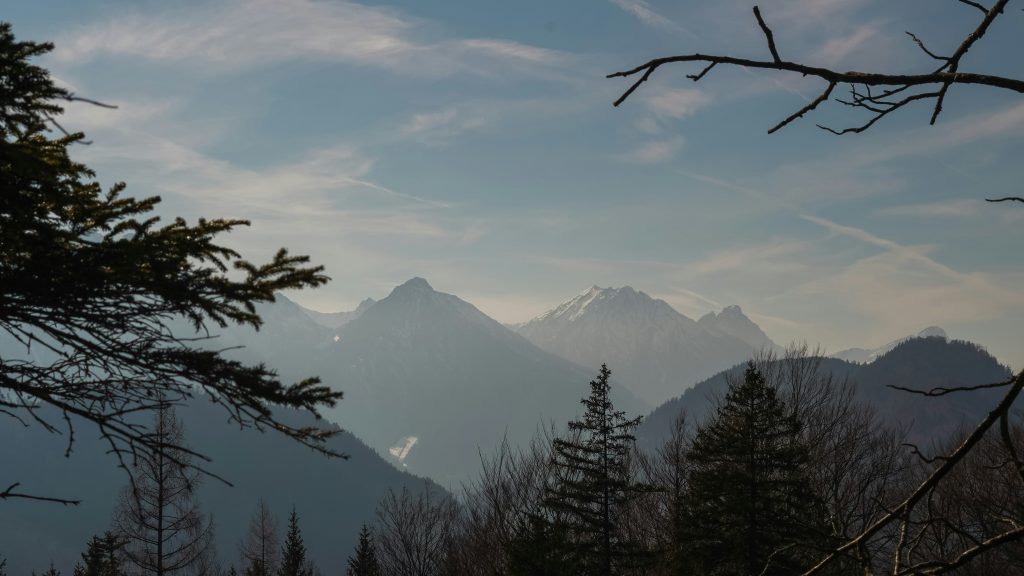
Füssen works well as an overnight base for a Neuschwanstein castle trip for three clear reasons: it sits just 4 km from the castle ticket center, it has a compact old town worth an evening’s walk, and the Lech River setting adds something to the experience of being here.
The limitations are also clear. Füssen is a small town. Dining and accommodation options are noticeably limited compared to Munich, and budget options fill quickly from June through August. Travelers who need variety in restaurants or a wide hotel selection should book early or adjust expectations.
One secondary stop worth noting is the Hohes Schloss, the Episcopal castle in Füssen’s old town. It requires roughly an hour and provides a different architectural register from the Ludwig II sites.
On transport: buses run regularly from Füssen station to the castle ticket center in Hohenschwangau. Driving adds parking logistics; the car parks fill early in peak season.
The Alpsee: One Hour That Earns Its Place
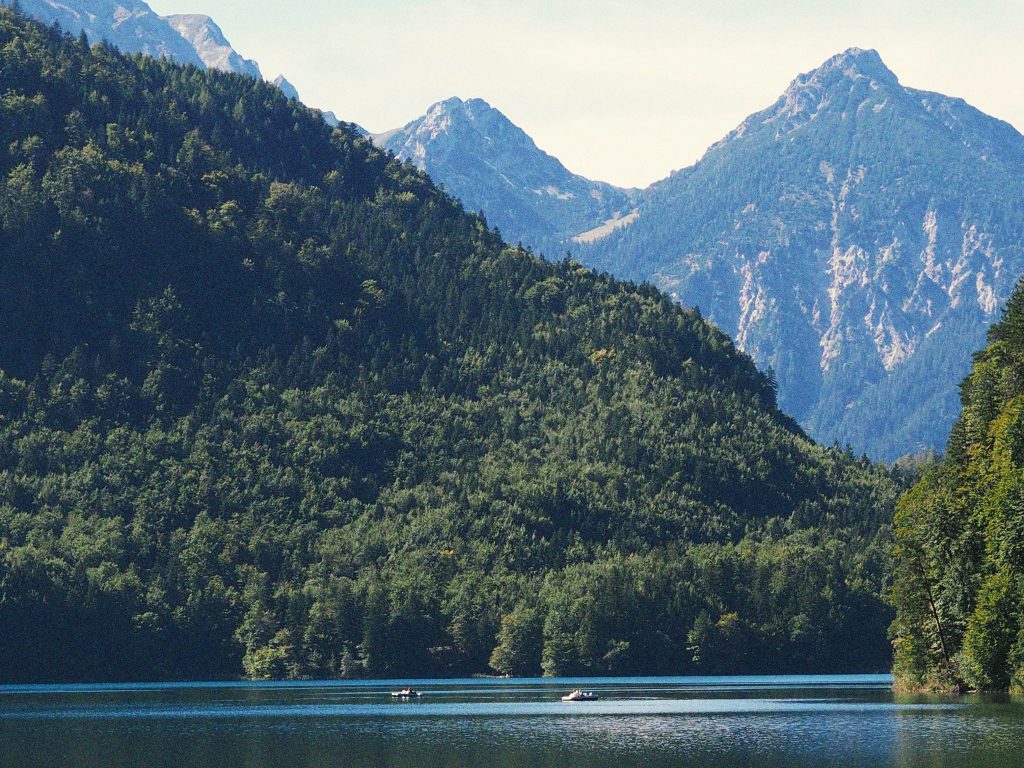
The Alpsee sits directly below Neuschwanstein Castle and is walkable from the ticket center. It is not a detour. It is already there.
The lake offers two modes of engagement: a short walk along the shore (20 to 30 minutes), or a full circuit of roughly 4 km around the lake. The water is calm, the mountain backdrop is present on clear days, and the area is noticeably less crowded than the castle approach path above.
The Alpsee is not a standalone reason to visit this region. It works best as an early morning add-on before ticket entry, or a late afternoon wind-down after the castle visit.
Travelers will also notice that the lake is visible from certain points on the Neuschwanstein approach trail, which gives the stop a sense of continuity rather than a separate obligation.
Linderhof Palace: Ludwig II’s Other Castle, Done Differently
| Neuschwanstein Castle | Linderhof Palace | |
|---|---|---|
| Completion status | Unfinished | Fully completed |
| Scale | Large, dramatic exterior | Small, intimate |
| Interior | Sparse (incomplete) | Intact baroque rooms |
| Gardens | Limited | Elaborate formal gardens |
| Notable feature | Marienbrücke viewpoint | Venus Grotto |
| Typical visit length | 3 to 4 hours | 2 to 3 hours |
| Crowd level (peak) | Very high | High |
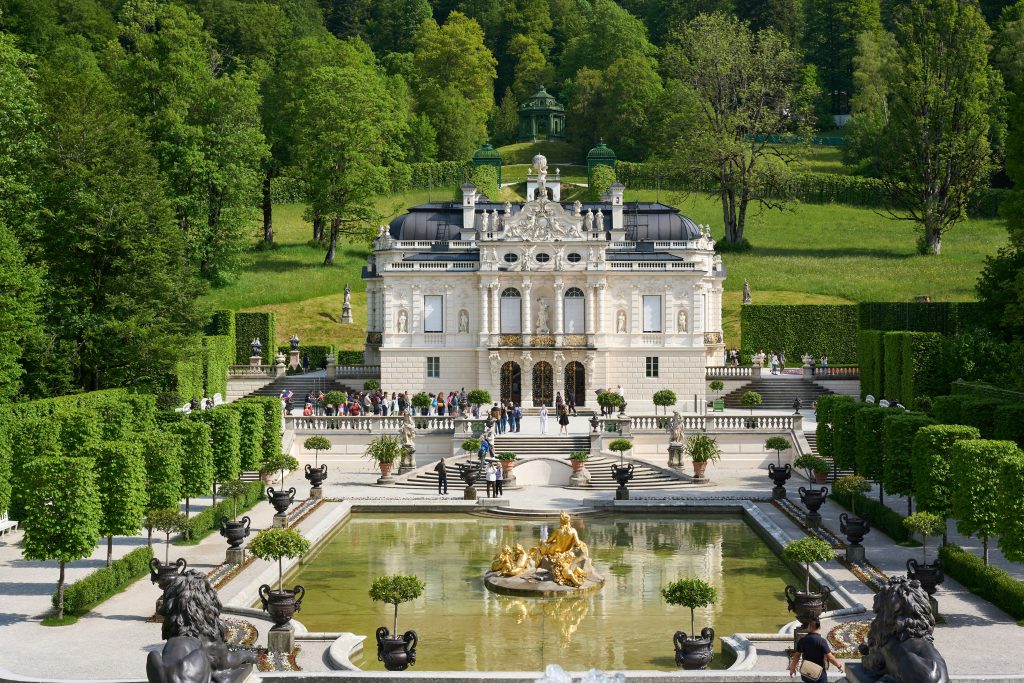
Linderhof Palace, located near Ettal in the Graswang Valley, is the strongest single contrast to Neuschwanstein Castle on this route.
It is smaller, quieter in scale, and fully completed. Ludwig II actually lived there. The baroque interior is intact, the formal gardens are elaborate without being generic, and the Venus Grotto (an artificially constructed cave with a lake inside, inspired by Wagner’s opera) is genuinely unusual by any standard.
Drive time from Füssen is approximately 45 to 55 minutes. From Oberammergau, which is around 10 minutes away, the sequencing is natural: Linderhof in the morning, Oberammergau in the afternoon.
Linderhof can feel busy in peak season despite being less well-known than Neuschwanstein Castle. Mornings on weekdays are noticeably calmer.
This stop is best suited for travelers with a genuine interest in the Wittelsbach dynasty or 19th-century decorative excess. For those prioritizing alpine scenery and outdoor time over palace interiors, Linderhof is less essential.
Oberammergau: Worth Stopping or Just Passing Through?
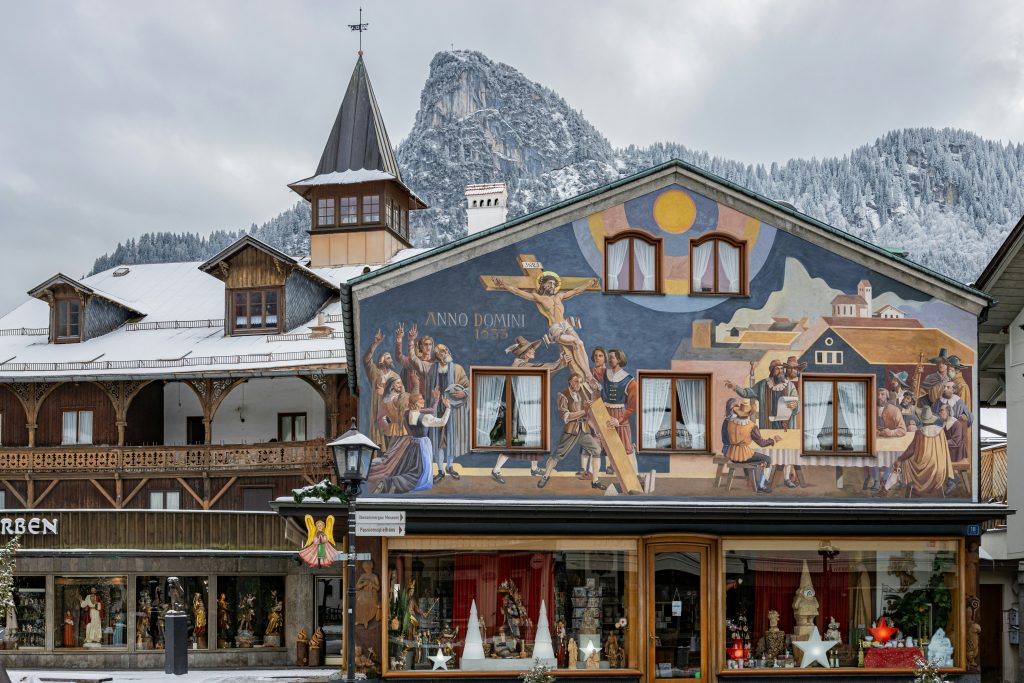
Oberammergau is a functioning village, not a theme park. Its appeal varies depending on the visitor.
The main visual draw is the Lüftlmalerei: elaborate painted facades on the buildings throughout the village center. They are genuinely distinctive and not replicated elsewhere in quite the same concentration. The Passion Play theatre is the cultural anchor. The play runs only in years ending in zero, but the theatre itself and the history behind it are relevant even in non-performance years.
A 90-minute stop covers the village comfortably and pairs logically with a Linderhof visit given the 10-minute drive between them.
Oberammergau has a reasonable concentration of traditional craft shops, particularly woodcarving, which is locally significant and has a long regional history. The village does not feel aggressively tourist-oriented.
This stop suits: travelers interested in Bavarian folk culture, or those breaking up a longer drive between sites.
Less relevant for: visitors focused purely on alpine scenery or castle history who are working with limited time.
Zugspitze: The Commitment It Requires
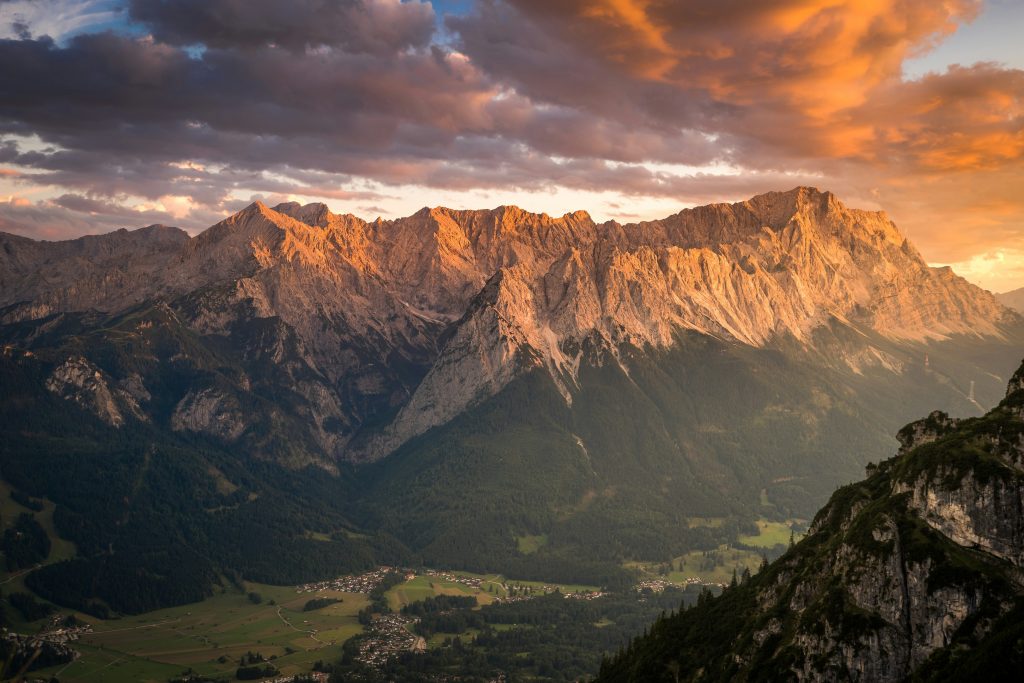
The Zugspitze is a different category of experience from the rest of this route. At 2,962 m, it is Germany’s highest peak, and getting there takes a full day.
From Garmisch-Partenkirchen, the Zugspitze works as a dedicated day trip. From Füssen, it is a stretch. Garmisch is approximately one hour from Füssen by car. Travelers based in Füssen who want to include the Zugspitze should plan it as a repositioning day, either driving to Garmisch early or adjusting their overnight base.
There are two ascent options:
- Zugspitzbahn (cog railway) from Garmisch central station: slower, more gradual, more mountain scenery en route
- Eibsee cable car from the Eibsee lake station: faster, more direct, more visually dramatic
Both arrive at the same summit platform. Most visitors choose one up and one down.
Weather dependency is not a minor consideration. Cloud cover can eliminate views entirely. Checking the mountain forecast 24 to 48 hours in advance is not optional. The Zugspitze webcam is a reliable planning tool.
The Zugspitze is best suited for travelers who can afford a full day and are willing to hold that day loosely in their itinerary. Locking it to a fixed mid-trip date creates real risk. Treating it as a contingency slot, filled only if the forecast is clear, is the more rational approach.
Building the Route: A Logical 3 to 4 Day Framework
This framework is designed for travelers based in Füssen. Those staying in Munich can adapt it with longer drive times factored in for each day.
Day 1: Arrive Füssen, Alpsee Walk, Old Town
Arrive early enough to walk part of the Alpsee before crowds build from mid-morning. Use the afternoon and evening to orient to Füssen’s old town. The Hohes Schloss fits here if time and energy allow.
Day 2: Neuschwanstein Castle
Book the first available entry window. Complete the Marienbrücke walk after the interior tour. The afternoon is naturally free given the morning commitment, and works well for the Hohes Schloss if it was skipped on Day 1, or simply for rest.
Day 3: Linderhof Palace and Oberammergau
Drive or take regional transport toward Ettal. Linderhof Palace in the morning, Oberammergau in the afternoon, returning to Füssen or repositioning toward Garmisch-Partenkirchen for Day 4.
Day 4: Zugspitze (Weather-Dependent) or Flexible Day
Treat Day 4 as a contingency slot. If the forecast is clear, commit to the Zugspitze from Garmisch. If not, use the day for a return to a favorite stop, a longer walk around the Alpsee, or the drive back.
On car versus public transport: most of this route is doable without a car, but requires careful timetable planning. Linderhof in particular has limited bus connections and is significantly easier to reach by car. Travelers without a car should check current schedules before finalizing the itinerary.
Practical Logistics Worth Knowing Before You Go
- Neuschwanstein tickets: Book at least 2 to 4 weeks ahead in summer through the official ticket portal. Third-party resellers charge more and offer nothing additional.
- Parking near the castle: Main car parks are in Hohenschwangau village at the base. Arrive before 8:30 a.m. in peak season to secure a space without extending the walk significantly.
- Bayern Ticket: A cost-effective option for regional rail and bus travel across Bavaria, including the Füssen line from Munich. Note: it is not valid on the private shuttle bus from Hohenschwangau to the castle.
- Cash vs. card: Major sites accept card. Smaller cafes and craft shops in Oberammergau still often prefer cash. Carrying both is the practical choice.
- Best time to visit: Late September and October offer noticeably smaller crowds and reasonable weather. July and August are peak in every sense: higher prices, heavier crowds, and the longest booking lead times required.
The Bigger Picture: What Makes This Region Work as a Trip
A Neuschwanstein castle trip works best when the castle is treated as one piece of a regional story rather than the only destination.
The through-line connecting all the stops on this route is Ludwig II’s Bavaria. His obsessions, his castles, his chosen landscape. Neuschwanstein, Linderhof, the Alpsee, the Allgäu Alps: these were not random proximity. They reflect a specific historical and personal geography that gives the trip a coherence a checklist approach misses.
This trip suits travelers who like combining history, architecture, and mountain scenery in a compact area, and who have enough flexibility to let the itinerary breathe around the Zugspitze and the castle ticket schedule.
Three solid days covers the essentials. Four days covers them comfortably.